
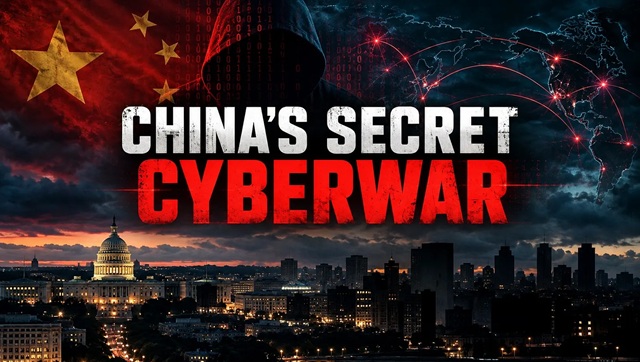
The Pentagon’s Doomsday Plan and the Volt Typhoon
The Pentagon is preparing military bases to survive 90 days without outside support. Warnings are issued across Europe. What are Western governments preparing for?
Imagine waking up tomorrow morning to find your electricity is out.
You reach for your cellphone, but the network isn’t working. You turn on the faucet, but no water comes out. At the gas station, the pumps won’t operate. Your credit cards are useless because electronic payment systems are down.
You drive to the grocery store, only to find its doors locked.
And nobody seems to know when normal life will return.
Now contemplate that this isn’t the aftermath of a hurricane, tornado, or natural disaster.
No, it was the result of a Volt Typhoon.
It was the work of a hostile foreign government: the Volt Typhoon.
The Volt Typhoon gains access to the computer systems Americans depend upon for electricity, drinking water, transportation, and communications.
I know. It sounds like science fiction. Science, yes. Fiction, not so.
American intelligence agencies have uncovered evidence that Chinese government-sponsored hackers have been preparing the groundwork for precisely this kind of disruption.
Now, as the Pentagon prepares its military installations for a potential domestic infrastructure catastrophe, the implications are becoming increasingly hard to ignore.
The Pentagon’s 90-Day Doomsday Plan
On October 25, Fox News reported that the Pentagon is developing an extraordinary military preparedness initiative known as FORTRESS.
Its objective is remarkable.
American military bases are being prepared to continue essential operations for at least 90 days without outside support.
That’s three months.
Three months without depending upon normal civilian electricity, water supplies, fuel deliveries, or other vital infrastructure.
The initiative reportedly includes portable nuclear reactors, independent electrical microgrids, and strategic reserves of fuel, ammunition, and essential supplies.
The underlying concern is that a major international conflict could reach American soil without a single enemy soldier landing on our shores.
An adversary might instead attack the civilian infrastructure America’s military depends on.
Military bases need electricity. They need fuel. They need communications networks. They depend on civilian transportation systems and industrial supply chains.
Disable enough of these systems, and American military operations could be seriously impaired before our forces even reach the battlefield.
The Pentagon’s chief spokesperson, Sean Parnell, described dependence on ordinary civilian infrastructure as an unacceptable risk.
The message is unmistakable.
The Pentagon is preparing for the possibility that America’s civilian infrastructure could become unavailable during a major national emergency.
But what kind of enemy could threaten those systems?
One answer has a name.
Volt Typhoon.
Meet Volt Typhoon: China’s Hidden Cyberwarriors
Most Americans have probably never heard of Volt Typhoon.
They should.
Volt Typhoon is the name assigned to a Chinese state-sponsored hacking operation that American intelligence agencies have linked to infiltrating critical infrastructure networks across the United States.
These hackers aren’t primarily interested in stealing your credit card numbers or holding your home computer hostage for ransom.
Their activities point toward something far more troubling.
They have penetrated computer networks associated with electricity, water systems, communications, transportation, and other essential services.
And according to federal cybersecurity officials, their behavior suggests preparation for potential disruption rather than ordinary intelligence gathering.
In February 2024, the FBI, National Security Agency, and Cybersecurity and Infrastructure Security Agency issued a joint warning about the operation.
Investigators had discovered that Chinese hackers maintained access to some compromised American infrastructure networks for at least five years.
Five years!
Consider what that means.
For years, hackers acting on behalf of a foreign government explored certain American infrastructure networks, gathered sensitive information, and maintained access that could be used in a future conflict.
They weren’t necessarily trying to destroy anything immediately. They were positioning themselves. And that may be the most disturbing aspect of the entire operation.
The Digital Equivalent of Planting Explosives
Imagine a foreign agent quietly entering an American power facility and, instead of damaging anything, they study the building.
He learns where the control rooms are located, where the security cameras point, how the electrical equipment operates, and which employees possess the keys.
Then he secretly obtains access credentials that could allow him to return.
Months may pass. Perhaps years. Still, nothing happens, and all appears normal. The lights remain on. The employees continue working. The toilet still flushes, and the microwave heats the afternoon lunch.
But the intruder has created an opportunity to strike when the moment is right.
That is a useful analogy for the strategy American intelligence officials believe Volt Typhoon has been pursuing.
The group’s hackers have frequently employed a technique called living off the land.
Instead of installing obvious malicious programs, they use legitimate computer administration tools already available inside the networks they penetrate.
These are the same kinds of tools authorized technicians use to maintain and troubleshoot computer systems. And that makes their activities especially difficult to identify.
To ordinary security software, some of the hackers’ activities can resemble routine maintenance.
Federal investigators have documented the attackers stealing administrator credentials, examining network configurations, and searching for ways to maintain long-term access.
In one documented intrusion involving an American water and wastewater organization, attackers moved through important computer systems over approximately nine months, using compromised credentials and legitimate remote-access methods.
The publicly documented evidence does not establish that the hackers actually shut down the facility’s water operations. Just waiting.
The U.S. intelligence agencies have assessed with high confidence that Volt Typhoon was positioning itself to enable future disruption of operational technology, the systems that help control physical infrastructure.
Consider the implications.
A country doesn’t necessarily need to send bombers against an American power facility if it can develop a cyber capability to interfere with the facility’s operations remotely.
And unlike a conventional military attack, the preparation might remain hidden for years.
Your Internet Router Could Help Conceal the Attack
Here’s another discovery that deserves attention.
In January 2024, the Justice Department announced that the FBI had disrupted a network of hundreds of compromised American home and small-business routers.
The operation was linked to Volt Typhoon.
Chinese government-sponsored hackers used these hijacked devices to hide the origins of their cyber operations. In simple terms, an attack originating overseas could be routed through an unsuspecting American household or business.
To someone examining network traffic, the connection might appear to originate from an ordinary domestic internet address. Both tricky and stealthy.
The FBI identified numerous compromised Cisco and Netgear routers, many of which were outdated devices that no longer received security updates.
Fortunately, federal authorities disrupted it through a court-authorized operation. But the existence of such a network demonstrates the sophistication of the broader campaign.
The hackers weren’t simply looking for vulnerable computers. They were building infrastructure to conceal their identities while targeting other networks.
No one has publicly assured that every compromised American infrastructure system has been discovered and secured.
Why Would China Want to Disable American Electricity?
To understand the possible motive, look toward Taiwan.
For years, American military planners have considered a confrontation with China over the island.
Such a conflict could require the United States to mobilize enormous military resources across the Pacific. Aircraft, naval vessels, ammunition, fuel, replacement equipment, and thousands of personnel might need to move rapidly through American military and civilian transportation networks.
Now consider a frightening possibility.
What if, at the very moment America needs to mobilize its forces, major infrastructure systems inside the United States begin experiencing widespread disruptions?
- Electrical failures interfere with industrial production.
- Communications outages complicate military coordination.
- Transportation disruptions delay the movement of equipment and supplies.
- Water and wastewater failures create emergencies in American communities.
Civilian authorities suddenly struggle to maintain basic services while military leaders confront an international crisis. Such disruption could consume government attention and resources at precisely the moment they are needed elsewhere.
This is one of the scenarios that American cybersecurity officials believe Chinese infrastructure intrusions could help enable.
The strategic implications are serious.
A future war with China might not begin for Americans with missiles flying overhead. It could begin with failures in the systems that keep daily life functioning.
Britain Is Preparing Its Citizens, Too
Now consider another development.
On October 22, the British government launched a nationwide emergency-preparedness campaign called Be Ready.
The campaign urges households to maintain enough essential supplies to remain self-sufficient for at least three days. That includes drinking water, nonperishable food, medication, and other emergency necessities.
British officials have emphasized natural disasters and severe weather, but their broader national security warnings also include cyberattacks and disruptions to essential services.
Britain’s defense secretary, Wes Streeting, warned of increasingly sophisticated cyberattacks that could disrupt businesses and supply chains.
The British government’s emergency advice isn’t limited to war. Much of it builds upon existing preparedness guidance and addresses ordinary emergencies.
Nevertheless, the timing is striking.
Within days of Britain’s renewed public preparedness campaign, Americans learned more about the Pentagon’s plans to keep military installations running through extended disruptions.
Britain is encouraging households to prepare for 72 hours. The Pentagon is preparing military bases for 90 days.
And Britain is far from alone.
Across Europe, governments are telling their citizens to prepare to survive without electricity, water, communications, banking services, and other essentials for periods ranging from 72 hours to two weeks or longer.
On March 26, 2025, the European Commission unveiled a preparedness strategy encouraging the EU’s approximately 450 million citizens to have enough essential supplies for at least 72 hours.
Meanwhile, American intelligence agencies have already identified a foreign cyber operation that appears designed to create opportunities for such interruptions.
Perhaps the important question isn’t whether these developments are coordinated.
Perhaps it’s why the vulnerabilities are serious enough to require this level of preparation.
The Problem With America’s Modern Way of Life
We live in a country where almost everything depends on electricity and communications.
- Our food supply depends on refrigeration, computerized inventory systems, electronic payments, and transportation networks.
- Gas stations depend on electric pumps.
- Many water systems depend on electric motors, automated treatment equipment, and communications networks.
- Hospitals depend on electrical power, medical technology, supply deliveries, and communications.
- Even the simplest financial transactions increasingly require functioning electronic systems.
Consider what happens when one part of that network fails.
A power outage can interfere with water pumping. An internet outage can affect payment systems. Transportation disruptions can delay deliveries of food, medicine, and fuel.
These problems can compound one another.
That doesn’t mean every local power failure would produce a national catastrophe. Many critical systems have backups, and utilities routinely plan for emergencies.
But prolonged, coordinated disruptions affecting several essential sectors could test those protections.
Our modern conveniences have created extraordinary prosperity and efficiency, but they have also created dependencies that previous generations never experienced.
A family living a century ago might have possessed a well, stored food, and independent heating.
Today, millions of Americans can lose access to several basic necessities if a few interconnected services fail.
What Is the Pentagon Telling Us?
The Pentagon isn’t announcing that World War III is about to begin, and Britain isn’t announcing that an invasion or catastrophic cyberattack is imminent.
But neither government is preparing for these possibilities without considering real-world vulnerabilities.
The Pentagon’s FORTRESS initiative raises an especially important question.
If the United States military believes it needs installations that can operate for three months without normal outside support, what comparable resilience do the surrounding civilian communities have?
- What happens to the elderly when electricity is unavailable for days?
- What happens to people who depend on refrigerated medication or electrically powered medical equipment?
- What happens when fuel deliveries stop, grocery stores cannot restock, or emergency communications become unreliable?
Military commanders must ensure their installations remain operational during a national emergency. But ordinary Americans also deserve to understand the risks that could affect their families and communities.
And that brings us back to Volt Typhoon.
We now have documented evidence that Chinese state-sponsored hackers infiltrated critical American infrastructure networks and maintained hidden access over extended periods.
Official assessments say these activities could support disruptive operations during a future crisis. The Pentagon has an initiative to reduce military dependence on vulnerable civilian systems. An important American ally is encouraging its population to prepare for temporary interruptions to essential services.
None of these facts proves that a catastrophic attack is coming.
But together, they provide ample reason to take the vulnerability of America’s infrastructure seriously.
The War That Could Arrive Without Warning
For generations, Americans have associated war with battlefields, fighter jets, naval fleets, missiles, and soldiers. We imagine the enemy somewhere far away.
But modern cyberwarfare has changed the geography of conflict.
A foreign adversary can attempt to penetrate computer networks thousands of miles away without crossing a physical border. Its operatives may never set foot in America. The public may never notice its preparations. Its targets may include systems most citizens never think about until something goes wrong.
That’s what makes Volt Typhoon such an important story.
The hackers didn’t have to turn off America’s lights to demonstrate a threat. They only needed to establish access that could be exploited later.
The FBI and other federal agencies have worked to disrupt the operation, but the publicly available information does not establish that the broader threat has been eliminated.
For Americans, the appropriate response isn’t panic. It’s awareness, preparedness, and an insistence that the institutions responsible for protecting critical infrastructure take these warnings seriously.
Because the most frightening aspect of Volt Typhoon isn’t what its hackers have already destroyed.
It’s what American intelligence officials believe they may have been preparing to destroy.
And perhaps the question Americans should be asking their leaders is this:
If the Pentagon is preparing to survive 90 days without the infrastructure the rest of us depend upon, shouldn’t the American people know how prepared their own communities are?
Martin Mawyer
Martin Mawyer is the founder of the Digital Intelligence Project and the President of Christian Action Network. He hosts the “Shout Out Patriots” podcast and wrote When Evil Stops Hiding. For more action alerts, cultural commentary, and real-world campaigns defending faith, family, and freedom, subscribe to Patriot Majority Report.
Sources and further reading
- Fox News, October 25, 2026. Inside the Pentagon’s doomsday plan to keep America fighting if global war erupts.
- The War Zone, October 26, 2026. 90 Days No Help: Fortress America’s Goal to Make Bases Resilient Bastions in a Crisis.
- CISA, FBI, NSA and international partners, February 7, 2024. PRC State-Sponsored Actors Compromise and Maintain Persistent Access to U.S. Critical Infrastructure.
- U.S. Department of Justice, January 31, 2024. U.S. Government Disrupts Botnet Used to Conceal Hacking of Critical Infrastructure.
- UK Cabinet Office, October 22, 2026. Households Encouraged to Take Small, Simple Steps to Stay Prepared in an Emergency.
- Sky News, October 22, 2026. Be Ready Campaign Urges Britons to Prepare for Extreme Weather and Cyberattacks.
©2026 Majority Report. All rights reserved.
Leave a Reply
Want to join the discussion?Feel free to contribute!