Tag Archive for: birthright citizenship

What I Saw Inside The Supreme Court During Trump’s Historic Visit

WASHINGTON — It was impossible for any member of the press or public to stop their eyes from drifting time to time from the bench to the middle of the nation’s highest court, where the president was quietly making history.

The nine Supreme Court justices carried on completely unfazed by the president’s first-time presence in their courtroom for oral arguments on birthright citizenship. Justices Brett Kavanaugh and Elena Kagan still exchanged a few laughs. Justice Samuel Alito periodically shut his eyes and reclined as far back as his chair would allow as attorneys spoke. Chief Justice John Roberts held to the strictest decorum.

While taking a second glance over the briefs in preparation, I somehow missed the president take his seat. But I immediately heard the murmurs around me as the whole morning’s anticipation reached its peak.

As the chief justice recently reminded a crowd in March, justices are not obligated to carry forward the views of those who appoint them. They’re used to criticism, and there’s no reason to be moved by a president’s attendance, though his criticism has been especially sharp since the majority struck down his tariff policy in February. 

Still, nobody was quite sure how the president’s attendance was going to play out.

Birthright citizenship is a major constitutional question with wide-ranging ramifications. The president has made his views clear about the damage “dumb judges and justices” could do by striking down his executive order and maintaining a policy that incentivises illegal immigration and birth tourism.

Aside from increased security, the president’s morning plans didn’t actually change much as the coequal third branch of government went about its business. Staff started retrieving reporters from the press room and seating them in the courtroom at 9:15 a.m., part of the usual routine. No official word came on the prior night’s Oval Office announcement.

“Is the president in group A, B, or C?” one reporter loudly asked.

The court staff member laughed and paused. “No response,” she replied.

Rumors swirled online the night before about a special seat reserved for the president.

“There’s literally a chair set up at SCOTUS for our presidents to sit in for oral argument,” Assistant Attorney General Harmeet Dhillon wrote in response to a reporter on X. “Your separation of powers nonsense is more imitation pearl-clutching hauteur.”

A National Park Service document does reference a black chair for the president in front of the bench, though the president’s attendance is “rare and limited to important ceremonial occasions.”

As previous presidents have done, President Donald Trump attended swearing-in ceremonies during his first term for Kavanaugh and Justice Neil Gorsuch, two of his appointees. Trump floated attending oral arguments for the tariff case in December but ultimately did not.

As reporters lined up before entering the courtroom, a staff member finally acknowledged we “may have heard” of the president’s plans to attend. If he stayed the entire argument, reporters were instructed to remain seated until he left.

When the chief justice announces “the case is submitted” and the buzzer sounds, press typically rush out to start writing, updating editors and appearing on-camera. While the court allows an audio livestream of oral arguments, a COVID-19 protocol that became permanent, it remains a rare institution in Washington where no cameras or electronics are allowed.

Seated in the courtroom, reporters without details of the president’s potential entrance craned their necks to scope out the room. Many of the press seats offer partial visibility into the courtroom, with parts of the bench obstructed by columns. On the busiest days of big cases, reporters seated in the back row behind the curtains are lucky if they can see one or two justices.

Reporters in the first rows whispered who they spotted to those behind. Secretary of Commerce Howard Lutnick. Attorney General Pam Bondi. In the public section nearest to the press, I spotted John Eastman.

Ten minutes before arguments began, a court staff member offered some details: Trump would be sitting in the front row of the public section. Between the bench and public seating, there are about five rows of chairs reserved for Supreme Court bar attorneys.

A law enforcement official stopped by next to warn members of the press, once again, that we would be kicked out if we stood up during the arguments. The officer declined to share any more about the president’s seat. Court staff can share those details, she said, though she couldn’t.

Just before the court was called into session, the president entered.

“Can she see the president?” another reporter in the neighboring alcove asked, gesturing to the courtroom artist to my right.

I shook my head. Her view of the president’s seat wasn’t ideal, but the artist was managing by leaning to the right with a small pair of theater binoculars. The only problem with the binoculars is that they can’t see through heads, she said.

“The Honorable, the Chief Justice and the Associate Justices of the Supreme Court of the United States,” the marshall called out as the room rose from their seats. “Oyez! Oyez! Oyez! All persons having business before the Honorable, the Supreme Court of the United States, are admonished to draw near and give their attention, for the Court is now sitting. God save the United States and this Honorable Court!”

Reporters lingered just a second longer than usual, milking every moment it was permissible to stand without getting called out by court police. I still couldn’t catch a view of Trump’s face.

At 10 o’clock, the Chief Justice began the usual swearing-in of new attorneys to the bar, and oral arguments began promptly after. A court spokesperson confirmed to the New York Times then that Trump was indeed seated in the courtroom, where reporters had no contact with those outside.

For a rare hour and 20 minutes, the president sat quietly and listened as the justices pressed his solicitor general, John Sauer, with questions. No White House press pool. No cameras. Only the regular Supreme Court pool and a courtroom artist.

Shortly after Sauer concluded, the president stood to leave.

The justices continued, never acknowledging their special guest. But now I could finally catch a glimpse as the president headed for a right side exit between two columns, his silhouette clear against the window as he left.

AUTHOR

Katelynn Richardson

Investigative Reporter

RELATED ARTICLE: Trump Might Lose Historic First SCOTUS Case President Has Ever Attended

EDITORS NOTE: This Daily Caller column is republished with permission. ©All rights reserved.


All content created by the Daily Caller News Foundation, an independent and nonpartisan newswire service, is available without charge to any legitimate news publisher that can provide a large audience. All republished articles must include our logo, our reporter’s byline and their DCNF affiliation. For any questions about our guidelines or partnering with us, please contact licensing@dailycallernewsfoundation.org.

Supreme Court Ends Unelected District Court Judges’ Abuses Of Power

The Supreme Court decisively ended lower courts’ ability to block policies issued by the Trump administration using nationwide injunctions on Friday.

In a 6-3 ruling, the majority found that lower courts exceeded their authority by issuing a nationwide block on President Donald Trump’s birthright citizenship restrictions.

“The injunctions before us today reflect a more recent development: district courts asserting the power to prohibit enforcement of a law or policy against anyone,” Justice Amy Coney Barrett wrote in the majority opinion. “These injunctions—known as ‘universal injunctions’—likely exceed the equitable authority that Congress has granted to federal courts. We therefore grant the Government’s applications to partially stay the injunctions entered below.”

Justices Sonia Sotomajor, Ketanji Brown Jackson and Elena Kagan dissented.

“The rule of law is not a given in this Nation, nor any other,” Sotomayor wrote. “It is a precept of our democracy that will endure only if those brave enough in every branch fight for its survival. Today, the Court abdicates its vital role in that effort.”

The Trump administration appealed three lower court orders blocking the birthright citizenship ban from taking effect in April, asking the Supreme Court to limit the ability of district courts judges to block policies nationwide through universal injunctions.

Trump issued his “Protecting the Meaning and Value of American Citizenship” executive order, which ends guaranteed citizenship for children of illegal aliens or migrants on temporary visas, in January during his first day in office.

During oral arguments in May, Solicitor General John Saur noted judges have issued 40 universal injunctions issued against the administration since Trump took office.

This is a breaking news story and will be updated.

AUTHOR

Katelynn Richardson

Investigative Reporter.

RELATED ARTICLE:

Nationwide Injunction: A Quiet Ruling with Explosive Impact

Supreme Court Greenlights Tennessee’s Ban On Sex-Change Procedures For Kids

EDITORS NOTE: This Daily Caller column is republished with permission. ©All rights reserved.


All content created by the Daily Caller News Foundation, an independent and nonpartisan newswire service, is available without charge to any legitimate news publisher that can provide a large audience. All republished articles must include our logo, our reporter’s byline and their DCNF affiliation. For any questions about our guidelines or partnering with us, please contact licensing@dailycallernewsfoundation.org.

Trump Admin Asks SCOTUS To Stop Judges From Trying To Govern ‘Whole Nation From Their Courtrooms’

“Universal injunctions have reached epidemic proportions since the start of the current Administration,” the application states.

WATCH: Federal judge James Boasberg blocks President Trump from deporting Tren de Aragua gang members

Trump Admin Asks SCOTUS To Stop Judges From Trying To Govern ‘Whole Nation From Their Courtrooms’

By: Katelynn Richardson, Daily Caller, March 13, 2025:

The Trump administration asked the Supreme Court on Thursday to rein in lower court rulings that have prevented a ban on birthright citizenship from taking effect nationwide.

Judges should not be able to govern “the whole Nation” from their courtrooms by issuing universal injunctions that block policies across the entire country while litigation is pending, the administration told the justices in its application.

“District courts have issued more universal injunctions and TROs [temporary restraining orders] during February 2025 alone than through the first three years of the Biden Administration,” the application states. “That sharp rise in universal injunctions stops the Executive Branch from performing its constitutional functions before any courts fully examine the merits of those actions, and threatens to swamp this Court’s emergency docket.”

The Trump administration is not yet asking the justices to weigh in directly on the constitutionality of President Donald Trump’s executive order banning birthright citizenship. Instead, they ask the justices to limit the common practice of universal injunctions that “compromise the Executive Branch’s ability to carry out its functions, as administrations of both parties have explained.”

Continue reading.

AUTHOR

RELATED ARTICLES:

Justice Alito ‘Stunned’ By Majority’s Failure To Crack Down On ‘Judicial Hubris’ Targeting Trump Admin

Trump Boots Venezuela Gang Members Under Wartime Law, Obama Judge Orders Plane to Bring Them back

‘That’s Absurd’: Karoline Leavitt Lights Into ‘Low-Level Judges’ Blocking Bureaucrat Firings

EDITORS NOTE: This Geller Report is republished with permission. ©All rights reserved.

New York Times admits Obama not born in U.S.?

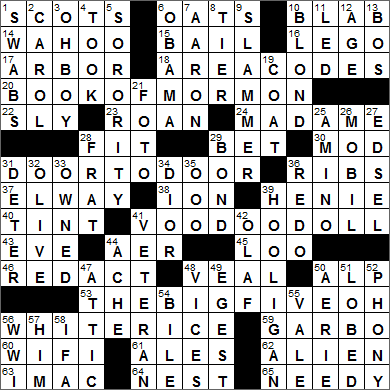
The New York Times, in a back handed way, has joined the Obama not born in the United States movement. In the September 8th, 2014 New York Times crossword puzzle the 6 DOWN hint is: First president born outside the continental U.S.

The answer is OBAMA.

08 Sep 14 New York Times Crossword Solution

Image is courtesy of NYTCrossword.com.

NYTCrossword.com states:

6. First president born outside the continental U.S. OBAMA
Despite rumors to the contrary, I am pretty sure that Barack Hussein Obama II was indeed born in Hawaii. President Obama was born on August 4, 1961 at Kapi’olani Maternity & Gynecological Hospital in Honolulu, Hawaii. He is the first president to have been born outside of the continental US.”

A July 2014 Rasmussen poll on conspiracy theories found forty-one percent (41%) of Republicans believe Obama is not an American citizen, compared to 21% of unaffiliateds and 11% of Democrats. Just over 20% of Republicans and unaffiliated adults also are not sure, but only seven percent (7%) of those in the president’s party share that doubt.

Has the New York Times joined with those who believe Obama is not an American citizen? We report, you decide.

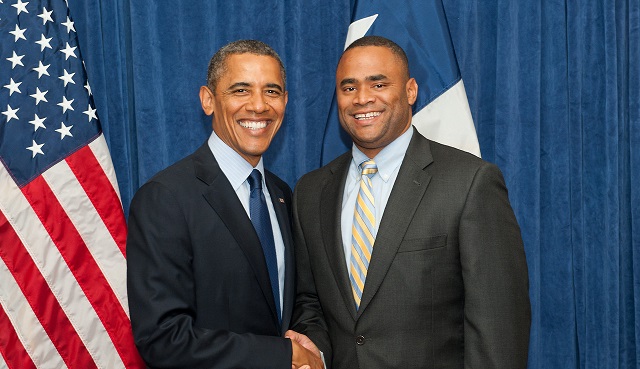
An open letter to U.S. Rep. Marc Veasey (D-TX) on the Birth Right Citizenship Act (H.R. 140)

Dear Representative Veasey,
RE: Your Opposition to H.R. 140 – Birthright Citizenship Act of 2013-2014

Dear Marc,

I am happy you took the time to write and give me your reasons for opposing the bill. I would like to address them one at a time.

The first statement is “H.R. 140 would change the definition of “American” which is absolutely not true. What it means is a child born would have at least one citizen parent to be a U.S. citizen. You must have never learned what the definition of “subject to the jurisdiction thereof” means. Children born of illegal aliens are not “subject to the jurisdiction” of our country. They are subject to the jurisdiction of the country from where there came from. Amending the IMM & NAT ACT to require one of the parents to be an American citizen would remove a strong magnet that currently attracts illegal aliens to sneak into the country to give birth to nearly 400,000 babies a year called “Anchor Babies”. I suggest you trace back the history of the Fourteenth Amendment and Representative John A. Bingham who is referred to as the father of it. Rep. Bingham discusses Natural Born citizen and the reason for the 14th amendment.

The second statement you made was H.R. 140 if passed would have the “goal of preventing future immigration.” I don’t know what world you are living in but how you came to that conclusion is not a reasonable response, when one is warranted.

The third statement you made was “eliminating birthright citizenship would do nothing to reduce illegal immigration.” If so, why do 400,000 births a year happen to parents who are illegal aliens? They sneak in to have babies here so the child can lock them into the U.S. welfare system at the expense of American workers.

“The proposal to eliminate birthright citizenship is a distraction from fixing our broken immigration system” is an incorrect statement. Marc, I just mentioned 400,000 babies a year born to illegal aliens in the U.S. annually and you think H.R. 140 is a distraction? You also state we have a “broken immigration system” which is the statement all democrats make. There are two things promised by Congress in 1986 that were never delivered; a secure border like we have had in Korea for 60 years and a mandatory system to make sure all workers are legal workers that is E-Verify. The system you refer to is not broken; it is simply not being enforced. If Congress would have fulfilled those two promises we wouldn’t be talking about H.R. 140.

Another statement you made was “Congress should be addressing immigration issues head on by reforming our immigration laws in a way that fairly addresses the economic and labor needs of the country, unites American families, and ensures that immigrants have legal channels to enter, remain and work in the U.S.” Do you happen to know what the U.S. population is and where we rank in being the most populated? The answer Marc is we rank third in population and have over 90,000,000 that have dropped out of the labor force. Are you aware we import maids and lawn mower operators while millions of your brothers and sisters are sitting on the couch watching game shows and waiting for the next welfare check.? Blacks are most affected adversely by illegal immigration for employment yet you are for open borders.

I have three questions for you:

  1. What is the purpose of mass immigration since immigration has always been used in the past to settle virgin lands but there are none left?
  2. If mandatory E-Verify had been put into place by Congress when promised 28 years ago do you think we would have millions of illegal aliens without an income living here?
  3. Do you think if Congress would have secured the border as we have in Korea for 60 years now do you think we would have illegal aliens and drugs moving back and forth at will?

Thanks for writing Marc and feel free to contact me again.

RELATED ARTICLES:

Ineligible Illegals File Request to Get Dreamer Status, Force Obama’s Hand
Hundreds More Criminal Illegal Aliens With Brutal Records Released Onto American Streets

EDITORS NOTE: H.R. 140 – Birthright Citizenship Act of 2013-2014 amends the Immigration and Nationality Act to consider a person born in the United States “subject to the jurisdiction” of the United States for citizenship at birth purposes if the person is born in the United States of parents, one of whom is: (1) a U.S. citizen or national, (2) a lawful permanent resident alien whose residence is in the United States, or (3) an alien performing active service in the U.S. Armed Forces.