Tag Archive for: Catholic

Catholic School Shooting Suspect Reportedly Identified, Manifestos Found

Authorities have reportedly identified the man who police say opened fire on children at a Catholic school in Minneapolis, Minnesota, on Wednesday before killing himself.

Authorities identified Robin Westman, a man in his early 20s, as the gunman who killed two children while they attended Mass at Annunciation Catholic School, injured 17 other people and fatally shot himself Wednesday morning, local and national news outlets reported, citing law enforcement sources. Videos from a channel bearing Westman’s name were posted on YouTube around the time of the attack, showing disturbing footage featuring multiple guns, cartridges and ammunition with statements written on the weaponry such as “where is your God?” and other ramblings, the Daily Caller News Foundation found.

The videos, which the DCNF saved before they were deleted, show what appears to be Westman filming an array of weapons in a bedroom and writings on paper apologizing to his family. A thumbnail image from a four-year-old video on the channel shows a man whose face matches images of Westman shared by The New York Post.

“I was corrupted by this world and have learned to hate what life is … I have wanted this for so long. I am not well. I am not right. I am a sad person, haunted by these thoughts that do not go away,” a notebook shown on camera reads.

One message written on weaponry in the video said “Guy Bartkus,” an apparent reference to the man who authorities say blew himself up at a fertility clinic in California in May because he believed humans should not procreate. Another name written on a gun was “Rupnow,” the last name of a high school student who opened fire at a Christian school in Wisconsin in December before killing herself.

Other written messages in the videos show a seemingly incoherent mix of racial slurs, a pride flag, calls to kill President Donald Trump, the phrase “kill pedos,” pentagram symbols, and a statement that “6 million wasn’t enough,” apparently referring to the six million Jews killed in the Holocaust. One of Westman’s guns was inscribed, “There is no message.”

Another clip of the footage shows a picture of Jesus Christ on a shooting target, while the words “fuck everything that you stand for” are seen on one of the cartridges.

The suspected gunman did not have an extensive criminal history, authorities said Wednesday, according to FOX9.

The FBI’s Minneapolis office and the Minneapolis Police Department did not respond to the DCNF’s requests for comment.

AUTHOR

Hudson Crozier

DCNF Crime and Extremism Reporter

RELATED ARTICLES:

‘Horrific Shooting’ Reported At Catholic School

Dem Mayor Uses Catholic Church Shooting To Slander Christians For ‘Thoughts And Prayers’

ROOKE: Democrats Waste No Time Disgracing Children Killed By Anti-Christian Terrorist

CNN Already Spewing Ignorant Talking Points About Guns Following Minnesota School Shooting

Live Updates: Motive Sought in Minneapolis Catholic School Shooting That Killed 2 Children and Injured 17

TRANS-TERROR: Firing at Church Pews, Trans Gunman Opens Fire on School Children at Catholic School, 2 Children Dead, 21 Wounded

RELATED VIDEOS:

White House flags flown at half staff in honor of the victims of the Minneapolis shooting

Democrat Mayor of Minneapolis slams people praying for the victims of the Catholic School Shooting

After TRANS SHOOTER killed TWO KIDS in Minneapolis, “Gender” Center WHISTLE-BLOWER SPEAKS OUT

EDITORS NOTE: This Daily Caller column republished with permission. ©All rights reserved.


All content created by the Daily Caller News Foundation, an independent and nonpartisan newswire service, is available without charge to any legitimate news publisher that can provide a large audience. All republished articles must include our logo, our reporter’s byline and their DCNF affiliation. For any questions about our guidelines or partnering with us, please contact licensing@dailycallernewsfoundation.org.

Catholics Are Becoming the New Mainline

On my way back from Mass recently, I walked past Alex Padilla, the uber left-wing California senator, coming out of St. Joseph’s on Capitol Hill. The incident was just the latest reminder for me that the Catholic Church is increasingly functioning as the new mainline church in American politics where left, right, and center gather to receive Christ. St. Joseph’s is located about a block away from the conservative Heritage Foundation, and a friend of mine has spotted the leader of the centrist Make America Healthy Again movement, Robert F. Kennedy Jr., at the parish as well.

The development of the Catholic Church as a haven for all members of the political divide is a fulfillment of what Alexis de Tocqueville said about American Catholics, who “constitute the most republican and the most democratic class of citizens which exists in the United States.”

Since Tocqueville’s time, Catholics have percolated throughout important Washington institutions. A majority of the justices on the Supreme Court from both Democrat and Republican appointments are Catholics. They include Amy Coney Barrett, Samuel Alito, Sonia Sotomayor, Clarence Thomas, and Chief Justice John Roberts. Neil Gorsuch was raised Catholic and attended Catholic school, but as of 2017, he attended an Episcopalian Church. Catholics also help run major think tanks in D.C. Kevin Roberts, the president of The Heritage Foundation, is probably the most prominent example.

When I arrived in D.C., I had no idea about how preeminent Catholic para institutions had become in the nation’s capital. When you stroll around the Capitol building, it’s not uncommon to see priests in white robes walking about. That’s because the Dominican House of Studies is just a few Metro stops away. It is located across from the National Basilica and the Catholic University of America.

It’s true that the mainline is not completely dead. Tucker Carlson remains an Episcopalian. President Donald Trump was raised a Presbyterian, although now he identifies as a nondenominational Christian. Former Department of Government Efficiency head Elon Musk was baptized and brought up as an Anglican. Mark Tooley, the Jesuit-educated president of the Institute on Religion and Democracy, is still fighting the good fight about the future of the mainline. Condoleezza Rice, who now heads the Hoover Institution, is the daughter of a Presbyterian minister.

And the mainline has also partially renewed its strength from converts. Jay Bhattacharya, the director of the National Institutes of Health became a Presbyterian in high school. Joshua Katz, another AEI scholar, also is a late in life convert to what was once called the Church of England (in the American colonies).

However, the election of Pope Leo XIV this year is probably the single greatest indicator that Catholics are taking over the bipartisan, cultural function once inhabited by the mainline. I was also struck by a recent picture of the pope meeting with Ben Shapiro, perhaps the most famous Orthodox Jew in the world.

The conservative political commentator said he gave the pontiff, a fellow Chicago White Sox fan, a signed baseball from the team’s 2005 World Series, and thanked him for standing for biblical values. This is a pope that gives an address to people in the White Sox stadium and dons a Villanova baseball cap. Villanova remains one of the few major American universities presided over by a Catholic priest (the vast majority of Jesuit universities are now run by lay presidents).

Time will tell if the new pope inspires American Catholics in a way never seen before. Pope Benedict XVI’s writings are still a guidepost for the newest generations of priests. Ultimately, Leo’s pontificate is a capstone to the long maturation of the Catholic faith in America. The most important Catholic is now an American, so naturally being American is becoming Catholic.

AUTHOR

Jacob Adams is a journalism fellow at The Daily Signal. Send an email to Jacob. Jacob on X: .

Don’t Underestimate Christian Media

For years, Christian media has often been viewed as a backwater source—like something seen in a Saturday Night Live skit. A source for snickers, but not for sensible information.

But, as Dr. Ted Baehr, the publisher of “Movieguide,” likes to say in effect, “The good news is: The bad news is wrong.”

Recently, the National Religious Broadcasters (NRB) commissioned a study with the respected pollster, the Barna Group, and found that a majority of Americans “engage with Christian media.”

The NRB reported on the survey’s findings with this title: “Most Americans Engage with Christian Media, NRB and Barna Report.”

The NRB notes in the findings: “More than 60% of American adults report consuming Christian media in some form, whether through television, radio, podcasts, news websites, social media, or YouTube. This is not an occasional interaction—among these users, half engage with Christian content at least once per week.”

Barna defines “Christian media users” as “viewers, listeners, or readers of Christian media” or consumers of “Christian radio, Christian TV, Christian podcasts (not including sermons), Christian news websites,” as well as users of social media with Christian content.

Troy Miller, president of the National Religious Broadcasters (NRB), told me in a recent radio interview about this: “To be honest, that number nearly caught us off guard.” Wow—nearly two-thirds of all Americans are engaged to some degree with Christian media. Miller said: “That was much, much higher than we thought it would be.”

And he added, “If you drill down further, within the Christian community—those who recognize that the Bible is the authority, who attend church on a regular basis, who read their Bible on a regular basis—their involvement with Christian media is [much greater]. They listen to Christian media almost on a daily basis.”

Furthermore, the NRB writes that there is a higher trust factor of Christian media among listeners/viewers than of other sources of media.

The NRB observes: “Christian media isn’t just widely consumed; it’s also largely respected. Two-thirds of the general population view Christian media as valuable and trustworthy, and that figure rises to four in five among those who use Christian media…..Even among those who don’t identify as born again, roughly half view Christian media in a positive light.”

Nonetheless, they also note the other side of the same story: “However, this trust is not without tension. Some respondents—particularly heavy users—express concerns about bias and manipulation in Christian content….Meanwhile, non-Christians tend to have the most negative perceptions of Christian media.”

During the time of America’s founding, what was the mass media in the various colonies? Certainly, newspapers were very influential. Stacy Schiff, author of The Revolutionary: Samuel Adams (2022), notes that Samuel Adams had incredible influence writing for the key newspaper of his city, The Boston Gazette.

Adams usually used pseudonyms (e.g., A Puritan, Candidus, Victus, etc.)  to avoid arrest or deportation to Canada or England for trial (and likely execution). She writes of the Royalist Massachusetts Governor, who despised Samuel Adams: “To [Thomas] Hutchinson’s dismay, seven-eighths of Boston read nothing but that ‘infamous paper’ [The Boston Gazette]. It set the temper of the town.”

Samuel Adams had another form of mass media. He utilized the Committees of Correspondence to communicate to the other colonies what was actually going on in Boston, the seedbed of the Revolution.

But there was yet another aspect of the media in those days almost always overlooked in our time—and that is, the sermons of the day. They were very influential.

I once interviewed the late Dr. Donald S. Lutz, author of The Origins of American Constitutionalism, of the University of Houston. Lutz had co-written a major study with Charles S. Hyneman. They found that about one-third of the quotes from the founding fathers’ writings came from the Bible; and other major quotes came from Bible-oriented writers, such as Montesquieu, Sir William Blackstone, and John Locke (in that order).

Lutz told me: “During the Founding Era, the late 1700’s, there were no magazines, newspapers had a very small circulation, there was no television, there was no internet. What did people do for entertainment? They would read pamphlets….Now, of all the pamphlets published during the last part of the 1700’s, more than 80% of them were reprinted sermons.”

As Americans, we have been given a great gift: free speech and a free press—largely because of Christian influence. But like all good gifts in this fallen world, it must be safeguarded.

As Troy Miller of the NRB noted recently to RadioWorld: “Free speech isn’t optional, It’s the foundation of the American experiment…If one group’s voice can be silenced because of its beliefs, every voice becomes vulnerable.” Thankfully, many Americans are sitting up and paying attention to Christian media.

©2025 All rights reserved.

Cardinal Robert F. Prevost Elected 267th Supreme Pontiff Of Roman Catholic Church

VATICAN CITY — Cardinal Robert F. Prevost was elected the 267th supreme pontiff of the Roman Catholic Church on Thursday by the College of Cardinals during a two-day conclave in the Vatican’s Sistine Chapel.

He will go by Pope Leo XIV.

The sight of white smoke billowing out from arguably the world’s most famous chimney delighted the crowd of over 45,000 observers keeping vigil in Saint Peter’s Square, which immediately expanded to a global audience of billions as the news broke.

The bells of Saint Peter’s Basilica, which joyously rang to commemorate the Easter Sunday resurrection of Jesus Christ before solemnly announcing the death of Pope Francis, 88, a day later, rang once again to celebrate the newest successor to Saint Peter.

As the senior cardinal deacon participating in the papal conclave, French Cardinal Dominique Mamberti, the Prefect of the Supreme Tribunal of the Apostolic Signature, announced the ancient “Habemus papam” proclamation from the central loggia (balcony) of the basilica:

Annuntio vobis gaudium magnum; | I announce to you a great joy:
habemus Papam: | we have a pope:

Eminentissimum ac Reverendissimum Dominum, | The most eminent and most reverend lord,
Dominum [first name] | Lord [first name]
Sanctae Romanae Ecclesiae Cardinalem [surname] | Cardinal of the Holy Roman Church [surname]
qui sibi nomen imposuit [papal name]. | who has taken the name [papal name].

Moments after the acceptance of the grave responsibility entrusted to him by his colleagues, the new pope announced a Petrine name and moved to an antechamber of the Sistine Chapel, the historic “Room of Tears,” to gather his thoughts and vest for his new ministry. The new Vicar of Christ is then introduced to the cheering crowd of onlookers and the world before offering the tradition Urbi et Orbi (“for the city and for the world”) blessing.

The term “conclave” is derived from the Latin cum (“with”) and clavis (“key”).

After the 1268 papal vacancy continued for a year before the waiting citizens of Viterbo, Italy took matters into their own hands. They locked the then-19 cardinal electors in the Palace of the Popes with only bread and water to pressure them to fill the vacancy; Gregory X was finally elected in 1271. He would later issue Ubi periculum, an Apostolic Constitution to formalize the rules for selecting a pope, which formed the basis for the modern-day, secretive process.

The conclave, which formally began Wednesday, made history as the largest in Church history. Out of the 235 members of the uppermost echelon of Catholic clergy, 133 participated as eligible cardinal electors — under 80 years of age at the time of the death of the reigning pope —which exceeds the previously defined limit of 120. The late Pope Francis created 108, or 80%, of them. To elect his successor required a two-thirds majority, at least 89 votes.

In addition, the cardinal electors represented 71 countries across six continents, making the conclave among the most geographically diverse to convene, another legacy of Pope Francis, who desired a Church which welcomes “everyone, everyone, everyone.” The largest national voting blocs represented Italy (17), the United States (10, which is one fewer than its showing in the 2013 and 2005 conclaves) and Brazil (seven). Europe’s share of the vote, 52, was less than half of the electorate; the representation of Asia (20) and Africa (18) increased from the 2013 conclave by 10 and seven, respectively. Canada sent four cardinals; Mexico sent two. The Catholic Church, however, is not a representative democracy — the papacy is Europe’s last absolute monarchy — with each cardinal considering their own ecclesiastical priorities when voting in the conclave.

Countries enjoying a first-time delegation to the conclave include Bangladesh, Cape Verde, Central African Republic, East Timor, El Salvador, Ghana, Haiti, Iran, Luxembourg, Malaysia, Mongolia, Myanmar (Burma), Papua New Guinea, Rwanda, Serbia, Singapore, South Sudan, Sweden and Tonga, according to Catholic News Agency.

Many of the cardinals had never met, but were able to be introduced to each other — and draw support and influence — over the course of twelve general congregation meetings ahead of the conclave to discuss matters affecting the Church.

The new pope inherits a spiritual flock of 1.39 billion Catholics and will likely need to address an increasingly secularized world, clerical sex abuses of minors and the fallout, as well as global conflicts, both armed and rhetorical.

AUTHOR

Thomas Wong

Associate Weekend Reporter.

RELATED ARTICLES:

SICK: Pope Francis Gifts Popemobile to Gaza

Catholic Church Warns Of ‘Government Overreach’ With New State Law Forcing Priests To Violate Sacrament

New Pope Registered Republican in Illinois; Trump Critic

Cardinal Robert Prevost Becomes First American Pope

Cardinal Prevost, Now Pope Leo XIV, Condemned Abortion

Pro-Life Leader Says New Pope “Holds Strong Pro-Life Convictions”

EDITORS NOTE: This Daily Caller column is republished with permission. ©All rights reserved.

Pope Francis Dead At 88, Sending Catholic Church Into Mourning, Reflection As World Speculates On Possible Successor

Francis, the 266th supreme pontiff of the Roman Catholic Church and spiritual shepherd of her estimated 1.39 billion members for nearly twelve years, died Monday in Rome at the age of 88 weeks after being hospitalized Feb. 14 for 38 days to treat double pneumonia, the Vatican announced.

Cardinal Kevin Farrell, Camerlengo [chamberlain] of the Apostolic Chamber, announced the pope’s death.

Dearest brothers and sisters, with deep sorrow I must announce the death of our Holy Father Francis. At 7:35 this morning [1:35 EDT], the Bishop of Rome, Francis, returned to the house of the Father. His entire life was dedicated to the service of the Lord and of His Church. He taught us to live the values of the Gospel with fidelity, courage, and universal love, especially in favor of the poorest and most marginalized. With immense gratitude for his example as a true disciple of the Lord Jesus, we commend the soul of Pope Francis to the infinite merciful love of the One and Triune God.

Vice President JD Vance met with the Holy Father only hours earlier.

“It’s good to see you in better health,” Vance told the pope on Easter Sunday as they began their conversation. His Holiness gifted him with a Vatican tie, blessed rosaries and three Easter eggs for his children. Before departing the brief encounter, Vance revealed to the bishop of Rome, “I pray for you every day.”

Pope Francis then made a rare — and final — public appearance to the crowd gathered after Mass in Saint Peter’s Square for his Urbi et Orbi (“for the city and for the world”) blessing.

“Brothers and sisters, Happy Easter!” the Vicar of Christ said with some effort and waving, delighting those who unknowingly numbered among the final crowds to see him in person.

As the news broke across Christendom and the world, church bells began to solemnly toll and the prayers of millions were raised in gratitude for his life, in hope and concern for the future of the Church and to beseech God’s mercy upon the deceased Vicar of Christ.

Pope Francis’s health in his final days drew attention after a number of his public events were cancelled or delegated to others.

The pope nevertheless remained in good spirits after he was hospitalized, the Holy See Press Office said. At times, he was reportedly able to breathe unassisted, eat, read, sit upright, work, offer jokes, spend time in the hospital’s chapel, watch the Holy Mass on television and receive the Eucharist as well as visitors. Though this hospitalization was both the longest of his papacy and without being see by the public, he continued to release messages — and sign Church documents — from Gemelli Polyclinic in Rome.

Notably, the Holy Father continued his daily practice of calling the only Catholic community in Gaza, Holy Family Parish, following the Oct. 7, 2023 attack on Israel by Hamas. Pope Francis regularly checked on the parish when speaking with Father Gabriel Romanelli, a fellow Argentine, and his assistant, Fr. Youssef Asaad. Even at the onset of being hospitalized, the pope reportedly insisted on making a video call to express his continued closeness and bless those who gathered in the church even during a local blackout.

In recent months, Pope Francis suffered from limited mobility, becoming dependent on a cane and, after two falls injured him, a wheelchair. He subsequently reduced the degree of engagement with public crowds and delegated liturgical roles as celebrant to other clergy. The pope had also been diagnosed with diverticulitis, a common issue involving the inflammation or infection of the colon, which was addressed with a 2021 surgery removing approximately twelve inches of that organ. In addition, long before becoming pope, he experienced a severe respiratory infection and underwent a procedure to remove part of one lung, The Associated Press reported. The pope’s past mobility similarly suffered due to sciatica.

The pope had prepared a letter of resignation “in case of impediment due to health reasons” at the beginning of his pontificate in 2013, His Holiness revealed during a Dec. 17, 2022 interview with ABC, a Spanish newspaper. As the pope’s health declined more than a decade later, however, Cardinal Secretary of State Pietro Parolin denied to an Italian newspaper, Corriere della Sera, being aware of any push for Pope Francis to resign, despite his being among the ten oldest pontiffs to have served, Vatican News reported.

“Honestly, I am not aware of such manuevers, and in any case, I try to stay out of them. On the other hand, I think it is quite normal in these situations for unverified rumours to circulate or for misplaced comments to be made — this is certainly not the first time. However, I do not believe there is any particular movement in this regard, and so far, I have not heard anything of the sort,” he told the outlet.

Parolin later kicked off a daily devotion including the recitation of the Rosary with the public gathered in St. Peter’s Square for the pope’s health during his hospitalization. Churches around the world likewise offered the sacrifice of the Mass for the intentions and well-being of the Holy Father.

By comparison, Polish-born Pope John Paul II, whose 9,665-day pontificate from Oct. 16, 1978 to April 2, 2005 was recorded as the third-longest in Church history, officially died from septic shock and cardio-circulatory collapse at the age of 84, The New York Times reported, citing Vatican records. He also suffered from Parkinson’s disease and arthritis, in addition to two gunshot wounds from a failed May 13, 1981 assassination attempt.

Similarly, Pope Benedict XVI, the predecessor of Pope Francis, led a 2,872-day pontificate from April 19, 2005 to Feb. 28, 2013. The accomplished German theological scholar shocked the world with a Feb. 11 announcement of his intention to abdicate his seat on the Chair of St. Peter upon the election of a successor (the last pope to step down was Pope Gregory XII in 1415), referencing how his “strength of mind and body … [had] deteriorated” due to “advanced age.” Reports would later emerge that His Holiness had lost sight in his left eye in addition to experiencing difficulty walking. After the election of Pope Francis, Pope Emeritus Benedict XVI withdrew to a secluded life of prayer and reflection in a monastery in the Vatican’s gardens but occasionally met with his successor throughout the next decade. This collegiality continued to bear fruit, Pope Francis revealed to Spanish journalist Javier Martínez-Brocal in a series of interviews between July 2023 and January 2024, as Pope Emeritus Benedict XVI “always defended” him and “never took his support away,” even in the face of criticism and attacks. He also reportedly never admitted he disagreed with the seemingly more liberal Argentine pontiff, but encouraged him to gather more information or consider other perspectives. Having originally expected to conclude the “last stage of his pilgrimage on this earth” soon after his abdication, “God’s Rottweiler” eventually died of cardiogenic shock Dec. 31, 2022 following respiratory failure at the age of 95, according to Vatican records. (RELATED: Pope Benedict Leaves Lasting Legacy As Millions Of Catholics Mourn His Loss)

Pope Francis was born Dec. 17, 1936 with the name Jorge Mario Bergoglio in Buenos Aires, Argentina, according to his official biography. The son of Italian immigrants, his father, Mario, was a railway company accountant; his mother, Regina Sivori, primarily raised their five children. Bergoglio graduated as a chemical technician before discerning the priesthood as a vocation, entering the Diocesan Seminary of Villa Devoto. On March 11, 1958 he entered a prominent Catholic religious order, the Society of Jesus, also known as the Jesuits. He was ordained a priest Dec. 13, 1969. Pope John Paul II elevated Bergoglio to be an auxiliary bishop of Buenos Aires on May 20, 1992 and then a cardinal on Feb. 21, 2001. Bergoglio was elected March 13, 2013 as Pope Benedict XVI’s successor, taking his Petrine name after St. Francis of Assisi and his motto from a homily by St. Bede, “miserando at atque eligendo (“by having mercy and choosing”). He formally approved the Church’s declaring Pope John Paul II to be a saint, canonizing him April 27, 2014.

During his 4,422-day papacy, Pope Francis made 72 visits to various states and territories (including repeats) as part of 47 international trips. Notably, he journeyed to Cuba and the United States between Sept. 19-27, 2015, including stops in WashingtonNew York and Philadelphia.

Incidently, in a break with recent tradition, the pope revealed Dec. 12, 2023 to Mexico’s N+ news outlet he chose to be buried in Rome’s Papal Basilica of St. Mary Major where he often prayed before and after travels and medical procedures because of his “very strong connection” with the church, calling it a “great devotion.” Seven other popes are buried there, according to the basilica.

He reigned as the worldwide Catholic-identifying population between Dec. 31, 2012 to Dec. 31, 2022 increased by 13.1%, from roughly 1.23 billion to 1.39 billion adherents, according to the latest available Church estimates. In comparison, the global population increased by 11.6%, from roughly 7.02 billion to 7.84 billion people during the same time period.

Throughout his ministry, Pope Francis sought to lead Christians in a secularized age, addressing matters involving climate change and human ecologyfamily issuesChristian unity and human fraternity and solidarity. He also frequently called to mind the plights of the poor, the outcast and suffering throughout the world — notably describing the Church as “a field hospital” — and promoting mercy and forgiveness in pursuit of peace and justice. While Pope Francis pursued numerous reforms of the Vatican’s handling of sex abuse cases involving clergy and minors, financesgovernance and structure, changes to the “Catechism of the Catholic Church” and restricting the popular celebration of the centuries-old Latin Mass liturgy were met with particular criticism from conservatives in the Church.

Church commentators have speculated how the Holy Father’s upbringing in Argentina may have developed in him some suspicion of capitalism while remaining opposed to the injustices of communism. As such, a number of the messages from his pontificate appeared to some Western critics as promoting progressive values of tolerance and inclusion towards international matters relating to immigrationenvironmental protection, the death penalty and pro-choice Catholic politicians receiving the Eucharist. Similarly, some actions by Pope Francis were met with confusion by the faithful when reported with limited context by media outlets, including a July 28, 2013 remark on homosexuality, “Who am I to judge?” as well as his Dec. 18, 2023 approving a declaration allowing priests to bless members — but not the union — of same-sex couples. (RELATED: ROOKE: Pope Francis Ignores Americans In Attack On US Immigration Policy)

At times, the confusion surrounding the pope’s statements have raised questions around papal infallibility. The authority of the pope (“papa” in Latin) is traced back through the ages to the primacy of St. Peter among the apostles who were first chosen by Jesus to join his ministry, according to the “Catechism of the Catholic Church.” As Roman pontiff, the pope “has full, Supreme, and universal power over the whole Church, a power which he can always exercise unhindered,” the Catechism states. Likewise, the Catholic dogma of papal infallibility applies solely to the pope’s definitive proclamation of doctrine “pertaining to faith or morals” being free of error, not that the pope himself is free from sin or error. When the pope is not speaking to all Catholics in his official capacity as the head of the Church, the faithful are not mandated to be bound to his words with “the obedience of faith” but nevertheless treat the Holy Father and his teachings with respect and serious consideration. As the pope’s authoritatively speaking ex cathedra (“from the chair”) is rarely formally invoked, the faithful are free to have disagreements with the prudential judgments and informal remarks of the popes, but not the dogma of the Church.

An incident involving the inclusion of a pair of Amazonian idols during an Oct. 4, 2019 tree-planting ceremony in the Vatican gardens attended by Pope Francis and indigenous performers also drew significant criticism from conservative Catholics. The statues, carved images of a naked pregnant Amazonian woman, supposedly represented Mary, the mother of Jesus. Confusion arose from the pope’s reference to the statues as “Pachamama,” the name — roughly translated as “Mother Earth” — traditionally given to a fertility goddess in the Andes region of South America. Pope Francis issued an apology after a video arose showing two men entering a Catholic church near the Vatican to remove the statues and throw them into Rome’s Tiber River. The statues, which were on display “without idolatrous intentions” according to the pope, were later recovered.

When asked Sept. 13, 2024 about the morality of voting for a candidate in favor of abortion in the then-upcoming U.S. presidential election, Pope Francis suggested voters select “the lesser of two evils,” referring indirectly to Republican nominee Donald Trump and Democratic nominee Vice President Kamala Harris.

The day before Trump’s second inauguration as president of the United States, Pope Francis bluntly denounced his plans to significantly step up enforcement of immigration actions such as deportations as a “disgrace.”

“It would make the migrants, who have nothing, pay the unpaid bill,” the pope claimed during an interview on Italy’s Channel 9 “Che Tempo Che Fa” (“What The Weather Is Like”) talk show, Reuters reported. “It doesn’t work. You don’t resolve problems this way.”

He nevertheless continued an unofficial tradition of sending the newly inaugurated president a congratulatory telegram.

Pope Francis subsequently sent a surprise Feb. 10 letter to the bishops of the United States expressing dismay at the Trump administration’s deportation plans and how Vice President JD Vance, himself a Catholic, sought to defend the policy invoking a theological concept, ordo amoris (“rightly-ordered love”).

Vance responded during his Feb. 28 remarks at the National Catholic Prayer Breakfast in Washington:

But every day since I heard of Pope Francis’s illness, I say a prayer for the Holy Father, because while, yes, I was certainly surprised when he criticized our immigration policy in the way that he has … I believe that the pope is fundamentally a person who cares about the flock of Christians under his leadership. And he’s a man who cares about the spiritual direction of the faith.

The pope had also previously expressed concerns with Trump’s rhetoric relating to a promised border wall with Mexico, criticizing him Feb. 17, 2016 as “not Christian.”

As part of his first international travels as president, Trump met privately with Pope Francis for approximately 30 minutes on May 24, 2017 before promising, “I won’t forget what you said.” Trump later spoke with His Holiness in the aftermath of an April 15, 2019 fire which devastated France’s Notre Dame Cathedral.

Following the announcement of the death of the pope, Vatican officials follow the protocols described in the 1996 apostolic constitution “on the vacancy of the Apostolic See and the election of the Roman pontiff,” “Universi Dominici Gregis” (“The Lord’s whole flock”):

As soon as he is informed of the death of the Supreme Pontiff, the Camerlengo of Holy Roman Church must officially ascertain the Pope’s death, in the presence of the Master of Papal Liturgical Celebrations, of the Cleric Prelates of the Apostolic Camera and of the Secretary and Chancellor of the same; the latter shall draw up the official death certificate. The Camerlengo must also place seals on the Pope’s study and bedroom … he must notify the Cardinal Vicar for Rome of the Pope’s death, whereupon the latter shall inform the People of Rome by a special announcement …

Other customs involved in confirming the death of a pope, such as thrice calling out the deceased’s baptismal name and using a special silver hammer to strike his head, are unconfirmed as they are not explicitly referenced in the apostolic constitution or its subsequent modifications.

Meanwhile, the Catholic Church enters a nine-day period of mourning known as novemdiales, during which a different cardinal each day celebrates public funeral rites. The body of the pope must normally be buried between four and six days after his death, Vatican norms specify. 138 cardinals — 110 of which have been created by Pope Francis —  are eligible to gather in the Sistine Chapel in the Vatican to start the secretive ancient process to elect the next pope, the papal conclave. Only those under the age of 80 may submit a ballot naming their preferred candidate. Ballots are burned after each round; the color of the resulting smoke from arguably the world’s most famous chimney atop the Sistine Chapel signifies the outcome: black for an inconclusive vote or white for a successful vote.

Upon earning a two-thirds majority of the voting cardinals, the leading candidate is asked if he will accept the election and, if so, to choose a name to be associated with his new Petrine ministry. The new supreme pontiff is then announced to the massive crowds waiting in St. Peter’s Square and throughout the world as the next leader of the Roman Catholic Church with the Latin proclamation, “Habemus Papam” (“We have a pope!”).

This is a breaking news story, and will be updated.

AUTHOR

Thomas Wong

Associate weekend editors.

RELATED ARTICLES:

Vice President JD Vance, Pope Francis Have Easter Sunday Meeting At Vatican

Pope Francis Questions Trump’s Christianity, Trump Fights Back

Bishop Says Catholic Teaching Does Not Support ‘Open Border Policy’

House Report Sheds Light On FBI Targeting Of Catholics, Pro-Lifers

EDITORS NOTE: This Daily Caller column is republished with permission. ©All rights reserved.

Vice President Vance, Family Join Good Friday Liturgy At Vatican Between Worldwide Meetings

Vice President JD Vance and his family attended the Liturgy of the Lord’s Passion on Good Friday in St. Peter’s Basilica between meetings with Italian and Holy See officials.

The second family arrived for the solemn two-hour Catholic service in the afternoon of the first day of their April 18-24 travels to Italy, Vatican City and India. The vice president was “tending to and instructing his children — picking them up and holding them at times throughout the extended standing portion of the Passion story being sung in Latin,” according to a White House press pool report.

Since Pope Francis, 88, is convalescing from double pneumonia after a 38-day hospitalization, the role of celebrant of the liturgy commemorating the crucifixion, death and burial of Jesus Christ was delegated to Cardinal Claudio Gugerotti, the prefect of the Dicastery for Eastern Churches. Following Vatican custom, the preacher of the papal household, Capuchin Father Roberto Pasolini, delivered the homily, reflecting how Christ is “the anchor of our hope.”

Vance arrived in Rome earlier that morning for a scheduled meeting with Prime Minister Giorgia Meloni. Meloni became the first European leader Thursday to meet with President Donald Trump in the White House following his April 2 Liberation Day tariff announcement. “I’ve been missing you,” Meloni reportedly joked to Vance, with the pair having met in the Oval Office roughly 17 hours earlier.

The vice president’s press secretary, Taylor Van Kirk, described Vance to the Daily Caller as “grateful for the opportunity to visit some of Rome’s amazing cultural and religious sites with his family during Holy Week.”

While Vance is expected to meet on Holy Saturday with the Holy See’s secretary of state, Cardinal Pietro Parolin, it remains unclear if it will be possible to meet with a weakened Pope Francis. Vance is also expected to attend Easter Sunday Mass at the Vatican on his final day in Rome.

The pope, having occasionally clashed with Trump since his first presidential campaign and after meeting him May 24, 2017, criticized the administration’s mass deportation plans in a Feb. 10 letter to the bishops of the United States.

“The rightly formed conscience cannot fail to make a critical judgment and express its disagreement with any measure that tacitly or explicitly identifies the illegal status of some migrants with criminality,” the supreme pontiff wrote.

“All the Christian faithful and people of good will are called upon to consider the legitimacy of norms and public policies in the light of the dignity of the person and his or her fundamental rights, not vice versa,” he continued.

The pope also responded in the letter to an observation Vance made in a Jan. 30 interview that the ancient Christian precept of love of neighbor begins close to home, linking that to the administration’s positions on border security and deportations of illegal migrants. His Holiness, however, said, “The true ordo amoris that must be promoted is that which we discover by meditating constantly on the parable of the ‘Good Samaritan’ (cf. Lk 10:25-37), that is, by meditating on the love that builds a fraternity open to all, without exception.”

Vance acknowledged the pope’s criticism in a speech at the Feb. 28 National Catholic Prayer Breakfast before defending the administration’s position.

“I try to be humble as best I can when I talk about the faith in — publicly, because, of course, I’m not always going to get it right, and I don’t want my inadequacies in describing our faith to fall back on the faith itself,” he admitted, citing his conversion from a Pentecostal upbringing and his Aug. 11, 2019 baptism into the Roman Catholic Church. “I don’t try to comment on every single Catholic issue. … But as Michael Corleone said in ‘The Godfather,’ sometimes, ‘they pull me back in.’ Sometimes I can’t help but spout off — I am a politician, after all, ladies and gentlemen.”

The administration’s border czar, Tom Homan, identifying as a “lifelong Catholic,” had “harsh words” when responding to the pope’s criticism Feb. 11. “He ought to fix the Catholic Church and concentrate on his work. Leave border enforcement to us. He wants to attack us for securing our border? He’s got a wall around the Vatican, does he not?”

While the United States Conference of Catholic Bishops sued the administration over funding cuts for nongovernmental organizations — including the USCCB — serving the needs of migrants, they also praised its actions to confront runaway gender ideology and government threats to religious freedom.

Vance previously celebrated his Catholic faith by revealing a prayer he recited before the Oct. 1 vice-presidential debate with the Democratic VP nominee, Minnesota Gov. Tim Walz. Following the Trump–Vance 2024 electoral victory, the then-junior Ohio senator stated he was even more proud that his seven-year-old son, Ewan, was baptized into the Christian faith.

He also received ashes on the forehead from a priest outside Air Force Two following an Ash Wednesday visit to the Texas border town of Eagle Pass on March 5.

Vance later gave a Saint Patrick’s Day tour of the White House to the priest who baptized him, Dominican Father Henry Stephan.

Note: This report has been updated with additional details.

AUTHOR

Thomas Wong

Associate weekend editor.

RELATED ARTICLES:

Pope Francis Congratulates Trump On Historic Inauguration Despite Blasting Key Policy As ‘Disgrace’ Hours Earlier

Bishop Says Catholic Teaching Does Not Support ‘Open Border Policy’

RELATED VIDEO: Trump Says ‘Proclaim As Christians…’ In Big Message To U.S.| Easter| Good Friday| Church| Jesus Christ

EDITORS NOTE: This Daily Caller column is republished with permission. ©All rights reserved.

Bishop Says Catholic Teaching Does Not Support ‘Open Border Policy’

Bishop Michael F. Burbidge of the Diocese of Arlington signaled Friday that Catholic teachings support President Donald Trump’s immigration enforcement.

Pope Francis and several bishops have previously taken stances against the president, calling Trump’s mass deportation plans a “disgrace” and stating that Catholic teaching requires countries to be open to migrants. Burbidge stated that although Catholics should affirm the dignity of migrants, nations also have a duty to uphold the rule of law and common good for its citizens.

“As the United States government revises its immigration policies, and after prayerful discernment and consultation, I offer pastoral encouragement to President Donald Trump and Vice President JD Vance, Congressional leaders, elected officials, and all Catholics and people of goodwill to consider the common good of our country with the light of faith,” Burbidge wrote. “The Church teaches, as does our Constitution, that a political community exists to protect the family and human dignity. We always defend and protect the most vulnerable, even as we defend the rights and duties of nations to govern themselves and to safeguard the common good.”

“As principles of Catholic social teaching, human dignity and the common good must not be brought into conflict,” Burbidge continued. “As Catholics, we understand the common good as inclusive of the individual good of each and every member of society. We also understand that the rule of law is to defend and promote the common good. For this reason, I have confidence that comprehensive immigration reform need not harm the dignity of any person. Even when immigration reform includes repatriation of those persons who have committed violent crimes, or who otherwise violate the terms of a right to remain, human dignity can be respected. We must not presume a conflict between human dignity and the rule of law.”

Pope Francis has frequently been at odds with Trump, reportedly appointing a liberal bishop to the Archdiocese of Washington as an intentional roadblock to the president after he appointed Brian Burch, president of the advocacy organization CatholicVote and avid supporter of Trump’s immigration policies, to the position of Vatican ambassador. Prior to the November election, the Pope implied that Trump’s stance on immigration was level with former vice president and Democratic presidential nominee Kamala Harris’ limitless pro-abortion stance.

The United States Conference of Catholic Bishops (USCCB) has also taken a stand against the president’s immigration policy, disagreeing that Church teachings support limits on immigration.

“The use of sweeping generalizations to denigrate any group, such as describing all undocumented immigrants as ‘criminals’ or ‘invaders,’ to deprive them of protection under the law, is an affront to God, who has created each of us in his own image,” USCCB wrote in a January memo. “Pope Francis has stated, ‘No one will ever openly deny that [migrants] are human beings, yet in practice, by our decisions and the way we treat them, we can show that we consider them less worthy, less important, less human. For Christians, this way of thinking and acting is unacceptable.’”

“As the Catechism of the Catholic Church emphasizes, Catholic teaching does not support an open border policy, but rather emphasizes a common sense approach where the duty to care for the stranger is practiced in harmony with the duty to care for the nation,” Burbidge concluded in his statement. “Therefore, I encourage President Trump and Congressional leaders to develop a national immigration policy that reflects the Catholic commitment to human dignity and the common good. Americans earnestly look to our elected officials for a humane and peaceful immigration policy that is just, compassionate, and restores confidence in the rule of law. American law must always include pathways for legal entry and as citizens we should always celebrate the contributions of immigrants, ensure the protection of the vulnerable, and uphold the common good which is the condition for ordered liberty and public safety.”

AUTHOR

Jaryn Crouson

Contributor.

RELATED ARTICLES:

‘Sign Of Great Hope’: Religious Leaders See A ‘Fourth Great Awakening’ As Americans Flock To Christianity

Federal Bureaucrats Ordered To Remove Pronouns From Email Signatures

RELATED VIDEO: Hamas, Hezbollah and the Cartel on Our Border

EDITORS NOTE: This Daily Caller column is republished with permission. ©All rights reserved.


All content created by the Daily Caller News Foundation, an independent and nonpartisan newswire service, is available without charge to any legitimate news publisher that can provide a large audience. All republished articles must include our logo, our reporter’s byline and their DCNF affiliation. For any questions about our guidelines or partnering with us, please contact licensing@dailycallernewsfoundation.org.

Trump Picks Leader Of Key Catholic Political Org, Father Of Nine For Vatican Ambassador

President-elect Donald Trump nominated CatholicVote president Brian Burch to serve as the United States Ambassador to the Holy See.

Trump made the announcement on Truth Social Friday, praising Burch for “helping build one of the largest Catholic advocacy groups in the Country.” Burch is a devout Catholic and outspoken supporter of Trump who urged Catholics to vote for the president-elect over his support of religious freedom and pro-life policies.

“I am pleased to announce that Brian Burch will serve as the next United States Ambassador to the Holy See,” Trump wrote in a Truth Social post. “Brian is a devout Catholic, a father of nine, and President of CatholicVote. He has received numerous awards, and demonstrated exceptional leadership, helping build one of the largest Catholic advocacy groups in the Country. He represented me well during the last Election, having garnered more Catholic votes than any Presidential Candidate in History! Brian loves his Church and the United States – He will make us all proud. Congratulations to Brian, his wife Sara, and their incredible family!

The Holy See Ambassador serves as the official representative of the United States to the Vatican.

Burch took to X to accept the nomination.

“I am deeply honored and humbled to have been nominated by President Trump to serve as the United States Ambassador to the Holy See. Words cannot express my gratitude to all those that have helped me achieve this nomination,” Burch wrote. “I am committed to working with leaders inside the Vatican and the new Administration to promote the dignity of all people and the common good. I look forward to the confirmation process and the opportunity to continue to serve my country and the Church. To God be the glory.”

Burch openly supported Trump’s election run, issuing a memo urging Catholics not to vote for Vice President Kamala Harris and running mate Minnesota Gov. Tim Walz, previously telling the Daily Caller News Foundation that the Democratic ticket “poses an existential threat to Catholics and all people of goodwill.”

“This is a candidate who doesn’t merely disagree with Catholics, but has a deep animus towards Catholics,” Burch warned at the time, adding that Harris has proven to have “broad hostility to Catholic institutions, Catholic moral beliefs, religious freedom and policies that would undermine the common good of the entire country.”

Trump’s victory on Nov. 5 was due in no small part to the Catholic vote, holding a double-digit lead over President Joe Biden despite losing the same group to him in 2020. Trump’s pro-life stance, defense of religious freedom and decision to pick Catholic J.D. Vance as his running may are all possible factors in Catholics’ voting trend this election.

AUTHOR

Jaryn Crouson

Contributor.

RELATED ARTICLE: ‘Sign Of Great Hope’: Religious Leaders See A ‘Fourth Great Awakening’ As Americans Flock To Christianity

RELATED VIDEO: President Trump: “We do NOT answer to bureaucrats we only answer to God in Heaven.”

EDITORS NOTE: This Daily Caller column is republished with permission. ©All rights reserved.


All content created by the Daily Caller News Foundation, an independent and nonpartisan newswire service, is available without charge to any legitimate news publisher that can provide a large audience. All republished articles must include our logo, our reporter’s byline and their DCNF affiliation. For any questions about our guidelines or partnering with us, please contact licensing@dailycallernewsfoundation.org.

Catholic Joe Biden Awards Medal To Former Planned Parenthood Head Who Oversaw Hundreds Of Thousands Of Abortions

President Joe Biden awarded the Presidential Medal of Freedom to Cecile Richards Wednesday, the former president of Planned Parenthood.

Biden praised Richards for her “courage” and fearlessness in leading America towards being “a nation of freedom” in an X post. Richards oversaw at least 3.8 million abortions during her 12 years as Planned Parenthood’s president, according to Susan B. Anthony Pro-Life America, which analyzed several of the organization’s annual reports.

Richards stepped down from her position as head of the organization in 2018 after a federal investigation revealed Planned Parenthood was allegedly illegally harvesting and selling parts from aborted babies. Earlier this year, Richards announced that she has been battling the same form of brain cancer that killed Biden’s son in 2015, according to abc News.

The former Planned Parenthood president previously urged women “to be bold” in announcing their abortions and to encourage other women to do the same.

Biden’s commitment to his Catholic faith has come into question due to his open support for abortion, especially after a priest denied him Holy Communion in 2019 over his promotion of abortion as a public official. The Biden administration has reportedly spent just under $45,000 in taxpayer dollars between June and December of 2023 on travel expenses for military members to receive abortions.

Biden has also been accused of weaponizing the FBI against Catholics and pro-life advocates, labeling them as “potential domestic terrorists,” according to the House Weaponization Subcommittee.

AUTHOR

Jaryn Crouson

Contributor.

RELATED ARTICLES:

‘Numbers Are Shocking’: Catholic Voters Played Key Role In Sinking Kamala Harris’ Presidential Bid

GOP Challenger Unseats Dem Incumbent To Win Alaska’s Lone House Seat

Incoming Transgender Rep. Sarah McBride Caves To Republicans’ Wishes To Not Use Women’s Bathroom

RELATED VIDEO: Why the Left Bows to Monsters

EDITORS NOTE: This Daily Caller column is republished with permission. ©All rights reserved.


All content created by the Daily Caller News Foundation, an independent and nonpartisan newswire service, is available without charge to any legitimate news publisher that can provide a large audience. All republished articles must include our logo, our reporter’s byline and their DCNF affiliation. For any questions about our guidelines or partnering with us, please contact licensing@dailycallernewsfoundation.org.

‘Jesus Is King’: J.D. Vance, Kamala Harris, and the Church’s Future

You could not get a starker contrast of worldviews. At a recent Kamala Harris presidential rally, someone shouted out “Jesus is Lord!” and Vice President Harris snapped back: “Oh, you guys are at the wrong rally. No, I think you meant to go to the smaller one down the street.” Harris’s hearers boisterously applauded her dismissive retort.

Measure that against the quick reply of vice presidential candidate J.D. Vance at a different event. Just days after Harris’s put-down, someone shouted “Christ is king!” while Vance spoke, and he calmly but boldly said, “That’s right, Jesus is King.” The crowd went wild.

In the span of a few hours, Harris and Vance showed us how Christianity is received by the two major parties in America today. In one rally, Christianity is not welcome; in the other, Christianity is affirmed (albeit quickly). Rarely have we gotten a clearer demonstration of the divide in American politics and American culture than this.

In noting this divide, we do not make the mistake of equating Christianity with the Republican Party. Further, zooming out from this particular moment, we evangelicals know that there are no perfect candidates in this fallen world. Jesus is not on the ballot and never will be. This truth, however, is not a defeatist principle. It is a liberating reality. Because we are under no pressure to choose the perfect candidate, we are freed to choose the best possible candidate.

We can operate in this freedom because we Christians are not voting to elect a national pastor. We are trying to honor good and oppose evil, and elect those who we believe will best carry out this mission (see Romans 13:1-7). In such a posture, we believers seek to be “salt and light” as Christ called us to be (Matthew 5:13-16). Salt, we remember, is preservative. In love for our neighbor (Matthew 22:39), we believers do what we can to preserve what is good in our nation.

We do this in dark days, to be sure. But Christianity, we recall, is a faith that is made for the darkness. As such, we Christians cannot abandon the public square. Scripture gives us no such mandate. In fact, the Old and New Testament alike summon us in the opposite direction. For example, the following figures show us powerful examples of faith in action — faith applied to politics.

In righteous Joseph, we see a man thrust in the center of a kingdom, doing great good for many through careful leadership. In courageous Esther, we see a woman who used all her God-given agency to save the Jewish people, those murderously opposed and targeted by wicked Haman. In uncompromising Daniel, we see a man given great influence in Babylon, yet who refused to live by pagan lies. In the prophet John the Baptist, we see a man who called out a ruler for his sexual sin and became the first Christian martyr for doing so. In Paul the apostle, we see a man who used his Roman citizenship to go on preaching the gospel when others tried to stop him.

All of these figures applied their faith to a fallen world. They did not have perfect political choices before them. Several of them, in fact, worked in pagan administrations and did so by the providential direction of God. (Note that Esther was involuntarily married to a pagan king — how’s that for an opportunity for cultural engagement?) Yet these brave men and women of God honored God in difficult circumstances. Placed in the fire by God, they did not run away from the smoke; they ran toward it.

These believers give us a marvelous example for our own day. They summon the modern church to moral action. Like them, we are not responsible for making the world sinless and painless. We cannot do so; only Jesus can (and Jesus surely will). We are responsible, instead, for doing all we can to love our neighbor. In a democracy like ours, which allows us the God-given privilege of voting, I believe that this entails that we are free to vote for the best possible candidate and party before us. In sum, we are freed to practice political realism in order to do what good we can.

This leads us back to where we started. One presidential candidate has declared that Jesus has no place in her rally. What a startling and frightening response Kamala Harris gave. We tremble for her soul. By contrast, J.D. Vance affirmed the kingship of Jesus. These starkly different responses clarify where we are in our society today. The church has just been given a visceral picture of its impending future. Tragically, one party is openly hostile to the Christian faith; the other is openly welcoming. May this reality wake us up and move us to act as we can.

But let us also remember this: there will come a day when the gathering of God’s people will not be small. Then, the people of God will be gathered in one glorious throng to honor and worship the King, Jesus Christ, the lamb slain before the foundation of the earth (Revelation 5). On that day, no one will be holding a counter-rally, no one will be mocking Christ, and no one will be able to hold back the action of his arm, an arm that is mighty to save, and terrifying in its power to judge.

AUTHOR

Owen Strachan

Owen Strachan is Senior Fellow for FRC’s Center for Biblical Worldview.

EDITORS NOTE: This Washington Stand column is republished with permission. All rights reserved. ©2024 Family Research Council.


The Washington Stand is Family Research Council’s outlet for news and commentary from a biblical worldview. The Washington Stand is based in Washington, D.C. and is published by FRC, whose mission is to advance faith, family, and freedom in public policy and the culture from a biblical worldview. We invite you to stand with us by partnering with FRC.

New evidence for the Shroud of Turin suggests that it is authentic

Anyone who thought that the Christian relic known as the Shroud of Turin was dead and buried would have been surprised last week by a sudden burst of headlines around the world suggesting the burial cloth, said to carry an image of Jesus in death, was not a fake after all.

The headlines included: “Turin Shroud may actually be Jesus’s burial cloth, new study suggests” (TheIndependent); “Controversial new Shroud of Turin evidence said to offer proof of Christ’s crucifixion” (the New York Post), and “Was Jesus buried in Shroud of Turin? Latest research reveals shocking details” (The Times of India)!

Reports also appeared in London’s Sun, Mirror, and Daily Mail, Al Jazeera, The Tablet, Fox News, and the Hindustan Times.

What the heck?

Close inspection reveals not one story, but two feeding off each other.

One was based on a recent dating test of a Shroud sample to the first century. Most people know a carbon-dating test in 1988 concluded that the Shroud was a medieval forgery.  But the latest tests, recently published in the peer-reviewed academic journal, Heritage, contradict the carbon dating, and say that the Shroud is likely to be 2000 years old.

The tests were carried out by a team of five scientists, led by a member of Italy’s National Research Council, Dr Liberato De Caro. They were based on a new dating technique – wide-angle, X-ray scattering (WAXS), which measures the natural ageing of flax cellulose, from which the Shroud is made.

Dr de Caro insists WAXS is more reliable than carbon dating. He points out it is not affected by carbon-14 contamination, widely believed to be responsible for the misleading results from the 1988 carbon dating.  He explains that it is difficult to know whether the radiocarbon tests measured the carbon 14 on the original fabric or additional carbon-14 that was added later.

The other story behind the headlines was about a former atheist, British filmmaker David Rolfe, who set out to “prove Shroud of Turin was fake”, realised it had to be “the cloth Jesus was buried in”, and became a Christian. Rolfe’s award-winning film, The Silent Witness, showed cinemagoers all over the world how compelling the evidence for the Shroud was at the time.

Many people would have wondered last week how the Shroud could suddenly be authentic. But the truth is that evidence has been growing relentlessly for decades. And most people don’t know the 1988 carbon dating is now widely believed by Shroud researchers to be flawed.

I am very aware of all this because I set out to write a book about the Shroud a few years ago explaining why it was a fake and ended up publishing a book titled: Riddles of the Shroud: Questions science can’t answer. The message, summed up in the sub-title, was that science has indeed failed to answer many questions raised by the Shroud since it first attracted the attention of scientists 126 years ago.

In 1898, when the first photo of the Shroud was taken, the world was amazed to hear that the image on the linen cloth was a negative “photographic” image that had existed for centuries before photography was thought of.

Sceptics claimed at the time – with impressive faith – that science would work it out. But over the past century, as the Shroud became the most researched artefact in history, science has only succeeded in discovering more unanswerable questions about it.

My list of questions in Riddles of the Shroud stopped at 99. The list has grown longer since then.

So why do so many people think the Shroud is some kind of miracle? Well, apart from the image’s photo-negative features, the Shroud has no traces of any artistic medium – no paint, pigment, ink or dye, but is inexplicably made from a microscopic layer of discoloured linen microfibres, found only on the microscopic surface of the cloth. (This means the image could not have been caused by a fluid or even gas, both of which would have penetrated much deeper into the cloth.) Many scientists have concluded it is an image that could only have been produced by a burst of radiation from the body.

Several tests have also confirmed that the image is three-dimensional, unlike all known photographs. Then there are the wounds and blood flows on the body image. They are forensically perfect. And the blood chemistry shows it came from someone who was tortured.

As well, microscopic traces of soil and flower pollen from the area around Jerusalem were uncovered. Other pollens point to a journey from Jerusalem, through Eastern Europe to France and Italy, all confirmed by historical writings and images on icons and coins matching the face on the Shroud.

The list goes on.

But it is not just this evidence that casts doubt on the 1988 carbon dating, but the raw data from the carbon dating as well. This was only recently made public after being locked away for almost three decades. Many requests for the data over the years were denied, but it was finally released by a legal request under Britain’s freedom of information laws.

Suspicion about the carbon dating goes right back to a press conference carbon daters held in 1989 to publicise their findings. The three men who conducted the conference in London (seen l-r) were Professor Edward “Teddy” Hall (deceased), from the Oxford University carbon-dating lab, Dr Michael Tite (retired) from the British Museum which coordinated the dating, and Professor Robert Hedges (retired), from Oxford University.

The carbon daters claimed the Shroud was “faked up” by a forger from a “multi-million-pound business in making forgeries during the fourteenth century”. But physicists and statisticians have now published papers in peer-reviewed academic journals challenging the carbon dating. They say the statistics are not “homogenous” – that they are “heterogeneous”. Most people would have no idea what these words mean, but the experts who do know say the findings are dramatic – they argue the dating was invalid and new dating tests are needed.

The other recent headlines, about former atheist filmmaker David Rolfe, followed the release of Rolfe’s latest film: Who Can He Be? It is one of several documentaries he has made on the Shroud, including Shroud of Turin Material Evidence, and A Grave Injustice, about the carbon dating.


The filmmaker is so convinced the Shroud is authentic, he has bet the British Museum a million dollars that it can’t replicate the Shroud. He explained: “They said it was knocked up by a mediaeval conman, and I say: ‘Well, if he could do it, you must be able to do it as well. And if you can, there’s a one-million-dollar donation for your funds.’”

The museum has not taken up the challenge. So, on a visit to the United States, Rolfe extended the bet to that country. Again, no one has come forward to claim the million dollars.

There are two prominent theories about the high concentrations of carbon 14 on the Shroud. One is that it was caused by a massive burst of radiation, believed to be responsible for the photo-like image on the cloth – a theory supported by many physicists.

The other theory involves traces of cotton found on the linen cloth, suggesting it was repaired in the Middle Ages using a method known as French invisible weaving.

If you are one of those who were surprised by last week’s headlines, be warned there is more to come. Next year the Catholic Church will celebrate a Jubilee year and as part of that Pope Francis is to make a pilgrimage to the Shroud on May 4, which will be shared online. A Shroud educational display will be set up in Turin to educate people “about the Cloth, its history and its meaning”.

There will be many other exhibits around the world of full-size photographic copies of the Shroud, as well as statues based on the 3D features on the Shroud.

At least two international Shroud conferences are being organized – one in the United States and one in Australia – both to be addressed by Shroud experts from around the world.

I can also confirm that, after digging more deeply into the carbon-dating of the Shroud, I will soon publish the results in a second book. In 50 years of journalism, I have never come across anything like the hidden story behind the carbon dating. The bottom line is that the carbon daters got it wrong, and the story of how it happened is one of the most fascinating I’ve come across.

The main conclusion from all of this is that reports that the Shroud’s death have been grossly exaggerated. Those who still believe that the burial cloth of Jesus expired almost 40 years ago will have to come to terms with its resurrection.

Carbon daters who have passed away since 1988 must be rolling in their graves.


Is the Shroud of Turin authentic? What do you think? 


AUTHOR

Journalist and editor William West has worked on national and international news publications for half a century. After years of research, he has written an introduction for ordinary people to what he believes is ‘the most profound puzzle of all time’.  His book ‘Riddles of the Shroud’ is available on Amazon. 

EDITORS NOTE: This Mercator column is republished with permission. ©All rights reserved.

Must-Read Vatican Document Slams Surrogacy, Gender Theory, War and Abortion
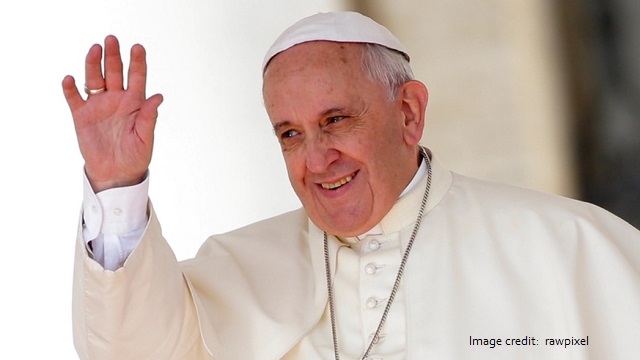
Earlier this week the Vatican published a 16,000-word document reaffirming Catholic condemnations of a wide range of moral issues, from war to surrogacy and human trafficking. Dignitas Infinita, or “Infinite Dignity”, is both a philosophical and a theological essay, appealing to open-minded people of all faiths and none.

Seldom has there been so much media coverage about a Vatican document which contains so few surprises. It’s no secret that the Catholic Church opposes abortion and euthanasia. Perhaps both the fans and foes of Francis thought that he might open up a crack for sex changes or for surrogacy.

But almost nothing has changed. Under Francis the Church is as severe as ever on life issues. Over at the New York Times, columnist Ross Douthat opined that the Pope’s “style has been to consistently push at the boundaries of his office, testing how far a pope can go in altering Catholic teaching”. He sounded mortified to report that Dignitas Infinita was “a clearer-than-usual line against developments in progressive thought and culture”.

Controversial issues

Here are some notable highlights.

Dignitas Infinita condemns surrogacy, first as a violation of the child’s dignity and second as a violation of the surrogate mother’s. It says:

the legitimate desire to have a child cannot be transformed into a “right to a child” that fails to respect the dignity of that child as the recipient of the gift of life … in this practice, the woman is detached from the child growing in her and becomes a mere means subservient to the arbitrary gain or desire of others.

The document also rejects gender theory. In a few perceptive sentences, it criticises the transhumanist impulse to “self-determination”, describing it as “a concession to the age-old temptation to make oneself God”. Furthermore, it describes the difference between male and female as “foundational”.

In the male-female couple, this difference achieves the most marvellous of reciprocities. It thus becomes the source of that miracle that never ceases to surprise us: the arrival of new human beings in the world.

Sex-change interventions are also condemned. The document quotes the Pope: “creation is prior to us and must be received as a gift. At the same time, we are called to protect our humanity, and this means, in the first place, accepting it and respecting it as it was created.”

One possible innovation in Dignitas Infinita is its approach to war. While lamenting the cruelty and senselessness of wars, the Catholic Church has traditionally supported the possibility of a “just war”. However, with weapons of mass destruction, asymmetric warfare and terrorism, perhaps the nature of war has changed. The document quotes the Pope — “it is very difficult nowadays to invoke the rational criteria elaborated in earlier centuries to speak of the possibility of a ‘just war.’ Never again war!”

Does this mean that requirements for a just war will be updated? Possibly.

Explaining human dignity

Even though there appears to be little novelty in Dignitas Infinita, it was five years in the making. The Pope’s top theologian, fellow Argentinian Cardinal Victor Fernández, explains in an unusual preamble that the document went through several versions, because the Pope had ordered some significant changes. He wanted the list of violations of human dignity to include issues like poverty, the wretchedness of migrants, violence against women, human trafficking, and war.

This is consistent with Francis’s impatience with what he feels is some Catholics’ single-minded focus on abortion and other pro-life issues. Dignitas Infinita endorses the notion that Catholic moral teaching is a “seamless garment” and that abusing migrants and abortion are both horrendous violations of human dignity.

But what is human dignity? The first half of the document offers a very helpful and thoughtful exploration of the topic.

It begins with the Universal Declaration of Human Rights whose 75th anniversary occurred last year. After the barbarism of World War II, the UDHR was a high-minded commitment by its signatories to restore a respect for human dignity. Its opening sentence asserts “the inherent dignity and of the equal and inalienable rights of all members of the human family”. John Paul II described the UDHR as “one of the highest expressions of the human conscience”.

However, it’s obvious that the concept of human rights has become so muddled that it is almost meaningless. Accompanied by claims to be advancing human dignity, rights have multiplied and morphed. Nowadays internet accessair conditioning and same-sex marriage are claimed as human rights, along with a right to abortion.

Although this is a very complex question, one reason for this proliferation is that people base their approach to human dignity on different foundations.

The Church’s approach is ontological; human dignity flows from the very fact of being a human being created by God. This means that all humans have dignity, not just those who possess privileges like awareness or intelligence or autonomy. Notoriously, Peter Singer (and other philosophers) say that “the life of a newborn is of less value than the life of a pig, a dog, or a chimpanzee.”

In a brief, but very insightful observation, Dignitas Infinita analyses Singer’s notion of human dignity (without naming him):

Some people propose that it is better to use the expression “personal dignity” (and the rights “of the person”) instead of “human dignity” (and the rights “of man”) since they understand a “person” to be only “one who is capable of reasoning.” They then argue that dignity and rights are deduced from the individual’s capacity for knowledge and freedom, which not all humans possess. Thus, according to them, the unborn child would not have personal dignity, nor would the older person who is dependent upon others, nor would an individual with mental disabilities. On the contrary, the Church insists that the dignity of every human person, precisely because it is intrinsic, remains “in all circumstances.”

As well, the document deploys a very important concept: that we humans are relational beings. Fundamentally, none of us are individuals. We are all bound up in a web of relations with other humans, past, present and future: “Indeed, there is an ever-growing risk of reducing human dignity to the ability to determine one’s identity and future independently of others, without regard for one’s membership in the human community.”

The document condemns “a self-referential and individualistic freedom that claims to create its own values regardless of the objective norms of the good and of our relationship with other living beings” Unless one grasps this, it may be hard to appreciate why the Church rejects surrogacy, transgenderism, euthanasia and so on.

Dignitas Infinita may contain no surprises, but its clarity and consistency are admirable. It’s a good springboard for responding to today’s ethical challenges.


Does the Catholic Church have anything valuable to say about human rights? Leave a comment in the box below.


AUTHOR

Michael Cook is editor of Mercator.

RELATED ARTICLES:

Major UK report throws transgender medicine onto the rubbish heap

Celebrity queer philosopher Judith Butler fights to vindicate her life’s work

Enver Hoxha tried to make Albania the world’s only officially atheist state. He failed miserably

POST ON X:

EDITORS NOTE: This Mercator column is republished with permission. ©All rights reserved.
Why Is It So Difficult To Define Anti-Semitism?

Even among those who condemn it, there is little consensus about what constitutes antisemitism. Is it disdain for Jews as a faith community or as a people? Is it motivated by hatred of doctrine or ethnicity?


Antisemitism has been around since the dawn of Jewish history and yet the mainstream media only found it newsworthy after October 7th. Since then, it has become ubiquitous in universities and pro-Hamas demonstrations – where progressives celebrate terrorism and demand the destruction of Israel and the Jews – and in a Democratic Party where progressive radicals demonize the Jewish State.

But even among those who condemn it, there is little consensus about what constitutes antisemitism. Is it disdain for Jews as a faith community or as a people? Is it motivated by hatred of doctrine or ethnicity?

Those who mistake it simply as prejudice against a faith do not understand the nature of Jewish identity, which is at once religious, ethnic, and national. The definition of hatred, it seems, is in the eye of the beholder.

Some antisemitism is religious to be sure, particularly among other Abrahamic faiths that must disparage Jews and Judaism to justify their pretensions to be the fulfillment of Jewish scripture and prophecy. Christians and Muslims both acknowledge the holiness of Tanakh and yet deviate significantly from it. To rationalize their divergence from Hebrew scripture, they must claim they supplanted Judaism or that the Jews corrupted their own scriptures.

Christianity

The Christian gospels, for example, are replete with anti-Jewish invective, associating Jews with darkness, evil, lies, deceit, and Satan (e.g., John 8:37-39; 44-47), blood libel and murder of the Prophets (e.g., Matthew 23:31-33; 1 Thessalonians 2), and hereditary blood guilt (Matthew 27:25). Assertions of insidious influence and control are central to the myth that the Jews compelled Pontious Pilate to kill Jesus at a time when Rome occupied Judea and the Sanhedrin had no leverage or authority to impose or even demand the death penalty. The passion narratives likewise contain demonic anti-Jewish caricatures that inspired persecution and massacres throughout Christian Europe.

Furthermore, the New Testament alters Tanakh (e.g., misstating the number of people who accompanied Yacov to Egypt and the burial place of the Patriarchs), misquotes the psalms and Prophets, and decontextualizes passages from Torah.

Islam

Despite the myth of Muslim tolerance, Islamic scripture is not much better. Indeed, the Quran is equally unflattering when it accuses the Jews of “unbelief” and murdering their Prophets (as does Christian scripture): “So, for their breaking the compact, and disbelieving in the signs of God, and slaying the Prophets without right, and for their saying, ‘Our hearts are uncircumcised’ – nay, but God sealed them for their unbelief, so they believe not, except a few…” (Sura 4:155).

It also accuses the Jews of corruption and deceit:

“And We decreed for the Children of Israel in the Book: ‘You shall do corruption in the earth twice…So, when the promise of the first of these came to pass, We sent against you servants of Ours, men of great might, and they went through the habitations, and it was a promise performed. Then We gave back to you the turn to prevail over them…Then, when the promise of the second came to pass, We sent against you Our servants to discountenance you, and to enter the Temple, as they entered it the first time.’” (17:4-7)

Moreover, Jews are frequently accused of scriptural corruption. “People of the Book, now there has come to you Our Messenger, making clear to you many things you have been concealing of the Book, and effacing many things…” (5:15); “God assail them! How they are perverted…They have taken their rabbis and their monks as Lords apart from God.” (9:31.) Claims of textual manipulation seem necessary for explaining away fundamental discrepancies with Tanakh, for example, that Yishmael, not Yitzchak, was bound by Avraham on Moriah.

Racial and ethnic components

Christians and Muslims often misstate Jewish text, doctrine, and history. But conceding deviations from the original Hebrew would undercut their doctrinal narratives. So, both their traditions must accuse the Jews of corruption and deceit, using themes and stereotypes that have fueled Jew-hatred throughout Christendom and the Islamic world for centuries.

Historically, the aim was not merely to disparage Jewish belief, but to devalue or subjugate the Jews as a people; and this is illustrated by the persistence of antisemitism against those who submitted to Christianity or Islam (usually on pain of death). The ethnic and racial components of antisemitism are evidenced by its continuation even after the outward elimination of doctrinal differences.

Catholic antisemitism always had a racial component. On the Iberian Peninsula, for example, people of Jewish heritage were often banned from professions and public office because of ancestry, not belief. Even before the Jews were exiled from Spain per the Edict of Expulsion in 1492 (and later from Portugal), those who were forcibly baptized and designated “New Christians” were identified by their tainted blood. This was first codified in 1449 by the “Statute of Blood Purity” in Toledo; and while some church leaders denounced such enactments, the Inquisition embraced them when it infiltrated Spain in 1478, and later Portugal, Peru, and Mexico in 1536, 1570, and 1571, respectively.

Clearly, racial antisemitism existed long before the Nazis; and it also infected Protestantism.

In targeting Jews through “friendship evangelism,” missionaries strenuously deny Protestant complicity in antisemitism by blaming Catholicism for the most pernicious forms of Jew-hatred. However, Martin Luther embraced the Church’s racial antisemitism and incorporated it in his vile screed, “On the Jews and their Lies,” which advocated expulsion, enslavement, and extermination. These tropes were later adopted by other non-Catholics, many of whom were complicit or complacent during the Holocaust.

Then there are doctrines like replacement theology and evangelical fronts like the Lausanne Movement. Whereas replacement doctrine seeks to displace actual Jews (defined by ancestry and their relationship with G-d) with a faith community of self-defined “spiritual Jews” who falsely claim covenantal status, Lausanne and similar movements actively engage in Jewish evangelism while claiming to love Israel and the Jews. Though antithetical to Torah, both recognize the Jews as a people, not merely a faith community.

And this recognition had parallels in the Islamic world, where forcibly converted Jews often stayed connected to their heritage, married among their own, continued observing Jewish rites and customs in secret – and remained under lingering suspicion. Like the Anusim (Conversos) of Christian Europe, many of these forced converts forgot their heritage while paradoxically maintaining it through rituals and marriage restrictions they continued to observe but no longer understood.

Xenophobia

When the fathers of European Enlightenment rejected the primacy of faith and national allegiances, they were offended by the Jews’ continuing embrace of their religious, ethnic, and national identity. The refusal to assimilate rendered them strangers wherever their migrations took them, arousing xenophobia with religious and racial overtones. And their image as quintessential outsiders was reinforced by their faithfulness to Torah, Jewish language, and ancient blood ties – all of which distinguished them from their host societies and reinforced stereotypes that continued to fester and mutate.

Denial of connection to Israel

A unique form of antisemitism today is the denial of the Jews’ history and connection to Israel. Progressives often maintain that Jewish identity is “only religious” to delegitimize it compared to Palestinian national identity. This theme is echoed in the PA Charter, which denies the Jews’ national history and deems them colonial occupiers.

The claim that Jewishness is “just a religion,” however, is contradicted by the scriptural, historical, and archeological records, which confirm Jewish ethnicity, national heritage, and origins in Israel. The record does not similarly validate Palestinian Arab identity, which is a modern political construct.

Jewish children

Whereas the roots of antisemitism are disparate, they are not mutually exclusive, whether based on religion, ethnicity, racial theory, or xenophobia; and regardless of ideology, it is exacerbated by the Jewish refusal to assimilate. Unfortunately, many opponents of antisemitism unwittingly help perpetuate it through ignorance of its historical and theological foundations.

Even Jewish children understand this.

My generation was born less than twenty years after the Holocaust. Though my family lost collateral relatives to the Nazis and their Ukrainian accomplices, many of my friends’ parents were Holocaust survivors who constituted a significant portion of our community. And they informed our understanding of antisemitism as simultaneously religious, ethnic, national, and racial – which colored our self-perceptions and even our sense of play.

I grew up in a neighborhood where the streets had storm-sewers with removeable grates that we could crawl through. While other kids played “cops and robbers,” we often navigated our way underground playing “escape from the ghetto.” And the brutal kidnapping of the Bibas family brings that “game” to life.

Clearly, even children experience existential angst, and ours was shaped by an awareness of antisemitism in all its manifestations – something adult academics, politicians, and media personalities never seem to grasp.

But then again, perhaps it takes the untainted sensibilities of a child to recognize the nuanced complexities of Jew-hatred and understand its scope.

Copyright 2024. Matthew Hausman, J.D. All rights reserved.

VIDEO: ‘It is absurd to remove crucifixes from our classrooms, while entire neighborhoods have been taken over by sharia’

Italian politician Giorgia Meloni: “I don’t believe we ought to hide our identity, in order to respect others. Which is what leftists believe. It is paradoxical to remove crucifixes from our classrooms, while accepting that entire European neighborhoods have been taken over by Islamic sharia. I don’t get it, honestly.”

Thanks to RAIR.

AUTHOR

RELATED ARTICLES:

Azerbaijani soldiers stab, rape, and dismember female Armenian soldier, video their crimes

Iranian dissidents and former hostages sue Raisi for torture as Biden’s handlers give him visa

UK: Muslim screaming ‘Allahu akbar’ stabs two police officers, one of them three times in the neck

UK: Muslims attack Hindu temple in Leicester

Pakistan: Muslim shaves his wife’s head over suspected affair

Afghanistan: Taliban lure woman from home under guise of distributing aid, shoot her dead

Hamas-Linked CAIR Tries Michigan Mosque Controversy Before the TV Cameras

EDITORS NOTE: This Jihad Watch column is republished with permission. ©All rights reserved.
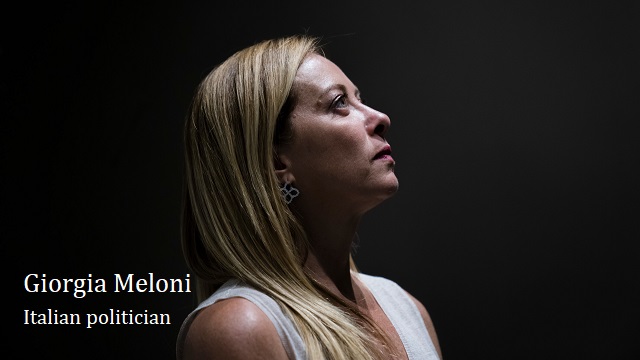
Hochul’s New Religion: God Gave Us the Vaccines, and He Wants Us to Be Vaccinated

My latest in PJ Media:

New York Governor Kathy Hochul (D-Planned Parenthood) is ostensibly a Catholic. When she was sworn in as governor in August, the Leftist Catholic America Magazine noted that she thanked her “big Irish Catholic” family, but her real religion was suggested in the next sentence of the America Mag report: “Her immediate family sat in the front row, wearing masks and spaced slightly apart.” Of course they did. For the secular, pro-abortion Left, the political agenda of the day is much more than just an array of policy imperatives and goals: it’s a holy faith, to be believed fervently and spread among the unenlightened masses. Hochul provided the latest example of this Sunday in a speech at the Christian Cultural Center in Brooklyn, where she preached her new gospel of faith and redemption coming at the point of a needle: the unvaccinated, she said, “aren’t listening to God and what God wants.”

Hochul spoke to the congregation as if she were a true believer, but given the likelihood that Hochul doesn’t actually share the faith of those who attend the Christian Cultural Center, her speech is less of an evangelical display than it is a nauseatingly condescending masterpiece of pandering. “God,” Hochul proclaimed, “let you survive this pandemic because he wants you to do great things someday. He let you live through this when so many other people did not and that is also your responsibility. But how do we keep more people alive?”

How indeed? Every religion is in one way or another a story of loss and gain, of sin and redemption, and the prophet Hochul’s new religion is no exception: she offered the Christian Cultural Center a parody of Christianity in which the coronavirus is the original sin, the vaccine is the means of redemption, and the vaccinated are the grateful saved community. “I prayed a lot to God during this time,” she claimed, “and you know what – God did answer our prayers. He made the smartest men and women, the scientists, the doctors, the researchers – he made them come up with a vaccine. That is from God to us and we must say, thank you, God. Thank you. And I wear my ‘vaccinated’ necklace all the time to say I’m vaccinated. All of you, yes, I know you’re vaccinated, you’re the smart ones, but you know there’s people out there who aren’t listening to God and what God wants. You know who they are.”

Hochul’s story is resonant of conversion stories down through the ages: I once was lost but now I’m found, I was wandering in sin and desolation but now – hallelujah! – I have seen the light and gotten the vaccine! Hochul continued her Christian parody by making her claim to be none other than the Lord himself, sending out His followers with the good news of salvation: “I need you to be my apostles. I need you to go out and talk about it and say, we owe this to each other. We love each other.”

There is more. Read the rest here.

RELATED ARTICLES:

95% Vaccinated Harvard Business School Suspends In-Person Classes After Covid Outbreak

Washington state: High school claims being white male Christian heterosexual brings one extra ‘privilege’

EDITORS NOTE: This Jihad Watch column is republished with permission. ©All rights reserved.