“Mom’s dead. Dad’s dead. I was shot. Because of a football game on TV.”
If this were a television script, most viewers would turn it off.
Not because it was boring. But because it would feel so absurd, so disconnected from how human beings are supposed to behave, that it would strain credibility. People would assume the writers had lost touch with reality.
Yet this week, it was not fiction.
A man argued with his wife because she asked him to stop watching a football game. He killed her. He shot a child. Then he killed himself.
That sequence of events should not be possible in a functioning society. And yet it happened.
Now imagine the child who survived.
Imagine growing up and having to explain, at some point in life, why you are orphaned.
“One night, my mom told my dad to stop watching a football game. He killed her, shot me, and then killed himself.”
Read that sentence again.
Not because it is shocking, but because of how disproportionate it is. A trivial moment. A routine domestic annoyance. Followed by irreversible destruction.
And this is not an isolated story.
In Atlanta, an employee at a Subway restaurant was shot and killed after a customer became upset about a condiment on his sandwich. According to police, the dispute was over too much mayonnaise.
Too much mayonnaise.
In Daytona Beach, Florida, a man shot and killed his wife in front of her parents after an argument that began because he had hidden her motorcycle and refused to tell her where it was. When her parents arrived to help, he retrieved a rifle and opened fire as they tried to leave.
These are not crimes of desperation. They are not acts driven by survival or self-defense. They are explosions triggered by inconvenience, frustration, and wounded ego.
This is not about football. It is not about mayonnaise. It is not about a motorcycle.
It is about the collapse of internal limits.
For most of human history, people understood that emotions had ceilings. Anger flared, but it stopped. Conflict erupted, but it resolved. Even violence, when it existed, followed some distorted sense of proportion.
Today, something has changed.
Minor friction increasingly produces catastrophic outcomes. There is no pause. No brake. No internal voice saying, this ends here. Not even against family members.
Everything escalates. Everything becomes final.
We live in a culture that trains people to indulge impulse, validate rage, and treat emotional discomfort as an injustice. Self-control is mocked. Restraint is framed as repression. Consequences are always someone else’s fault.
And the innocent pay the price.
Not in abstract statistics. In real lives. In hospital beds. In children who will carry stories that make no sense because the culture that produced them no longer makes sense.
This is not a call for hysteria. It is a call for honesty.
Something is deeply wrong when trivial moments can detonate into annihilation. When anger has no governor. When people cannot tolerate frustration without resorting to destruction.
What’s disturbing is that we now live in a culture where a sentence like that can even exist.
There is a reason Scripture treats anger as dangerous, not merely unpleasant.
There is a verse I am constantly reminding myself of whenever anger rises: “Do not let the sun go down on your anger.” Ephesians 4:26.
God does not give that warning casually. It is an acknowledgment of how destructive unresolved anger can become if it is allowed to fester, harden, and grow overnight.
God knows the danger. He warned us of the danger. But for the casual Christian, and certainly for the unbeliever, that warning is often never learned, or never taken seriously.
Please visit the Patriot Majority Report substack.
https://drrichswier.com/wp-content/uploads/A-Sentence-No-Child.jpg358640Majority Reporthttp://drrich.wpengine.com/wp-content/uploads/logo_264x69.pngMajority Report2025-12-27 15:36:142025-12-27 15:40:12A Sentence No Child Should Ever Have to Say
A Call to New Resolve in Battle against the Iranian Mullahs
The recent ceasefire in the conflict between Iran and Israel has not brought peace to the Iranian people. Instead, it has unleashed a brutal campaign by the Islamic Republic’s theocratic regime to tighten its grip on power. The mullahs, sensing their vulnerability after widespread unrest and dissent, have launched a vicious crackdown, targeting ordinary citizens, activists, and minority groups with arrests, executions, and intimidation. Over 700 individuals have been detained across Iran in just 12 days, with hundreds more in Tehran alone, according to Iran’s Fars News Agency. Six executions on espionage charges have already occurred, and more are expected. The regime’s message is clear: dissent will be crushed at all costs. The Iranian people, yearning for freedom, cannot achieve it while being hunted and killed. The international community, particularly the United States, must act decisively to support Iranians in their struggle to dislodge the mullahs and secure a referendum for a free Iran where they can determine their government and destiny.
The Islamic Republic’s tactics are ruthless and systematic. Checkpoints have sprung up across cities like Kermanshah, Isfahan, and Khuzestan, enabling mass arrests of anyone suspected of dissent or even curiosity. A Tehran-based human rights lawyer told the Center for Human Rights in Iran (CHRI) on June 25, 2025, that many detainees at these checkpoints were simply filming out of curiosity, yet they now face fast-tracked trials in kangaroo courts without legal representation. The destruction of Evin Prison’s administrative buildings in an Israeli strike has further eroded any semblance of due process, leaving families and lawyers unable to advocate for detainees. Meanwhile, the regime’s parliament is pushing a draconian new espionage law that could impose the death penalty for acts as simple as sharing content on social media, labeling them as “spreading corruption on Earth.” This legal framework, combined with the regime’s unchecked power, is designed to terrorize the population into submission.
The targeting of specific groups reveals the regime’s desperation to eliminate all opposition. Activists, including sociologists, rappers, and professors, have been arrested without warrants, often violently. Minority communities, particularly Kurds and Baha’is, face disproportionate persecution. In Kurdish cities, the Islamic Revolutionary Guard Corps (IRGC) has set up checkpoints to detain individuals arbitrarily, with some families unaware of their loved ones’ fates. A Kurdish activist reported to CHRI that many are now in hiding, fearing retribution for past political or civic engagement. Baha’i citizens, long persecuted by the regime, have seen at least 20 arrests or home searches since the conflict began. Even families seeking justice for loved ones killed in prior protests are being silenced through arrests. This purge is not just a response to war – it’s a calculated effort to eradicate the seeds of rebellion that have grown since the Women, Life, Freedom protests.
The Iranian people need more than mere condemnation – they require concrete support to overthrow the mullahs and establish a government of their choice. History provides a clear lesson: without outside intervention, oppressive regimes can solidify their rule for generations. Had the United States not joined the Allies to free France in World War II, the French might still be living under Nazi control, speaking German in a world dominated by tyranny. Similarly, the Iranian people cannot remove the mullahs alone while facing state violence and repression. The global community, led by the U.S., must step up to empower them. If arming Iranian resistance groups to defend themselves against the IRGC and Basij forces is necessary, so be it. A free Iran, where citizens can vote in a referendum to determine their government, is worth the effort.
The upcoming U.S.-Iran talks offer a crucial chance to directly address the regime’s human rights abuses. The Trump administration must clearly state that the international community will not accept Tehran’s violent suppression. Hadi Ghaemi, CHRI’s executive director, warned that ignoring these abuses risks legitimizing the regime’s brutality. The U.S. should demand an immediate halt to arbitrary arrests, executions, and restrictions on internet access, which the regime uses to isolate and control its citizens. Beyond diplomacy, the U.S. and allies should consider providing resources to Iranian resistance movements, whether through funding, intelligence, or, if needed, weapons. The mullahs have demonstrated they will kill one by one to stay in power; the Iranian people need the means to fight back.
Skeptics may argue that arming Iranians risks escalating regional tensions or creating instability. But the alternative – inaction – guarantees the perpetuation of a regime that not only oppresses its people but also threatens global security through its support for terrorism and nuclear ambitions. The Iranian people have already shown their courage through protests and acts of defiance. They are not asking for charity; they are asking for the tools to secure their freedom. A referendum in a free Iran, where citizens can vote without fear of execution or imprisonment, is the only path to lasting change. The mullahs’ grip on power is weakening, but they will not fall without a fight. The U.S. and its allies must stand with the Iranian people, just as they stood with the French in their darkest hour, to ensure that freedom prevails.
The era of half-measures has ended. The Iranian regime’s crackdown is a desperate attempt to cling to power, but it also reveals its fragility. By supporting the Iranian people through diplomatic pressure, resources, or direct aid, the international community can help them seize this moment to remove the mullahs. A free Iran, led by the will of its people, isn’t just a dream; it’s a necessity for regional stability and global justice. The world cannot stand by while the mullahs kill their way to control. The Iranian people deserve the chance to shape their future, and they need our help to make it happen.
Surprisingly, I have noticed some similarity between Prince Reza Pahlavi and President Donald Trump. A successful billionaire who was content with his empire and didn’t want the hassle of becoming the President of the United States. However, it was his passion, purpose, and destiny to Make America Great Again.
Prince Pahlavi also led a comfortable life and did not need this kind of distress. But, something big, something more powerful was calling to him that he must fulfill his destiny. Although he pledged his oath to become the next in line as the Shah of Iran, he has stated that he is not seeking the crown unless and until the Iranian people decide in his favor to do so. For now, his focus is not the revival of the Pahlavi dynasty, and on numerous occasions has stated it is up to the people of Iran to decide their future form of government.
Iranian people inside and abroad have given Prince Reza Pahlavi symbolic power of attorney to lead the current revolution. “Pahlavi, you are our representative,” and “Pahlavi is our choice, the leader of our revolution,” people in every corner of Iran shouted upon his return. But there is a huge obstacle in the Western world’s derangement syndrome against Prince Pahlavi, and the West has been hobnobbing with the People’s Mujahideen of Iran, commonly known as the Mujahideen-e-Khalq or MEK, a notorious Iranian resistance Islamist Marxist group; it was once listed as a Foreign Terrorist Organization (FTO) by the United States for its alleged killing of U.S. personnel in Iran during the 1970s, and for its ties to former Iraqi leader Saddam Hussein.
Pahlavi’s mission is a transition from the present failed Islamic regime to a secular democracy as the central objective in pursuance of a Constitutional Assembly, elected by the entirety of eligible Iranian voters under the supervision of international monitors. It could be the means to usher in a new system of governance. President Trump should invite Prince Pahlavi into the while house and discuss the regime and the desire of the Iranian people for freedom and democracy.
Great opportunities don’t come every day — recognize and seize them whenever you can. If we fail to act on this golden chance now, future historians will ask: how could the entire group have seen it coming and done nothing about it? What kind of drugs were these people on?
Exclusive permission was given to use this graphic by Dr. Iman Foroutan, chairman of the Board and Executive Director, The New Iran iman.foroutan@thenewiran.com
http://drrich.wpengine.com/wp-content/uploads/logo_264x69.png00Amil Imanihttp://drrich.wpengine.com/wp-content/uploads/logo_264x69.pngAmil Imani2025-06-29 08:31:112025-06-29 08:47:34A Call For International Action
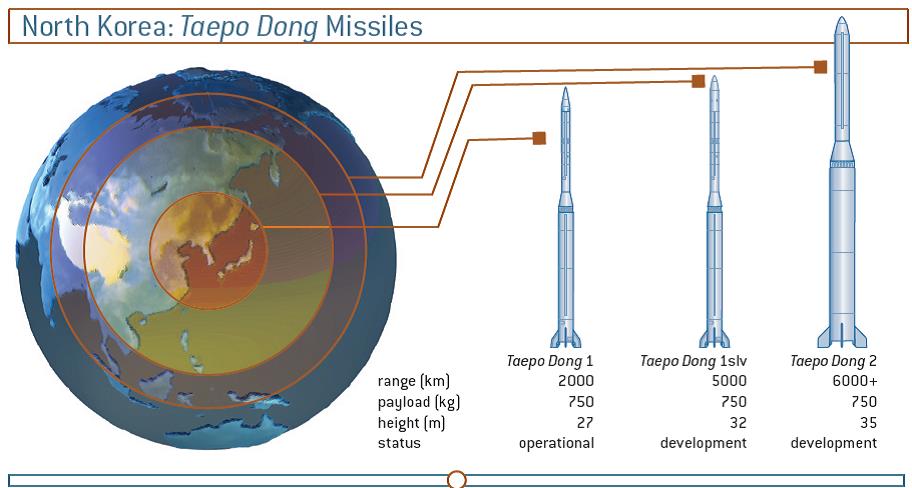
What a week it has been. No, we are not talking about the New Hampshire primary results or Saturday’s South Carolina debate, but rogue North Korea stealing the oxygen out of the international media’s lungs. It started with the second successful satellite launch since 2012 on Sunday, February 7, 2016 nearly over shadowing the Broncos victory in the 50th Super Bowl. As we wrote in an NER Iconoclastpost on February 8, 2016, this game changer demonstrating the rogue regime’s ICBM technology and America’s inadequate ballistic missile defense, especially on our vulnerable heartland coast on the Gulf of Mexico:
Launched in a southerly direction, the 200 kg observational satellite is in polar orbit. That means it passes over the US every 95 minutes, perhaps providing imagery and GPS coordinates for possible later use. Yesterday, it missed the window of opportunity, by an hour, to pass over the stadium for 50th Super Bowl Championship game with tens of thousands of fans intent on watching the Denver Broncos beat the North Carolina Panthers for the title
“it’s great that the US has THAAD and ship borne X band radar floating in the Pacific and both ship and shore based Aegis installations in Eastern Europe (Romania) protecting us from missiles fired towards the East Coast. However, we have nothing in place to provide missile defense our vulnerable Gulf of Mexico coast.” Ambassador Hank Cooper, the Reagan era SDI chief, warned about the absence of Aegis missile defense installations on our Gulf coast in November 2015 and most recently in a Feb.2, 2016 High Frontieralert.
He argues that that our ballistic missile defense shield on the Gulf coast lacks the means to combat the threat of a possible North Korean bomb in a satellite (Fractal Orbital Bomb) or missiles launched from either ships in the Gulf or those silos that allegedly Iran has been building in the Paraguana Peninsula in Venezuela. Ex-CIA director R. James Woolsey and Dr. Peter Pry discussed in a July 2015 article the threat from FOBS that could trigger an Electronic Magnetic Pulse (EMP) effect over the US sending us back to the dark ages of the 19th Century before the advent of electricity.
On Friday, February 12, 2015 CNNreported the rotund Kim Jong Un played another round of the Pyongyang version of the Games of Thrones with the dramatic execution of another high military officer, General Ri Yong-gil for, “factionalism, misuse of authority and corruption.” The young Kim family successor may yet set the record for summary execution of North Korean military officials surpassing that of his father and grandfather. The same day in Washington, the US Senate and House overwhelmingly passed a new round of North Korean sanctions. Reuters reported:
Lawmakers said they wanted to make Washington’s resolve clear to Pyongyang, but also to the United Nations and other governments, especially China, North Korea’s lone major ally and main business partner.
The package includes sanctions targeting North Korea and “secondary sanctions” against those who do business with it.
The vote was 408-2 in the House, following a 96-0 vote in the Senate on Wednesday.
Impatient with what they see as Obama’s failure to respond to North Korean provocations, many of his fellow Democrats as well as the Republicans who control Congress have been clamoring for a clampdown since Pyongyang tested a nuclear device in January.
Pressure for congressional action further intensified after last weekend’s satellite launch by North Korea.
Obama is not expected to veto the bill, given its huge support in Congress.
Earlier Fox Newsreported Gordon Chang expressing skepticism that more sanctions would not achieve the end of punishing North Korea for violating UN and US sanctions against missile development. We wrote:
Chang holds that sanctions don’t work with North Korea. Instead He suggested that we might control the aid to North Korea endeavoring to separate the people from the autocratic ruling Kim family. He also suggested that South Korea move 143 companies out of the Kaesong industrial shared with North Korea. He noted that after the January 6, 2016 nuclear test, no further sanctions were proposed at the UN because China would effectively block them. China he pointed out does a fair amount of banking with North Korea.
North Korea must have paid attention to Chang’s comments, as they seized jointly owned companies in the Kaesong industrial park. Deutsche Wellereported South Korea cutting off the power to the Kaesong complex on Friday, February 12, 2015. Effectively it was shutting the cross border industrial park down in retaliation for the North’s nuclear and missile tests in January and February 2016. South Korean News agency, Yonhap, reported on Sunday, February 14, 2014 the South Korean Unification Minister accusing the Hermit State of using funds to develop weapons systems:
In a television appearance, Unification Minister Hong Yong-pyo said “70 percent” of the money that flowed into the Kaesong Industrial Complex has been used by the ruling Workers’ Party to bankroll weapons development.
“Workers at Kaesong are paid in cash (U.S. dollars), but the money doesn’t go directly to these workers. It goes to the North Korean government instead,” Hong said.
“Any foreign currency earned in North Korea is transferred to the Workers’ Party, where the money is used to develop nuclear weapons or missiles, or to purchase luxury goods.”
Last week, South Korea shut down the industrial park in response to the North’s recent nuclear test and long-range rocket launch. Opened in 2004, the complex had long been a big cash cow for North Korea.
North Korea, in turn, expelled all South Korean nationals on Thursday from the complex and froze factory assets by South Korean firms, further driving the last remaining symbol of inter-Korean reconciliation to the brink.
For the last two weeks, the National Security Task Force of America (NSTFA) of the Lisa Benson Show has been running twitter rallies directed at the media and Republican Presidential hopefuls on one issue: our vulnerable Ballistic Missile Defense. The NSTFA sent out tweets and retweets at the rate of 400 to 600 an hour. The first NSTFA twitter rally, occurred before the New Hampshire primary debates, caught the attention of a South Carolina supporter of Texas Senator Ted Cruz who relayed the information to his campaign staff. Those NSTFA tweets focused on the most vulnerable area of the US exposed to a possible North Korean ICBM launch, the lack of any missile defense on our Gulf of Mexico. The result was that Cruz raised the issue during the debates. The second NSTFA twitter rally occurred Thursday, February 11th producing more than 6,000 twitter impressions. One of those Republican hopefuls targeted by the NSTFA twitter rally was Florida Republican Senator Rubio. Rubio’s platform statement on rebuilding and modernizing our military noted his missile defense proposals:
Expand missile defense by speeding up deployment of interceptors in Europe, deploying a third site in the United States, and ensuring that advanced programs are adequately funded.
Work interoperably with allies on missile defense – we should encourage the spread of missile defense technology as a solution to the spread of ballistic and cruise missiles.
Increase the Missile Defense Agency’s Research & Development budget and create a rapid-fielding office to focus on fielding directed energy weapons, railguns, UAV-enabled defenses, and other means to defeat a threat missile across its entire flight trajectory.
The Wall Street Journal (WSJ) lead editorial in the Presidents Weekend edition on February 13-14, 2016, “The Rogue-State Nuclear Missile Threat,“ resonated some of the Rubio and others concerns about the US vulnerability to North Korean and possible Iranian missile strikes. The WSJ editorial noted, “North Korea can now threatens most of the continental US:”
Americans have been focused on New Hampshire, Iowa [and South Carolina}, but spare a thought for Los Angeles, Denver and Chicago. Those are among the cities within range of the intercontinental ballistic missile tested Sunday by North Korea. Toledo and Pittsburgh are still slightly out of range, but at least 120 million Americans with the wrong zip codes could soon be targets of Kim Jong Un.
The WSJ editorial went on to contrast the Bush versus the Obama Administration actions on missile defense:
You can thank the George W. Bush Administration for the defenses that exist, including long-range missile interceptors in Alaska and California, Aegis systems aboard U.S. Navy warships and a diverse network of radar and satellite sensors. The U.S. was due to place interceptors in Poland and X-Band radar in the Czech Republic, but in 2009 President Obama and Hillary Clinton scrapped those plans as a “reset” gift to Vladimir Putin.
Team Obama also cut 14 of the 44 interceptors planned for Alaska and Hawaii, ceased development of the Multiple Kill Vehicle (an interceptor with multiple warheads) and defunded the two systems focused on destroying missiles in their early “boost” phase, when they are slowest and easier to hit. By 2013 even Mr. Obama partially realized his error, so the Administration expanded radar and short-range interceptors in Asia and recommitted to the 14 interceptors for the U.S. West Coast. It now appears poised to install sophisticated THAAD antimissile batteries in South Korea.
Yet the Administration has failed to support a third East Coast site (to protect against Iranian and Russian threats) and provide adequate funding. Budgets are down about 25% from the Bush Administration’s roughly $10 billion a year. Mr. Obama’s final budget proposal released Tuesday would cut another $800 million from the Missile Defense Agency, nearly 10% from last year’s total.
The WSJ editorial concluded:
The overarching lesson of North Korea is the folly of arms control, starting with the 1994 Agreed Framework that first tried to buy off Pyongyang with energy and food aid. The U.S. would be safer today if it had moved to topple the Kim regime before it got the bomb. But having failed to act when the costs were lower, it is now necessary to buttress defenses in East Asia and the U.S. in what is fast becoming a new age of nuclear and missile proliferation.
From last Sunday’s Super Bowl game in Denver to Valentine’s Day, the evidence is piling up that Chang presciently opined; unanimous sanctions passed by Congress this past week will not deter North Korea from building nuclear ICBMs. Rather, it is the ironical proposal for a preemptive strike against North Korean missile launches by present Obama Pentagon chief Ashton Carter and former Clinton Era Secretary of Defense William Perry in a 2006 Time Magazinearticle.
The conclusion in our February 8, 2016 NER/Iconoclast post appears equally prescient:
The North Korean satellite launch coupled with the January 6, 2016 nuclear test exposes the vulnerability of the US to possible missile attack by rogue regimes like North Korea and ally Iran. The lack of a Ballistic Missile Defense demonstrated by this latest successful North Korean satellite launch now vaults the issue to the top of national security issues along with Islamic terrorism for serious discussion in the 2016 Presidential campaign.
EDITORS NOTE: This column originally appeared in the New English Review.
https://drrichswier.com/wp-content/uploads/north-korean-nuclear-icbm-e1455540717127.jpg441640Jerry Gordonhttp://drrich.wpengine.com/wp-content/uploads/logo_264x69.pngJerry Gordon2016-02-15 07:52:162016-02-17 06:24:05U.S. Congress Unanimously passing Sanctions won’t stop North Korea from building Nuclear ICBMs