Tag Archive for: federal funding

Study: Over 6 Million Obamacare Recipients Fraudulently Enrolled

A stunning new study has revealed that over six million individuals who are currently enrolled in the government’s Affordable Care Act health care insurance subsidy program (known as Obamacare) were signed up fraudulently, amounting to over a quarter of all Obamacare enrollees.

According to the new report conducted by the Paragon Health Institute, 6.2 million people are illegitimately enrolled in Obamacare, which means that taxpayer dollars will likely fund up to $25 billion in improper payments in 2026. The fraudulent enrollments are largely due to individuals or insurance agents falsifying income to qualify for larger subsidies.

As noted by The Wall Street Journal Editorial Board, enrollment in Obamacare plans has doubled in recent years due to COVID pandemic subsidies. After the subsidies expired, “The consensus in the healthcare establishment was that people would drop coverage.” But instead, 23.1 million people signed up for ACA coverage this year, just 1.2 million fewer than last year. “One reason is that subsidies for most enrollees remain very generous,” the board observed. “The government this year will pay 94% of the premium for the median enrollee — about $699 of a $741 monthly premium. … Nearly 30% of enrollees won’t have to pay premiums thanks to subsidies.”

In addition, Paragon found that “[m]any improper enrollees are likely phantom enrollees — people who are unaware of their enrollment, covered elsewhere, or entirely fictional. In 2024, 35 percent of exchange enrollees and 40 percent of fully-subsidized low-income enrollees generated no medical claims — double the percentage expected in a normal health insurance market.” The report further noted that “The Centers for Medicare & Medicaid Services (CMS) found that an average of 1.6 million people per month were simultaneously enrolled in Medicaid and subsidized exchange coverage.”

The Trump administration has taken a series of steps to address the fraud crisis. The Paragon report pointed out that almost two million improper enrollees have been removed “through actions targeting duplicate Medicaid-exchange enrollment and individuals who failed to comply with tax-filing requirements.” In addition, additional eligibility verification rules enacted by last year’s One Big Beautiful Bill and by the administration are set to take effect over the next two years.

During a White House press briefing on Tuesday, CMS Administrator Dr. Mehmet Oz detailed what occurred during the Biden administration that enabled widespread Obamacare fraud and what the Trump administration is doing to address it.

“[In] 2020, there were nine million people on Obamacare. … Today it’s more than 20 million,” he explained. “What happened? What happened was we completely took the guardrails off. And I know this because I’m working in the agency that actually was told to take the guardrails off, and because there wasn’t an earnest desire to keep track of whether you were appropriately on it or not. … We believe that 35%, roughly, of the people [who] are using the Affordable Care Act … exchanges [have] never used the program once. They’ve never filed a claim, may not be legit. And that actual number may translate to five [to] six million people we could be paying premiums for because they don’t have to contribute anything. … These are people who have Medicaid and someone, often a broker, dishonestly enrolling them in [the ACA], or they’re … getting full insurance paid for by us in multiple states at once. So we have evaluated these numbers. They are extremely concerning.”

After highlighting that a new process for rooting out Obamacare fraud was started by the administration two weeks ago after their initial rule was enjoined by a federal court, Oz went on to illustrate what will occur when fraud is rooted out and eligibility rules are enforced.

“[I]f you care about the ACA, then you’ll want us to take the fraud out,” he underscored. “And let me just take a step back. If we want you to go back to work on Medicaid, what’s going to happen? You’re going to start making money. As you make money … you get above the poverty level. You’re going to want to buy an Affordable Care Act product or a private industry [plan]. Commercial insurers are going to start using it. That’s a good thing. We’re getting America back up. They’re getting [Medicaid recipients] into work, getting them into the stratosphere, building prosperity. So we want these programs to work together. But if you’ve got millions of people literally who are getting insurance that they don’t want, they don’t even know they have it, and we’re all paying for it, that’s tens of billions of dollars we’re throwing away. That increases premiums for everybody. It drives affordability down.”

“We’re not going to tolerate [it] anymore,” Oz added.

AUTHOR

Dan Hart

Dan Hart is senior editor at The Washington Stand.

EDITORS NOTE: This Washington Stand column is republished with permission. All rights reserved. ©2026 Family Research Council.


The Washington Stand is Family Research Council’s outlet for news and commentary from a biblical worldview. The Washington Stand is based in Washington, D.C. and is published by FRC, whose mission is to advance faith, family, and freedom in public policy and the culture from a biblical worldview. We invite you to stand with us by partnering with FRC.

Johnson, Thune Hatch Plan to End DHS Shutdown and Launch Second Reconciliation Push

As the almost 50-day partial shutdown drags on, travelers have definitely found some creative coping mechanisms for their long waits at U.S. airports. In Houston, one man went viral for walking up and down the security line with a vodka bottle, pouring shots for annoyed adults. Atlanta’s Hartsfield-Jackson brought in live entertainment, a violinist who was supposed to ease some of the tension. “[A] violin playing like on the deck of the Titanic. Is it that bad?” one passenger joked. And in Baltimore, volunteers passed out “pick-me-up snacks.” Now that TSA workers are finally getting paid, Americans’ aggravation is starting to subside — just not where Congress is concerned.

What was a four-hour checkpoint in Houston had dwindled to just 10 minutes on Monday, PBS reported — a world of difference from the endless nightmare passengers were experiencing just 48 hours earlier. After weeks of maddening scenes across the country, there are signs that things may slowly be returning to normal. On Capitol Hill, though, there’s been no reprieve from the biggest standstill: Homeland Security funding. But that’s about to change.

While the president found a workaround for TSA agents, the two chambers have been logging long phone calls in search of a solution to turn the lights on across DHS. As Politico points out, “While about 50,000 airport security officers are now getting paid under Trump’s executive action, thousands more workers remain furloughed or working without pay. Those include more than 2,000 employees of the premier federal cybersecurity agency, more than 4,000 FEMA workers as well as more than 1,000 Coast Guard civilians.”

On Wednesday afternoon, the situation took a dramatic turn when the two GOP leaders — who were at odds on strategy before the Easter recess — released a joint statement agreeing to compromise on their differences. In it, House Speaker Mike Johnson (R-La.) and Senate Majority Leader John Thune (R-S.D.) both agreed to swallow pieces of the other chamber’s proposal in an effort to get all of Homeland Security funded.

“In the coming days, Republicans in the Senate and House will be following through on the President’s directive by fully funding the entire Department of Homeland Security on two parallel tracks: through the appropriations process and through the reconciliation process,” they explained. “We appreciate,” they continued, “that Senator [Lindsey] Graham (R-S.C.) and the Senate Budget Committee have already initiated the process of developing a budget resolution that will ensure border security and immigration enforcement will be funded for the balance of the Trump Administration and insulated from future attempts by the Democrats to defund those agencies.”

Translation: House Republicans will be pressured to accept the Senate’s proposal to partially fund Homeland Security in exchange for Thune’s help in passing another reconciliation bill (which would presumably finance ICE and Customs and Border Patrol). Of course, the advantage of reconciliation, that tricky budgetary process the GOP used to move the One Big Beautiful Bill, is that it lets conservatives bypass the Senate’s 60-vote threshold and get legislation over the finish line with a simple majority — an absolute necessity in the era of absurd Democratic obstruction.

Last Friday, House Minority Leader Hakeem Jeffries (D-N.Y.) pushed hard to bring the Senate-passed proposal to the floor — to no avail. Wednesday afternoon, he reiterated that position, posting that it was “time to pay TSA agents, end the airport chaos and fully fund every part of the Department of Homeland Security that does not relate to Donald Trump’s violent mass deportation scheme.”

Assuming that position holds, the Democrats’ help will be crucial in getting the Senate bill over the hump in Johnson’s chamber, where some conservatives were already grumbling about the new, two-track plan. But even they must recognize the quandary leadership is in when Minority Leader Chuck Schumer’s (D-N.Y.) party is determined to put political messaging above American safety.

“We operated under a belief that while our country is in the midst of an international armed conflict, Democrats might finally come to their senses and understand that defunding our homeland security agencies is beyond reckless and very dangerous,” the two leaders pointed out. “[But] it is now abundantly clear that Democrats place allegiance to their radical left-wing base above all else — including their own power of the purse — which means open borders and protecting criminal illegal aliens. That is not acceptable to Republicans in Congress, nor is it to the American people. We cannot allow Democrats to any longer put the safety of the American public at risk through their open border policies, so we are taking that off the table.”

By early Thursday morning, the new plan was already moving. In its pro-forma session, the Senate sent its partial funding bill back to the House, where action will likely be taken early next week. Meanwhile, conservatives are bracing for the wild race toward reconciliation.

The challenge, most people agree, will be political discipline. There’s always a temptation for the party chasing reconciliation to throw every possible thing at the wall and see if it sticks. But this cannot be a catch-all, conservatives warn. “I would keep it as simple as possible so it could pass,” Johnson reiterated. While some Republicans will want to slip in Iran funding, pieces of the SAVE America Act, or other logjammed bills, an injection of too many priorities could “kill the whole thing,” one senator acknowledged anonymously.

“If you want to keep all of our members tight,” outgoing Senator Thom Tillis (R-N.C.) insisted, “… we need to agree to parameters and not allow scope creep.” The majority leader echoed the sentiment. “We’re just trying to make sure we keep our expectations realistic,” Thune said.

One advantage of the idea is that Republicans could fund all of DHS for multiple years — sparing them (and the country) this headache every time Homeland Security appropriations comes up. On that, both chambers agree. “We’re going to send [the House something] that actually funds DHS for the next three years. We’re not going through this again with the Dems, okay?” Senator John Hoeven (R-N.D.) emphasized.

Rep. Kevin Hern (R-Okla.) wonders if the House can find a sweet spot on reconciliation the second time around. “The reality is, we will be fine in the Senate,” he explained, recognizing that Thune can still lose three Republicans on reconciliation and still pass the bill. “The House is where we’re going to have the problem,” he cautioned on Tuesday’s “Washington Watch.” But we’re going to have people in swing districts [who] are going to have a real problem with it. The speaker knows that. We all know that, and we’re working hard to try to figure out a way forward.”

Singling out the perpetual thorn in Johnson’s side, Rep. Thomas Massie (R-Ky.), Hern acknowledged, “… There are a lot of reasons why we don’t have the full vote margins that we need. … And we know that we have one member [who’s] going to vote against everything that we do going forward. So we can’t lose any[one]. And that’s a very difficult situation when you’re trying to pass something as monumental as a second reconciliation bill.” Especially when the president throws down this timeline: “I am asking that the Bill be on my desk NO LATER than June 1st,” he posted Wednesday.

But the current situation isn’t just unsustainable, it’s historic. “Listen, not every single Democrat is against funding the security of our border and ICE,” Hern wanted people to know, “but the stranglehold by the Democrat[ic] leadership is making it such [that] if you vote to do the right thing for America, you’re a bad person. [And] I do think that it’s unprecedented.”

AUTHOR

Suzanne Bowdey

Suzanne Bowdey serves as editorial director and senior writer at The Washington Stand.

EDITORS NOTE: This Washington Stand column is republished with permission. All rights reserved. ©2026 Family Research Council.


The Washington Stand is Family Research Council’s outlet for news and commentary from a biblical worldview. The Washington Stand is based in Washington, D.C. and is published by FRC, whose mission is to advance faith, family, and freedom in public policy and the culture from a biblical worldview. We invite you to stand with us by partnering with FRC.

DHS Funding Drama Pits House against Senate

The Senate and the House of Representatives are still sparring over funding for a critical federal agency, even as air travel is crippled and the threat of terrorist acts looms large. In the earliest hours of Friday morning, while much of America still slept, Senate Republicans attempted to end the impasse they had reached against their Democratic counterparts and end the longest Department of Homeland Security (DHS) shutdown in U.S. history.

The deal was met with outrage by House Republicans, however, as the bill provided funding for the Transportation Security Administration (TSA), Federal Emergency Management Agency (FEMA), Coast Guard, and other DHS components, but deliberately excluding funding for Immigration and Customs Enforcement (ICE) and Customs and Border Protection (CBP), the two DHS agencies responsible for immigration enforcement and border security, labeled problematic by Democrats.

Senate Minority Leader Chuck Schumer (D-N.Y.) touted the bill’s passage as a win for Democrats, charging that Senate Republicans “caved to our demands to fund DHS without a blank check for ICE and CBP.” He added, “Democrats held firm in our opposition that [President] Donald Trump’s rogue and deadly militia should not get more funding without serious reforms, and we will continue to fight for those reforms.”

House Speaker Mike Johnson (R-La.) lambasted the funding bill as a late-night “gambit” and a “joke,” suggesting that Senate Majority Leader John Thune (R-S.D.) and other Senate Republicans likely hadn’t even read the text of the bill they approved. “I’m quite convinced that it can’t be that every Senate Republican read the language of this bill,” Johnson quipped. “It’s pretty alarming.” He cited a portion of the bill clarifying that there will be no funding provided to ICE and CBP, commenting, “We’re not doing that.”

Rep. Chip Roy (R-Texas) spoke forcefully against Senate Republicans for passing the bill and then immediately leaving Washington, D.C. for the Easter recess period. “It is absolutely offensive to the people that we represent that the Senate would send over a bill that doesn’t fund Border Patrol and the core components of ICE,” he told reporters Friday. “It’s absurd. And the fact that they would expect us to take that up and pass it today, as they leave town — I mean, could the Senate be any more lazy than to send to us a bill that doesn’t do the job and then leave town? We’re going to stand up and say no to that. We’re going to send back a bill that’s responsible to the American people.”

Accordingly, House Republicans passed their own funding bill to ensure that the entirety of DHS receives federal funding, faulting Democrats for allowing the agency to be shut down for nearly 50 days now, even as war with Iran heightens national security concerns. “Is our border secure? Are our airports safe? Will hardworking personnel receive their paychecks? Can Secret Service plan for the security of upcoming national events? Do Americans have confidence that their government is doing its job to protect the country? This bill answers those questions with certainty,” said House Appropriations Committee Chairman Tom Cole (R-Okla.) in a statement. “It ends the Democrat shutdown, restores full funding for the Department of Homeland Security, and ensures the men and women on the front lines of safeguarding our nation are paid, supported, and able to carry out their duties without continued disruption. It brings stability back to DHS now — and makes clear where the House stands: with our citizens.”

The House bill is a stopgap measure intended to fund DHS fully for a 60-day period while lawmakers continue battling over long-term funding. Congressional Democrats originally refused to fund DHS starting February 14, in an effort to halt ICE and CBP operations, maligning the immigration agencies as lawless and aggressive following controversial operations in Minnesota earlier. Since then, travelers have been waiting longer and longer periods of time in line at airports as unpaid TSA staff either quit or refuse to show up for work. Late Friday, 209 House Republicans were joined by three House Democrats and one Independent to pass the funding measure, while 203 Democrats voted against it. Eight Republicans and eight Democrats did not vote.

Schumer pledged that Senate Democrats would shut down the House bill, just as they have killed previous House efforts to fully fund DHS, describing the new bill as “dead on arrival.”

In a “Washington Watch” interview Friday night, Senator Ron Johnson (R-Wis.) suggested that the House bill will likely fail in the Senate, instead recommending that DHS be funded through the budget reconciliation process, a theory floated previously by Thune. “The good news is ICE and CBP were funded by the One, Big, Beautiful Bill for a period of time. So we have a way to cure this. What we need to do is get this behind us, get on the same page,” he said. Through the reconciliation process, Johnson suggested, Republicans can pass “a very focused and very rapidly-passed reconciliation bill. My suggestion is let’s pass all of DHS for the Trump term and beyond.” He continued, “Again, it’s going to be a big price tag, but it’s going to be in lieu of appropriations, so Democrats can never use DHS and the men and women of DHS as pawns in their political games.”

Johnson shared that he was “disappointed” that the House rejected the Senate funding package, noting that friendly mainstream media coverage largely protects congressional Democrats from being held accountable by voters. “We can’t force Democrats to do certain things when you have no accountability, no pressure by the mainstream media. So that’s the pickle we’re in as Republicans. It’s not a fair fight. It’s not a level playing field,” he said. “I mean, if we could have passed something we would have done that. We would have done that days ago, weeks ago. But it’s not going to pass. So it’ll be right back in this House’s lap.”

Also on “Washington Watch” Friday, Rep. Glenn Grothman (R-Wis.) addressed many of the points raised by Johnson. Grothman said that Republican senators who backed the funding bill isolating ICE and CBP “would tell you … we have enough money available right now that we can do a reconciliation package and get the money to fund these two vital organizations before they run out of money.” He continued, “The problem is we have a very slim majority in the House of Representatives, and there is no guarantee that we can put together any package that will only cause us to lose two votes and could easily be one vote.” The congressman added, “Therefore we feel it would be reckless not to pass a bill that is fully funding both ICE and Border Patrol right now.”

In response to the funding crisis, the president issued an executive order demanding that DHS use funding already available to it in order to pay TSA agents. “As the Democrat-caused shutdown of the Department of Homeland Security (DHS) continues well into its sixth week, America’s air travel system has reached its breaking point. This is an unprecedented emergency situation,” the president wrote. He added that the approximately 50,000 TSA agents who have gone unpaid for weeks have been denied funds by “Democrats’ reckless decision to prioritize criminal illegal aliens over American citizens and shut down DHS until their demand to prohibit enforcement of Federal immigration law is met.”

“If Democrats in the Congress will not act to honor the service of our TSA officers, who are now performing their critical public safety responsibilities without knowing whether they will be able to buy food for their families or pay their rent, then my Administration will take action,” the president announced. “As President of the United States, I have determined that these circumstances constitute an emergency situation compromising the Nation’s security.”

Grothman commented, “Donald Trump solved the biggest problem by … announc[ing] that he is going to fund the people at the airports. And I think that of all the things that Homeland Security does, that’s the one thing that has to get done and the people care about.” He suggested that without the public pressure resulting from the lapse in TSA funding, congressional Republicans may be more likely to fight Democrats to fund ICE and CBP. “So since he has just announced he is going to fund that, I think the other parts of the law, well, hopefully we’ll be able to come to a compromise on them.”

Some Senate Republicans have voiced that they would like to fight Democrats on the issue. Senator Mike Lee (R-Utah), for example, said in a Sunday night social media post, “Waiting for a deal to materialize with Chuck Schumer applies no pressure on Senate Democrats to fund DHS. Interrupting their recess and forcing them to debate DHS funding on the Senate floor *would* apply pressure. We can’t reward unprecedented obstruction with two-week recesses.” He further suggested that the president could exercise his constitutional authority to convene an “extraordinary” Senate meeting in order to force debate and a vote.

AUTHOR

S.A. McCarthy

S.A. McCarthy serves as a news writer at The Washington Stand.

EDITORS NOTE: This Washington Stand column is republished with permission. All rights reserved. ©2026 Family Research Council.


The Washington Stand is Family Research Council’s outlet for news and commentary from a biblical worldview. The Washington Stand is based in Washington, D.C. and is published by FRC, whose mission is to advance faith, family, and freedom in public policy and the culture from a biblical worldview. We invite you to stand with us by partnering with FRC.

Corporation for Public Broadcasting Votes to Dissolve amid Defunding Battle

The Corporation for Public Broadcasting’s (CPB) Board of Directors voted to officially dissolve the organization on Monday. According to a press release, the decision comes in response to moves from the Trump administration and within Congress to pull its federal funding.

Nearly 60 years ago, authorized by the U.S. Congress under the Public Broadcasting Act of 1967, CPB’s roots trace back to a time when commercial broadcasting dominated the airwaves, and there was a push for alternatives that prioritized education and public service over profit. Signed into law by President Lyndon B. Johnson, the Act aimed to create a system free from political interference, emphasizing “strict adherence to objectivity and balance.” Over the years, federal appropriations formed the backbone of CPB’s budget, often exceeding $400 million annually in recent decades, with peaks around $525 million before the cuts — with roughly 70% of funds distributed to local stations.

However, in May 2025, President Donald Trump signed an executive order to terminate federal funding for public media outlets such as CPB on the grounds that its reporting failed to be “fair, accurate, unbiased, and nonpartisan.” Only months later, the Senate passed the Rescissions Act of 2025, effectively cutting $9.4 billion in federal funding flowing to CPB and its affiliates. This included $1.1 billion specifically earmarked for public broadcasting through fiscal years 2026 and 2027. This rescission package, which also targeted foreign aid, passed along largely party lines, with Republicans arguing that taxpayer dollars should not subsidize what they (and many others) perceived as ideologically slanted content.

In response, CPB had sued the Trump administration as it began scaling down its operations — and to no avail, it would seem, in light of their final decision announced Monday. The dissolution process, set to conclude by late January 2026, involves “the responsible distribution of all remaining funds in accordance with Congress’s intent” as well as the preservation of archives in partnership with institutions like the University of Maryland and the American Archive of Public Broadcasting.

The organization ultimately pinned the blame on “sustained political attacks that made it impossible for CPB to continue operating as the Public Broadcasting Act intended.” As Patricia Harrison, president and CEO of CPB, put it, “When the Administration and Congress rescinded federal funding, our Board faced a profound responsibility: CPB’s final act would be to protect the integrity of the public media system and the democratic values by dissolving, rather than allowing the organization to remain defunded and vulnerable to additional attacks.”

Echoing this, Chair of CPB’s Board of Directors Ruby Calvert claimed “what has happened to public media is devastating,” adding that “after nearly six decades of innovative, educational public television and radio service, Congress eliminated all funding for CPB, leaving the Board with no way to continue the organization or support the public media system that depends on it.”

Calvert ultimately expressed optimism that “public media will survive, and that a new Congress will address public media’s role in our country because it is critical to our children’s education, our history, culture and democracy to do so.” As Harrison went on to claim, “public media remains essential to a healthy democracy.” The corporation’s statement concluded: “While CPB’s chapter is ending, the mission of public media endures. Local stations, producers, journalists, and educators across the country will continue serving their communities, informing the public, and elevating local voices.”

The news of closure has sparked a variety of responses nationwide. While CPB officials and their supporters are lamenting the loss of what they describe as “trusted news, educational programming, and local storytelling,” many others have taken to celebrating. Conservatives, from government officials to everyday citizens, have argued that the closure does not diminish these values but instead advances them by moving away from what they see as an organization that pushed left-wing, government-funded content. And these sentiments echo long-standing criticisms that date back to Republican officials like former President Ronald Reagan and former House Speaker Newt Gingrich, who attempted similar defunding efforts but were thwarted by Congress.

Fast forward to now, and Family Research Council President Tony Perkins observed how “this is a very significant development. The end of the Corporation for Public Broadcasting signals that real structural change is underway in Washington.” As he further emphasized, “Kudos to the Trump administration. Its defunding strategy is dismantling decades of the Left’s entrenched infrastructure within government. Too often, Republican administrations merely hit the pause button on the Left’s projects — allowing them to resume the moment power changes hands. The Trump administration, by contrast, is hitting the eject button.”

Several members of Congress echoed these remarks, with Rep. Michael Cloud (R-Texas) stating, “The closure of the [CPB] comes on the heels of a tenure dedicated to censorship and leftist ideologies. The organization garnered our tax dollars and made products through NPR and PBS that lacked competitive viewership and undermined American values and free speech.” Similarly, Senator John Kennedy (R-La.) referred to CBS as “the scheme bureaucrats used to funnel taxpayer money to NPR and PBS,” emphasizing how its closure is “great news for every American who doesn’t want their tax dollars funding left-wing opinion journalism EVER again.”

As public media transitions to reliance on private donations and other revenue streams, some fear a fragmented media landscape. Others, however, view it as an opportunity for more trustworthy news and storytelling, with less government influence, to finally take the stage.

AUTHOR

Sarah Holliday

Sarah Holliday is a reporter at The Washington Stand.

EDITORS NOTE: This Washington Stand column is republished with permission. All rights reserved. ©2026 Family Research Council.


The Washington Stand is Family Research Council’s outlet for news and commentary from a biblical worldview. The Washington Stand is based in Washington, D.C. and is published by FRC, whose mission is to advance faith, family, and freedom in public policy and the culture from a biblical worldview. We invite you to stand with us by partnering with FRC.

The 3 Most Important Votes of the ‘One Big Beautiful Bill’ Vote-a-Rama

President Donald Trump’s “One Big Beautiful Bill” moved closer to adoption overnight, as Senate Democrats attempted to load the bill with poison pill amendments in the “vote-a-rama.” During the lengthy amendment process, which began at 9 a.m. Monday morning and continues as of this writing, anyone may offer amendments to the 940-page bill. Senate changes have already made the bill less attractive to pro-life, pro-family conservatives. Yet the revised text also removes a controversial, 10-year moratorium on states regulating artificial intelligence.

“The president’s ‘One Big Beautiful Bill’ is quickly losing its glamour in the Senate. The bill now appears to be a contestant in a beauty pageant for a tractor pull,” said FRC Action Chairman Tony Perkins. “The Senate version currently defunds big abortion providers like Planned Parenthood for only one year, instead of ten. That’s a huge disappointment. The first Senate version defunded gender transition procedures in Medicaid (not in Obamacare, as the House did, nor in Medicare or in the tax code, as had been proposed). But the current version will subject even that slimmed-down provision to a 60-vote threshold, meaning the provision will not pass the Senate, and Americans will continue to pay for gender transition experimentation on vulnerable individuals.”

Perkins wondered only if Senate Republican leaders were “completely out-muscled by the parliamentarian, or worse yet, didn’t try to secure the key components of the House version.” Senate GOP inaction “shows an unacceptable lack of political will.”

“Will senators fight to defund abortion providers for the maximum-allowable 10 years? Will they fight to defund gender procedures that bring trauma and life-long harm, or will they be satisfied with a show-vote on gender transition procedures?” asked Perkins.

Here are three of the most important votes that took place over the last 24 hours.

1. The Senate Continues to Defund Planned Parenthood

The Senate version of the bill reduced the 10-year defunding of Planned Parenthood to only one year. But overnight, the Senate narrowly voted down an amendment to strike down even that brief funding interlude, on a 51-49 vote. Two “pro-choice” Republicans, Susan Collins of Maine and Lisa Murkowski of Alaska, voted with the Democrats to fund the nation’s largest abortion business, which committed 402,230 abortions and received $792.2 million in taxpayer funding in 2024.

“The Republicans’ bill will cut millions of women off from birth control, cancer screenings, essential preventative health care — care they will not be able to afford anywhere else,” alleged Senator Patty Murray (D-Wash.). “It will take another step towards enacting the Republicans’ plan for a backdoor nationwide abortion ban. How does it do this? By defunding Planned Parenthood.” Republicans, she said, were “happy to cut off this life-saving care.”

But Kristen Day, executive director of Democrats for Life, rebutted the talking point. “Defunding Planned Parenthood is not one of them. Community Health Centers and Federally Qualified Health Centers (FQHCs) provide comprehensive healthcare, and there are more of them!” she said. “Let’s fully fund real healthcare.”

“Senate Democrats just failed in their attempt to remove the meager tip (10%) that Senate Republicans were offering to the taxpayers and pro-life Americans,” said Perkins.

Kristan Hawkins of Students for Life of America said, “Let me be clear: Defunding Planned Parenthood for one year would be one small step that we celebrate, while we will still fight for all those at risk by the Abortion Goliath’s predatory & violent business. One giant leap would be full debarment.”

2. Senate Nixes the 10-year Moratorium on States Regulating Artificial Intelligence (AI)

On a nearly unanimous vote, the Senate adopted a bipartisan amendment from Senators Marsha Blackburn (R-Tenn.) and Maria Cantwell (D-Wash.) to eliminate the One Big Beautiful Bill’s controversial, 10-year moratorium on AI regulation. If enacted, the provision would have struck down an estimated 75 existing state laws and barred any further protections for the next decade, including laws against AI-generated child pornography.

Blackburn and Senator Ted Cruz (R-Texas) had sought a compromise that would reduce the decade-long federal ban on state AI regulations to five years and allow states to protect children from exploitation, and safeguard people’s images and likenesses, provided those regulations did not impose an “undue or disproportionate burden” on artificial intelligence. “Find you a senator who looks at defunding gender transition procedures the way Ted Cruz looks at protecting AI,” joked Quena González, senior director of Government Affairs at Family Research Council, on social media.

But Blackburn eventually broke with Cruz, saying the proposed compromise did not do enough for “those who need these protections the most. This provision could allow Big Tech to continue to exploit kids, creators, and conservatives. Until Congress passes preemptive legislation like the Kids Online Safety Act and an online privacy framework, we can’t block states from making laws that protect their citizens.” On the House floor, Blackburn listed a litany of AI regulations Congress had failed to pass, which states have adopted. On Friday, 17 Republican governors urged congressional leaders to strike the AI moratorium, saying it “threatens to undo all the work states have done to protect our citizens from the misuse of artificial intelligence.”

Cruz withdrew his amendment a little after 4 a.m. Tuesday, paving the way for the House to adopt Blackburn’s amendment on a strongly bipartisan basis: 99-1. Senator Thom Tillis (R-N.C.) cast the lone no vote.

3. Democrats Extend Taxpayer-Funded Benefits to Criminal Illegal Immigrants

Senator John Cornyn (R-Texas) offered an amendment that would have reduced federal Medicaid funding to states that cover illegal immigrants charged with serious crimes. Under Senate parliamentary procedure, the measure needed to clear a 60-vote threshold but passed with only 56 votes. One Republican, Susan Collins of Maine, voted against the measure. Meanwhile, five Democratic senators voted in favor: Maggie Hassan of New Hampshire, Catherine Cortez-Masto of Nevada, and Jon Ossoff and Raphael Warnock of Georgia. “Illegal aliens should be on a flight back to their home country, not on Medicaid (funded by American taxpayers)!!!” said Rep. Keith Self (R-Texas). On Monday, the Senate rejected an amendment from Blackburn that would have prevented states from allowing illegal immigrants to enroll in Medicaid.

The Senate also rebuffed numerous attempts to maintain or further extend Green New Deal tax credits and subsidies. Senator Mike Crapo (R-Idaho) spoke in opposition to many of the measures, branding taxpayer funding of “mature industries” as “wasteful.”

House conservatives laid much of the blame for the One Big Beautiful Bill Act’s lost beauty at the footsteps of Senate Parliamentarian Elizabeth MacDonough, a former Al Gore adviser. “The Senate parliamentarian over the last few days has said that a lot of our deficit reduction measures were invalid under the Byrd rule. They’ll have to be changed and modified,” Rep. Andy Harris (R-Md.) told “Washington Watch” regular guest host Jody Hice on Friday. Many have asked for the Senate to overrule the parliamentarian, something Senate Majority Leader John Thune (R-S.D.) has repeatedly and recently refused to do. “I’ve asked for her to be fired. I don’t know why you would be the Republican leader of the Senate and have a parliamentarian who was hired by Harry Reid 12 years ago,” Rep. Greg Steube (R-Fla.) told “Washington Watch” Monday.

House conservatives said changing the original text of the bill too much risks upsetting the key agreements that allowed the One Big Beautiful Bill Act to pass the House, where Republicans also hold only a three-vote majority. “It was a very carefully negotiated compromise. And as they wander away from that, it becomes less and less likely that it’s going to succeed when it comes back out to the House,” said Harris. “We want this to succeed. We want President Trump to succeed. But the safest thing they could do is take our House bill and just pass it the way we pass it, or make some very small changes.”

“If they try to send it over to the House with a large increase in the budget deficit, then I think we’re going to have to go back to the drawing board,” warned Harris.

House leaders want the bill to meet President Trump’s deadline of July 4, making a speedy House vote likely. “I’ve been talking with [Senate Majority] Leader Thune constantly through the process and with individual senators, encouraging them to change the House product as little as possible,” Speaker of the House Mike Johnson (R-La.) told “This Week on Capitol Hill” Saturday.

“I will have to wait about 72 hours for the bill to lay over before we can vote. But the plan would be if it’s in shape that we could use it,” said Johnson. A prompt House vote “would also allow for the president to have a big, beautiful bill signing on Independence Day. And I certainly hope we can keep that deadline.”

As the Senate nears a final text, senators on both sides of the aisle can agree on one thing: They want the nearly day-long marathon known as “vote-a-rama,” to end. “It’s like an all-night party, but without the party,” quipped Senator Mike Lee (R-Utah) in the wee hours of Tuesday morning.

“I just want to go home,” agreed Senator John Fetterman (D-Penn.). “I’ve already missed our entire trip to the beach.”

AUTHOR

Ben Johnson

Ben Johnson is senior reporter and editor at The Washington Stand.

RELATED ARTICLES:

Policy Has Consequences: Anti-Family Polices in Cuba Are Affecting Real People

The War of the Machines: Peter Thiel, J.R.R. Tolkien, the Antichrist, and Technology

Two Polls Reveal Public Support Is Growing for Prayer, Chaplains in Schools

EDITORS NOTE: This Washington Stand column is republished with permission. All rights reserved. ©2025 Family Research Council.


The Washington Stand is Family Research Council’s outlet for news and commentary from a biblical worldview. The Washington Stand is based in Washington, D.C. and is published by FRC, whose mission is to advance faith, family, and freedom in public policy and the culture from a biblical worldview. We invite you to stand with us by partnering with FRC.

Planned Parenthood Committed 402,230 Abortions, Received $792.2 Million in Taxpayer Funding in 2024

House Republicans seeking to end federal funding of abortion businesses received two enormous boosts to their efforts on Monday, as a legislative provision inched closer to adoption and Planned Parenthood released an annual report showing it received more taxpayer funding than any time in history. The report has pro-life experts telling The Washington Stand, “Planned Parenthood must be defunded.”

Planned Parenthood committed 402,230 abortions and received $792.2 million in taxpayer funding in 2024, according to its 2024 annual reportreleased Monday. Last year, U.S. taxpayers became Planned Parenthood’s largest financial contributor, supplying 39% of the organization’s $2 billion in revenue — up from 34% in the last report.

“Planned Parenthood carries out over 1,100 abortions per day and receives over $2 million a day in taxpayer funding. This should absolutely disgust Americans. Our hard-earned dollars should not be going towards the slaughter of innocent unborn children. The federal government must end this horrific use of funds,” Mary Szoch, director of the Center for Human Dignity at Family Research Council, told The Washington Stand. “It’s past time for Congress to say, ‘American taxpayers will not be forced to pad the wallets of Planned Parenthood executives while women receive shoddy treatment in unsanitary conditions and their unborn children are killed.’”

“Planned Parenthood must be defunded,” Szoch remarked.

Planned Parenthood had net revenue of $2 billion and ended the year with total net assets of $2.52 billion. More than a dozen Planned Parenthood executives make more money than Anthony Fauci. Yet financial data remain murky, co-mingling multiple years and not including all affiliates.

The report indicates a massive increase in both abortions and taxation extraction since last year. Planned Parenthood committed 392,712 abortions and received a $699.3 million in 2023. Taxpayers were “forced to give them a 13% increase in funding while most of America received only a 3 to 5% increase,” SFLAction President Kristan Hawkins told TWS via email. The abortion business carried out 374,155 abortions and received $670.4 million in taxpayer funding during its 2021-2022 fiscal year — itself an increase of 9,252 abortions over pre-Dobbs levels.

“Leave it to Planned Parenthood to reveal their billions of dollars in abortion income on the heels of Mother’s Day weekend,” observed American Life League (ALL) Director Katie Brown Xavios. Planned Parenthood’s actions “included 402,230 abortions, sex education for young children, cross sex hormone distribution, and of course, the distribution of the deadly abortion pill.” ALL noted the report did not specify the number of abortions carried out by telehealth medication abortion.

Planned Parenthood increased its promotion of transgender procedures, primarily cross-sex hormone injections, introducing “Virtual Health Centers” at 23 Planned Parenthood affiliates. But as it did last year, Planned Parenthood lumped in the number of “transgender services” with “other procedures,” which fell dramatically to 77,858 from 177,237 in the 2023 report.

At least one Planned Parenthood affiliate has begun advertising transgender surgeries. “Planned Parenthood also offers some gender affirming surgeries to patients in the St. Louis area and refers to other providers when needed,” proclaims Planned Parenthood Great Rivers (PPGR) in Missouri.

“For yet another year, pregnant women seeking help at Planned Parenthood are sold an abortion 97% of the time, while prenatal services, miscarriage care and adoption referrals make up a minuscule minority of the options they offer. Meanwhile their priorities include their assault on parental rightstransgender ‘treatments’ and political spending to defeat Republicans,” Susan B. Anthony Pro-Life America told TWS. “This report heightens the urgency to defund Big Abortion and stop forcing taxpayers to fund an industry that destroys unborn lives and preys on women and girls.”

Planned Parenthood employs 90 “patient navigators” whose actions “potentially break laws in pro-life states,” noted SFLAction.

Yet the “health care provider” reduced its health care services sharply since last year: Cancer screenings decreased 8.1%, pap tests fell 12.3%, and primary care visits declined by 13.7%, according to Michael New, a professor at The Catholic University of America.

Planned Parenthood: Undergoing STI Testing Is a Time of ‘Hope’

The nation’s largest abortion business styled its work as inspiring hope. “Every time a patient walks through the doors of a Planned Parenthood health center, it is an act of hope,” begins Planned Parenthood’s annual report. “Every time someone … goes with their partner for STI testing, they are filled with hope that the future they plan is possible.”

The report boasts of its ties to partisan political figures in the Democratic Party, noting Democrat Kamala Harris became the first sitting vice president to visit an abortion business, choosing a Minnesota Planned Parenthood. It vows to continue its activism “to educate people about sexual and reproductive health and rights” — a concept Planned Parenthood believes endows all American minors and illegal immigrants with the right to taxpayer-funded abortion-on-demand for any reason through all nine months of pregnancy, as well as transgender procedures.

Planned Parenthood CEO Alexis McGill Johnson also vowed Planned Parenthood will continue to promote “abortion care” to “communities of color, low-income communities, those without documentation.” Her promise would cheer Planned Parenthood founder Margaret Sanger, a eugenicist who once attended a Ku Klux Klan rally. “That’s who Planned Parenthood is and who we’ll continue to be,” promised Johnson.

House Committee Moves to Defund Planned Parenthood

The report came as the House Energy and Commerce (E&C) Committee, chaired by Rep. Brett Guthrie (R-Ky.), approved language to end federal funding to any entity that carries out abortions. On Monday, 183 legislators from almost every state urged Congress to defund Planned Parenthood.

“We commend our House Republican allies for working hard on a budget reconciliation process that finally gets taxpayers out of the abortion business and we encourage them to persevere,” Susan B. Anthony Pro-Life America told TWS. “Now more than ever, we can hardly wait to see the ‘one big beautiful bill’ advance in Congress.”

Yet defunding efforts are reportedly opposed by Republican Reps. Brian Fitzpatrick (R-Penn.), Mike Lawler (R-N.Y.), and Jen Kiggans (R-Va.).

“Demanding that Americans prop up an organization that sells wrong-sex hormone treatments, that sterilizes minors, and that ends precious lives in the womb violates the consciences of many Americans,” Hawkins told TWS. “Planned Parenthood is a case study in how access to power equals wealth, and for those in the GOP who are inclined to support them, remember at election time they are coming for you!”

Until the bill passes, pro-life advocates vowed to fight on. “The fight isn’t over,” said an email sent Monday night by FRC Action, urging recipients to take action. “In fact, it’s really just begun.”

“As Congress looks to cut waste, fraud, and abuse, it’s high time that we end taxpayer funding of gender transition procedures and abortion providers,” says the FRC Action letter.

AUTHOR

Ben Johnson

Ben Johnson is senior reporter and editor at The Washington Stand.

RELATED ARTICLES:

West Virginia Strengthens Law Protecting Minors from Gender Transition Procedures

Experts Decry Washington State Law Singling out Clergy

Pope Leo XIV Plans to Address Artificial Intelligence Concerns

EDITORS NOTE: This Washington Stand column is republished with permission. All rights reserved. ©2025 Family Research Council.


The Washington Stand is Family Research Council’s outlet for news and commentary from a biblical worldview. The Washington Stand is based in Washington, D.C. and is published by FRC, whose mission is to advance faith, family, and freedom in public policy and the culture from a biblical worldview. We invite you to stand with us by partnering with FRC.

Florida Governor: Stop Funding Syrian Muslim Resettlement in the Sunshine State

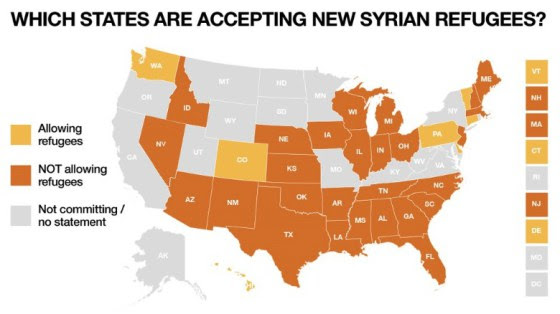
Florida Governor Rick Scott requested a halt to federal funding of the scheduled resettlement of 425 Syrian Refugees in the Sunshine State.  This follows similar actions by Republican gubernatorial colleagues in Alabama, Arkansas, Illinois, Louisiana, Massachusetts Michigan, and Texas.  He  sent a letter this afternoon to U.S. House Speaker Paul Ryan, Senate Majority Leader, Mitch McConnell and all members of the Florida U.S. Senate and Congressional delegation outlining his concerns.
states taking syrian migrants cnn

He adds his concerns regarding the ability of the Administration to vett Syrian refugees to prevent the possible infiltration of ISIS jihadis as occurred last weekend in Paris.  The Syrian passport of a suicide bomber or shahids (martyr) was found at the Paris soccer stadium a check of which revealed his entry into the EU via Greece in early October, 2015

In his letter to House Speaker Ryan and Senate Majority Leader McConnell, Governor Scott expressed his concerns:

Several organizations have requested that our state Department of Children and Families support the relocation of 425 possible Syrian refugees to Florida, as they receive federal funding to house these refugees in our state. Following the terrorist attacks by ISIS in Paris that killed over 120 people and wounded more than 350, and the news that at least one of the terror attack suspects gained access to France by posing as a Syrian refugee, our state agency will not support the requests we have received.

More importantly, however, it is our understanding that the state does not have the authority to prevent the federal government from funding the relocation of these Syrian refugees to Florida even without state  support. Therefore, we are asking the United States Congress to take immediate and aggressive action to prevent President Obama and his administration from using any federal tax dollars to fund the relocation of up to 425 Syrian refugees (the total possible number of refugees pending for state relocation support at this time) to Florida, or anywhere in the United States, without an extensive evaluation of the risk these individuals may pose to our nationalsecurity.

As the federal elected body that exercises oversight and authorizes federal spending, please take any action available through the powers of the United States Congress to prevent federal allocations toward the relocation of Syrian refugees without extensive examination into how this would affect our homeland security.

My office stands ready to provide any available information regarding this request for your immediate action.

RELATED ARTICLE: Do governors have any power when it comes to resettlement of third-worlders to their states?

EDITORS NOTE: This column originally appeared in the New English Review.