Tag Archive for: john thune

Vance Says He And Trump War-Gamed A Senate Floor Takeover To Pass SAVE America Act

Vice President JD Vance told Daily Caller Editorial Director Vince Coglianese that he and the president discussed how to take over the Senate floor and pass the SAVE America Act.

Coglianese, the host of VINCE on the Bongino Report, sat down with Vance for a 30-minute interview aired on Tuesday. Vance told Coglianese that he and Trump have “obsessively” discussed how they could pass the SAVE America Act and nuke the filibuster — two of the president’s top priorities.

“First of all, could I assume the chair of the Senate and fire the parliamentarian? Yes, I could. If you have to ask the question, what does that give you? So let’s just play this out,” Vance told Coglianese in response to a question about what could be done to get the SAVE America Act through.

“Trust me, we have played it out internally with a lot of great people, including the president of the United States. So I take over the chair, I fire the parliamentarian, and what happens? Four or five Republicans, at least, and maybe 10 Republicans, they join the Democrats to then overrule the new chair, which is the Vice President of the United States,” Vance said.

The vice president went on to add that a number of Republican senators vote more with Democrats than their own party, which has been part of the issue. All they need, Vance said, was 50 senators to “stick together” to make it happen.

“The problem is not with who’s in the chair. The problem is that you have four or five Republicans, and we all know who they are, who are going to stand with Democrats. So let me just again play this out in some detail. Again, we’ve war-gamed this to every detail because I wanted to do this a few months ago, and we ultimately decided, the president and I, like, this doesn’t make sense because it’s not going to go anywhere,” Vance continued.

“So just to be clear, you and the president met and discussed how to do this,” Coglianese followed up.

“We have obsessively thought through how to get Save America passed, and how do you how do you blow up the filibuster? So you have 47 Democratic senators. If I overrule the parliamentarian, they need four because if they get to 50, I break the tie and we win. 47 Democrats plus four Republicans: Mitch McConnell, John Cornyn, Tom Tillis, Lisa Murkowski. There’s your four. They overrule the vice president,” Vance said.

“You have a fun little ceremonial battle that you lose. We’re actually interested in winning the battle, which means replacing mediocre Republican senators with good Republican senators,” he concluded.

“Which is why you’re going to win the midterms,” Coglianese said.

The SAVE America Act has stalled in the Senate for months. At one point, Trump traveled to Capitol Hill in June for a tense lunch with Senate Republicans over the legislation. It was a meeting that, according to one source, only set things back further. Sources familiar with the situation previously told the Caller that the legislation will likely never have the votes to move forward. Even so, one White House official told the Caller that the administration is exploring every possible path to get it done, because for this president, it remains a priority he is determined to see through.

“…our five Republican Senate Holdouts, Lisa Murkowski, Susan Collins, Thom Tillis, Bill Cassidy, and Mitch McConnell, must vote to SAVE OUR COUNTRY,” Trump posted on Truth Social in June, referring to those keeping the legislation from moving forward. “There can be no more excuses!”

AUTHOR

Reagan Reese

White House Correspondent

RELATED ARTICLE: EXCLUSIVE: Mike Lee Explains How LBJ Broke A Filibuster And What It Means For The SAVE America Act

RELATED VIDEO: NBC: Republicans are more popular than Democrats

EDITORS NOTE: This Daily Caller column is republished with permission. ©All rights reserved.

President Trump Has Had It With Leader John Thune

Tod Starnes: Senate Majority Leader John Thune has not allowed President Trump to make a single recess appointment. Why is that? The American people deserve to know why the Majority Leader is blocking the president’s agenda. And the American people also deserve to know why Senate Republicans have not removed Thune from leadership. As far as I’m concerned, at this point every Republican senator is complicit. They’ve played games with the America First agenda for 2 years. Lots of talk. Lots of condemnation. But no action.

Jim Banks is now the third Senator to oppose August recess until the SAVE America Act passes.

Thune is working for the Democrats.

Do they have pictures with Thune with a farm animal? What do they have on him?

“We don’t need a recess. Let’s pass the SAVE America Act. It’s more important than taking a break, taking a recess!”

Thune stuck between Trump’s demands, members’ recess plans

By Stef W. Kight

Senate Majority Leader John Thune is stuck between the public, painful demands from President Trump to cancel the August recess and the pleas of members to let them go home.

Why it matters: For senators, the summer recess is next to holy. For the president, confirming his nominees is simply more important.

  • “We’re thinking about it,” Thune told Axios on Monday about Trump’s call to cancel all — or part — of the August break.
  • “We want to get as many noms through the pipeline as we can,” he said.

But still, August is August.

  • “People are accustomed to going back,” Thune said. “This is the time of year when they go back and interact with their constituents and talk about some of the things that we’ve gotten done.”
  • “I do not believe we need to cancel the August recess,” Sen. Shelley Moore Capito (R-W.Va.) said Monday. “Please wipe that suggestion off of your DNA.”
  • Sen. Lisa Murkowski (R-Alaska) vehemently defended the extended break: “You get us for the rest of the year back here, but there’s got to be some time when we can actually be addressing the needs of our constituents back home.”

Driving the news: After Trump’s weekend post on Truth Social, leadership has made clear to senators that fiddling with the August recess is on the table.

  • Thune has talked to Trump about the president’s goals and told reporters he met with the president on Monday.

The intrigue: If Thune moves forward with August votes, there is always the risk of attendance challenges.

  • The Senate requires a minimum of 51 senators for a quorum— and it only takes one Democrat to force a quorum call.
  • With just a three-seat margin, Republicans are “only as strong as our four weakest links,” as one senior aide put it.

What we’re hearing: The Senate is buzzing about what Thune will do, according to conversations with senators and staffers.

  • Senators are likely to put on a brave face and say publicly that they are willing to do whatever it takes to accomplish Trump’s agenda.
  • But trust us, both sides want to go home.

Continue reading.

GOP Sen. John Kennedy warns John Thune ‘being too cautious’ as Trump agenda hangs in the balance

By Samuel Chamberlain, NY Post, July 27, 2026

Senate Majority Leader John Thune (R-SD) needs to get to work on passing the rest of President Trump’s agenda with fewer than 100 days to go before the midterm elections, a key member of the GOP’s rank-and-file warned Sunday.

“Look, I mean no disrespect. I love John Thune. He’s my leader. He’s got a big brain. He’s better looking than me, but I think he’s just being too cautious,” Sen. John Kennedy (R-La.) told CBS News’ “Face The Nation,” adding that the majority leader “wants to spend the rest of our time talking with [Senate Minority Leader Chuck] Schumer about shutting down government, and the Graham Platner wing of the [Democratic] party is, his party, is not going to let Schumer agree with us.

“They already want to give Schumer a bathrobe, a Popsicle, and an early bedtime, and have him retire. I don’t think Chuck can agree with us,” Kennedy predicted. “I think he’s going to shut down government.”

An image collage containing 2 images, Image 1 shows Kevin Baillie poses for a selfie with a red Ferrari race car, Image 2 shows A wooden sign for “Sendero Ranch” hangs above a green metal gate, with a road extending into a desert landscape with mountains in the background
Netflix exec goes ballistic after being fired for stunning ‘trust exercise’ confession at ranch retreat: suit

California man missing for over a month in the Pacific Ocean is suddenly found drifting off Hawaii

At least 3 killed in shooting at Seattle food festival that sent attendees running for their lives
“We need to put the, the House budget resolution on the floor,” Kennedy told host Margaret Brennan. “It’s the only chance we have to get money to defense, the farmers, and to take another crack at the SAVE Act. We need to add Iran to the [Lindsey] Graham Russian sanctions bill and vote on it. We need to put the cryptocurrency market structure bill on the floor and vote on it.”

Currently, a shutdown is set to begin at 11:59 p.m. ET Sept. 30.

“That to me is what the SAVE Act is all about, and I think we can pass it … but we’re not going to know if we don’t try.”

The Louisianan’s comments came three days after White House press secretary Karoline Leavitt told reporters that Trump’s “patience is running out” with Thune.

A day earlier, the president had told supporters in Georgia to “call John Thune, he’s the leader of the Republican Party, and tell him to get this stuff approved.”

Democrats have repeatedly blocked Republican attempts to bring the SAVE America Act to the Senate floor for debate.

AUTHOR

RELATED ARTICLE: Mike Lee Blocks Senate Recess: No Vacation Until SAVE America Act Gets a Vote

POSTS ON X:

EDITORS NOTE: This Geller Report is republished with permission. ©All rights reserved.

EXCLUSIVE: GOP Leaders Circulate Talking Points To Quash SAVE America Act Revolt

Senate GOP leaders are circulating talking points aimed at quashing the internal revolt over the SAVE America Act, according to a document obtained exclusively by the Daily Caller.

The document outlines potential questions from the media and offers guidance for members’ responses on several topics, including the GOP’s marquee election-integrity legislation, the SAVE America Act. The document, created by the Senate Republican Conference (SRC), is titled “Conference Prep.”

Senate Republican “Conference Prep” by ashley

The prep document includes a hypothetical question a member could face: “President Trump is calling for Leader Thune to keep the Senate in session in August to pass the SAVE America Act. Do you agree?”

The suggested response states: “I want to pass the SAVE America Act just as much as the President, but we don’t have the votes to pass the SAVE America Act or eliminate the filibuster. If staying in session will somehow change that outcome, then I’m all for it.”

It continues: “But I don’t think staying in session will make more votes appear. We are not going to get a single Democrat to vote for the SAVE America Act no matter how long we are in session. And we have work to do at home to make sure that we beat the Democrats in November.”

One Republican staffer familiar with the document said it sends the message that Senate Republicans support the legislation — but with a caveat.

“The message seems to be that Republicans support the SAVE America Act but are willing to change absolutely nothing, sacrifice no vacations, and threaten no committee seats to move it forward,” the staffer wrote to the Caller. “A strategy that relies on Democrats suddenly doing the right thing is not a strategy.”

The Caller reached out to Senate Republican Conference Chairman Tom Cotton of Arkansas to confirm the document’s authenticity but did not receive a response in time for publication.

The document also addresses the recent public tension between White House Press Secretary Karoline Leavitt and Thune following her remarks last Thursday that Trump’s patience was running out with the Senate leader over his handling of the president’s legislative priorities. Leavitt told Daily Caller White House Correspondent Reagan Reese that Trump wanted to “see as much of the SAVE America Act passed as possible by the August recess.”

The document instructs conference members to push back on the idea of a rift between Trump and Thune, emphasizing that the two Republican leaders are “united” and working together to advance the president’s agenda.

“President Trump and Senator Thune are united and doing an excellent job delivering safety and prosperity for Americans, despite unprecedented Democrat obstruction,” the document states.

The talking points highlight Trump and Thune’s cooperation on issues including affordability, border security, and national security. They point to efforts such as ending taxes on tips, eliminating income taxes on Social Security benefits, strengthening the military, securing the border, deporting violent criminals through measures such as the Laken Riley Act, and cracking down on fentanyl trafficking.

The document also addresses calls from some conservatives to eliminate the Senate filibuster to advance legislation, arguing that Republicans must remain focused on defeating “radical Democrat socialists” rather than changing Senate rules.

The memo instructs senators to argue that eliminating the filibuster would be a long-term mistake that could allow future Democratic majorities to expand federal power, add new states, pack the Supreme Court, and pass their broader agenda.

Asked whether Democrats would eliminate the filibuster anyway, the talking points say Republicans should not give them the opportunity or political cover to do so. Conference leaders instead advise Republican senators to argue that if Democrats choose to eliminate the filibuster, they should own the consequences with voters.

The messaging suggests the party should continue working together to advance Trump’s agenda despite disagreements over legislative strategy.

On Monday, Trump once again called on Thune to advance the GOP election-integrity legislation in a Truth Social post.

“John Thune should not allow the United States Senate to ‘leave town’ until it passes The Save America Act or, far better still, TERMINATES THE FILIBUSTER…” Trump wrote.

The Caller reached out to Thune for comment but did not receive a response.

AUTHOR

Ashley Brasfield

Senior Politics Reporter

RELATED ARTICLES:

Mamdani Election Bombshell: More Fraudulent Votes Cast Than Margin of Mamdani’s ‘Victory,’ Says Election Auditor

Darline Graham Bucks John Thune, Says She’ll Stay In Town Until SAVE America Act Passes

Trump, 3 GOP Senators Tell John Thune To Keep Senate Open Until SAVE ACT Is Passed

Karoline Leavitt Says Trump’s Patience ‘Running Out’ On SAVE America Act, Thune Fires Back

EDITORS NOTE: This Daily Caller column is republished with permission. ©All rights reserved.

No Path, No Votes: Inside the GOP Revolt Threatening Trump’s SAVE America Act

Election integrity has been a priority for President Donald Trump for years. In his second administration, that priority took legislative form in the SAVE America Act, which would require Americans to show ID to vote, along with a host of other safeguards.

But for months, the bill has stalled in the Senate, even as the president rages about it on Truth Social and to reporters in the Oval Office. Trump traveled to Capitol Hill last Thursday for a tense lunch with Senate Republicans over the legislation. It was a meeting that, according to one source, only set things back further. Around the same time, Trump shelved plans to sign a housing bill, a move some sources see as tied to his frustration with the Senate.

Now, the SAVE America Act appears to be in more limbo than ever.

Sources familiar with the situation tell the Caller that the legislation will likely never have the votes to move forward. Still, one White House official told the Caller that the administration is exploring every possible path to get it done, because for this president, it remains a priority he is determined to see through.

“…our five Republican Senate Hold Outs, Lisa Murkowski, Susan Collins, Thom Tillis, Bill Cassidy, and Mitch McConnell must vote to SAVE OUR COUNTRY,” Trump said on Truth Social of those keeping the legislation from moving forward. “There can be no more excuses!”

Multiple sources told the Caller that, as the legislation currently stands, it doesn’t have the votes, and that the senators Trump named are unlikely to come on board. Killing the filibuster, which the president has also floated as a way to force the bill through, runs into the same wall, those sources said.

The path forward doesn’t run through the 21st Century ROAD to Housing Act, either. If Trump vetoes that legislation, one source said, Congress has the votes to override him. But a source familiar with the president’s thinking said a veto won’t be necessary; Trump isn’t expected to reject the bill.

“It’s a yawn,” Trump said on Monday of the housing legislation. “To me, compared to the SAVE America Act, just about everything is a big yawn.”

Speaker Mike Johnson has floated putting the legislation into a reconciliation bill. The House voted down a procedural measure Tuesday that would have allowed debate on tying the bill to the National Defense Authorization Act. It is a legislation Congress is expected to take up alongside a reauthorization of FISA Section 702 and annual appropriations bills.

That FISA fight has become its own flashpoint. When Trump’s former Director of National Intelligence, Tulsi Gabbard, resigned to care for her husband amid his cancer diagnosis, the president temporarily installed FHFA Director Bill Pulte atop the agency.

The move that set off alarms in the Senate, with Democrats threatening to block a FISA renewal over Pulte’s appointment. Trump later nominated Jay Clayton, the U.S. Attorney for the Southern District of New York, for the ODNI post, but killed a path to a quick confirmation hearing, leaving Pulte in place longer than expected.

One source familiar with Senate dynamics said the ODNI standoff and the back-and-forth over Clayton are being interpreted on the Hill as Trump’s way of making senators pay for failing to pass the SAVE America Act. A White House official pushed back on that characterization.

Even as his team searches for a way forward, the president himself seems unsure the bill will ever pass. One White House official said Trump’s passion for the issue stems from the campaign trail, where he’s heard from Americans across the country who want to see it become law.

Senate Majority Leader John Thune has absorbed much of the blame for the bill’s collapse. Trump himself told the Caller he was “disappointed” in Thune for failing to either kill the filibuster or pass the legislation.

But a source familiar with the president’s thinking said that frustration isn’t really about Thune. Trump likes him and knows his members do too. The president’s irritation, the source said, is with the individual senators who won’t get on board.

“The SAVE America Act has always been a top priority for President Trump, and it remains one. This is commonsense legislation supported by the vast majority of Americans that will secure our elections for generations to come,” Abigail Jackson, a White House spokeswoman, told the Caller.

“The President knows how critical this issue is for the American people, and he will not stop fighting until it is passed,” she added.

AUTHOR

Reagan Reese

White House Correspondent

RELATED ARTICLE: EXCLUSIVE: Mike Lee Explains How LBJ Broke A Filibuster And What It Means For The SAVE America Act

EDITORS NOTE: This Daily Caller column is republished with permission. ©All rights reserved.

EXCLUSIVE: Mike Lee Explains How LBJ Broke A Filibuster And What It Means For The SAVE America Act

Republican Utah Sen. Mike Lee laid out how former President Lyndon B. Johnson’s battle to pass the Civil Rights Act of 1964 has important implications for the adoption of the SAVE America Act during an interview with the Daily Caller on Monday.

Lee, a leading advocate and sponsor of the SAVE America Act — landmark election integrity legislation supported by President Donald Trump — cited the Senate’s handling of the Civil Rights Act of 1964 as a historical example of how major legislation can advance even when the votes for cloture are not initially in place.

The Utah Senator explained that when the bill arrived in the Senate from the House in March 1964, supporters of the bill were still significantly short of the votes needed to invoke cloture — roughly 30 votes, though he noted even at the time the exact count was uncertain. As Lee explained, “It’s a good example because they were clearly not close to achieving cloture when it arrived.”

US President Lyndon B. Johnson hands a pent to the Rev. Martin Luther King (2nd-R) after signing the historic Civil Rights Act in the East Room of the White House, in Washington, D.C., 02 July 1964. The Civil Rights Act of 1964, signed into law by United States President Lyndon B. Johnson on July 2, 1964, put an end to all forms of segregation and discrimination based on race, color, religion, sex or national origin. (Photo by AFP) (Photo by -/AFP via Getty Images)

US President Lyndon B. Johnson hands a pent to the Rev. Martin Luther King (2nd-R) after signing the historic Civil Rights Act in the East Room of the White House, in Washington, D.C., 02 July 1964. The Civil Rights Act of 1964, signed into law by United States President Lyndon B. Johnson on July 2, 1964, put an end to all forms of segregation and discrimination based on race, color, religion, sex or national origin. (Photo by AFP) (Photo by -/AFP via Getty Images)

Drawing a parallel to his efforts to invoke the same talking filibuster to advance the SAVE America Act, Lee noted that then-President Johnson — a vocal supporter of the Civil Rights Act of 1964 — backed an aggressive floor strategy during the debate. At the time, Johnson urged Democratic Senate Majority Leader Mike Mansfield to keep the Senate in continuous, round-the-clock session to wear down opposition, a tactic LBJ had previously used as majority leader to advance civil rights legislation, according to a U.S. Senate historical report.

Mansfield, however, rejected the proposal.

He argued that marathon sessions would turn the Senate into “a circus or a sideshow,” warning that the sight of senators appearing in “bedroom slippers, without neckties, with hair uncombed and pajama tops sticking out” would diminish the chamber’s dignity.

Rather than forcing continuous debate, Mansfield allowed the fight over the legislation to unfold over more than 50 days, insisting on preserving the Senate’s “dignity and decorum” while keeping the bill on the floor until supporters ultimately secured enough votes to invoke cloture. In effect, grinding most other Senate business to a halt.

Rather than personally managing every moment of the floor fight, like Johnson, Mansfield delegated much of the day-to-day debate to key allies, including soon-to-be Vice President Hubert Humphrey — then still a Democrat senator for Minnesota — and Democratic California Senator Thomas Kuchel, while he coordinated the broader legislative strategy behind the scenes.

Mansfield believed the lengthy debate served an important purpose. With many senators still undecided, he viewed the Senate as a deliberative body where extended discussion could persuade Democrat lawmakers and help opponents ultimately “accept the legitimacy of the outcome,” according to the Senator.

Asked whether he sees parallels between Mansfield’s strategy and the approach the current GOP Senate should take to advance election integrity legislation, Lee said he does, though he noted there are important differences between Mansfield’s effort and the current Senate under Republican Majority Leader John Thune.

“I mean, you did have the majority leader who was saying, ‘I’m willing to do this, and that is what it takes.’ In the modern Senate, you do need the support, active involvement, and engagement by the Senate Majority Leader in order for this to work,” Lee said.

Lee went on to note that one of the “distinct privileges” of the leader is to set the chamber’s schedule, and a talking filibuster is a “significant scheduling commitment.”

Lee said that during the 1964 legislative debate, Senate Majority Leader Mike Mansfield reinforced his commitment to ensuring passage by making it clear the chamber would remain on the bill for as long as necessary. To Lee’s understanding, Mansfield told senators, “We’re going to do this. We’re going to pass it, and we’re going to debate this for as many weeks as it takes in order to pass it. And they stayed in week in, week out.”

Noting he believes the Senate often debated on Saturdays and typically recessed on Sundays for church attendance, but otherwise remained in continuous session, he said it became increasingly clear Mansfield would not back down, “And they saw that he meant it, especially when you get into it that far. When you get weeks into it, it’s, ‘oh my gosh, he’s not messing around. This is serious.’”

With national attention focused on the Senate, supporters of the Civil Rights Act of 1964 used the prolonged floor debate to build momentum for the legislation, while opponents relied on extended debate tactics in an effort to delay or weaken the bill.

When the bill’s supporters briefly failed to produce enough senators for a quorum call, Mansfield privately admonished colleagues, reminding them that “there comes a point in time when certain procedures must, in the best interest of the Senate, be laid down.” Attendance quickly improved.

Lee, who has faced pushback from his own party for his support for this approach, responded to criticism over why the Senate should prioritize the measure even with GOP control of both the legislative and executive branches. The Senator, responding to Thune and Republican Texas Sen. John Cornyn’s argument that Republicans lack the votes, told the Caller that cloture is just one way to break a filibuster — and when you use only that method of breaking the filibuster — after a while, you can become convinced that it’s the only way. But it’s not the only way.”

The talking filibuster employed against the Civil Rights Act only lasted roughly 54–60 working days, or up to about 75 calendar days by some counts, beginning in late March 1964 and ending with final Senate passage on June 19, 1964.

Lee cites the episode and use of the talking filibuster to pass the Civil Rights Act of 1964 as a blueprint for how sustained floor debate and prolonged pressure can still, more than six decades later, be used to advance major legislation like the SAVE America Act.

AUTHOR

Ashley Brasfield

Senior Politics Reporter

RELATED ARTICLES:

Trump Cancels Housing Bill Signing Over SAVE America Act

House Cancels Votes As GOP Holdouts Revolt Over Failure To Pass SAVE America Act

‘Cluster F*ck’: Trump’s Dramatic Feud With Senate Republicans Boils Over

Senate Ditches Town Early For Two-Week Recess As Save America Act Remains On Ice

EDITORS NOTE: This Daily Caller column is republished with permission. ©All rights reserved.

John Thune Faces Censure Over Failure to Advance SAVE Act

Finally, action and accountability. Thune must go.

Thune to face censure vote from SD GOP over SAVE America Act

Grassroots conservative activist Scott Presler, who was in attendance for the vote, shared footage of the committee vote.

By: Ben Whedon, Just The News, June 26, 2026:

The South Dakota Republican Party’s Resolutions Committee approved a censure resolution against Senate Majority Leader John Thune, who represents the state.

Grassroots conservative activist Scott Presler, who was in attendance for the vote, shared footage of the committee vote. Their decision sends the resolution to the state party.

The resolution condemns Thune’s failure to pass the SAVE America Act, a marquis voter ID bill that has languished in the upper chamber, despite pressure from President Donald Trump and Republican lawmakers. Thune has resisted changes to Senate rules to pass the bill without the 60 votes needed to clear the filibuster.

Thune faces reelection in 2028. The vote follows Presler claiming to have been barred from a paid dinner organized by the South Dakota Republican Party.

Continue reading.

AUTHOR

RELATED ARTICLE: ‘Communists Are Finally Making Their Move’: Trump Warns Against Leftward Shift In Democrat Politics

RELATED VIDEO: Byron Donalds: “This is not hard. 80% of the American people want the SAVE America Act to pass.”

EDITORS NOTE: This Geller Report is republished with permission. ©All rights reserved.

Senate Republicans Have The Power To Force Democrats To Filibuster Voter ID — So Why Don’t They?

Senate Republicans could force Democrats into a talking filibuster on voter identification, but it’s unclear if they will use the strategy to pass the bill.

The SAVE America Act, a Republican-backed election integrity measure, would require documentary proof of U.S. citizenship to register to vote — including by mail — mandate photo ID for federal elections, direct states to verify citizenship and remove non-citizens from federal voter rolls.

Republican Texas Rep. Chip Roy in a post on X, confirmed that the bill is expected to reach the House floor in February, and if passed, move to the Senate — where questions remain about whether Republicans, despite controlling both chambers, can muster the 60 votes needed to overcome a filibuster.

Without the 60-vote threshold or Democratic support, GOP Senate leadership would be faced with potentially using one of the Senate’s oldest tools — the talking, or standing, filibuster — to advance the legislation.

Republican Utah Sen. Mike Lee has referred to the Senate procedure as the “zombie filibuster.”

He wrote in a post on X that it is “uncharted territory” and acknowledged that it can be “time-consuming and difficult.”

Lee argues that now is the time to address the legislation, adding that the talking filibuster differs from the legislative filibuster because it does not require eliminating the 60-vote threshold for legislation or nominations, and therefore does “not commit” to altering Senate rules.

“This mess has got to be dealt with,” Lee told the Daily Caller.

“We might as well deal with it in the first instance. It does not commit us, it’s not nuking, it’s not changing the rules, it’s not ignoring any rules, it doesn’t require any nefarious activity, nor does it even compel us to adopt the same approach to every piece of legislation moving forward. But this is because it’s got to be dealt with at one point or another anyway. This isn’t gonna go away,” he continued.

Under a traditional talking filibuster, opposition is worn down through continuous floor speeches or enforcement of the two-speech rule, which limits each senator to two speeches on the same legislative question per legislative day. By keeping the Senate in continuous session and refusing to adjourn, the majority can prevent the minority from resetting those speech limits.

This approach shifts the burden to the minority to maintain constant floor presence and uninterrupted debate, imposing sustained physical and mental demands to preserve the filibuster.

Once all speeches are exhausted and a quorum is present, the majority leader may put the question to the chamber and proceed to a simple-majority vote. At that point, the filibuster has ended, cloture is unnecessary, and no Senate rules have been changed or overridden.

Operating entirely within existing Senate rules, this would allow Majority Leader Sen. John Thune — with a quorum present — to bring the measure to a final vote with 51 votes, as the 60-vote cloture threshold no longer applies once the filibuster has run its course.

If the Republican Senate chooses to proceed with a talking filibuster, it would require Majority Leader Thune to take an active role in calling live quorums, compelling Democrats to speak and enforcing Senate Rule 19, the “two-speech rule.”

One of the most high-profile examples of a talking filibuster came during the debate over the Civil Rights Act of 1957, when South Carolina Democratic Sen. Strom Thurmond spoke for over 24 hours in an attempt to block the legislation. He joined the Republican Party in 1964.

Since then, modern filibusters have largely relied on the threat of extended debate rather than continuous speeches, making Thurmond’s effort a rare example of the classic talking filibuster.

A common criticism of the federal voter identification bill is that, if enacted, it could pave the way for federalizing elections and encroach on state authority.

Lee has rejected that claim, dismissing it as a “paranoid fantasy” advanced by opponents of the legislation rather than a reflection of what the bill actually does.

“I mean it, it’s just, it’s not gonna happen. I mean it. I don’t, I don’t know anybody who wants to do that supposedly,” Lee told the Caller.

Another argument raised against the bill is that the National Voter Registration Act of 1993 (NVRA) may constrain federal proof-of-citizenship requirements. Critics point to the Supreme Court’s 2013 ruling interpreting the NVRA to require states to accept the federal voter registration form, which relies on an attestation of citizenship rather than documentary proof.

Under that framework, opponents of the SAVE Act argue the legislation’s mandates would need to be implemented through state-level registration systems or by amending the NVRA itself, rather than imposed through standalone federal legislation.

Lee asserts that Article I, Section 4 of the Constitution gives Congress clear authority to enact the SAVE America Act, particularly because federal law — not state policy — created the current constraints.

He contends that Supreme Court interpretations of the National Voter Registration Act have prevented states from requiring proof of citizenship for voter registration, even when there is reason to believe noncitizens may be registering.

Justice Samuel Alito dissented in the Arizona v. The Inter Tribal Council of Arizona Inc. case, arguing that the Supreme Court’s interpretation of the NVRA “brushes aside the constitutional authority of the States” by preventing Arizona from enforcing its own proof-of-citizenship requirement to ensure that only qualified voters (U.S. citizens) are registered.

Supporters of the SAVE America Act frame the legislation not as an intrusion on state authority, but as a necessary federal remedy to a problem created by existing federal law.

The original SAVE Act, which ensures only U.S. citizens are added to federal voter rolls and prevents noncitizens from voting in federal elections, has been stalled in the Senate Rules Committee, chaired by Republican Kentucky Sen. Mitch McConnell. 

The newest version of the legislation, sponsored by Lee and Roy, has garnered support from President Donald Trump.

He told Daily Caller White House Correspondent Reagan Reese Friday: “I would love to use [the standing filibuster]. The SAVE Act is very important. Voter ID — if you look at it, no mail-in voting, and you have to have proof of citizenship. Everybody wants it. Polls — even with Democrats — it’s polling at 82%, with Republicans at 99%. So we are going to be trying very hard.” 

The Utah Republican met with Trump in the Oval Office Thursday alongside Republican Senators Ron Johnson 0f Wisconsin and Rick Scott of Florida, telling the Caller the president “wants it done” and is “energized” and “very motivated” to see the bill passed and signed into law.

Lee further pointed out that his legislation could be strategically leveraged by Republicans, telling the Caller he believes using a talking filibuster on the SAVE America Act would increase the party’s negotiating power.

“If we do this with SAVE America, I think it increases our negotiating power, our leverage, you might say.”

Majority Leader Thune has raised concerns that the time required for a talking filibuster could otherwise be used to advance multiple pieces of legislation.

Lee pushed back, arguing that lawmakers should be willing to devote additional time to the effort.

“On each of those other pieces of legislation, and even if we have less full time available to do other stuff, then gosh, let’s make up for it by working longer hours, by having longer work weeks, by staying on weekends, by canceling some recesses,” Lee told the Caller.

“We are lawmakers. We were elected to make laws, and not all laws are worth enacting, but good heavens, when we’ve got this somewhat rare and extremely valuable asset and resource — if the House, the Senate majorities all unified at the same time as a Republican presidency, it is reckless not to use this, absolutely inexcusably reckless.”

AUTHOR

Ashley Brasfield

Reporter

RELATED ARTICLES:

Enough! It’s Time to Pass the SAVE America Act!

‘It’s Not Insurmountable’: John Kennedy Sizes Up What’s Needed To Pass SAVE ACT

Mitch McConnell’s Hospital Stay Is Delaying The SAVE Act

Trump Slams Door Shut On Conservatives’ Effort To Attach Election Integrity Bill To Shutdown-Ending Measure

EDITORS NOTE: This Daily Caller column is republished with permission. ©All rights reserved.

VOTER ID OR RESIGN: Thune Refuses to Force the Vote on SAVE Act

John Thune is backstabbing….again, betraying the voters he claims to represent.

Thune is already backing away from the SAVE Act, suddenly fretting about the “implications” of forcing Democrats to actually talk during a filibuster. He’ll

He knows the truth: his spineless, gutless RINO allies would kill voter ID to protect their careers. So instead of honoring the deal to use a standing filibuster and force a real vote, Thune is ducking, weaving, and stalling — Mitch McConnell 2.0 in a cheaper suit.

This is why we lose elections. Not because of Trump — whose approval rivals peak Bush and Obama — but because of weak Republican leadership that caves before the fight even begins.

If you cannot pass a bill backed by more than 80% of Americans, you don’t deserve the job.

The “implications” of making Democrats speak are nothing compared to the consequences of fraudulent elections.

Thune gave his word. If he breaks it, history will remember him as exactly what he is proving himself to be.

Thune Fumbles SAVE Act Opportunity

Republican Leader says “talking” filibuster will take too much time

By: Senate Conservatives Fund, February 3, 2025:

Senate Republican Leader John Thune (R-SD) announced yesterday that Republicans would not use a “talking” filibuster to break the Democrats’ obstruction of the SAVE Act.

This makes no sense.

Stopping non-citizen voting in federal elections is not only a widely popular idea, but it’s also essential to securing our nation’s future.

Thune said a talking filibuster would “tie up the Senate” and take up limited floor time needed for other things.

This is the worst excuse he could have made. The Senate only works two and a half days a week now, so there’s plenty of time to do what it takes to save our country.

The sad truth is that there are still too many Senate Republicans who are unwilling to fight for our principles and values. They hide behind the 60-vote threshold to fool their own voters.

Sean Davis at The Federalist explained this well.

Senate Republicans refuse to force standing filibusters, which would lead to bills passing with only 51 votes, because it would condition their own voters to actually getting the laws they were promised enacted into law. Can’t have that, now can we.

Second, such a process would expose the 10-15 most worthless Republicans who would vote against these bills, showing that even with a majority, Republicans somehow never have a majority.

As a result, they use the 60-vote threshold as a handy excuse for their own refusal to ever do anything they promise. They always have the time and the votes to shovel your money to Ukraine or to carve out new tax loopholes for their corporate lobbyist friends.

What they have no time or patience for is doing anything their actual constituents demand. And that right there is why Republicans are going to get destroyed in November if they don’t start doing what they promised.

This should make every conservative’s blood boil.

And it should make us work harder than ever to elect strong conservatives who share our values and will do what it takes to advance our priorities — even if that means working a normal five-day work week.

Read more.

Democrats have openly vowed to blow up the Electoral College and add two new states to cement their power.

(Congressman John Rose)

“House Republicans MUST hold the line and refuse to fold on something as fundamental as election integrity. The SAVE Act belongs on must-pass legislation.”

Force the vote — or step aside.If Congress won’t pass a bill that 83% of US citizens are asking for— that means we have taxation without representation.

Work the phones. Call (202) 224-2321.

AUTHOR

RELATEDVIDEOS:

HORRIFIC: Illegal Alien Kills 4 in Indiana, Rioters Ram Fed. Officers, Victor Davis Hanson RETURNS

WARNING: America First Agenda Detected

WATCH: Barack Obama was asked to show his ID to vote in 2012

POSTS ON X:

EDITORS NOTE: This Geller Report is republished with permission. ©All rights reserved.
Democrats Plan To Shutdown ICE Funding Has Already Been Foiled

The Democrats’ effort to block funding for Immigration and Customs Enforcement (ICE) as part of a Department of Homeland Security (DHS) appropriations fight has so far failed to derail ICE funding.

In July, Congress passed the One Big Beautiful Bill Act, setting aside roughly $170 billion for immigration enforcement and border security, including about $75  billion in supplemental funding for ICE, making it one of the most heavily funded federal law enforcement agencies.

Even if parts of the federal government shut down at the end of the week, ICE and CBP operations in Minneapolis and across the country are expected to continue uninterrupted. ICE agents are classified as “excepted” workers, allowing them to remain on duty during a funding lapse, and the agency still has substantial carryover funds from last year’s Trump-backed appropriations.

Although Democrats’ attempt to curtail ICE funding has not prevailed, outrage over the fatal shooting of Alex Pretti — a U.S. citizen and intensive care nurse killed by a Border Patrol agent in Minneapolis over the weekend — has escalated tensions in Congress.

Pretti’s death incident has sparked intensified scrutiny of ICE and CBP operations nationwide, with Senate Democrats warning they will oppose the DHS funding bill unless it is reworked to include meaningful limits on immigration enforcement — a standoff that could help trigger a partial government shutdown as the funding deadline looms. (RELATED: Minnesota Judge Threatens To Hold ICE Head In Contempt)

Senate Minority Leader Chuck Schumer announced Saturday in a post on X that Democrats will withhold the votes needed to advance the Department of Homeland Security (DHS) funding measure unless it is revised to address concerns over ICE and other immigration enforcement practices, highlighting growing resistance within his party to including DHS funding in the broader appropriations package.

Although ICE would continue operating during a shutdown, Democrats, including Senate Minority Leader Chuck Schumer and head of the Congressional Progressive Caucus Texas Rep. Greg Casar, have argued since the fatal Alex Pretti shooting that the funding bill goes beyond immigration enforcement and have demanded changes to DHS and ICE policies as a condition for their support.

On Jan. 13, Casar, urged Senate Democrats to insist on reforms to ICE before they vote for a major spending bill.

Casar laid out a series of nonnegotiable demands for changes to ICE’s operations as part of any DHS funding bill, calling for federal immigration agents to withdraw from Minneapolis and halt similar operations in other cities and for independent investigations into any deaths involving federal agents, according to an interview with The Guardian.

The White House and Republicans both contacted Senate Democrats late Sunday, but no realistic solutions have been proposed so far, according to a PBS News report, citing an anonymous Senate Democratic leadership aide.

Although the shooting has sharply escalated tensions in Congress, Republicans have resisted separating DHS funding from the larger spending package, and operations by ICE and U.S. Customs and Border Protection (CBP) are still expected to continue uninterrupted — in part because both agencies are funded as “essential” through carryover appropriations.

The legislation also provides funding for agencies like Federal Emergency Management Agency (FEMA) — especially important as 12 states remain under disaster declarations — and the Transportation Security Administration (TSA), which is already grappling with major travel disruptions. As a result, failing to pass the bill could have serious consequences for essential government services unrelated to immigration.

A spokesperson for Republican Senate Majority Leader John Thune, when asked about the ongoing talks with Democrat leadership, told the Daily Caller that Democrats have already acknowledged ICE would continue operating even if part of the government shuts down. He reiterated that the funding covers more than just immigration enforcement.

“Democrats themselves have said for weeks that ICE would still continue its operations during a shutdown. But the DHS bill includes so much more than that — FEMA, with 12 states under disaster declarations, and TSA, while airports are dealing with the most cancellations since the Schumer shutdown, will be greatly impacted. What Democrats want are policy changes, yet they themselves negotiated these appropriations bills, and there were House Democrats who supported homeland security appropriations in the House even after the Renee Good shooting,” the spokesperson said.

The Caller reached out to Schumer’s office to ask whether he has had any discussions with the White House or Senate GOP leadership, but did not receive a response prior to publication.

AUTHOR

Ashley Brasfield

Reporter

RELATED ARTICLES:

‘What’s Happening In Minnesota Is Appalling’: Schumer Vows Dems Won’t Support ‘Woefully Inadequate’ DHS Funding Bill

Sen. Chris Murphy All But Promises There Will Be Another Shutdown Because DHS Is ‘Murdering’ People

RELATED VIDEO: President Trump Delivers Remarks, Jan. 27, 2026

EDITORS NOTE: This Daily Caller column is republished with permission. ©All rights reserved.

Republicans Erased Record Number Of Biden Regulations In 2025. Here Are The Worst Ones…

Congressional Republicans capped off 2025 with one notable accomplishment: overturning a record number of regulations enacted under former President Joe Biden.

Republicans undid 22 regulations issued in the final months of Biden’s presidency that restrict fossil fuel production, phase out the sale of gas-powered cars and limit access to credit in the name of capping overdraft fees. The record number of resolutions of disapproval, used to block regulations, signed into law by President Donald Trump is the most of any Congress since the Congressional Review Act (CRA) was enacted in 1996.

GOP lawmakers rescinded 14 Obama regulations during Trump’s first term in 2017.

The CRA allows Congress to rescind recent administrative rulemakings with a simple majority vote in both chambers, along with the president’s stamp of approval.

“By reining in Biden’s heavy-handed bureaucrats, we are saving Americans $180 billion,” Senate Majority Whip John Barrasso said in a floor speech on Dec. 17. “That pencils out to over $2,000 in savings for each and every family.”

1. Banning New Gas-Powered Cars

Congressional Republicans successfully undid a Biden-era waiver in May allowing California and any state that adopts its stringent standards to ban the sale of new gas-powered cars by 2035. The Republican-controlled Congress also rescinded two California vehicle emissions rules requiring the sale of zero-emission heavy-duty trucks and effectively banning diesel engines.

Republicans — and some Democrats — warned California’s aggressive electric vehicle (EV) mandate would undermine consumer choice and devastate Americans employed in the automobile industry.

“These job losses will not be confined to California, but they will be spread all across the nation,” Republican West Virginia Sen. Shelley Moore Capito said in a speech on the Senate floor prior to the upper chamber voting to nix the waiver.

Trump frequently called for the repeal of EV mandates during his 2024 presidential campaign.

Though the push to rescind the rules hit several procedural roadblocks, Senate Majority Leader John Thune kept his conference united before the window to nix the waivers closed.

2. Ending Coal Leasing In America’s Top Coal Region

GOP lawmakers voted in October to repeal a Biden-era rule restricting millions of acres of land in the Powder River Basin — spanning Montana and Wyoming — from future mining.

Republican Montana Sen. Steve Daines argued the Biden administration’s move to end coal leasing in the resource-rich region following the 2024 election amounted to a “midnight rule” with little political support among the affected states.

Daines alongside fellow Republican Montana Sen. Tim Sheehy and Reps. Troy Downing and Ryan Zinke spearheaded the successful effort to nix the heavy-handed resource management plan.

“The American people have rejected the left’s radical climate hysteria and removing this harmful rule will help protect our energy dominance and our national security,” Republican Montana Sen. Steve Daines told the DCNF prior the resolution of disapproval’s passage in the Senate.

Biden sought to restrict coal production and pledged to shut down coal plants “all across America” in 2022. More than 40% of the country’s coal production comes from the Powder River Basin, according to analysis published by the Energy Information Administration in 2019.

The Republican-controlled Congress also overturned a Biden plan restricting coal leasing on Wyoming public lands in November.

3. Blocking Energy Production In Alaska

In December, Trump signed into law two resolutions of disapproval overturning Biden-era rules restricting energy production in Alaska. The Biden regulations, finalized after the 2024 election, blocked oil and gas leasing across 13 million acres across Central Yukon in the name of conservation and restricted future energy production in the Arctic National Wildlife Refuge’s Coastal Plain (ANWR).

“When we unlock Alaska, we are strengthening America’s national security and economic posture in this generation and for generations to come,” Republican Alaska Rep. Nick Begich told the DCNF in December. “These bills are not isolated. They are representative of a long-term strategy to rebuild our energy strength, reconstruct our critical mineral inventory, and ensure that America — not China — controls the supply chains that power our economy.”

Alaska’s congressional delegation and many tribal communities within the Last Frontier State argued the Biden-era regulations tamping down energy production were economically devastating.

“The economy in the North Slope is oil and gas activity,” Begich also told the DCNF. “The building blocks of communities — schools, healthcare, roads and running water  — exist due to the “economic base our early leaders ensured that we had access to.”

4. Instituting Price Controls On Overdraft Fees

Republicans voted in spring 2025 to undo a Consumer Financial Protection Bureau (CFPB) rule that limited most bank overdraft fees to $5, far less than the $35 average. The Biden administration approved the controversial rulemaking capping the amount banks can charge their customers when they overdraft their checking accounts in December 2024.

GOP lawmakers and the banking industry warned the overdraft fee rule would reduce the amount of credit that banks can provide to low-income customers, who would be forced to turn to payday lenders that typically charge higher interest rates. Opponents of the rule also slammed the agency for overstepping its authority to regulate checking accounts.

“The Biden administration’s ill-conceived rule imposing new price controls on overdraft services provided by banks and credit unions harmed the very consumers the CFPB is supposed to protect,” Senate Banking Committee chairman Tim Scott said in May. “The rule would have reduced access to credit and important financial services and resulted in more unbanked Americans.”

5.  Driving Up Costs For Commercial Appliances

Trump approved two resolutions of disapproval in May cancelling Biden regulations that imposed stringent energy efficiency standards on walk-in coolers and freezers and a separate rule targeting commercial refrigerators and freezers.

Republicans argued the Biden-era rules imposed a high cost burden on the small businesses who would have to comply with the new standards and limited consumer choice.

“This regulation, which had an estimated cost of a billion dollars, would have been crippling for businesses throughout the country, especially in rural areas,” Republican Oklahoma Rep. Stephanie Bice, the sponsor of one of the resolutions of disapproval, said in a statement in March.

Republicans also successfully nixed a Biden Department of Energy rule banning some gas water heaters by 2029.

AUTHOR

Adam Pack

Reporter

RELATED ARTICLE: Trump Admin To Wash Away Biden-Era Water Rule After Years Of Contentious Debate

EDITORS NOTE: This Daily Caller column is republished with permission. ©All rights reserved.


All content created by the Daily Caller News Foundation, an independent and nonpartisan newswire service, is available without charge to any legitimate news publisher that can provide a large audience. All republished articles must include our logo, our reporter’s byline and their DCNF affiliation. For any questions about our guidelines or partnering with us, please contact licensing@dailycallernewsfoundation.org.

GOP Launches Rival Healthcare Plan As Obamacare Showdown Hits Senate Floor

Senate Republican leadership announced Tuesday that they will bring their own healthcare proposal to a floor vote, running in parallel with Democrats’ push for an extension of the enhanced Obamacare subsidies.

The Senate is scheduled to vote Thursday on a Democrat proposal for a three-year extension of the boosted subsidies, which Democrats secured as part of the deal that ended the record-breaking government shutdown. Following internal debate over several Republican healthcare proposals and whether to schedule a side-by-side vote, GOP senators have coalesced around a health savings account-based approach.

“It actually does make health insurance premiums more affordable,” Senate Majority Leader John Thune told reporters at a news conference Tuesday. “It delivers the benefit directly to the patient, not to the insurance company, and it does it in a way that actually saves money to the taxpayer. That is a win-win proposal.”

The Health Care Freedom for Patients Act— sponsored by Sens. Bill Cassidy, chair of the Senate Health, Education, Labor and Pensions (HELP) Committee, and Mike Crapo, chair of the Senate Finance Committee — is pitched as an “alternative to Democrats’ temporary COVID bonuses, which send billions of tax dollars to giant insurance companies without lowering insurance premiums.”

Under the plan, roughly $1,000 to $1,500 would be deposited into HSAs paired with bronze or catastrophic plans on the Affordable Care Act (ACA) exchanges.

The idea of redirecting federal subsidies from insurance companies directly to individuals has the backing of President Donald Trump, who has warned that extending the boosted Obamacare subsidies would hand insurers “another huge payday at the expense of the American people.”

Democrats, meanwhile, are pressing ahead with their three-year extension of the soon-to-expire subsidies, despite the near certainty that the measure lacks the 60 votes needed to pass.

The enhanced subsidies — enacted by Democrats in 2021 without GOP support — removed the upper-income cap and increased subsidy amounts, dropping premiums to zero for many enrollees. They are set to expire at the end of 2025.

A clean three-year extension with no eligibility changes would add $350 billion to the national debt over the next decade, the Committee for a Responsible Federal Budget estimates.

Republicans argue that Democrats’ plan, which goes even further than the one-year extension Democrats demanded during the shutdown, is primarily a political maneuver.

“I am absolutely open to a pathway forward, but what we’re seeing from Democrats is completely disingenuous,” Republican Sen. Katie Britt of Alabama told the Daily Caller News Foundation Tuesday. “They know that a flat three-year extension will not pass, so they’re intentionally putting something on the floor for politics, not for the people they serve.”

Concerns about fraud are also fueling GOP resistance to the extension of the enhanced Obamacare subsidies.

Research has shown that fraud is especially widespread among zero-premium plans, which critics say create opportunities for bad actors to enroll unsuspecting individuals without their knowledge. Moreover, the Government Accountability Office recently uncovered rampant fraud and systemic failures in the ACA marketplace, including fictitious identities, invalid Social Security numbers, and even deceased individuals being frequently approved for taxpayer-funded subsidies.

“This program desperately needs to be reformed, the Democrats have decided, ‘We’re not going to do anything to reform it,’ and so we’ll see where the votes are on Thursday,” Thune said

Republicans also point to rising costs, noting that Obamacare premiums have increased twice as fast as employer-based premiums — evidence, they say, that the program is not delivering on promises of affordability.

“Money should go directly to patients so they can make their own decisions, and that will drive down costs,” said Senate Majority Whip John Barrasso of Wyoming, adding that taxpayers should not be “held hostage in the straitjacket of the one-size-fits-all that is Obamacare.”

However, Senate Democratic leadership has already dismissed the GOP plan.

“Their phony proposal is dead on arrival,” said Senate Minority Leader Chuck Schumer. “Their bill is junk insurance; it’s been repudiated in the past. The American people will repudiate it once again.”

Democrat Sen. Richard Blumenthal of Connecticut said Tuesday that Republicans are “forcing a false choice on the American people.”

Even within the GOP, some are doubtful that the proposal has the votes to advance.

“In my opinion, trying to take the longer view — and also being as objective as I can — I think the only way that there will be a bill put together reforming the Obamacare exchanges is through the reconciliation bill,” Sen. John Kennedy of Louisiana told reporters shortly before the GOP announcement.

Although Republican leadership selected Cassidy’s proposal for a vote on Thursday, others — including Sens. Susan Collins of Maine and Bernie Moreno of Ohio — have introduced a two-year extension with income restrictions and minimum premium payments.

“I think we need to do everything we can to bring down the cost of premiums, so I’m happy to take a vote on any of these plans,” Sen. Josh Hawley of Missouri said Tuesday, adding he is inclined to vote yes on all of them. Hawley has also introduced a bill to allow taxpayers to deduct out-of-pocket medical expenses up to $25,000 per individual or dependent.

In the House, Speaker Mike Johnson said that Republicans will vote on a healthcare proposal by the end of December and continue working on healthcare legislation into early 2026, according to Punchbowl News.

Caden Olson contributed to this report.

AUTHOR

Melissa O’Rourke

Reporter

RELATED ARTICLES:

Obamacare Deadlock Drags On, But One Healthcare Fix Could Slash Medical Costs Nationwide

Senate Conservatives Rip ‘Gateway Drug’ Earmarks In Government Funding Bills

EDITORS NOTE: This Daily Caller column is republished with permission. ©All rights reserved.


All content created by the Daily Caller News Foundation, an independent and nonpartisan newswire service, is available without charge to any legitimate news publisher that can provide a large audience. All republished articles must include our logo, our reporter’s byline and their DCNF affiliation. For any questions about our guidelines or partnering with us, please contact licensing@dailycallernewsfoundation.org.

Senate To Confirm 97 More Trump Nominees After Democrat Blockade Fails

Republicans will confirm a bloc of eight dozen Trump nominees as soon as next week following an attempted blockade by Senate Democrats.

Republican leadership planned Thursday to kick-off the procedural process to confirm 88 of President Donald Trump’s nominees in a bloc vote, but were initially thwarted by Democratic Colorado Sen. Michael Bennet, who challenged the package for violating Senate rules. When Republicans refiled the package later on Thursday, the conference included an additional nine nominees, bringing the total to nearly 100.

Democrats blocked the group package because Sara Bailey — one of President Donald Trump’s nominees included in the package — was not eligible to be included.

When Republicans went nuclear in September to streamline the confirmation process over Democrats’ fierce objections, the conference did not allow cabinet-level positions or judicial appointments to be confirmed in a group package.

Bailey, a former Fox News contributor, has been tapped to serve as director of the Office of National Drug Control Policy, which is a senior-level position on par with a cabinet secretary.

Senate Majority Leader John Thune argued that Democrats’ delay tactics amounted to “Trump Derangement Syndrome” during remarks on the Senate floor Thursday.

“Democrats – and their base – still can’t deal with the fact that President Trump won last November,” Thune said on the Senate floor. “And so they have held up every single one – every single one – of his nominations in revenge.”

The new package includes former Republican New York Rep. Anthony D’Esposito, who has been appointed to serve as inspector general of the Department of Labor. Thirteen U.S. attorney nominees and dozens of lower-level executive branch nominees are also teed up for confirmation.

The Senate has confirmed 314 civilian nominees as of Thursday evening, according to a tally by the Senate Republican Communications Center.

The 97-member bloc would bring the Senate to more than 410 civilian confirmations in the first year of Trump’s second term.

“That far outstrips total confirmations by this point in President Biden’s term, and in President Trump’s first term as well,” Thune said Thursday.

Thune also said that Senate Republicans have virtually cleared the nominations backlog. Before Republicans changed Senate precedent to allow for certain nominees to be confirmed in groups, more than 150 of the president’s picks were awaiting floor consideration.

The Senate approved a 48-member nominations package in September and an additional 108 of the president’s picks in a single group vote in October.

Bennet celebrated his short-lived blockade of Trump’s nominees Thursday before Republicans added more individuals to the resolution.

“I will not allow unqualified nominees, this White House, or the President to undermine the rule of law and our national security,” the Colorado Democrat wrote in a statement posted to social media.

AUTHOR

Adam Pack

Reporter

RELATED ARTICLES:

Democrats Torpedo Bipartisan Talks With Take-It-Or-Leave-It Obamacare Plan

Gun Orgs Facing Trump DOJ ‘Opposition’ Aren’t Sure What To Make Of Its New 2A Division

Supreme Court Allows Texas To Use New Map

EDITORS NOTE: This Daily Caller column is republished with permission. ©All rights reserved.


All content created by the Daily Caller News Foundation, an independent and nonpartisan newswire service, is available without charge to any legitimate news publisher that can provide a large audience. All republished articles must include our logo, our reporter’s byline and their DCNF affiliation. For any questions about our guidelines or partnering with us, please contact licensing@dailycallernewsfoundation.org.

Eight Senate Democratic Caucus Members Defy Chuck Schumer To Advance Deal That Would End Shutdown

Forty days into the longest government shutdown in history, eight members of the Senate Democratic Caucus bucked Senate Minority Leader Chuck Schumer to support a deal that will end the government shutdown.

Lawmakers voted 60 to 40 to advance a House-passed clean continuing resolution (CR) Sunday night that had previously failed to clear the Senate’s 60-vote threshold 14 times. Though the deal marks a crucial breakthrough to reopen the government, the process is expected to take several days due to likely opposition from a number of senators to expedite a vote on final passage.

Any agreement will also have to clear the House of Representatives, which has been in recess since Sept. 19.

Democratic Sens. Tim Kaine of Virginia, Jeanne Shaheen and Maggie Hassan of New Hampshire and Jacky Rosen of Nevada flipped their votes to support the House-passed CR. Senate Minority Whip Dick Durbin of Illinois, the second-ranking Democrat who is not running for reelection, also supported the measure.

The five Democrats joined their fellow caucus members, Democratic Sen. John Fetterman of Pennsylvania, Democratic Sen. Catherine Cortez Masto of Nevada and Independent Sen. Angus King of Maine, who repeatedly voted with Republicans to fund the government throughout the record-breaking shutdown fight.

Georgia Sen. Jon Ossoff, who is widely viewed as the most vulnerable Democratic incumbent running for reelection in 2026, voted with Schumer to oppose the shutdown deal.

In the coming days, Senate Majority Leader John Thune is expected to offer a substitute to the House-passed continuing resolution that would include the prongs of the bipartisan framework.

The deal extends government funding levels through the end of January 2026, advances three full-year appropriations bills and funds a federal food aid program through fiscal year 2026. The agreement also reverses the mass layoffs of federal workers implemented by the Trump administration during the shutdown.

King, Hassan and Shaheen were reportedly responsible for negotiating the bipartisan deal with Republicans to bring an end to the 40-day funding lapse.

The breakthrough comes after Thune kept the Senate in session over the weekend in an effort to hasten an end to the shutdown. The funding lapse forced a vast swath of federal employees to miss paychecks, threatened millions of Americans’ access to food stamps and disrupted air travel in major hubs across the country.

King, who caucuses with Democrats, told reporters prior to the vote that the “length of the shutdown” led the group of Democrats to support the shutdown deal. The Maine Independent also said Republicans’ refusal to negotiate on extending enhanced Affordable Care Act subsidies slated to expire at the end of December while the government was shut down also forced Democrats’ hands.

“The question was, as the shutdown progresses, is a solution on the ACA [Affordable Care Act] becoming more likely? It appears not,” King told reporters. “And I think people are saying we’re not going to get what we want, although we still have a chance, because part of the deal is a vote on the ACA subsidies.”

Many of King’s Democrat colleagues railed against the bipartisan agreement, arguing the legislation was inadequate because it failed to guarantee an extension of the ACA subsidies.

“I cannot in good faith vote for a show vote that does nothing to guarantee that 24 million Americans get the health care they deserve,” Arizona Sen. Ruben Gallego, a potential 2028 presidential candidate, wrote on X.

“[V]oting for Trump’s continuing resolution – without any protection against his health care cuts or his growing illegality – is a mistake,” Connecticut Sen. Chris Murphy, another Democrat who could make a run for president in 2028, wrote on X. “I voted NO.”

The Democratic National Committee, left-wing activist organizations and a large chunk of House Democrats, including Minority Leader Hakeem Jeffries, voiced their opposition to the deal Sunday evening. Democratic candidates running for Senate during next year’s midterm elections and rumored 2028 presidential candidates also came out against the deal, citing its insufficient language on health care.

Thune has offered Democrats a vote on extending the ACA subsidies as part of the shutdown deal. However, the vote is likely to fail due to deep opposition among Republicans to an ACA subsidy extension without significant reform.

Republicans are not about to further burden taxpayers by blindly extending a flawed program,” Thune said on the Senate floor Saturday.

House GOP leadership will give lawmakers 36 hours notice to return to Washington upon the Senate passing a stopgap bill to reopen the government.

AUTHOR

Adam Pack

Reporter

RELATED ARTICLES:

Trump Says He Wants To Give $2,000 Tariff ‘Dividends’ To Every American

Hakeem Jeffries, Progressive Dems Rage Against Deal To End Shutdown

Trump Administration Orders States To ‘Immediately Undo’ Work Sending Out Full Food Stamp Benefits

Minneapolis Mayor Jacob Frey Blasted On Social Media For Victory Speech In Somali After Winning Third Term

Just 3 Democrats Vote To Pay Troops, Law Enforcement 38 Days Into Their Shutdown

EDITOES NOTE: This Daily Caller column is republished with permission. ©All rights reserved.


All content created by the Daily Caller News Foundation, an independent and nonpartisan newswire service, is available without charge to any legitimate news publisher that can provide a large audience. All republished articles must include our logo, our reporter’s byline and their DCNF affiliation. For any questions about our guidelines or partnering with us, please contact licensing@dailycallernewsfoundation.org.

Just 3 Democrats Vote To Pay Troops, Law Enforcement 38 Days Into Their Shutdown

Almost all Senate Democrats rejected a bipartisan bill Friday evening to pay active-duty troops and federal employees reporting to work, including Capitol Police officers, during the 38-day government shutdown.

Lawmakers voted 53 to 43 to advance the federal worker pay bill, falling seven votes short of the Senate’s 60-vote threshold. The failed vote marks the second time a majority of Democrats have blocked legislation to pay some federal workers during the funding lapse.

Sens. Ben Ray Luján of New Mexico and Jon Ossoff and Raphael Warnock of Georgia were the lone Democrats to cross party lines to support Republican Wisconsin Sen. Ron Johnson’s Shutdown Fairness Act. Democratic Sen. John Fetterman of Pennsylvania, who supported the bill on Oct. 23, did not vote. Luján notably voted against the bill in October.

All federal employees have missed at least one full paycheck since the beginning of the shutdown on Oct. 1.

“Let me be clear about what a ‘no’ vote means,” Senate Majority Whip John Barrasso, the second-highest-ranking Senate Republican, said during floor remarks Friday. “A NO vote is a vote to refuse to pay air traffic controllers who are working. Refuse to pay TSA agents who are working. Refuse to pay military members who are serving around the world. Refuse to pay Capitol Police officers who are here in this building working.”

Senate Majority Leader John Thune also criticized Democrats for choosing to prolong the shutdown despite its toll on essential federal employees working unpaid during the funding lapse.

“If I were a Democrat I would be embarrassed – I mean, flat-out embarrassed – to walk into this building every day,” Thune said Friday. “To walk past the men and women of the Capitol Police, who are not getting paid thanks to Democrats. To walk past junior staffers, many of whom are undoubtedly frantic by this point as they wonder how they’re going to pay their rent and continue to buy food.”

Democrats said they opposed the legislation because it did not cover all federal workers. However, the caucus has refused to reopen the government, which would ensure all federal workers are paid.

The failed vote comes as some progressive Democrats have vowed to continue fighting, claiming voters gave the party a mandate to keep the government shuttered following Tuesday night’s election victories.

Democratic Connecticut Sen. Chris Murphy is one of a handful of Democrats who have argued the ending the funding lapse could jeopardize lawmakers’ standing with the party’s base.

“The 2026 election is just 12 months away,” Murphy told Punchbowl News on Thursday. “And if we surrender without having gotten anything, and we cause a lot of folks in this country who had started to believe in the Democratic Party to retreat again, I worry that it will be hard to sort of get them back up off the mat in time for next fall’s election.”

Republicans rejected an offer from Democrats on Friday afternoon to extend Obamacare subsidies slated to expire at the year’s end in exchange for ending the shutdown.

GOP lawmakers have been adamant throughout the 38-day shutdown that they will not negotiate on health care policy until Democrats vote to fund the government.

“Democrats want to give $35 billion next year to insurance companies for subsidies with no fraud controls and to benefit the wealthy. Hard no, Chuck,” Senate Republicans’ X account wrote, referring to Senate Minority Leader Chuck Schumer.

President Donald Trump called on the Senate to stay in session over the weekend to hammer out a deal. If lawmakers do not come to an agreement, Trump called on Republicans to invoke the nuclear option and kill the Senate’s legislative filibuster to pass a funding measure on their own.

Thune told the Daily Caller News Foundation in an exclusive interview on Wednesday that Republicans lack the votes to nuke the longstanding procedural rule.

“Not even close,” the majority leader said of the whip count.

AUTHOR

Adam Pack

Reporter

RELATED ARTICLES:

EXCLUSIVE: Trump Admin Executes Massive Crime Crackdown In Memphis

Flights May Cease Over Patches Of US If Democrat-Backed Shutdown Keeps Going, Admin Warns

Democrat Katie Porter Falls Behind Outspoken GOP Candidate In Shocking California Poll

EDITORS NOTE: This Daily Caller column is republished with permission. ©All rights reserved.


All content created by the Daily Caller News Foundation, an independent and nonpartisan newswire service, is available without charge to any legitimate news publisher that can provide a large audience. All republished articles must include our logo, our reporter’s byline and their DCNF affiliation. For any questions about our guidelines or partnering with us, please contact licensing@dailycallernewsfoundation.org.

Democrats Defy Call From Allied Federal Workers Union To End Government Shutdown

Senate Democrats largely brushed off the pleas of a longtime party ally to end the 28-day government shutdown on Tuesday, rejecting a clean funding measure to reopen the government for the 13th time.

Senators voted 54 to 45 to advance legislation temporarily funding the government through Nov. 21, falling short of the Senate’s 60-vote threshold. The vote tally has remained unchanged since the opening days of the shutdown with the same three Democratic caucus members — Democratic Sen. John Fetterman of Pennsylvania, Democratic Sen. Catherine Cortez Masto of Nevada and Independent Sen. Angus King of Maine — crossing party lines to reopen the government.

Senate Minority Leader Chuck Schumer’s decision to prolong the shutdown comes after the country’s largest federal workers union called on Democrats to vote for the House-passed spending bill to reopen the government without mentioning either party by name.

“Federal workers – your constituents, who serve your constituents – are hurting,” American Federation of Government Employees (AFGE) national president Everett Kelley wrote in an open letter on Monday. “As president of the largest federal employee union, I cannot countenance the sight of workers I represent standing in food lines. It should trouble the conscience of every member of Congress and indeed every American.”

Senate Minority Whip Dick Durbin, the second-ranking Senate Democrat, told reporters that his caucus were taking federal workers’ concerns “seriously.” Hundreds of thousands of federal workers missed their first full paycheck of the shutdown on Friday and more federal employees, including air traffic controllers, did not receive their government salary on Tuesday.

“It has a lot of impact,” Durbin said of AFGE’s call for an end to the shutdown. “They’ve been our friends.”

However, Durbin signaled on Tuesday that Democrats would keep the government shuttered until their various partisan demands are met.

“The increase in health insurance [premiums], I think is going to be devastating for American families,” Durbin told the Daily Caller News Foundation.

Senate Republicans have excoriated Democrats for choosing to continue the shutdown despite a bevy of federal food aid and early childhood support programs slated to run out of funding on or before Nov. 1.

“The pain is becoming intolerable for the American people,” Senate Majority Whip John Barrasso told the DCNF on Tuesday. “I see it at the grocery store, and if that [Women, Infants and Children program] goes away this Saturday, I expect I’m going to hear a lot about it at the grocery store.”

“I don’t know if the Democrats go out into public and talk to people, but the pain is significant already, and the Democrats view that as leverage,” Barrasso continued.

Fetterman, who has emerged as a vocal critic of Schumer’s shutdown strategy, argued that Democrats should listen to the federal workers union’s plea to vote for the bipartisan spending bill and end the shutdown.

“Our servicemembers, federal workers, and Capitol Police are hurting. It’s one of many reasons why I’ve continuously voted to open our government,” Fetterman wrote on X on Monday. “We need to end this chaos.”

Senate Majority Leader John Thune has continued to hold out hope that a handful of rank-and-file Democrats will buck Schumer to end the shutdown.

“I’m hoping enough [Democrats] come to their senses to give us the five votes that we need to actually get the government reopened again,” Thune told Fox News’ Sean Hannity on Monday evening. “But they are playing a game, and these demands that they have … [are] not serious. It’s not realistic, and they know it.

“And all we’re simply trying to do is fund the government at last year’s levels and keep it open until we can get the appropriations process going,” Thune continued.

Andi Shae Napier contributed to this report. 

AUTHOR

Adam Pack

Reporter

RELATED ARTICLES:

Democrat-Supporting Federal Workers Union Calls For End To Shutdown

Pam Bondi Promises ‘Accountability’ After Report Says Biden’s Autopen Pardons May Be ‘Void’

EXCLUSIVE: Independent Women Urges Dem Leadership To End Government Shutdown

Democrats Take Aim At Republicans, Shoot Themselves In The Foot With Gov’t Shutdown

RELATED VIDEO: CNN: Republican approval ratings SKYROCKET during Chuck Schumer’s shutdown

EDITORS NOTE: This Daily Caller column is republished with permission. ©All rights reserved.
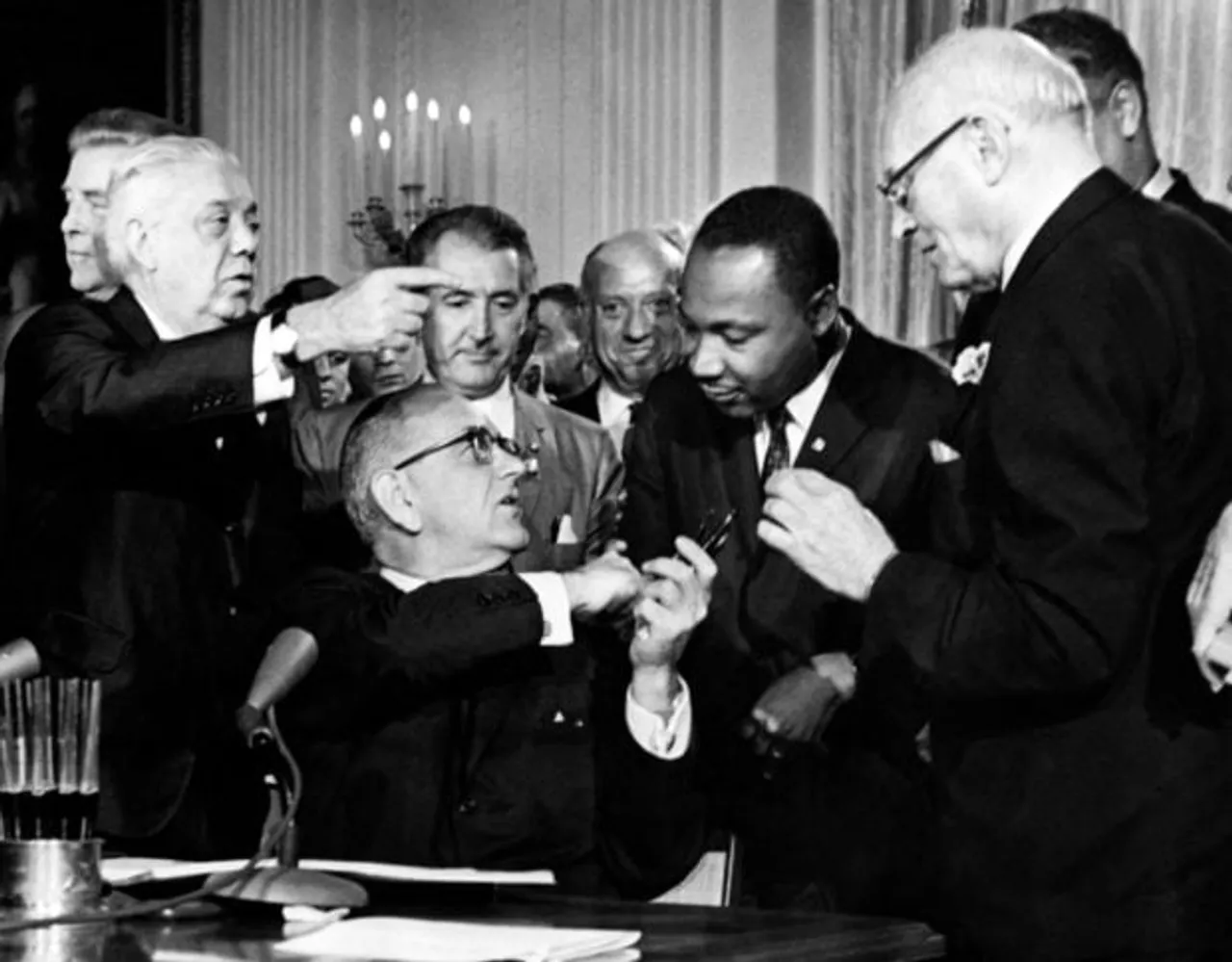

All content created by the Daily Caller News Foundation, an independent and nonpartisan newswire service, is available without charge to any legitimate news publisher that can provide a large audience. All republished articles must include our logo, our reporter’s byline and their DCNF affiliation. For any questions about our guidelines or partnering with us, please contact licensing@dailycallernewsfoundation.org.