Tag Archive for: Nigeria

Oladigbo Oluwasogo Olalekan: A Rising Star in Nigerian Politics and Contributor to DrRichSwier.com, Now Running for National Assembly

Sarasota, FL — In an exciting development for Nigerian politics, Oladigbo Oluwasogo Olalekan, a prolific writer and a trusted voice in political discourse, has announced his candidacy for the Obokun/Oriade seat in Nigeria’s National Assembly. Running under the platform of the Social Democratic Party (SDP), Olalekan is set to bring his extensive experience in media, business, and leadership to the heart of Nigerian governance.

From Contributor to Candidate: Olalekan’s Transition to Politics

Oladigbo Olalekan is no stranger to the world of media and policy analysis. His insightful contributions to DrRichSwier.com, a leading American-based news and opinion website, have made him a recognized voice in political discussions. As an author and thought leader, Olalekan’s works, such as “Trump’s Not Done with Washington: The Return of the MAGA White House” and “Nigeria’s Political Journey in the Fourth Republic,” have given readers a nuanced perspective on both American and Nigerian politics.

But now, Olalekan is taking his influence to the next level by directly engaging in Nigeria’s legislative process. With a deep-seated passion for improving his home country’s future, he aims to represent the people of Obokun/Oriade in Nigeria’s National Assembly, where he hopes to introduce policies that focus on youth empowerment, job creation, and community infrastructure development.

A Vision for Youth Empowerment and Sustainable Growth

In his candidacy announcement, Olalekan outlined his legislative agenda, which is focused on the twin pillars of Youth Empowerment and Job Creation, and Community Infrastructure Development. His experience as a Group Programs Manager at Tungba Communication Ltd, alongside his leadership in media, gives him a strong platform from which to advocate for policies that will impact young people and underserved communities.

1. Youth Empowerment and Job Creation Bill

Olalekan’s first priority is to create opportunities for Nigeria’s growing youth population, which remains at risk of being sidelined by the country’s high unemployment rate. His proposed bill will focus on fostering job creation through skills acquisition, entrepreneurship programs, and public-private sector partnerships. Olalekan envisions a Nigeria where young people are equipped with the skills they need to thrive in the modern economy.

“I am committed to seeing our youth prosper,” Olalekan declared in his announcement. “Through targeted legislation, we can empower the next generation, provide them with meaningful employment, and ensure they play an active role in shaping Nigeria’s future.”

2. Community Infrastructure Development Bill

In addition to youth empowerment, Olalekan is deeply committed to improving Nigeria’s infrastructure. His vision includes laws aimed at expanding access to essential services such as healthcare, education, electricity, and safe roads in underserved regions. Olalekan believes that an equitable distribution of resources is key to unlocking the nation’s full potential.

“Building robust infrastructure will ensure that every Nigerian has the opportunity to lead a better life,” Olalekan explained. “Equitable development in areas like Obokun/Oriade will set a precedent for the entire country.”

A Rich Background of Service and Leadership

Oladigbo Olalekan’s career is defined by his commitment to service and leadership across several sectors. From his role as a Group Programs Manager at Tungba Communication Ltd (the parent company of Tungba100.9FM and Tungba90.3FM), to his tenure as the founder and managing editor of Starnigerianews.com, Olalekan’s work has made a lasting impact in both media and public service.

His extensive media experience—spanning from Sweet107.1FM in Abeokuta to On Top Radio 90.9—has allowed him to connect with Nigerians across the country, offering thoughtful commentary on politics, sports, and current affairs. Olalekan’s past as a program presenter, content writer for Opera News Hub, and guest analyst on popular radio shows makes him an influential voice in Nigeria’s media landscape.

His authorship of key books, such as “Trump’s Not Done with Washington” and “Nigeria’s Political Journey in the Fourth Republic”, further demonstrates his understanding of both global and local political dynamics. Through his writings, Olalekan has become a critical observer of the political landscape, advocating for reform and transparency in both Nigerian and international politics.

A Deep Commitment to Nigeria’s Future

Oladigbo Olalekan’s professional background is complemented by his academic credentials. He holds an HND in Office Technology and Management from Osun State Polytechnic, Iree, Osun State Nigeria and has received multiple professional certifications, including from the Chartered Institute of Personnel Management (CIPM) and the Institute of Strategic Management of Nigeria (ISMN).

His diverse career also includes roles in procurement management at Blowfish Group Limited, administrative support at Gold Cross Hospital, and project management for the renovation of the Central Bank of Nigeria’s Sokoto branch, which has given him the hands-on experience needed to address the diverse issues facing his community.

A Call for a Better Nigeria

In a political climate often seen as disconnected from the people it serves, Olalekan’s candidacy offers a refreshing change. His vision for Obokun/Oriade’s future is rooted in the belief that effective governance starts with listening to and empowering the people. As he campaigns to represent his constituency in the National Assembly, Olalekan promises to bring practical solutions to Nigeria’s pressing challenges, from unemployment to infrastructure decay.

“I believe in the potential of Nigeria and its people,” Olalekan concluded. “Together, we can create a future where every citizen has the opportunity to succeed, where our communities are thriving, and where Nigeria is positioned for long-term prosperity.”

As Olalekan’s campaign gains momentum among the youth with the Federal Constituency, it is clear that his bid for the Obokun/Oriade seat is not just about winning an election—it is about fighting for a better Nigeria. His combination of media influence, professional expertise, and unwavering commitment to public service makes him a force to be reckoned with in the upcoming National Assembly elections.

Looking to the Future

Oladigbo Olwasogo Olalekan’s bid for office represents a turning point for Nigerian politics. His multifaceted career and strong leadership credentials give him the tools to tackle Nigeria’s most urgent challenges. Whether through his work as a media contributor, a political analyst, or a hands-on leader, Olalekan is dedicated to shaping a Nigeria that works for everyone. His candidacy for the Obokun/Oriade seat is more than just a political campaign—it is a call to action for all Nigerians who believe in the power of transformative leadership.

Will Olalekan’s vision for a more prosperous, inclusive Nigeria resonate with voters? As he continues to champion the causes of youth, infrastructure, and social justice, his candidacy is poised to leave a lasting impact on the nation’s future.

©2026 . All rights reserved.

Oladigbo Oluwasogo Olalekan: A Rising Star in Nigerian Politics and Contributor to DrRichSwier.com, Now Running for National Assembly

April 8, 2026 – Sarasota, FL – In an exciting development for Nigerian politics, Oladigbo Oluwasogo Olalekan, a prolific writer and a trusted voice in political discourse, has announced his candidacy for the Obokun/Oriade seat in Nigeria’s National Assembly. Running under the platform of the Social Democratic Party (SDP), Olalekan is set to bring his extensive experience in media, business, and leadership to the heart of Nigerian governance.

From Contributor to Candidate: Olalekan’s Transition to Politics

Oladigbo Olalekan is no stranger to the world of media and policy analysis. His insightful contributions to DrRichSwier.com, a leading American-based news and opinion website, have made him a recognized voice in political discussions. As an author and thought leader, Olalekan’s works, such as “Trump’s Not Done with Washington: The Return of the MAGA White House” and “Nigeria’s Political Journey in the Fourth Republic,” have given readers a nuanced perspective on both American and Nigerian politics.

But now, Olalekan is taking his influence to the next level by directly engaging in Nigeria’s legislative process. With a deep-seated passion for improving his home country’s future, he aims to represent the people of Obokun/Oriade in Nigeria’s National Assembly, where he hopes to introduce policies that focus on youth empowerment, job creation, and community infrastructure development.

A Vision for Youth Empowerment and Sustainable Growth

In his candidacy announcement, Olalekan outlined his legislative agenda, which is focused on the twin pillars of Youth Empowerment and Job Creation, and Community Infrastructure Development. His experience as a Group Programs Manager at Tungba Communication Ltd, alongside his leadership in media, gives him a strong platform from which to advocate for policies that will impact young people and underserved communities.

1. Youth Empowerment and Job Creation Bill

Olalekan’s first priority is to create opportunities for Nigeria’s growing youth population, which remains at risk of being sidelined by the country’s high unemployment rate. His proposed bill will focus on fostering job creation through skills acquisition, entrepreneurship programs, and public-private sector partnerships. Olalekan envisions a Nigeria where young people are equipped with the skills they need to thrive in the modern economy.

“I am committed to seeing our youth prosper,” Olalekan declared in his announcement. “Through targeted legislation, we can empower the next generation, provide them with meaningful employment, and ensure they play an active role in shaping Nigeria’s future.”

2. Community Infrastructure Development Bill

In addition to youth empowerment, Olalekan is deeply committed to improving Nigeria’s infrastructure. His vision includes laws aimed at expanding access to essential services such as healthcare, education, electricity, and safe roads in underserved regions. Olalekan believes that an equitable distribution of resources is key to unlocking the nation’s full potential.

“Building robust infrastructure will ensure that every Nigerian has the opportunity to lead a better life,” Olalekan explained. “Equitable development in areas like Obokun/Oriade will set a precedent for the entire country.”

A Rich Background of Service and Leadership

Oladigbo Olalekan’s career is defined by his commitment to service and leadership across several sectors. From his role as a Group Programs Manager at Tungba Communication Ltd (the parent company of Tungba100.9FM and Tungba90.3FM), to his tenure as the founder and managing editor of Starnigerianews.com, Olalekan’s work has made a lasting impact in both media and public service.

His extensive media experience—spanning from Sweet107.1FM in Abeokuta to On Top Radio 90.9—has allowed him to connect with Nigerians across the country, offering thoughtful commentary on politics, sports, and current affairs. Olalekan’s past as a program presenter, content writer for Opera News Hub, and guest analyst on popular radio shows makes him an influential voice in Nigeria’s media landscape.

His authorship of key books, such as “Trump’s Not Done with Washington” and “Nigeria’s Political Journey in the Fourth Republic”, further demonstrates his understanding of both global and local political dynamics. Through his writings, Olalekan has become a critical observer of the political landscape, advocating for reform and transparency in both Nigerian and international politics.

A Deep Commitment to Nigeria’s Future

Oladigbo Olalekan’s professional background is complemented by his academic credentials. He holds an HND in Office Technology and Management from Osun State Polytechnic, Iree, Osun State Nigeria and has received multiple professional certifications, including from the Chartered Institute of Personnel Management (CIPM) and the Institute of Strategic Management of Nigeria (ISMN).

His diverse career also includes roles in procurement management at Blowfish Group Limited, administrative support at Gold Cross Hospital, and project management for the renovation of the Central Bank of Nigeria’s Sokoto branch, which has given him the hands-on experience needed to address the diverse issues facing his community.

A Call for a Better Nigeria

In a political climate often seen as disconnected from the people it serves, Olalekan’s candidacy offers a refreshing change. His vision for Obokun/Oriade’s future is rooted in the belief that effective governance starts with listening to and empowering the people. As he campaigns to represent his constituency in the National Assembly, Olalekan promises to bring practical solutions to Nigeria’s pressing challenges, from unemployment to infrastructure decay.

“I believe in the potential of Nigeria and its people,” Olalekan concluded. “Together, we can create a future where every citizen has the opportunity to succeed, where our communities are thriving, and where Nigeria is positioned for long-term prosperity.”

As Olalekan’s campaign gains momentum among the youth with the Federal Constituency, it is clear that his bid for the Obokun/Oriade seat is not just about winning an election—it is about fighting for a better Nigeria. His combination of media influence, professional expertise, and unwavering commitment to public service makes him a force to be reckoned with in the upcoming National Assembly elections.

Looking to the Future

Oladigbo Olwasogo Olalekan’s bid for office represents a turning point for Nigerian politics. His multifaceted career and strong leadership credentials give him the tools to tackle Nigeria’s most urgent challenges. Whether through his work as a media contributor, a political analyst, or a hands-on leader, Olalekan is dedicated to shaping a Nigeria that works for everyone. His candidacy for the Obokun/Oriade seat is more than just a political campaign—it is a call to action for all Nigerians who believe in the power of transformative leadership.

Will Olalekan’s vision for a more prosperous, inclusive Nigeria resonate with voters? As he continues to champion the causes of youth, infrastructure, and social justice, his candidacy is poised to leave a lasting impact on the nation’s future.

U.S. Expands Footprint in Nigeria, Sends 200 Troops for Anti-Terror Training

The U.S. military announced Tuesday that it would send 200 servicemembers to the embattled African nation of Nigeria to help train Nigerian troops to fight Islamist terrorists, who have murdered tens of thousands of Christians and other religious practitioners in the country over the last two decades.

According to a Wall Street Journal report, the troops will join several U.S. servicemen already stationed in Nigeria to “help local forces use intelligence to identify targets for military strikes.” Specifically, the U.S. troops will reportedly train Nigerian forces to coordinate the risky military tactic of “simultaneous air and infantry operations.” However, a spokesman for Nigeria’s armed forces made it clear that the U.S. forces will not be involved in any direct combat operations. He went on to say that the Nigerian government had requested America’s assistance.

The announcement came seven weeks after the U.S. fired over a dozen missiles from an offshore warship at two alleged jihadist camps in Nigeria run by the Islamic State. While it was never confirmed how many terrorists were killed in the attack, a Nigerian military spokesman stated, “I can confirm the intent was achieved.” The strike was likewise launched at the request of Nigeria’s government.

The surge in U.S. military activity in Nigeria has come amid burgeoning genocidal violence against the Christian population of the country by several Islamist jihadi groups, including Boko Haram, Islamic State in West Africa Province, Fulani, and others. As noted recently by Across Nigeria Founder Brad Brandon during “Washington Watch,” 72% of all Christians killed across the globe in 2025 took place in northern Nigeria. Experts estimate that upwards of 60,000 Christians have been murdered in the country since 2009, far and away the largest total of any nation in the world over that time frame. In addition, Nigerian sources estimate that jihadists have murdered approximately 29,000 non-fundamentalist Muslims.

A renewed focus on the crisis emerged last November when President Trump declared the ongoing deadly attacks on Christians in Nigeria to be a “genocide” and threatened to send U.S. troops into the country “guns-a-blazing” to eradicate Islamist terrorists. He also threatened to significantly cut aid to the country if Nigeria’s government “continues to allow the killing of Christians,” with his administration declaring the nation a Country of Particular Concern (CPC) in November. Since then, it appears the Trump administration has settled on the strategy of direct military cooperation with the African nation.

But will the strategy successfully rid Nigeria of Islamist jihadists? Experts like Lt. Col. (Ret.) Bob Maginnis, who serves as senior fellow for National Security at Family Research Council, say that the strategy strikes a sensible medium.

“The decision to send 200 U.S. troops to Nigeria for training purposes — while avoiding direct combat — reflects a familiar and cautious approach,” he told The Washington Stand. “It signals support without plunging America into another open-ended conflict. The December missile strike against Islamic State camps reinforced that message: we are willing to act against terrorist infrastructure, but we are reluctant to expand our footprint.”

“Is that enough?” Maginnis continued. “From a military standpoint, training and targeted strikes can help. Nigeria’s armed forces face a complex threat environment: jihadist groups such as Boko Haram and Islamic State West Africa Province operate across difficult terrain, exploit porous borders, and prey upon vulnerable rural communities — many of them Christian. Professionalizing Nigerian units, improving intelligence fusion, logistics, and air-ground coordination can strengthen Abuja’s capacity to protect its own citizens.”

At the same time, Maginnis argued that the U.S. should take a more consistent approach to fighting Christian persecution worldwide in order to build credibility. “Nigeria has been one of the epicenters of anti-Christian violence, especially in Africa. Villages are attacked, clergy kidnapped, congregations massacred. Persecution of Christians is not isolated or declining; it is expanding geographically and intensifying in severity. What we see in Nigeria is part of a broader global pattern — from parts of the Middle East to communist regimes like China, where state-driven repression seeks to subordinate or silence Christian witness.”

As to the question of whether the U.S. should take more direct military action, Maginnis contended that “we must begin with clarity. The U.S. should support nations that are genuinely committed to defeating jihadist violence and protecting vulnerable populations, including Christians. Training missions, intelligence sharing, and carefully calibrated strikes can be appropriate tools when tied to measurable reforms and accountability. But ‘boots on the ground’ in a combat role is another matter entirely. Nigeria is a sovereign state with a large military. The primary burden must rest with its government.”

He further recommended continuing “training and advisory support for Nigerian forces conditioned on demonstrated commitment to protecting civilians” and “targeted counterterrorism strikes when actionable intelligence identifies terrorist infrastructure,” as well as upping “diplomatic pressure on Abuja to address corruption, impunity, and sectarian bias within its own security services.”

“Expanding into large-scale U.S. combat deployments would risk repeating past mistakes,” Maginnis advised. “But retreating into symbolic gestures while persecution spreads would also be a failure. The United States cannot solve every conflict. It can, however, choose integrity. If we are serious about combating Islamist terrorism in Nigeria, we must also be serious about confronting persecution wherever it occurs — without fear, favor, or double standards.”

AUTHOR

Dan Hart

Dan Hart is senior editor at The Washington Stand.

EDITORS NOTE: This Washington Stand column is republished with permission. All rights reserved. ©2026 Family Research Council.


The Washington Stand is Family Research Council’s outlet for news and commentary from a biblical worldview. The Washington Stand is based in Washington, D.C. and is published by FRC, whose mission is to advance faith, family, and freedom in public policy and the culture from a biblical worldview. We invite you to stand with us by partnering with FRC.

Legacy Media Downplays Christian Persecution In Nigeria After Trump Admin Strikes

Legacy media outlets downplayed Christian persecution in Nigeria after President Donald Trump’s administration struck anti-Christian ISIS terrorists in the country.

Trump wrote in an Oct. 31 Truth Social post that 3,100 Christians were killed in Nigeria, compared to 4,476 globally, citing an Open Doors report that recorded deaths for the 12 months from October 2023, a White House official said, according to the BBC. Yet legacy media outlets suggested Christian persecution was not a significant issue compared to attacks on Muslims following the strikes Trump announced on Truth Social Thursday.

For instance, Sky News Africa correspondent Yousra Elbagir went on “MS NOW Reports” on Friday to refute the existence of Christian persecution.

“Now, the Nigerian government has come out and acknowledged publicly that they were working with the U.S. in these strikes, that there was security cooperation,” Elbagir said. “But their officials have also had to reiterate that they are not focusing on the protection of one religious group over the other. The Nigerian government has insisted that Christians are not being disproportionately targeted by terrorists in Nigeria, and the data just doesn’t back that up either.”

“Trump has been repeating these claims, apparently to appease his far right evangelical Christian base who have long condemned the targeting of Christians in Nigeria,” she continued. “But having been in Nigeria and been in communities that are targeted by Boko Haram and by ISWAP [Islamic State West Africa Province], I’ve seen for myself that these communities are often Muslim, that there’s no discrimination between Christians and Muslims. And just on Christmas Eve, a bomb exploded in a mosque in Maiduguri, the capital of Borno State, killing at least five people who were there to worship.”

Radical Islamist terrorists from northern Nigeria — including ISWAP, Boko Haram and the Fulani ethnic militia — have carried out almost daily murders, kidnappings and robberies targeting Christians and nonradical Muslims in the nation’s Middle Belt.

Furthermore, over 7,000 Christians were killed in Nigeria in 2025 as of Aug. 10, according to the International Society for Civil Liberties and the Rule of Law.

The BBC published a piece on Friday titled, “Are Christians being persecuted in Nigeria as Trump claims?” The outlet cited sources that cast doubt on the significance of anti-Christian attacks, including data on deaths.

The BBC also referenced political violence monitoring organizations who said the majority of those targeted by jihadist groups were Muslims. It cited Nigerian security analyst Christian Ani, who acknowledged there were terrorist attacks against Christians, but claimed it was impossible to back up assertions of deliberate targeting.

Moreover, CNN published a piece on Thursday after the strikes, titled, “Trump says violence in Nigeria targets Christians. The reality is more nuanced.”

The outlet reported that “experts and analysts” have told it that Muslims have also been victimized by radical Islamists.

“Has the long-running violence killed Christians?” the outlet asked, answering, “Yes – though that’s only part of the picture.”

Still, CNN acknowledged “a spate of high-profile attacks in predominantly Christian pockets of the north” of the country, highlighting examples of mass killings in Christian areas.

Like Elbagir, the outlet suggested the killings were a politically opportune issue for right-wing evangelical Christians.

CNN subsequently highlighted mass killings of Muslims and cited Nigerian human rights advocate Bulama Bukarti, who asserted that public attacks more commonly affect Muslims than Christians.

“Yes, these (extremist) groups have sadly killed many Christians. However, they have also massacred tens of thousands of Muslims,” Bukarti said.

CNN also referenced Armed Conflict Location & Event Data (ACLED), which reportedly found there 317 Christians were killed in targeted attacks compared to 417 Muslims from January 2020 to September 2025. However, the outlet noted that the group did not identify the religion of the overwhelming portion of the over 20,400 civilians killed during the time period.

The Conversation also found in November that church attacks have greatly outnumbered mosque attacks since 2020, using data from ACLED. Nigeria has a similar number of Christians and Muslims, according to multiple reports.

Trump called on Congress to investigate Nigeria in the Oct. 31 Truth Social post, designating the nation as a Country of Particular Concern. He also had warned Nigeria’s government on Nov. 1 that if it did not stop the attacks against Christians, then the U.S. might “very well go into that now disgraced country, ‘guns-a-blazing,’ to completely wipe out the Islamic Terrorists who are committing these horrible atrocities.”

AUTHOR


RELATED ARTICLE: China Arrests Almost 30 Pastors, Members Of One Of Its Biggest Underground Churches

EDITORS NOTE: This Daily Caller column is republished with permission. All rights reserved.


All content created by the Daily Caller News Foundation, an independent and nonpartisan newswire service, is available without charge to any legitimate news publisher that can provide a large audience. All republished articles must include our logo, our reporter’s byline and their DCNF affiliation. For any questions about our guidelines or partnering with us, please contact licensing@dailycallernewsfoundation.org.

U.S. conducting surveillance flights over Nigeria after Trump’s threat to intervene to end persecution of Christians

And now, American surveillance has begun, bringing the Trump administration’s threats closer to actualizing.

The Nigerian government has tried to cover its indifference to the persecution of Christians by presenting the conflicts as being between warring factions. The government insists that what is happening is not Muslim persecution of Christians, but conflicts between Muslim groups. However, when Muslim groups are fighting each other, both sides of the war focus their brutal attacks on Christians, who suffer the worst — from forced conversions to church and village burnings and beheadings.

No Western government has taken interest in persecuted Christians to the degree that the Trump administration has, not even the Vatican, which instead is obsessed with advocating for Western surrender to suicidal open-door, unvetted immigration.

“Exclusive: US conducting surveillance flights over Nigeria after Trump intervention threat,” by Jessica Donati and Idrees Ali, Reuters, December 22, 2025:

Dec 22 (Reuters) – The U.S. has been conducting intelligence-gathering flights over large parts of Nigeria since late November, according to flight tracking data and current and former U.S. officials, in a sign of increased security cooperation between the countries.

Reuters could not determine what information the flights are meant to obtain.

But the flights in West Africa follow U.S. President Donald Trump’s threats in November to militarily intervene in Nigeria over what he says is its failure to stop violence targeting Christian communities. The flights also are occurring just months after a U.S. pilot working for a missionary agency was kidnapped in neighboring Niger.

The U.S. contractor-operated aircraft used for the surveillance operations typically takes off from Ghana and flies over Nigeria before returning to Accra, the Ghanaian capital, the tracking data for December shows.

Flight tracking data shows the operator is Mississippi-based Tenax Aerospace, which provides special mission aircraft and works closely with the U.S. military, according to the company’s website. Tenax Aerospace did not respond to a request for comment.

Liam Karr, the Africa Team Lead for the Critical Threats Project at the American Enterprise Institute, has analyzed the flight data. He said the operation appeared to be running out of an airport in Accra, a known hub for the U.S. military’s logistics network in Africa.

Karr said the operation was an early sign the U.S. was rebuilding its capacity in the region after Nigeria ordered U.S. troops to leave a sprawling, newly built air base in the desert last year, and turned instead to Russia for security assistance.

“In recent weeks we’ve seen a resumption of intelligence and surveillance flights in Nigeria,” Karr said in an interview.

A former U.S. official said the aircraft is among several assets the Trump administration moved to Ghana in November. It is unclear how many aircraft remain in Ghana, but the former official said the missions include tracking down the kidnapped U.S. pilot and gathering intelligence on militant groups operating in Nigeria. Boko Haram and its splinter organization, Islamic State West Africa Province, are among the militant groups operating in Nigeria…

AUTHOR

RELATED ARTICLES:

Senior Egyptian Journalist: The Public In Gaza Understands That Hamas Is Responsible For Its Disaster; A Public Explosion Against Hamas Is Closer Than Ever

Israel Announces It Will Build 19 More Settlements in Judea and Samaria

Nigerians facing coordinated jihad attacks to kill ‘as many people as possible on Christmas Day’

Times Square billboard proclaims ‘Jesus is Palestinian’

Wikipedia’s Anti-Israel Editors and That Alleged ‘Genocide’ in Gaza

Indonesia: As police look on, Muslims screaming ‘Allahu akbar’ block Christians from attending Christmas service

Another Day, Another Muslim Rapist Convicted

Canada, UK, France, Germany among 14 countries to condemn Israel’s ‘settlement expansion’ in Judea and Samaria

Canada: Muslim writer condemns terrorism, but suggests Israeli policy ‘responsible for Islamic extremism’

EDITORS NOTE: This Jihad Watch column is republished with permission. ©All rights reserved.

Islamic Extremists Prepare To Slaughter Hundreds On Christmas, Local Intel Warns

Islamic extremists in Nigeria are reportedly plotting an attack for Christmas — which could result in hundreds of deaths and the displacement of many more if left unchecked, the head of a Nigerian news site told the Daily Caller.

U.S.-based filmmaker, evangelist and founder of Truth Nigeria, Judd Saul, told the Caller that extremists are mobilizing units in preparation for a mass assault on Christian regions of Nigeria.

Fulani militants appear to be rallying forces and supplies to strike Riom, Bokkos and Barkin Lotti of Plateau state, the Agatu region of Benue state and the Kafanchan region of Kaduna state in Nigeria, according to Saul.

Saul warned that if immediate action is not taken by the Nigerian state — and likely with pressure from the U.S. — they may see up to 1,000 people dead and potentially 20,000 to 40,000 more displaced.

At least 3,100 Christians have been killed in Nigeria in 2025, according to Open Doors data. President Donald Trump, his State Department and Republican members of Congress have repeatedly called on the government to protect Christians in the region.

The perpetrators of these near-daily attacks consist of Boko Haram, ISIS of West Africa and the Fulani ethnic militia, with the latter likely being the most dangerous, according to Saul.

“I’d say 80% of the Christian killings are done by the Fulani,” Saul told the Caller. He noted that these groups often work together when they are not fighting among themselves, and their main goal is to turn Nigeria into a caliphate.

Although murders, rapes and mass kidnappings happen regularly, Saul said the terrorists often save their most horrendous attacks for Christian holidays.

A 2023 Christmas massacre left approximately 200 Nigerians dead, with a majority of the deaths in Bokkos, according to persecution.org.

“More dead bodies were found in the bush today,” one witness told persecution.org. “Yes, my village was attacked on Christmas Eve, and other villages close to my community. Many houses were burnt including my church. I can’t say how many people were killed but we found more dead bodies today and we are looking for missing ones.”

Judd is not alone in his fear of a potential upcoming attack. Senior counsel for Alliance Defending Freedom (ADF) International, Sean Nelson, (who recently participated in a roundtable with congressional leaders on Nigerian Christian persecution) gave a similar warning.

“Christmas is, sadly, a time when many Christians globally worry about persecution & violent attacks against them,” Nelson said Friday.

Saul said his publication is aware of the specific locations and severity of potential attacks due to the work of brave citizen journalists. 

His reporters are not only familiar with the region and historical conflicts, but they also show up to the scene of attacks to identify and count bodies and interview witnesses, Saul told the Caller.

Saul contrasted his reporters with mainstream Nigeria outlets, the latter of which he claims are paid by the state to attend government hosted press briefings.

Saul also said their investigative work allows them to predict upcoming attacks with nearly 90% accuracy. He contrasted this with the military, which he claims “magically disappears” from an area before its citizens are attacked.

Saul declined to provide the Caller with the specific tips his journalists received regarding a potential Christmas attack, but he detailed how they usually conduct the investigative process.

Although Truth Nigeria was created to archive the attacks and share them abroad, Saul said it quickly grew its credibility with locals, leading many to reach out and offer tips on unusual movements.

Saul told the Caller that villagers will often reach out when large groups of strangers travel on roads that are less frequented. Saul’s reporters will then call contacts in neighboring villages to get an in-depth and corroborated account of the direction and size of the party.

“When they see movement, they call us,” Saul said. “When they see, you know, 100 armed Fulani militia on motorcycles heading somewhere, they call us.”

Saul told the Caller that the potential Christmas attack, like others, is preventable — but only if officials are willing to clean house.

“Does the Nigerian government love its terrorism more than they love their own people?” Saul asked. “Do they want to see a prosperous Nigeria that could be a beacon of hope for the rest of Africa? Or do they love their terrorists and their stupid radical Islamist ideology more? That’s the question.” (RELATED: Republican Leaders Turn To Christ To Guide Policy On Islamic Countries)

Saul added that he would hate to see U.S. military intervention take place, but it may be necessary to stop the killings, adding that a long-term solution could require a third party to ensure a legitimate election.

“I would beg and ask the U.S. government to do something to intervene so we can stop the killing of these Christians on Christmas,” Saul said.

In early November, Trump issued a warning to the Nigerian government on Truth Social.

“If the Nigerian Government continues to allow the killing of Christians, the U.S.A. will immediately stop all aid and assistance to Nigeria, and may very well go into that now disgraced country, ‘guns-a-blazing,’ to completely wipe out the Islamic Terrorists who are committing these horrible atrocities,” he stated.

“I am hereby instructing our Department of War to prepare for possible action. If we attack, it will be fast, vicious, and sweet, just like the terrorist thugs attack our CHERISHED Christians! WARNING: THE NIGERIAN GOVERNMENT BETTER MOVE FAST!” Trump concluded.


“Yes sir,” Secretary of War Pete Hegesth responded.

“Either the Nigerian Government protects Christians, or we will kill the Islamic Terrorists who are committing these horrible atrocities.”

AUTHOR

Derek VanBuskirk

Reporter

RELATED ARTICLE: Anti-Christian Extremists Can’t Stop Brutalizing European Christmas Markets

RELATED VIDEO: Ex-Muslim FBI Informant On America’s National Security Illusion

EDITORS NOTE: This Daily Caller column is republished with permission. ©All rights reserved.

‘We Must Act Quickly’: Hill Leaders Push for Immediate Action on Nigeria

In a country halfway across the world, Agnes remembers the song her dad taught her when she was scared. And that was most of the time. While American children can’t sleep because of invisible monsters, in Nigeria, the nightmares are real life. Would tonight be the night the men attacked, burning, shooting, and killing? “In those moments,” she remembers, “my dad sang to us, ‘God will never forsake us. God will never abandon us. Even when there is suffering and persecution, God will never leave us.’” It is the song of millions of sons and daughters now, passed down through the years of grief — the nation’s unofficial heirloom.

Like so much of Africa, Nigeria’s story is one of constant violence, suffering, and mourning. While the government looks away, tens of thousands of Christians have been massacred, buried in mass graves that have taken over miles of desolate countryside. At the hands of Boko Haram or the Fulani herdsman, armed gangs roam across the country — kidnapping, beheading, and setting on fire anyone in their path. Some are held hostage in terror camps, others are forced into brutal marriages against their wills, raped by so many men they don’t know who their babies’ fathers are.

It is, most people who have been there will tell you, worse than genocide. Fred Williams, a missionary to Nigeria, has pleaded with the West to intervene. “Since [2001], the attacks have been relentless, continuous,” he stressed. “[These are] stories of carnage and killing and horror. … Thousands are being killed,” he insists. “I’m constantly in those villages. I have interviews. I have photos. Most of what is happening is too graphic to show the media. That is how bad it is,” he tells reporters.

Just days ago, a bride and her bridal party were kidnapped in the north, as another pastor and members of his congregation were put in cars and driven away. To where, no one knows. Nigerian President Bola Tinubu, who’s tried to absolve himself of the world’s criticism, arguing he’s done everything he can to protect Christians, declared a national “security emergency” last week, authorizing the police and army to recruit and train additional personnel. “There will be no more hiding places for agents of evil,” Tinubu vowed. But Nigerians have heard that before.

When 300 girls were abducted from a Catholic school last month and Nigerian leaders did nothing, parents started begging America to intervene. “We almost had a heart attack,” Peter Jagaba said emotionally of his daughter Paulina’s capture. Like the thousands of fathers who have walked this dread before him, he’s asking his government to get involved. “I want the Federal Government of Nigeria to bring back my daughter safe and alive,” Jagaba told The Wall Street Journal. “I’m also calling on the American government to help us — we need help from anywhere,” he said desperately.

President Trump, who’s become actively engaged in the crisis across Africa these last several weeks, has been open about his disgust with the country’s leaders. “I’m really angry about it,” Trump said during an interview in late November, arguing the Nigerian government has “done nothing” and that “what’s happening in Nigeria is a disgrace.”

He’s leaned on Congress to find ways that members can help the administration apply more pressure there, especially in stopping the bloodshed that’s claimed tens of thousands of innocent lives. On Tuesday, the House Appropriations Committee hosted a joint briefing to investigate the slaughter of Christians in Nigeria with Republicans, Democrats, and experts like former Congresswoman and U.S. Commission on International Religious Freedom Chair Vicky Hartzler.

Together, they agreed, time is short. “The Nigerian government is trying to run out the clock,” longtime human rights advocate Rep. Chris Smith (R-N.J.) warned. “We cannot allow this to happen. We must act quickly and decisively to save more lives.”

To be a Christian, or even a moderate Muslim living in Nigeria, Smith explained, “means to be living under the constant threat of murder, rape, and torture by radical Islamist groups. … The most brutal and murderous anti-Christian persecution in the world — as well as the systemic targeting and killing of moderate Muslims who speak out against radical Islamists or refuse to conform with their extreme ideals — occurs in Nigeria, the ground zero of religious violence.” And while the Nigerian government has a “fundamental, constitutional obligation to protect its citizens,” he underscored, “the perpetrators of this persecution operate with complete impunity.” The United States, he promised, “is committed to standing firmly with the persecuted, no matter where in the world.”

Rep. Brian Mast (R-Fla.), chairman of the House Foreign Affairs Committee, wanted people to understand the severity of what’s taking place 5,500 miles away. “This is not merely ‘inter-communal violence’ or a ‘resource conflict,’ as many claim. This is a targeted campaign of religious cleansing,” he argued. “Whether it is Boko Haram, Islamic State West Africa Province, or radicalized nomadic Fulani militants, the objective is to drive Christians out of their ancestral lands in the Middle Belt and impose a radical Islamist ideology, as has already happened across the northern states, where blasphemy laws are used to oppress.” He paused, adding solemnly, “I firmly stand with President Trump in his decision to redesignate Nigeria as a Country of Particular Concern. We must demand that the Nigerian government disarm these militias, return displaced families to their homes, and bring the perpetrators to justice.”

Brad Brandon, CEO and founder of Across Nigeria, agrees that putting the spotlight on the terrorism happening across the country is exactly what believers there desperately need. “The attention that’s happening here in the United States is something that many Nigerians have been waiting for and asking for,” he told Family Research Council President Tony Perkins on Wednesday’s “Washington Watch.” “Their government has been nonresponsive. … So to get the United States government involved, members of Congress involved, to see the media starting to talk about it — from Bill Maher to Nicki Minaj to President Trump, all of these people drawing attention to it — it’s a welcome change for Nigerians who are suffering under this persecution.”

Brandon pointed out the astonishing statistic that 70% of all Christians killed around the world are killed in northern Nigeria. “I’ve stood at the mass graves of friends of mine who’ve been buried, many, many times,” he said somberly. Then he paused, raising the one question that should motivate every leader act: “If the United States does not address this right now globally, who will?”

AUTHOR

Suzanne Bowdey

Suzanne Bowdey serves as editorial director and senior writer at The Washington Stand.

RELATED ARTICLE: Trump Admin Takes First Steps To Tackle ‘Religious Cleansing’

EDITORS NOTE: This Washington Stand column is republished with permission. All rights reserved. ©2025 Family Research Council.


Partner with The Washington Stand to bring news from a biblical worldview to readers nationwide. From now until December 31, every gift will be doubled through our year-end Challenge Match.

The Washington Stand is Family Research Council’s outlet for news and commentary from a biblical worldview. The Washington Stand is based in Washington, D.C. and is published by FRC, whose mission is to advance faith, family, and freedom in public policy and the culture from a biblical worldview. We invite you to stand with us by partnering with FRC.

Is America’s Newest Friend A Threat To Christians?

President Donald Trump met with Syrian President Ahmed al-Sharaa at the White House Monday, prompting scrutiny over al-Sharaa’s treatment of his country’s Christian minority.

Trump has made addressing the global persecution of Christians a priority of his administration, and he designated Nigeria a “Country of Particular Concern” and called for a congressional investigation in October.

Nigeria is not the only country where Christians are being targeted. Religious minorities are targeted or caught in the crossfire as players move for power in Syria.

As the nearly 14-year civil war came to a close, al-Sharaa’s forces took control of the Syrian government from Bashar Al-Assad’s regime in late 2024.

Al-Sharaa’s resistance, the Nusra Front, was formally aligned with al-Qaeda until 2016, Reuters reported. It rebranded itself in 2017 as Hay’at Tahrir al-Sham (HTS), according to the Center for Strategic and International Studies.

Al-Sharaa previously had a $10 million U.S. bounty on his head, but he told CNN in December that his group was working to reassure Christians targeted by extremist and jihadist groups during the civil war that they would be safe under his rule.

“There were some violations against them [minorities] by certain individuals during periods of chaos, but we addressed these issues,” al-Sharaa told CNN.

“No one has the right to erase another group,” he continued. “These sects have coexisted in this region for hundreds of years, and no one has the right to eliminate them.”

Despite al-Sharaa’s promises, doubts remain due to his resistance group’s jihadist origins and track record of human rights abuses, Open Doors research analyst on the Middle East, Henriette Kats, said in December.

CEO of Christian rights organization Open Doors U.S., Ryan Brown, told the Daily Caller the attacks happening in Syria don’t take place in a vacuum, and they are the result of a civil war.

Brown said the threat Assad’s regime posed to Syrian Christians was a “known entity,” but the rise of al-Sharaa bred uncertainty and elicited mixed reactions from Christians.

Al-Sharaa began his rule by meeting with high-level clergymen to “lay the foundations for future dialogue” with the goal to “continue these meetings to reach future understandings,” an anonymous official told AFP, Al Arabiya English reported.

Despite al-Sharaa’s purported commitments, the future of Syrian Christians remains uncertain. They face attacks from groups opposing al-Sharaa because of their faith, while others are being killed in unrelated conflicts involving forces allegedly tied to his government.

A suicide bomber attacked an evening Catholic Mass in June, taking the lives of 22 people and wounding more than 50 others, according to Open Doors.

“I was preaching when the shooting began. Then came the screams,” the father of a neighboring Greek Orthodox church told Open Doors. “Everyone instinctively dropped to the ground. The fear… it was unspeakable. We were all in shock, paralyzed by the horror.”

Syrian authorities attributed the attack to ISIS, according to the report.

“We thought getting rid of the previous regime was going to give us some sense of freedom,” an Open Doors partner told the organization, claiming authorities are only “pretending to protect the rights of everybody in Syria.”

Hundreds of minorities — including the Druze and Alawites —were slaughtered in 2025, Open Doors reported. The group noted that many are questioning whether al-Sharaa can control the extremist groups in his country.

Al-Sharaa called on “remnants of the former regime” to immediately surrender and vowed to hold accountable “anyone who was involved in the bloodshed of civilians,” according to Al Arabiya English.

Head of the Europe branch of the Christian Syriac Union Party, Joseph Lahdo, said Christians have become the “target of direct attacks,” according to Christian Solidarity International.

Outside of the bombings and direct attacks on churches and families, Lahdo alleged Christians face taxes and financial pressure, and Christian women are forced out of workplaces and universities.

Christians also face political marginalization, absence of real representation in governing institutions and continuous threats from extremist groups and Turkish military operations, according to Lahdo. He added that Christians lack access to adequate international support.

In preparation for Trump’s Monday meeting with the president, nearly 100 U.S. church leaders signed an open letter thanking Trump for his recent efforts in combating Christian persecution in Nigeria.

The letter urged Trump to address the persecution of religious minorities, including Christians, in Syria.

“[R]eligious minorities face ongoing violence, death, displacement, starvation, and water and medical deprivation, all while innocent women and children are held hostage by ISIS terrorists,” the letter stated.

The letter, whose signatories included Vice Chair of Trump’s Religious Liberty Commission Dr. Ben Carson, requested Trump “secure President al-Sharaa’s commitment to opening a secure humanitarian corridor from Hader to Suwayda in southern Syria,” arguing the corridor would facilitate aid delivery and the evacuation of civilians.

It’s estimated that nearly 90% of the aid being distributed through Damascus does not reach its intended target of Sweida, according to the Catholic Review.

Although it is unclear whether such topics came up during the first-ever visit by a Syrian president to the White House, Trump said he believes al-Sharaa can make Syria successful and help bring peace to the region.

After Trump’s meeting, the U.S. Commission on International Religious Freedom indicated the government will continue to address issues of religious freedom in the region.

The commission will hold a virtual hearing on religious freedom in Syria Thursday to “identify continued challenges to U.S. policy and religious freedom in Syria.”

Witnesses are slated to speak on specific threats to freedom of religion or belief toward Syrian minorities, as well as how the U.S. “can leverage bilateral, regional, and international interests in its support of [freedom of religion or belief] for all Syrians.”

Brown told the Caller there are ways Syria’s government can ensure Christians and religious minorities are protected, including by implementing constitutional reforms that enshrine basic protections for Christians and other Syrian minorities. He said the U.S. should continue to encourage the prioritization of the freedom of religious belief in its international relations.

He said the most important way someone can help is to pray for Christians and others caught in the Syrian turmoil, as well as donating to groups like Open Doors. The organization supplies information on countries dealing with Christian persecution, helps support the livelihood of Christians and provides trauma care after attacks, like the suicide bombing in June.

Brown said that although most Christian persecution is directly violent, other forms of persecution are increasing around the world, specifically during the past few years in sub-Saharan Africa.

“It is becoming alarming how much violence is continuing to escalate in the expression of persecution,” he told the Caller.

AUTHOR

Derek VanBuskirk

Reporter

RELATED ARTICLES:

Ex-Terrorist Leader Goes On Fox News, Gives Wild Answer About 9/11

Trump Sprays Syrian President Ahmed Al-Sharaa With Cologne, Asks How Many Wives He Has

Syrian President Ahmed Al-Sharaa Shoots Hoops With US Military Officials Ahead Of White House Visit

Trump welcomes Syrian jihad leader to White House, waives sanctions as he signs onto global coalition against ISIS

EDITORS NOTE: This Daily Caller column is republished with permission. ©All rights reserved.

Nigerian bishop says Muslim attacks on Christians are ‘very definition’ of genocide

No Jews are involved, however, and so no one cares.


Is the Persecution in Nigeria a Christian Genocide? This Bishop Says ‘Yes’.

by Peter Pinedo, CNA, January 30, 2024:

Bishop Wilfred Anagbe of Nigeria shared details of the worsening persecution of Christians in Nigeria, accusing members of the government there of being complicit in what he called a Christian “genocide” and an erasure of the Christian presence from the country.

Bishop Anagbe, who leads the Makurdi Diocese, warned that if greater action is not taken he believes the Christian population, which currently numbers over 86 million, roughly half of the total Nigerian populace, could disappear entirely in the next few decades.

Though the Nigerian Christian population is massive and is known as having some of the most devoted faithful in the world, Bishop Anagbe said the Christian presence in Nigeria is “gradually and systematically” being reduced by radical Islamists through “killings, kidnappings, torture, and burning of churches.”

In the last decade alone, since taking up the leadership of his diocese in Nigeria’s central Benue state, the bishop said that he has lost 160 churches because of attacks that he said are being perpetrated by radical members of a Muslim tribe known as the Fulani.

Bishop Anagbe is in Washington, D.C., this week to bring attention to the crisis in Nigeria and to participate in the International Religious Freedom Summit, taking place Jan. 30–31.

He gave his remarks Tuesday morning at a breakfast in the House Rayburn Office Building. The event was organized by the papal relief group Aid to the Church in Need….

Some Western politicians and media outlets posit that the crisis in Nigeria has been brought on by climate change, which they say is forcing nomadic Fulani herdsmen to fight with Christian farmers over scarce land. Bishop Anagbe, however, condemned this narrative as “lies and propaganda.” He said that the Fulani terrorists are motivated by hatred of Christianity first and foremost.

Bishop Anagbe told CNA that the attacks, which often kill hundreds at a time, are “targeted at Christian Indigenous groups in Nigeria” as “a way of eliminating this group of people who have the same faith from different places.” This, he said, is the very definition of a religious genocide.

“I keep asking how many mosques have been attacked versus Catholic churches? How many pastors and reverend fathers have been kidnapped versus imams?”

“They’re doing this systematically,” he said. “When you eliminate people who are not confrontational to you, who didn’t provoke you, and there’s no war, it’s an agenda they have to do.”

The agenda, Bishop Anagbe said, is the “extermination” of Christianity from Nigeria.

Read more.

AUTHOR

RELATED ARTICLES:

Lest We Forget, Lest We Forget! Hostage Relatives Who Are Holocaust Survivors Testify

Saudi Arabia says it’s willing to make ‘concessions on Palestinians’ for a peace deal with Israel

UK: Pro-Israel MP quitting after death threats, abuse and intimidation from Muslims

American Military Expert John Spencer on the IDF

Did Iranian Agent Serving as Pentagon Chief of Staff Cause Death of 3 Soldiers?

Rutgers Prof Noura Erakat: ‘Zionism Is Based on Racial Elimination’

Italy’s defense minister: Houthi attacks and Red Sea disruption threaten Italy’s economic stability

EDITORS NOTE: This Jihad Watch column is republished with permission. ©All rights reserved.

Cornflakes for Jihad: How the Jihad Terror Group Boko Haram Began, and how the U.S. Helped

A question that is not asked frequently enough is how jihad groups are able to amass so much wealth. This extraordinary article pulls back the curtain on how one such group, Boko Haram in Nigeria, was able to get started. This article is full of illuminating revelations of all kinds. Be sure to read it all.

Cornflakes for Jihad: The Boko Haram Origin Story

by David Hundeyin, West Africa Weekly, October 2, 2021:

In May 2021, a 96 year-old businessman died in Rome, Italy. In his lifetime, Ahmed Idris Nasreddin might have amassed a personal fortune of close to half a billion dollars, but the death of NASCO Group’s multimillionaire founder barely made the news. At first glance, the only extraordinary thing about his life story was that it embodied the African entrepreneurship dream.

Nasreddin was an Eritrean who moved to Jos in Nigeria’s Plateau State, and grew his father’s small manufacturing business into a $460 million conglomerate involved in everything from breakfast cereal and confectionery to pharmaceuticals, real estate and energy. After many years of growth and success, he eventually handed his sprawling business empire over to his son Attia Nasreddin, and retired at an old, satisfied age.

In an official statement released after Nasreddin’s death in May, Plateau State governor Simon Lalong said:

“NASCO has over the years remained a major employer of labour in Plateau and continues to contribute to the economic prosperity of the State and Nigeria at large through tax revenue and corporate social responsibility.”

Well that was the cover story, anyway.

In reality, as is so often the case in Nigeria, the gap between the facts and the information released to the public is so wide as to be scarcely believable. What on earth could this shrewd, respectable businessman who looked like he could not hurt a fly have done, to put him in the same article as a story about the world’s deadliest terrorist organisation? Why would the brand he built, which to many Nigerians evokes memories of a beloved childhood breakfast staple, appear in the same sentence as Boko Haram?

To answer these questions, our story begins on another continent in 1955, some 8 years before his father would move to Nigeria and establish NASCO Group.

A Scholar From Zamfara

The year is 1955, and a 33 year-old Islamic scholar from Gummi in modern day Zamfara State has made his way to Mecca for his first Hajj pilgrimage. Alongside him is a certain Ahmadu Bello, who is the Premier of Northern Nigeria. During this trip, the scholar impresses both Ahmadu Bello and the Saudi King Sa’ud with his Arabic translation skills. He rapidly makes a big impression on many locals and clerics in Mecca.

These relationships will later become his most valuable asset following the events that take place after his subsequent return to Nigeria. Upon returning to Nigeria, he takes up positions teaching Arabic Studies at Islamic schools in Kano and Kaduna. His style of teaching focuses on educating his students about the differences between Islamic religious doctrine and local customs. Based on his strict Sunni understanding of the Qur’an, he teaches his students to adopt a ‘pure’ Islamic identity at the expense of practises that he considered bid’ah (roughly translated as ‘innovation’ or ‘corruption’).

He also becomes the first Islamic scholar to translate the Qur’an from Arabic into Hausa, which puts him in a uniquely influential position comparable to that of Ajayi Crowther in 19th century southwestern Nigeria. Using this leverage, he becomes an increasingly powerful figure in Northern Nigeria, with his essentialist views on Islamic doctrine gaining popularity. To him, the existing Sufi orders of Northern Nigeria are polluted with bid’ah and unfit for purpose. He becomes well known for attacking the Tijaniya and Qadriyya brotherhoods during his appearances on Radio Kaduna, while advocating for a ‘return’ to ‘Islamic purity.’

Following the death of his friend and benefactor Ahmadu Bello, the scholar finds himself in a precarious situation. The new Nigerian federal government led by soldiers has a motive to crack down on anyone who is outspoken and influential. He may be a giant in Northern Nigeria, but he is a giant with feet of clay. His solution is to seek financial, doctrinal and political help from his friends in Mecca. The Saudis, as always, are ready to help.

His Saudi backers are keen to use him to espouse the Saudi Arabian state’s official interpretation of Islam, which is based on the work of 18th century Islamic scholar Muhammad ibn ‘Abd al-Wahhab. This fundamentalist doctrine, often known as Wahabbism fits very closely with the teachings of our hero in Northern Nigeria, and he enthusiastically sets about gathering support for this new Saudi-funded project. In the 2009 book ‘The Wahhabi Mission and Saudi Arabia,’ historian David Commins says:

“The [Saudi-funded Muslim World] League also sent missionaries to West Africa, where it funded schools, distributed religious literature and gave scholarships to attend Saudi religious universities. These efforts bore fruit in Nigeria’s Muslim northern region with the creation of a movement (the Izala Society) dedicated to wiping out ritual innovations. Essential texts for members of the Izala Society are Muhammad ibn Abd al-Wahhab’s treatise of God’s unity and commentaries by his grandsons.

Reaching out to his erstwhile students across Kaduna and Kano over the course of the 1970s, the scholar-turned-politician slowly builds a coalition of strategically-aligned individuals who will someday become very powerful people in Northern Nigeria. In 1978, one of his prominent students, Sheikh Ismaila Idris takes charge of this increasingly powerful but somewhat unofficial movement, and calls it Jama’atu Izalatil Bid’ah Wa Iqamatus Sunnah (Society of Removal of Innovation and Re-establishment of the Sunnah), also known as JIBWIS.

Based in Jos and known colloquially as the Izala Movement, this organisation will go on to become the most influential Islamic body in Nigeria over the next few decades. Its members will become some of Nigeria’s most revered Imams and clerics. They will achieve high ranks in the Nigerian Armed Forces.

They will sit on the Federal Executive Council.

JIBWIS will come to exert a level of influence over Nigeria’s national politics and governance that is unprecedented for a religious body in Nigeria. Soon, it will become almost impossible to achieve power in many parts of Northern Nigeria without identifying with the Izala Movement.

Among other things, the scholar states that Muslims should never accept a non-Muslim as ruler, which can be interpreted as a call for insurrection against a Christian Nigerian president. He is never held to account for this statement. In any case, he no longer believes that writing books or teaching people about Islam will on their own, lead to an Islamic renaissance in Northern Nigeria. Now he is all about partnership and politicking. He maintains his membership in Northern Nigeria’s legacy Islamic group, Jama’atu Nasril Islam (“Group for the Victory of Islam”), but he is unmistakably the beating heart of the new Izala Movement. To all intents and purposes, this is the birth of modern Salafist Islam in Nigeria.

Without firing a shot or winning an election, this Islamic scholar has become one of the most powerful men in Northern Nigeria

His name?

EDITOR’S NOTE: Sheikh Ahmad Abubakar Gumi is the son of Abubakar Mahmud Gumi….

A Wikileaks cable from 2002 hints at American hesitancy on the subject of freezing NASCO’s Nigerian assets due to the economic implications for Plateau State and political implications in Nigeria.

The real proof of Nasreddin’s double life however, comes from the US Treasury Department which publishes a comprehensive account of how he launders and moves money around the world for terrorist entities. Want to hear the real kicker? Nasreddin has been funding and laundering money for none other than GSPC – the Algerian terrorist group which Yakubu Katsina and Shahru Haruna are also involved with at the exact same time.

The Nigerian jihadis being trained in Algerian camps in 2002 will later return to Nigeria and make up the core of what will later become known as “Boko Haram.” And – what a coincidence – NASCO is also based in Jos, which so happens to be the headquarters of the Izala Movement and its many North African dalliances.

Using money made from selling market-leading FMCGs to Nigerian consumers, a cross-border network of terrorism is being nurtured that will someday kill the very kids eating NASCO cornflakes every morning.

And it’s all thanks to this nice gentleman from Eritrea.

There is much more. Read the rest here.

EDITORS NOTE: This Jihad Watch column is republished with permission. ©All rights reserved.

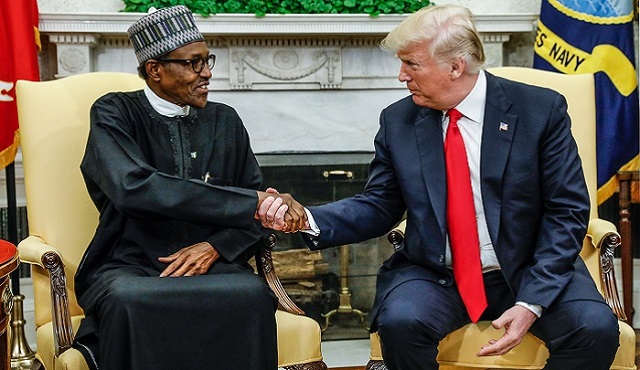
Nigeria’s president: Trump “looked at me in the face. He said ‘why are you killing Christians?’”

Nigeria ranks 12th in the Open Doors USA World Watch List of the worst countries for Christian persecution. Fulani jihadists and the Boko Haram jihad group brutalize and slaughter Christians on a routine basis.

For some odd reason, Buhari — himself a Fulani and a Muslim — decided to be honest about what transpired between him and Trump.

“I was in his office, only myself and himself. Only God is my witness. He looked at me in the face. He said ‘Why are you killing Christians?‘”

Buhari explained: “I tried and explained to him this has got nothing to do with ethnicity or religion. It is a cultural thing which the respective leadership was failing the nation.”

This is disingenuous. Nigeria has been termed the “biggest killing ground of Christians in the world.” Anglican Archbishop Benjamin Argak Kwashi of Jos said: “This thing is systematic. It is planned; it is calculated…. their intention is to Islamize Nigeria.”

Although Buhari openly condemns Boko Haram and Fulani jihadist attacks on Christians, he has done little to stop them.

In February, the Trump Administration launched the first-ever International Religious Freedom Alliance, which 26 countries joined: Albania, Austria, Bosnia and Herzegovina, Brazil, Bulgaria, Colombia, Croatia, Czech Republic, Estonia, The Gambia, Georgia, Greece, Hungary, Israel, Kosovo, Latvia, Lithuania, Malta, the Netherlands, Poland, Senegal, Slovakia, Slovenia, Togo, Ukraine, and the United Kingdom.

Let’s hope more practical efforts are made to help Christians who are suffering persecution in Nigeria and elsewhere. Western countries need to be stop aid to countries that aid and abet persecution against Christians and other religious minorities.

“Buhari: Trump Accused Me of Killing Christians in Nigeria,” by Omololu Ogunmade, This Day, September 8, 2020:

For the first time since he met the United States President Donald Trump in Washington in April 2018, President Muhammadu Buhari disclosed Monday that Trump unequivocally accused him of killing Christians in Nigeria.

However, he said he defended himself, telling Trump that the conflict between farmers and herders in Nigeria was caused by cultural matters and not dictated by ethnic or religious factors.

Buhari, who said he was put on the spot by Trump when he was alone with him, alleging that he (Buhari) was slaughtering Christians in Nigeria, added that the question startled him but he put his emotion under control.

The president, who made the disclosure when he deviated from his closing speech at the end of a two-day ministerial retreat in the Presidential Villa, said he was the only African leader from less developed countries that was invited by Trump at the time.

He asked his cabinet members how they would feel if they were the ones put on the spot and confronted with such a grave allegation, disclosing that he further told Trump that the conflicts were caused by successive leaders of the country who tampered with established grazing routes.

According to him, only Nigerian leaders in the First Republic kept grazing routes while subsequent ones encroached on them, adding that the crisis was older than him and much more than Trump whom he said he was still older than.

“I believe I was about the only African among the less developed countries the President of United States invited, and when I was in his office, only myself and himself. Only God is my witness. He looked at me in the face. He said ‘why are you killing Christians?’

“I wonder if you were the person how you will react. I hope what I was feeling inside did not betray my emotion. So, I told him that the problem between the cattle rearers and stagnant farmers I know is older than me, not to talk of him (Trump). I think I am a couple of years older than him.

“With climate change and population growth and the culture of the cattle rearers, if you have 50 cows and they eat grass, any route to your water point, they will follow it, it doesn’t matter whose farm it was.

“The first republic set of leadership was the most responsible leadership we ever had. I asked the minister of agriculture to get a gazette of the early 60s which delineated the cattle routes where they used meagre resources then to put earth dams, wind mills even sanitary department.

“So, any cattle rearer that allowed his cattle to go to somebody’s farm is arrested, taken before the court, the farmer is called to submit his bill and if he can’t pay, the cattle are sold, but subsequent leaders, VVIPs (very very important persons) they encroached on the cattle routes, they took over the cattle rearing areas.

“So, I tried and explained to him this has got nothing to do with ethnicity or religion. It is a cultural thing which the respective leadership was failing the nation,” he said….

RELATED ARTICLES:

Boris Johnson: Anti-Brexit Biden doesn’t understand UK’s negotiations with EU

CAIR Denounces Netflix’s Pedophilia-Fest ‘Cuties’ – Because It Portrays Islam Negatively

Hungary rejects EU’s new calls for open borders, insisting on right of sovereign states to control their own borders

RELATED VIDEO: Robert Spencer and Charles Moscowitz discuss ‘Rating America’s Presidents’

EDITORS NOTE: This Jihad Watch column is republished with permission. ©All rights reserved.

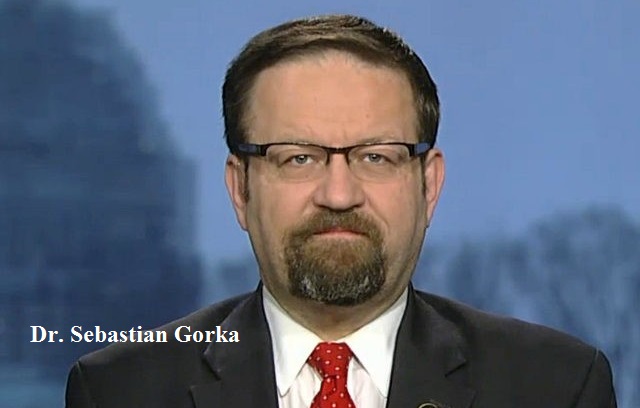
Views on Radical Islam: An interview with Dr. Sebastian Gorka, Deputy Assistant to the President

The Trump Administration spearhead of the ideological war against Radical Islamic Jihadism is Dr. Sebastian Gorka, Deputy Assistant to President Trump and member of the White House Strategic Initiatives Group. He has recently surfaced as spokesperson for the Administration on this and related issues and been the subject of a number of media reports. We had prior knowledge of his views on Radical Islamic jihadism from our New English Review book review and interviews prior to his involvement in the Trump transition team.  Subsequently, following the President’s election he was selected to serve in the Executive Office of the President.  We were afforded an opportunity to interview him on a wide range of current issues on Northwest Florida’s Talk Radio 1330 AMWEBY.  The program aired February 28, 2017.

Among the following national security and foreign policy issues addressed in the 1330amWEBY interview with Dr. Gorka were:

  1. Why the Trump Administration is concerned about the threat from radical Islamic Jihadism?
  2. Who are the ‘self-styled’ counterterrorism experts criticizing the Administration for exposing the ideology behind Radical Islamic Jihadism?
  3. The dangerous threat of Iran’s nuclear and missile development, state support for global terrorism and hegemonic aspirations in the Middle East.
  4. Importance of Israel, Jordan, Egypt as allies in support of US national security interests in the Middle East.
  5. Possible formation of a NATO-type regional military alliance composed of Sunni Arab Monarchies, Emirates and states with possible links to Israel.
  6. Administration views on Turkey and the Kurds in the war to defeat ISIS.
  7. Global spread of Radical Islamic Jihad especially in Sudan, Nigeria, Niger and Mali in Africa.

What follows is the interview with Dr. Gorka:

Mike Bates: Good afternoon welcome back to Your Turn. This is Mike Bates. With me in the studio Jerry Gordon is the Senior Editor of the New English Review and its blog The Iconoclast and joining us by telephone Dr. Sebastian Gorka, Deputy Assistant to the President in the strategic initiatives group. Dr. Gorka, welcome.

Dr. Sebastian Gorka: Thank you for having me.

Bates: Dr. Gorka, you have been criticized significantly by so-called counter-terrorism experts for concentrating on addressing the ideology behind radical Islamic terrorism. Is there any merit to that criticism at all?

Gorka: It’s quite ironic that the individuals that have written these recent critiques are in many cases the people who are responsible for the last eight years of Obama administration policies. That completely ignored the ideological component of groups like ISIS and Al Qaeda and simply resulted in the atrocious situation we have today with ISIS declaring a caliphate of remarkable affiliates across the globe and with attack after attack occurring not only in America but especially in Europe. So the fact is denying the reality of what your enemy believes makes it very difficult to stop them recruiting new terrorists in the future. That’s my bottom line.

Bates: So how are you advising the Trump administration concerning the threat from radical Islamic terrorism?

Gorka: The President, even before he became the Commander in Chief, was very clear on these issues so we are just continuing the work of the presidential campaign. If your listeners look at a very important speech that wasn’t paid adequate attention to it, the Presidents’ Youngstown speech which was very clear on the ideological components of this war. Then we have the inauguration which was very specific, his fifteen minute speech that talked about the radical Islamic terrorist threat the phrase of your former President denied and refused to use.  Then we had  last Friday his address to CPAC which was just as strenuous and talked about obliterating the threat and wiping them from the face of the earth.  Our belief is that this is a war against individual organizations like ISIS. However, in the long term it is really a counter-ideological fight that has to resolve finally in the delegtimization of the religious ideology that drives groups like ISIS.

Jerry Gorda: Dr. Gorka, speaking about obliterating ISIS what changes might we expect in administration policies towards the Kurds in the war to defeat ISIS and the resolution to the conflict in Syria?

Gorka: Unlike previous administrations we don’t give our playbook away in advance. We don’t talk about the specifics of our war plan. However, the President has been clear that whether it’s the Kurds or whether it’s others in the region America is not interested in invading other peoples’ countries; that’s un-American. Our nation was born in a rejection of imperialism not the colonization or occupation of other countries.  Whether it is the Kurds or local Sunnis or the forces of Iraq, we are interested in helping our partners in the region win their wars for themselves. It’s not about American troops being deployed in large numbers, it’s about helping those Muslim nations and forces in the Middle East who want to be our friends help them win their battles for themselves.

Bates: Well speaking about them winning the battles for themselves there have been some news reports about some administration discussions about the possible formation of a NATO type regional military alliance in the Middle East. Is there anything developing there?

Gorka: Again we are going to keep our powder dry and we are not going to give away our game plans in advance. The bottom line is not the labels or not what we wish to package things into. The issue is the local actors stepping up to the plate with our assistance to fight their backyard war.  I mean it’s not, Christians who have been decimated, Yazidis have been decimated but by far the largest number of victims of the jihadist groups are their fellow Muslims. They are not just the Shia who they deem to be heretics but in many parts of Iraq and Syria and elsewhere the ISIS forces, the related groups are killing other Sunnis that they disagree with.  Whatever the coalition it will be very different from the smoke and mirrors coalition that was created under the Obama years which really wasn’t a serious force.

Gordon: Dr. Gorka, how dangerous is the threat of Iran’s nuclear and missile development, state support for global terrorism and hegemonic aspirations in the Middle East?

 Gorka: That’s a question that could have a PhD dissertation level response. Let’s just talk about the facts. We know Iran according to the U.S. Government is a state-sponsored terrorism, the largest state-sponsor of terrorism. It is not doing this recently it has been doing this since 1979 whether it is from the Iranian hostage siege crisis all the way down.  This is a nation that I like to depict as an anti-status quo actor. This is a nation that doesn’t share basic interests with the normal values of the international community. They are not interested. If you are a theocratic regime that wishes to forcibly and subversively export  your theocratic vision around the world what is the common interest you could have with America or with any of our allies? That’s the false premise upon which U.S. Iran relations were based in the last eight years and the idea that a nation that has that destabilizing ideology wishes to acquire weapons of mass destruction including nuclear capability means that they do represent a threat to all nations that believe in a global stability.

Gordon: Dr. Gorka, how important is Israel as an ally in support of U.S. National Security interests in the Middle East versus resolution of the impasse with the Palestinians?

Gorka: There is no greater partner of the United States in the Middle East. We are very close and we help the Jordanians, Egypt, UAE  redressing and improving the very  negative relationship that was established between the White House under the Obama administration and Egyptian President Sisi’s government. Israel, as a beacon of democracy and stability in the Middle East, is our closest friend in the region and the President has been explicit in that again and again So it would be difficult  to overestimate just how important Israel is not only to America’s interest in the region but also to the broader stability of the Middle East.

Bates: And what kind of role do you foresee for Turkey?

Gorka: I think that is in many ways up to Ankara. Historically, after it’s accession to NATO, Turkey became one of the most important nations in the alliance. It had the largest army in Europe. As a result of its location it was highly important during the Cold War geo-strategically. Recent events with an emphasis to rising fundamentalist attitudes have questioned the future trajectory of Turkey. The administration and the President is clear that it wishes to be a friend to those who wish to be our friends.  I think you know any good relationship depends upon both parties willingness to work together. We would like to continue a fruitful relationship with Turkey but that depends upon the government in Ankara itself.

Gordon: Dr. Gorka, the Obama administration lifted sanctions against the Islamic Republic of the Sudan on the cusp of leaving office. This despite evidence that the regime of President Bashir is raising a terrorist army literally to foment jihad in the Sahel region of Africa. What remedies might the administration consider to combat this?

Gorka: Again you are trying to tease out very concrete policy prescriptions from us and I’m really not prepared to do that at this point. Remember we are in week six of the administration.  However, we do recognize and we are very serious about the fact that of what I call the global jihadi movement isn’t just an issue in the Middle East. We like to focus on the so-called five meter target. It was Al Qaeda for a decade then it morphed into the Islamic state or ISIS.  There are large swaths of territory in Africa that are unstable, are not sovereign in the sense that the local government exercises full control over them. The mere fact alone if you look at Nigeria, the Boko Haram, the black African jihadi group has sworn allegiance to ISIS and Ab? Bakr al-Baghdadi and has been incorporated into the Islamic state, changed its name to the West African Province of the Islamic state. That shows you just how serious the situation is.  Jihadism truly spreads from whether it’s Aleppo, whether it’s Raqqa, whether it’s Africa, Mali, Nigeria or to the streets of Brussels or San Bernardino. We fully appreciate just how global the threat is and that includes Africa as well.

Bates: Dr. Gorka, it obviously includes the United States as well.  One of President Trump’s very first executive orders had to do with the restriction of entry into the United States from people from seven countries. The administration was criticized by the Democrats and the media, my apologies for being redundant there.  However, if you look at the numbers of those seven affected countries, Iran, Iraq, Libya, Sudan, Somalia, Syria and Yemen,  have a combined population of  220 million people and there is a global Muslim population of 1.6 billion.  That means that 86 percent of Muslims in the world are not prevented from entering the United States and yet it was portrayed as a Muslim ban. How does the administration intend to come out with a revised plan that can avoid that criticism or do you think the criticism will come no matter what?

Gorka: The criticism will come no matter what because there is a fundamental disjuncture between the mainstream media, a perception of the world and the actual reality of how serious the threat is. These are the countries that either are state sponsors of terrorism or are the hotbeds of jihadist activity today be it Islamic State or Al Qaeda. This is a threat analysis we inherited from the Obama administration.  The idea that it is controversial is asinine and secondly you’re absolutely right. If this had been an Islamaphobically generated executive order then how is it the most populous Muslim nation in the world, Indonesia, was left off of the list? How is it the most populous Arab Muslim nation in the world  Egypt was left off the list? The challenge that was politically brought was that there was some ulterior motive behind the listing of these seven countries.  The fact is it is an unemotional cold analysis of the threat to America that was the reason for the drawing up of that moratorium of that list of seven nations.  But if you have a political agenda then of course you will spin things politically.

Bates: Another nation that’s not on that list is Saudi Arabia. Can you address the cooperation we are getting from the House of Saud regarding the overall global war on Islamic terrorism?

 Gorka: Again, it’s getting a little too specific.  However,  I will talk about some good things that have occurred. We know that there were issues with certain elements of Saudi society propagating or supporting the propagation of radical ideologies around the world. That attitude changed quite drastically in about ’05, ’06 when Al Qaeda started targeting Saudi officials on Saudi soil.  A nation that may have been problematic for several years has recently been reassessing its attitude to these international actors.  We expect to see even more positive things coming out of Saudi Arabia as we in the White House, especially the President and Secretary Tillerson start to rebuild the relationships with all our allies in the region that were so detrimentally affected by the treatment they received at the hands of the Obama White House.

Bates: Well if I may editorialize for just a moment, it is a relief to see an administration that is taking the threats seriously and is dealing with the world as it is and not as it wishes the world were. Dr. Sebastian Gorka, Deputy Assistant to the President in the strategic initiatives group, thank you so much for joining us this afternoon on Your Turn on 1330 AM WEBY.

LISTEN to the 1330 AM WEBY interview with Dr. Gorka.

RELATED ARTICLE: Swede Democrat leaders pen WSJ op-ed imploring Americans to avoid the mistakes Sweden made 

EDITORS NOTE: This column originally appeared in the New English Review.

The Betrayal Papers: A New Genocide

Part I of The Betrayal Papers explained the history and context of the Muslim Brotherhood’s influence in the American government.

Part II looked at the associations of seven Obama officials with Muslim Brotherhood front organizations in the United States.

Part III traced the Muslim Brotherhood’s and the State of Qatar’s influence on domestic policy and Obama administration scandals.

Part IV will examine foreign policy under Obama.  It will explain how the Obama administration and U.S. Department of State have used the American military and standing in the world as tools to kick start the creation of a new Islamic Caliphate.  Obama’s unconscionable enabling of and silence regarding a new genocide will be revealed.  Finally, this article will offer a cursory reassessment of America’s allies, and which countries we have lost as friends.

“The transformation of America has been in the full swing ever since 2008.  President Obama’s no-show in Paris was an embarrassment for all Americans.  But it also was a signal to the Islamic jihadis.  It’s one of the many signals he’s sent over the years while he’s in office.  Now there’s no question: We got a hell of a job ahead of us…  with the Muslim Brotherhood penetration in every one of our national security agencies, including all our intelligence agencies.” –  Admiral James ‘Ace’ Lyons, speaking at the Center for Security Policy

Is Obama a Muslim?

This is the question that many Americans and people around the globe are asking themselves lately.  From his refusal to label the Islamic State “Islamic,” to his lecture about the Crusades at the National Prayer breakfast, what once was taboo is now starting to be verbalized.

Yet this may be the slightly wrong question to ask.  The ruling establishment of Saudi Arabia, home to Islam’s holiest sites, Mecca and Medina, is rightly considered an authoritative voice of Islam.  In case you missed it, the Saudis have emerged as some of Obama’s biggest critics.

In doing so, the Saudis also revealed the truth regarding the Arab Spring.

Writing in the Saudi daily Al-Jazirah, columnist Dr. Ahmad Al-Faraj, while supporting Israeli’s Prime Minister Benjamin Netanyahu’s speech before Congress, not only called Obama “one of the worst U.S. presidents;” he also exposed the nature of so-called “democratic revolutions” in the region.  Stated al-Faraj:

Since Obama is the godfather of the prefabricated revolutions in the Arab world, and since he is the ally of political Islam, [which is] the caring mother of [all] the terrorist organizations, and since he is working to sign an agreement with Iran that will come at the expense of the U.S.’s longtime allies in the Gulf, I am very glad of Netanyahu’s firm stance and [his decision] to speak against the nuclear agreement at the American Congress despite the Obama administration’s anger and fury.”

Translation: Obama served as a mouthpiece for, and armed,the Muslim Brotherhood (i.e., “political Islam”) revolutionaries in Egypt, Tunisia, Libya, and Syria.  He was aided in this incredibly destructive policy of jihad by Secretary of State Hillary Clinton until her resignation in 2013, and has been further aided by her successor, John Kerry.

The original Muslim Brotherhood, the Ikhwan, was banished from Saudi Arabia in 1927.  The conservative Wahhabi Saudi royals have traditionally had little use for exporting jihad, and indeed are one of the United States’ oldest strategic allies in the region.  Despite Americans’ revulsion at Saudi Arabia’s application of barbaric sharia (i.e., Islamic) law in their own country, outside the Kingdom Saudis have every reason to maintain the status quo with neighbors, including Israel, Jordan, and Egypt.  That means keeping the Muslim Brotherhood out of power.

The pertinent question is not whether Obama is secretly a Muslim, per se, but rather if Obama is a secret Muslim Brother.  That is the real question.

The Words of Obama, Dalia, and Rashad

If we take the Saudis, the most influential Gulf country, seriously, then it follows that Obama and his administration must have had a plan for the Arab Spring that goes back several years, i.e. 2008.

Part II of The Betrayal Papers identified seven Obama administration officials who had/have associations with several Muslim Brotherhood front organizations in the United States (CAIR, ISNA, MSA, etc.).  It also tracked their associations with Georgetown University and the Brookings Institution, both recipients of significant amounts of money from the State of Qatar, the home of many prominent Muslim Brothers.

One of those officials is Rashad Hussain, who is Obama’s Special Envoy to the Organisation of the Islamic Conference.  In August 2008, Hussain co-authored a paper for the Brookings Institution called Reformulating the Battle of Ideas: Understanding the Role of Islam in Counterterrorism Policy.  The paper, which calls Islam the “strongest ally” in the “global effort to end terrorism,” explicitly calls for the American government not to reject political Islam, but to utilize Islamic scholars and Islamic “policymaking” to reject “terrorism.”  It also recommends that “policymakers should reject the use of language that provides a religious legitimization of terrorism such as ‘Islamic terrorism’ and ‘Islamic extremist.’”

Is it any wonder now why Obama says that the Islamic State “is not Islamic?”  This is the deceptive language of the Muslim Brotherhood, recently welcomed to the White House.

Let’s now turn our attention at a report co-authored by Dalia Mogahed, who was a member of Obama’s Advisory Council of Faith-Based and Neighborhood Partnerships and influential in writing Obama’s nefarious 2009 speech in Cairo.  Additionally, Mogahed is currently listed as a member of Georgetown’s Berkley Center for Religion, Peace, & World Affairs.

Mogahed was part of the Leadership Group on U.S.-Muslim Engagement.  Other members of the group were former Secretary of State Madeline Albright, Imam Feisal Abdul Rauf (of World Trade Center Mosque notoriety), and Muslim Public Affairs Council’s Ahmed Younis.  The report issued by the group called for engagement and cooperation with political Islam, and specifically with the Muslim Brotherhood:

The U.S. must also consider when and how to talk with political movements that have substantial public support and have renounced violence, but are outlawed or restricted by authoritarian governments allied to the U.S. The Muslim Brotherhood parties in Egypt and Jordan are arguably in this category. In general, the Leadership Group supports engagement with groups that have clearly demonstrated a commitment to nonviolent participation in politics.”

Indications of a plan to work with the Muslim Brotherhood were evident as early as June 2009, when the President went to Cairo’s Al-Azhar University to address the Muslim World.  The audience included prominent members of the Muslim Brotherhood that Obama insisted on having seated in the front row.  Said Obama, [The] partnership between America and Islam must be based on what Islam is, not what it isn’t.  And I consider it part of my responsibility as President of the United States to fight against negative stereotypes of Islam wherever they appear.”

With the statements of the Saudi journalist, Hussain, Mogahed, and Obama himself in mind, presented below is a thumbnail sketch of the Arab Spring and its consequences, and the intersection between the Obama administration and the Muslim Brotherhood.  This is only a fraction of the evidence that proves Obama has worked hand-in-hand with the Muslim Brotherhood to transform the Middle East.

Tunisia

In Tunisia in 2011, the government of Ben Ali fell after a man self-immolated, sparking a wave of protests.  Subsequently, Tunisia elected the Muslim Brotherhood Ennahda party, with a plurality of 37% of the vote.  In October 2014, Tunisia elected a secular government.

Libya

Libya exemplifies the essence of the so-called Arab Spring, an anarchic Muslim Brotherhood revolution that thrives on violence and chaos.

In such ungovernable disarray are significant parts of Libya today, that it is actually being used as a staging ground by ISIS for an invasion of Europe.

Despite repeated warnings and advice by the United States military to leave Muammar Gaddafi in power, Secretary of State Hillary Clinton and President Obama launched a disastrous war against the Gaddafi regime, leaving a power vacuum for Al Qaeda and the Muslim Brotherhood to fill.

Practically, Libya served as armaments bazaar for the Muslim Brotherhood and all associated terrorist groups.  Libyan weapons have ended up in the hands of jihadis across North Africa, potentially contributing to the stockpile of arms of Boko Haram.  These weapons were also sent to Syrian rebels, including groups who are now part of ISIS.

Currently, an ongoing proxy war rages in Libya.  The anti-Muslim Brotherhood countries of Egypt and the United Arab Emirates battle Qatar and Turkey (close allies of the Obama administration) and the local Islamic terrorists.

Benghazi

Benghazi and all the mystery that surrounds it can mostly be dispelled in a few short paragraphs.  A few facts will inform the reader, and then the attack that killed four Americans on September 11, 2012 can be then put in the larger context of a Muslim Brotherhood-guided American agenda.

First, the February 17 Martyrs Brigade, aka Ansar al-Sharia, was hired to guard the compound by the American government.  In a word, they are a jihadi militia.

Second, the compound in Benghazi was crawling with CIA agents.  According to CNN’s Jake Tapper, there were “dozens” of CIA personnel present the night of the attack, and the Obama administration has gone to “great lengths” to obscure their activities.  Many speculate that Ambassador Stevens was a CIA asset in the State Department.

Third, only hours before the attack, Stevens met with a Turkish ambassador at the compound.  Turkey, it should be recalled, was a transshipment point for some Libyan weapons that were shipped out of the country to jihadis elsewhere.

Fourth, the Muslim Brotherhood Morsi government of Egypt was involved with the attack.  In fact, some of the terrorists were caught on video saying “Don’t shoot!  Dr. Morsi sent us!”

These facts beg the question: If Ambassador Stevens was in fact overseeing a gun running operation to Islamic/jihadi/Muslim Brotherhood militias, why would the same people kill him?

Given the above evidence, the prominent theory that Stevens was going to be a trade for the Blind Sheikh, Omar Abdel-Rahman, seems a plausible explanation.  (Morsi was dedicated to the release of Rahman.)  And this theory is endorsed by no less an authority than retired four star Admiral James Lyons.

Once this plan went spectacularly wrong, a number of other things occurred, which again, fit into the larger picture of a Muslim Brotherhood-control Obama administration.

In an alarming breach of protocol and duty, Obama’s Special Advisor, Valerie Jarrett, issued the order to the military “stand down.”  In other words, she ordered that Stevens and the other Americans be left to fend for themselves against a well-armed jihadi militia.

Regarding the now infamous Talking Points scandal involving Susan Rice, et. al., that blamed the attack on obscure and poorly produced movie, an MSA member from George Washington University was copied on the email sent by Ben Rhodes (who, recall, wrote Obama’s 2009 Cairo Speech).

Finally, George Soros is also connected to this scandal.  The Obama-appointed lead investigator for the attack was Ambassador Thomas Pickering, who has ties to CAIR, a well-known Muslim Brotherhood front group in the United States.  At the time of the investigation, Pickering was the co-chair of the Soros’ International Crisis Group.  He is still a trustee.

Egypt

So much has been written about Obama’s decision to force the resignation of Hosni Mubarak, and the subsequent election of Mohamed Morsi to the Egyptian Presidency, that the space here will be used only to reinforce some key and lesser known points.

  • Mubarak was the lynchpin of regional stability, the president of the most populous Arab country who maintained not only peace but a strong relationship with Israel and the United States.
  • Mohamed Morsi likely joined the Muslim Brotherhood through the Muslim Students Association in America, while he was a student at University of Southern California.
  • The wife of Mohamed Morsi was a long-time friend of then-Secretary of State Hillary Clinton.
  • When Morsi came to power and began to implement sharia law, Obama promised the Morsi government $8 billion in exchange for land in the Sinai for Palestinians (Hamas).  Once Morsi was removed, following a brief, murderous, and highly destructive reign of power, Obama immediately withheld military aid to Egypt.
  • Through 2013, the Clinton Foundation received between $1 million and $5 million from Qatar.
  • It appears likely that close Obama friends, the domestic terrorists Bill Ayers and wife Bernadine Dohrn, played a significant role in fomenting the protests which led to the resignation of Mubarak.  Terrorist birds of feather flock together.

In case you were wondering, Obama advisor Dalia Mogahed considered the ouster of Morsi a “coup,” and CAIR and ISNA were likewise critical of the restoration of secular law in Egypt, which no doubt has prevented the slaughter of countless Coptic Christian lives.

Syria, Iraq, and ISIS – A Lost War, a Genocide, and a Rape of Humanity

Say what you will about Bashar al-Assad, he and his father Hafez have always strongly opposed the Muslim Brotherhood.  Indeed, Mustafa Setmariam Nasar, aka Abu Musab al-Suri, a lieutenant of Osama bin Laden and architect of the Madrid train bombings, spent most of his life trying to overthrow the Assads and implement sharia law.  (Not only is Nasar Syrian, his nom de guerre “Al-Suri” means “the Syrian.”)  As late as 2008, none other than Nancy Pelosi was hobnobbing with the secularly minded Assads.  John Kerry and his wife Teresa Heinz Kerry also dined with and were entertained lavishly by the Assads in 2009.

What Obama has unleashed in Syria by supporting jihadi rebels is an apocalyptic force of total depravity that specializes in genocide and cultural annihilation.  There are few words that do justice to the evil, inhumanity, and unbelievable cruelty that define ISIS and their end-of-times approach to warfare.

Not only do they set people on fire, but they also behead and torture children.  Americans are bombarded with these images regularly.  Equally as atrocious and appalling, they openly and gleefully destroy everything pre-Islamic.  Much like the Buddhas in Afghanistan that the Taliban dynamited, ISIS believes in the Islamic concept of Jahiliyyah, which demands that all traces of civilization before the time of Mohammed the Prophet be erased.

ISIS is literally rampaging across the cradle of civilization, Mesopotamia, laying waste to some of humanity’s oldest faith communities, artifacts, and landmarks.  Simultaneous to the modern day Holocaust that is happening to ancient Christian communities in the occupied regions, ISIS trumps even the art-hoarding Nazis in their total disregard for all things that make us human.

In the face of this unspeakable crime against humanity, Obama has not once mentioned the ongoing genocide, much less the irreplaceable loss of culture and tangible history.  The airstrikes ordered by Obama and his advisor Valerie Jarret against ISIS have been described as “pin-pricks.”  This shows that they are either lackadaisical in the face of the genocide, or more likely do not wish to be bothered.  So committed is Obama to America’s defeat in the Middle East that he has appointed the above-mentioned Rashad Hussain, a documented supporter of political Islam, as a social media “warrior” to lead the cyber charge against these subhuman savages.

In time, the enormity of this crime will be examined through a historical lens.  A few decades from now people will wonder how the liberty-loving United States elected a hollow, morally insipid man named Barack Hussein Obama, who armed and trained a jihadi army that destroyed our common human heritage and murdered entire tribes by the thousands.

Of great concern, domestically the soulless ISIS is now operational in all 50 states (according to the FBI), and ISIS training camps have been discovered in various states.  A not-so-unexpected consequence of Obama’s open borders policy, indeed.

Regarding Iraq, it is no surprise and it is not hyperbole to simply state the obvious: Obama and the Muslim Brotherhood surrendered Iraq to the enemy, willingly and consciously.  Into this void steps an emboldened and rejuvenated Iran.

Afghanistan

Much like Iraq, Afghanistan is in the process of being surrendered to the Taliban.  Not only has the administration and (Afghan President) Karzai negotiated with the Taliban, they also idly watched as the same terrorists who hosted Osama bin Laden set up an embassy in Doha, Qatar.  A national intelligence estimate as early as December 2013 predicted that all progress would be lost once a military draw down began.

True to form, seven months after this estimate was released Obama swapped one American deserter, Bowe Bergdahl, for five high ranking Taliban commanders released from Guantanamo Bay, and a significant sum of money.

Following Obama’s policies, all the American blood and treasure spent liberating Afghanistan will be sacrificed by Obama, to the absolute benefit of the Muslim Brotherhood.

As a postscript, it will be noted that a primary source of Taliban funding, poppies for opium, have seen record Afghan crop yields in 2013 and 2014.

Nigeria

While #BringBackOurGirls may have been a temporary PR win for the Obama administration, it obscured the fact that the administration has been consistently enabling the growth of the jihadi army of Boko Haram by downplaying them as a threat.  As if on cue, last week Boko Haram pledged allegiance (bayah) to the Islamic State.

According to one report that rings true, Boko Haram began with a $3 million grant from Osama bin Laden.  One senior U.S. intelligence official stated, regarding the matter, “There were channels between bin Laden and Boko Haram leadership… He gave some strategic direction at times.”  This connection evidently does not phase the Obama administration and U.S. Department of State.

As Andrew McCarthy wrote regarding the Clinton State Department’s position on Boko Haram:

“Instead, ignoring what Boko Haram pronounces its goals to be, the Obama administration portrayed it as a diffuse organization with no clear agenda that was ascendant due to the policies of the Nigerian government (which is under Christian leadership).”

Hillary Clinton’s successor at State, John Kerry, sings the same tune, while thousands of Nigerians are massacred.  Following air strikes by the Nigerian government, Kerry urged restraint, warning Nigerian President Goodluck Jonathan “to respect human rights and not harm civilians.”

Meanwhile, this African scourge has amassed a “massive army” that is reportedly stronger than the Nigerian Army.  Defeating Boko Haram will likely take the coordinated efforts of Nigeria and neighboring Cameroon, which has close ties to a very sympathetic Israel.  The French Army is right now operating out of Mali in Nigeria, contributing to the fight against the jihadis.

Israel

There is so much in the news regarding Obama’s falling-out with Israel and Prime Minister Netanyahu that little needs to be added here.  The likely breaking point in the relationship was Obama’s and Kerry’s siding with Qatar and Hamas during the war last summer; and, more recently, with the obvious intention of Obama to permit Iran to develop their nuclear arms capacities.  This week, it is reported that Obama has appointed another Hamas-connected advisor, Robert Malley, to coordinate Middle East policy for the White House.

The deplorable disrespect and insults hurled at Netanyahu by the Democrats during his visit are the mirror image of an America whose college campuses have been overtaken with a virulent anti-Semitism.

Still, this chapter would not be complete without mentioning the integral part that Obama’s friends Bill Ayers and Bernadine Dohrn, terrorists themselves, played in launching the diplomatically catastrophic “Peace Flotilla” – boats from Turkey, filled with military supplies and other goodies, for Hamas.

Iran

Into the grand void, the power vacuum, created by the Arab Spring, steps a nation largely unaffected by the Arab Spring: Iran.  In fact, when Iran nearly embraced modernity and secular government with its so-called “Green Movement,” Obama and the Iranian-born Valerie Jarrett stood conspicuously on the sidelines.  Years in the making, the protestors and activists who challenged the Iranian mullahs paid dearly for their attempt at overthrowing the Islamic Republic while Obama’s administration remained silent and watched them get smashed.

An historic moment was totally squandered.

Whether it is in Yemen or in Iraq, Iran is the beneficiary, net-net, of the Arab Spring.  Even as their Supreme Leader openly calls for the destruction of Israel, the Obama administration proceeds undaunted with negotiations that would give them nuclear capabilities and the means to strike the Middle East, Europe, and the United States with intercontinental ballistic missiles.

Conclusion

The Citizens’ Commission on Benghazi put it this way: Obama “switched sides in the War on Terror.”  The evidence presented above is but a glimpse into the preponderance of open source, published information that supports the Commission’s conclusion.

We are now faced with a totally new geopolitical situation: geographically, politically, and militarily.

With the body count growing by the day, and with a far larger war looming on the horizon, one would think that the responsible parties still left in government would pause, reflect, and begin to reverse course before it is too late.  Yet as recently as December, NATO hailed its partnership with terrorist financier extraordinaire, the Gulf State of Qatar.  This is tantamount to openly declaring allegiance to the Muslim Brotherhood, a totalitarian and genocidal movement whose actions we see manifested daily.

The ultimate fallout from this historic, awful change in American policy may very well be a war of untold destruction.  In the meantime, it is observed that some of America’s former allies have already decided that we, as agents of jihad, can no longer be trusted.  Egypt is forming a closer relationship with Putin’s Russia, as is Saudi Arabia.  India, which had moved closer to the United States under George W. Bush, has also turned toward Russia.  France, with the rise of the National Front party, may very well be next to look east to Moscow.  And Israel is openly courting new strategic alliances.

Truly, there have been few times in American history when our national commitment to morality, decency, and humanity has been so genuinely questionable.  If the majority of the American people understood what has already been risked by this president and his Muslim Brotherhood-aligned administration, they would demand immediate resignation and a full investigation of the government agencies which are in league with, and give aid and comfort to, the enemy.

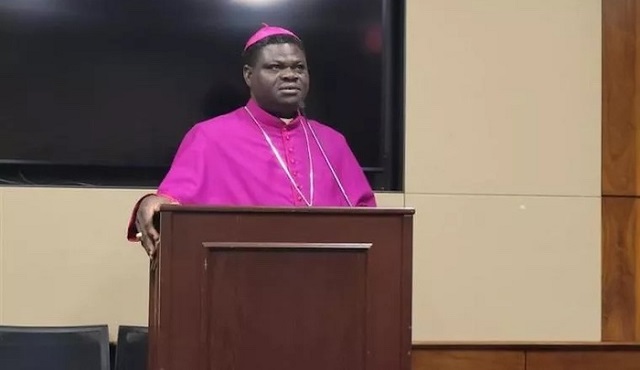
Obama’s Grand Plan?

On October 25, 2014, I published a column titled, “Barack Obama: Grand Caliph of Islam,” in which I conjectured that Obama’s long term career goal, after completing his second term in the Oval Office, may be to return to the land of his forefathers and, within a few short years, run for president of Kenya.  Although most Americans would expect Obama to do almost anything to establish his place in history, many readers scoffed at the suggestion, saying that it was illogical to even suggest that anyone would want to become president of a small East African country after serving two terms as president of the richest, most powerful nation on Earth.  But was that really so farfetched?  And what led me to arrive at that conclusion?  Let’s connect a few dots.

First, if we can take Obama at his word regarding his parentage, he was born on August 4, 1961, to an American mother, Stanley Ann Dunham, and Barack Obama, Sr., a citizen of British East Africa (Kenya), a British colony.  Thus, if Obama is to be believed, it is indisputable that he was born with dual U.S.-Kenyan citizenship.  However, after Kenya won its independence from Great Britain on December 12, 1963, the newly-adopted constitution failed to recognize permanent dual citizenship, requiring all those of dual nationality to decide by date-certain which country they wished to affiliate with.  And since there is no evidence that Obama has ever renounced the American portion of his dual citizenship, under Chapter VI, Section 97 of the 1963 constitution he automatically lost the Kenyan portion of his dual citizenship on August 4, 1984.

Understanding that Obama is a man motivated primarily by delusions of grandeur, it leads one to ask: how could such a man ever find happiness in any position in which he was not the center of attention, worshiped and adored by people around the world?  And what could he possibly do that would allow him to carve out a niche for himself in world history greater than the presidency of the United States?  Allow me to speculate once again that, after spending eight years in the White House attempting to “fundamentally transform” the greatest, most powerful nation on Earth, doing irreparable damage to our country in the process and earning the well-deserved title of “Worst President in American History,” it is entirely conceivable that he might wish to live out his years in Kenya where he is universally worshiped and adored.

Impossible you say?  Perhaps.  But I would argue that what I suggest is no more far-fetched than the notion that an inexperienced, pot-smoking, cocaine sniffing, red-diapered, black agitator from Chicago… a man whose only discernible talent is the ability to read someone else’s words from a teleprompter and make them sound convincing… could plan and implement a career path that would transport him from the leadership of a racially-oriented “community organizer” scam in Chicago to the presidency of the United States in just 12 short years.

When Obama leaves office in January 2017, he will be just 55 years, 6 months, and 16 days old, a relatively young man, but a man burdened by an acute case of narcissistic personality disorder.  The psychiatric division of the Mayo Clinic defines narcissistic personality disorder as “a mental disorder in which people have an inflated sense of their own importance and a deep need for admiration.  Those with narcissistic personality disorder believe that they are superior to others and have little regard for other people’s feelings.  But behind this mask of ultra-confidence lies a fragile self-esteem, vulnerable to the slightest criticism.”

Some have argued that the presidency of Kenya is far too humble a position for Obama, a man who thinks only in the most grandiose terms.  In response, I would venture a guess that, given his popularity among black Africans and with Muslims around the world, his long term agenda would have him emigrating to Kenya, running for president, and then proceeding to unite all of sub-Saharan Africa and all of Muslim North Africa, into a single Islamic confederation… a massive Islamic caliphate with himself as Grand Caliph.

A man who hates the U.S. military as much as Obama does, yet finds no contradiction in thinking of himself as Commander-in-Chief of the largest and most lethal military force on earth, would have no problem seeing himself as the Grand Caliph of the entire Islamic world.  So what steps has he taken to turn his out-sized ambition into reality?

In spite of having lost his Kenyan citizenship in August 1984, Obama spent some $24 million in U.S. foreign aid funds during fiscal year 2010 in support of a “yes” vote on a revised Kenyan constitution.  So, one might ask, what possible interest could a U.S. president possibly have in rewriting the constitution of a small country in east Africa, unless it was a revision that would reinstate his dual US-Kenyan citizenship and make it possible for him to run for president of that country?

The people of Kenya approved their new constitution on Obama’s 49th birthday, August 4, 2010 (don’t you just hate it when that happens?).  Chapter 3, Section 14 of the revised constitution provides that, A person is a citizen by birth if on the day of the person’s birth, whether or not the person is born in Kenya, either the mother or father of the person is a citizen (of Kenya).  On that day, Barack Obama became a “citizen by birth,” of Kenya.  So, other than his successful effort to assist the people of Kenya in the adoption of a new constitution, what additional steps has he taken to turn his great ambition into a realistic possibility?

According to a February 21, 2015, article in WorldNetDaily (WND), Obama is spending an additional $250 million… courtesy of the American taxpayer… sending advisors to Kenya for the purpose of assisting in the “simultaneous expansion of healthcare services and the ongoing decentralization of the national government.”  WND quotes a document seeking to recruit  the right bureaucrat to implement this foreign aid boondoggle… the largest in sub-Saharan Africa and the seventh largest in the world… by repeating Obama’s longtime goal of establishing “a social healthcare system to enable equitable provision of health care to all Kenyan citizens.”

With the raging “success” of the Affordable Care Act, otherwise known as “Obamacare,” it is only logical to assume that he would want to do for the people of Kenya exactly what he has done for (to?) the American people.  Where better to inflict the same sort of bureaucratic health care disaster than in an African country where he just happens to hold lifetime citizenship?

According to the plan, the successful candidate, working out of USAID’s Office of Population and Health in Nairobi, “will advise USAID/Kenya on all aspects of family planning (spending U.S. taxpayer dollars in support of abortion), maternal and child health, nutrition (an obvious ploy to introduce Kenyans to their future First Lady), tuberculosis, malaria, and HIV/AIDS.”

WND reports that, “The advisor will be tasked with finding solutions to obstacles Kenyans face in receiving health care, particularly ‘public sector maternity and primary health care services,’ which became free for Kenyans in June 2013.”  One can only assume that it is Obama’s way of using Kenya as a social laboratory… experimenting with a single-payer system and avoiding the need for health care “exchanges” that have made Obamacare such a nightmare for Americans.

According to the recruiting document, “An estimated 30 percent of people now receiving care in public facilities could afford to use private services if they had insurance.  Shifting them would allow the government to focus public sector resources on the poorest and most vulnerable citizens”… coincidentally, the very same poor, needy, and uneducated people whose allegiance Obama would need in his campaign for the presidency of Kenya.

But that only insures Obama’s election in Kenya.  Beyond that, what could he possibly have in mind that would insure his place in history?  Looking at a map of Africa, with some forty-six countries having significant Muslim populations, the total Muslim population of Africa in 2010 was estimated to be 435.24 million… thirty-six percent more people than the entire population of the United States… and is expected to grow to an unsustainable 539.08 million people by 2020 when Obama will have been out of office for just four years.

A February 17, 2015 report by Liberty Voice reminds us that, since 2009, the Nigerian terror group, Boko Haram, has murdered more than 5,000 Nigerians and has abducted more than 500 others: men, women, and children.  Included among those abducted are 276 teenage girls, aged 16-18, who were abducted from the town of Chibok in April 2014.  Of the 276 girls kidnapped, some 57 have escaped.  The remaining 219 remain captives of Boko Haram where they are raped, tortured, used as sexual barter, and sold into slavery.

Given the ability of terror groups such as ISIS and Boko Haram to spread terror among peace-loving peoples, it is easy to see how an entire continent, with well over a half billion Muslims, would be ripe for conquest and radicalization.  The only thing they lack is a charismatic leader, a man worshiped and adored by Muslims around the globe.

These are people who have no qualms whatsoever about raping, murdering, or burying children alive; depriving women of all human rights; beheading Christians, Jews, and apostate Muslims; or burning captive enemy fighters alive.  Nevertheless, it appears that no atrocity, no matter how unspeakable, is sufficient to cause Obama to identify the enemy for who he is.  Is it any wonder, then, that he steadfastly refuses to offend even the vilest of the vile, refusing to use the terms “Islamic terrorists” or “radical jihadists?”

Either his narcissistic personality disorder is so acute that he is simply indifferent to human suffering, or he is looking to the future when he will need the goodwill of every Muslim in Africa to insure his place as the single most powerful black man in recorded history?  So think about it.  It’s time to start connecting the dots.

EDITORS NOTE: The featured image is of President Obama at White House. Photo by Pete Souza.