Tag Archive for: Supreme court

SCOTUS Approves Lone Star State’s New Congressional Maps

With the 2026 midterms looming, the U.S. Supreme Court is officially weighing in on the redistricting arms race between red and blue states. Late Thursday, the nation’s highest judicial authority disagreed with a lower court ruling and instead allowed Texas to implement new congressional district maps expected to take five seats in the U.S. House of Representatives from Democrats and hand them to the GOP.

A divided three-judge panel consisting of two federal district court judges and one appellate court judge ruled late last month that the new congressional district maps Texas planned were unlawful, charging the state legislature with remaking congressional districts on racial lines, rather than along political ones. Six of the Supreme Court’s nine justices reversed the lower court’s decision. “Texas is likely to succeed on the merits of its claim that the District Court committed at least two serious errors. First, the District Court failed to honor the presumption of legislative good faith by construing ambiguous direct and circumstantial evidence against the legislature,” the court’s majority wrote in a two-page order halting the lower court’s injunction. “Second, the District Court failed to draw a dispositive or near-dispositive adverse inference against respondents even though they did not produce a viable alternative map that met the State’s avowedly partisan goals.”

The Supreme Court’s progressive wing, comprised of Democrat-appointed Justices Sonia Sotomayor, Elena Kagan, and Ketanji Brown Jackson, issued a 17-page dissenting opinion authored by Kagan and joined by Sotomayor and Jackson. “In enacting an electoral map slanted toward Republicans, did Texas predominantly use race to draw its new district lines? Or said otherwise, did Texas accomplish its partisan objectives by means of a racial gerrymander?” Kagan asked. “Texas largely divided its citizens along racial lines to create its new pro-Republican House map, in violation of the Constitution’s Fourteenth and Fifteenth Amendments,” she continued, noting the lower court’s decision. “Yet this Court reverses that judgment based on its perusal, over a holiday weekend, of a cold paper record. We are a higher court than the District Court, but we are not a better one when it comes to making such a fact-based decision.”

“That is why we are supposed to use a clear-error standard of review — why we are supposed to uphold the District Court’s decision that race-based line-drawing occurred (even if we would have ruled differently) so long as it is plausible,” she wrote. The clear-error standard of review is an appellate standard, under which “a finding is ‘clearly erroneous’ when, although there is evidence to support it, the reviewing court on the entire evidence is left with the definite and firm conviction that a mistake has been committed,” according to the Supreme Court in United States v. United States Gypsum Co. “Without so much as a word about that standard, this Court today announces that Texas may run next year’s elections with a map the District Court found to have violated all our oft-repeated strictures about the use of race in districting,” Kagan continued. “Today’s order disrespects the work of a District Court that did everything one could ask to carry out its charge — that put aside every consideration except getting the issue before it right. And today’s order disserves the millions of Texans whom the District Court found were assigned to their new districts based on their race.”

Justice Thomas Alito, joined by Justices Clarence Thomas and Neil Gorsuch, responded to Kagan’s argument in a three-paragraph concurring opinion. “Texas needs certainty on which map will govern the 2026 midterm elections, so I will not delay the Court’s order by writing a detailed response to each of the dissent’s arguments. Instead, I offer two short points which for me are decisive,” Alito wrote. “First, the dissent does not dispute — because it is indisputable — that the impetus for the adoption of the Texas map (like the map subsequently adopted in California) was partisan advantage pure and simple.”

“Second, the clear-error standard of review does not apply here because the ‘trial court base[d] its findings upon a mistaken impression of applicable legal principles,’” Alito clarified. “Because of the correlation between race and partisan preference, litigants can easily use claims of racial gerrymandering for partisan ends. … To prevent this, our precedents place the burden on the challengers ‘to disentangle race and politics,’” he continued. “Thus, when the asserted reason for a map is political, it is critical for challengers to produce an alternative map that serves the State’s allegedly partisan aim just as well as the map the State adopted.” It is common, in such cases, for challengers to present an alternative map that achieves the stated partisan objectives without racially gerrymandering. However, Alito observed, the challengers in the Texas could not do so, “giving rise to a strong inference that the State’s map was indeed based on partisanship, not race.” He emphasized, “Neither the duration of the District Court’s hearing nor the length of its majority opinion provides an excuse for failing to apply the correct legal standards as set out clearly in our case law.”

In comments to The Washington Stand, FRC Action Director Matt Carpenter hailed the Supreme Court’s decision. “The Supreme Court handed Texas Republicans, and by extension Republicans in Congress, a huge victory in the redistricting war by restoring Texas’s congressional maps last night,” he said. “This emergency order from the highest court in the land does more than restore five new potentially red congressional districts, it signals that this court is unlikely to side with frivolous claims of racial discrimination in the gerrymandering process from leftwing lawyers like Marc Elias — whose legal group represented one of the plaintiffs in this case, and has gone to great lengths to hurt election integrity wherever it has advanced,” Carpenter continued. “This could have huge ramifications as we also expect a decision from the Supreme Court on Louisiana vs. Callais, a case with the potential to strike down Section 2 of the Voting Rights Act, which would open up as many as 19 other congressional districts for redistricting.”

The Supreme Court only issued a stay on Thursday, halting a lower court’s injunction. However, the justices are deliberating over a similar set of circumstances, originating in Louisiana. In the dual cases of Louisiana v. Phillip Callais and Press Robinson v. Phillip Callais, since consolidated into a single case, the Supreme Court will consider Section 2 of the Voting Rights Act (VRA), which bars racial gerrymandering, and reconsider its own precedents on the issue. Congressional district maps drawn by Louisiana’s state legislature in 2022 only created one majority-black congressional district out of the state’s six, despite the fact that roughly one-third of the state’s population is black. In response to a lawsuit accusing them of racial gerrymandering, Louisiana legislators remade the maps, yielding two majority-black districts. Those remade maps, however, were subsequently challenged, also on racial grounds: this time, the argument was that the new maps were racial gerrymandering because they were explicitly redrawn along racial lines.

In the midst of oral arguments in October, a majority of justices appeared poised to render Section 2 toothless and dilute its own precedents on the issue. In a line of questioning that would have been almost equally applicable to the Texas case, Alito asked, “If registered, Democrats overwhelmingly vote for Democratic candidates, regardless of the candidate’s race. Is that bloc voting?” Querying the relationship between redistricting along political lines and redistricting along racial lines, he continued, “Likewise, if registered Republicans overwhelmingly vote for Republican candidates, that’s not bloc voting. … So if it happens to be that people of one race or another race overwhelmingly prefer one of the political parties, does that transform the situation into racial voting? Or is it still just partisan voting?”

Accusations of racial gerrymandering have often been used by progressive voting groups to challenge and block Republican-led redistricting efforts. The Supreme Court’s decision in the Texas case could potentially indicate which way the Justices may rule in the Louisiana matter. A decision to neuter Section 2 allows red states to move forward with partisan redistricting maps, eliminating over a dozen Democrat-held House seats.

AUTHOR

S.A. McCarthy

S.A. McCarthy serves as a news writer at The Washington Stand.

RELATED VIDEO: Ken Paxton Discusses the Monumental Texas Redistricting Win at the Supreme Court

EDITORS NOTE: This Washington Stand column is republished with permission. All rights reserved. ©2025 Family Research Council.


Partner with The Washington Stand to bring news from a biblical worldview to readers nationwide. From now until December 31, every gift will be doubled through our year-end Challenge Match.

The Washington Stand is Family Research Council’s outlet for news and commentary from a biblical worldview. The Washington Stand is based in Washington, D.C. and is published by FRC, whose mission is to advance faith, family, and freedom in public policy and the culture from a biblical worldview. We invite you to stand with us by partnering with FRC.

Florida Moves to Redistrict in Congressional Maps Arms Race

As battles over congressional district maps rage on, the Sunshine State is officially preparing to join the fray. In an interview with The Floridian, Governor Ron DeSantis (R-Fla.) announced that the state is “going to redistrict,” anticipating a special legislative session in the first half of 2026 to draw new congressional maps. Florida House Speaker Danny Perez (R) has already assembled a select committee, comprised of eight Republicans and three Democrats, to prepare new congressional district maps.

DeSantis also noted that a pair of cases before the U.S. Supreme Court centered on the Voting Rights Act (VRA) will likely play a role in Florida’s redistricting. “The issue is that there is a Supreme Court decision that we are waiting on — the argument in October about Section 2 of the VRA that impacts Florida’s maps,” he said, adding that the Florida legislature will have to wait for the Supreme Court’s ruling before making changes to congressional maps “next Spring.”

Section 2 of the VRA stipulates, “No voting qualification or prerequisite to voting or standard, practice, or procedure shall be imposed or applied by any State or political subdivision in a manner which results in a denial or abridgement of the right of any citizen of the United States to vote on account of race or color…” The provision has proven controversial over the years, as various organizations have accused state legislatures of racial gerrymandering either by breaking up areas with heavy minority populations into different congressional districts or, conversely, not grouping areas with lighter minority populations together. The two cases out of Louisiana, Louisiana v. Phillip Callais and Press Robinson v. Phillip Callais, deal with the issue.

A 2022 congressional map approved by the Bayou State’s legislature left only one majority-black congressional district out of the state’s six districts, despite roughly a third of the state’s population being black. In response to a VRA lawsuit and a federal court’s preliminary injunction, the Louisiana legislature drew new maps, creating two majority-black districts. However, another lawsuit then accused the legislature of racial gerrymandering — this time drawing congressional maps explicitly based upon race.

In comments to The Washington Stand, FRC Action Director Matt Carpenter explained, “Governor DeSantis has been clear for a while now that Florida will redraw their maps. Most of the reports I’ve seen suggest Republicans are looking at targeting three to five Democratic seats.” He continued, “The plan, at the moment, appears to be to use a special session in the spring to redraw districts, which would allow for a decision from the Supreme Court on the Voting Rights Act to potentially be decided, paving the way for new opportunities for the Republican-led government of Florida to draw new maps.”

Earlier this year, President Donald Trump urged red states to redraw congressional district maps in order to net the GOP more seats in the U.S. House of Representatives in the 2026 midterms, prompting a series of political and legal conflicts across the country. Different rules dominate in different states, with some state legislatures being allowed to easily redraw congressional district maps and others requiring constitutional amendments to bypass a bipartisan redistricting committee. Texas was the first state to respond to the president’s petition, drawing new maps that would hand five House seats currently held by Democrats to Republicans. However, Section 2 of the VRA was once again brought into play, with Democrats accusing the Lone Star State GOP of racial gerrymandering, and Republicans defending the new maps as purely political. That case has also been appealed to the U.S. Supreme Court, where Justice Samuel Alito granted an administrative stay, effectively allowing the new district maps to remain in effect during litigation.

Indiana’s Republican-controlled legislature has also drawn new congressional district maps, potentially giving Republicans two more seats in the U.S. House. Hoosier State House representatives recently released a draft map, according to Politico, breaking Indianapolis into four districts and fracturing Democrat control over the urban area. Despite pressure from both the president and Indiana Governor Mike Braun (R), Indiana Senate President Pro Tem Rodric Bray (R) has voiced opposition to redistricting, instead arguing that Republicans should campaign harder in Democrat-held districts. Indiana’s House is slated to vote on the new maps this week, while the state Senate could vote on the House-approved maps as early as next week.

AUTHOR

S.A. McCarthy

S.A. McCarthy serves as a news writer at The Washington Stand.

EDITORS NOTE: This Washington Stand column is republished with permission. All rights reserved. ©2025 Family Research Council.


Partner with The Washington Stand to bring news from a biblical worldview to readers nationwide. From now until December 31, every gift will be doubled through our year-end Challenge Match.

The Washington Stand is Family Research Council’s outlet for news and commentary from a biblical worldview. The Washington Stand is based in Washington, D.C. and is published by FRC, whose mission is to advance faith, family, and freedom in public policy and the culture from a biblical worldview. We invite you to stand with us by partnering with FRC.
Texas Takes Redistricting Battle to SCOTUS as Blue States Prepare to Ax GOP House Seats

Ahead of next year’s midterm elections, Texas Republicans are moving to redraw their state’s congressional district maps, netting the GOP at least five more seats in the U.S. House of Representatives, but federal judges have accused the Lone Star State’s legislature of racial gerrymandering.

“The public perception of this case is that it’s about politics,” wrote Judge Jeffrey Brown of the U.S. District Court for the Southern District of Texas, in a decision this week barring the use of the new congressional maps. “To be sure, politics played a role in drawing the 2025 Map. But it was much more than just politics. Substantial evidence shows that Texas racially gerrymandered the 2025 Map.”

Most federal cases are heard first by a district court, then a court of appeals, and finally by the U.S. Supreme Court, if they make it that far in the appeals process. Voting rights cases, however, are heard by a three-judge panel consisting of two federal district court judges and one appellate judge, and are then appealed immediately to the Supreme Court. Brown, appointed by President Donald Trump, was joined in his decision to reject Texas’s new congressional maps by Judge David Guaderrama of the U.S. District Court for the Eastern District of Texas, who was appointed by Barack Obama. Judge Jerry Smith of the U.S. Court of Appeals for the Fifth Circuit, who was appointed by Ronald Reagan, was the sole dissent.

Texas Attorney General Ken Paxton (R) announced immediately following the decision that he would appeal the case to the Supreme Court. “The radical left is once again trying to undermine the will of the people. The Big Beautiful Map was entirely legal and passed for partisan purposes to better represent the political affiliations of Texas,” Paxton insisted, repudiating the claims of racial gerrymandering. “For years, Democrats have engaged in partisan redistricting intended to eliminate Republican representation. Democratic states across the country, from California to Illinois to New York, have systematically reduced representation of Republican voters in their congressional delegations,” the attorney general continued. “But when Republicans respond in kind, Democrats rely on false accusations of racism to secure a partisan advantage. I will be appealing this decision to the Supreme Court of the United States, and I fully expect the Court to uphold Texas’s sovereign right to engage in partisan redistricting.”

In the court’s injunction blocking the use of the new maps, Brown alleged that Texas Governor Greg Abbott (R) and the Republican-led state legislature had been hesitant to redistrict along partisan lines when Trump made the suggestion earlier this year. Instead, Brown charged, Lone Star State officials only moved on the proposal when the U.S. Department of Justice’s (DOJ’s) civil rights division warned that the state may face lawsuits over its current “unconstitutional” congressional maps, which the DOJ argued created illegal racial coalitions favoring Democrats over Republicans and thus diluting what would otherwise be a majority vote for a Republican candidate.

Appearing on Wednesday night’s episode of “Washington Watch,” FRC Action Director Matt Carpenter commented, “The mid-decade redistricting cycle we’re in was always going to be litigated, and it seems like we’ve arrived at that stage now where the courts are going to have to weigh in.” He also anticipated that a number of states “waiting in the wings trying to figure out which way this is headed” before redrawing congressional maps may be encouraged to do so if the Supreme Court backs Texas in its move. “I think whatever comes from the Supreme Court, if they decide to take up this case, is going to have enormous ramifications for some of the states that are making overtures that they’re going to redraw their own districts,” Carpenter suggested. “Florida is looking at redrawing their districts. Indiana is — it’s kind of stalled, but they’re looking at it as well. And you’ve got blue states like Virginia and Maryland that are also looking at redistricting, and there’s potential for even more in the future.”

Trump and Indiana Governor Mike Braun (R) have pressed the Hoosier State’s legislature to draw new district maps favoring Republicans, potentially eliminating two Democrat-held seats in the U.S. House, but Republicans in Indiana’s GOP-dominated senate split over whether or not to push the congressional maps through in a special session next month, ensuring that they would be used in the 2026 midterms, or delay until early next year and risk not redistricting in time to effect the midterms. All 10 Democrats in the state senate voted against participating in a special session, while Republican senators split evenly on the issue: 19 in favor, 19 against.

Carpenter noted that Indiana senate Republicans may not “have the votes to go through with this redistricting push” during a special session. “It looks as though they may take up redistricting when they convene for their regularly scheduled session,” he explained. “So I guess the concern was they were not able to get the votes during a special session, but we’ll see if, maybe with some additional time once they convene in January, perhaps they’ll have the votes needed to look at their maps again.”

Redistricting in Virginia, where Democrats expanded their control over the state legislature and took the governor’s mansion in off-year elections earlier this month, will likely come down to meeting deadlines, Carpenter observed. “Each state has their own sort of labyrinth of constitutional requirements and statutes around redistricting. The situation in Virginia is there’s basically no room for error,” he explained. “They have to pass a constitutional amendment this session with this governor,” Carpenter noted, referring to outgoing Republican Governor Glenn Youngkin. “He won’t have to veto it, but then they have to come back next session and pass an identical constitutional amendment, get it on the ballot before their spring primaries — which I believe are in April — and get it passed,” Carpenter detailed. “So they have a series of events that that they can’t miss any one of those deadlines in order to circumvent their constitutionally-required bipartisan redistricting commission.”

In Maryland, Carpenter anticipated, Governor Wes Moore (D) may not attempt redistricting through the usual legislative means, due to the makeup of the Old Line State’s Supreme Court. “They have a Supreme Court that’s been loaded up from former Republican Governor Larry Hogan. And so I think the political calculus from Democrat Governor Wes Moore in that state and the Democratic leadership in the legislature is that they’re not likely to get new maps past that Republican dominated state Supreme Court,” Carpenter observed. “Nevertheless, Governor Moore is pushing through with a redistricting commission, so he’s trying to circumvent the legislature.”

AUTHOR

S.A. McCarthy

S.A. McCarthy serves as a news writer at The Washington Stand.

RELATED ARTICLES:

Trump Signs Bill Ordering Release Of Epstein Files

Democratic Rep Sheila Cherfilus-McCormick Indicted Over ‘Stealing’ FEMA Funds

EDITORS NOTE: This Washington Stand column is republished with permission. ©All rights reserved. ©2025 Family Research Council.


The Washington Stand is Family Research Council’s outlet for news and commentary from a biblical worldview. The Washington Stand is based in Washington, D.C. and is published by FRC, whose mission is to advance faith, family, and freedom in public policy and the culture from a biblical worldview. We invite you to stand with us by partnering with FRC.
States Go Head-to-Head to Redraw House Seats before Next Year’s Competitive Midterms

If there’s a breakthrough on the horizon of the government shutdown, you wouldn’t know it from House Minority Leader Hakeem Jeffries’s (D-N.Y.) whereabouts. The Democratic leader left D.C. — and its partisan messaging wars — for a Monday jaunt in Illinois, where he hoped to make a dent in another nationwide clash: redistricting. The jaunt, which underscored the urgency both parties feel to redraw their congressional maps, is the latest push in a see-saw battle to shake up the House’s slim majority.

As most people watched with interest this past August, the furious arms race between red states and blue states for House seats kicked off in Texas, where the Trump Justice Department gently reminded leaders that it was in violation of a recent court order on how congressional lines were drawn. When Lone Star State leaders moved to correct the problem, introducing legislation to rewrite district lines, Democrats revolted, leaving the state in dramatic style to try to grind the debate to a stop. Ultimately, their stunt failed, and GOP officials chased the lawmakers back home, where the proposal soon passed.

What most Americans didn’t know — and the media was careful to ignore — is that Texas was responding to a Fifth Circuit Court decision months earlier that upended a controversial provision in the Voting Rights Act. In the late 1980s, legislators amended the law to mandate certain majority-minority districts. The point was to ensure that black votes weren’t diluted in majority-white areas.

Now, six decades after the Act was passed (and four since this radical modification to the law), there’s widespread concern that the legislation has actually sparked the discrimination it was designed to prevent. After all, Politico explains, “The districts created as a result of the tweak to the law are almost entirely represented by Democrats, something that Republicans have long claimed gives the party an unfair advantage.”

As the National Review editors point out, “More than a dozen congressional districts as well as many state legislative districts are drawn along openly racial lines for the explicit purpose of separating voters into racial enclaves. We do not need racial gerrymandering to target a problem that recedes ever further into our past. Nothing in the Constitution,” they argue, “requires this. To the contrary, as the Court has warned for decades, using race as the predominant factor in drawing district lines violates the 14th and 15th Amendments’ guarantees of equal protection and freedom from race discrimination in voting rights.”

The Supreme Court has a chance to radically overhaul the Voting Rights Act this term, and states across both political spectrums are scrambling to reshape their congressional maps in the hopes of swaying what will be a furiously competitive midterm election.

In Texas, North CarolinaMissouri, and Utah, conservatives got off to a fast start, revising their districts to be more competitive for Republican candidates. Some estimates put the GOP pick-up at about seven seats in the U.S. House. But that was before New York, Illinois, Virginia, and California clapped back, moving aggressively to respond and, in Golden State Governor Gavin Newsom’s (D) case, bypassing the state constitution to do so.

As Time magazine Senior Correspondent Phillip Elliot explains, “California actually has one of the better — and consistent — non-partisan systems for creating fair political maps based on the results of the U.S. Census conducted at the top of each decade.” And yet with Proposition 50, slated to come before voters on November 4, the independent system for drawing the congressional lines would be replaced by the Democrat-controlled legislature, effectively rigging the process for decades to come.

But in Democratic circles, there’s a growing pushback to the idea. In places like Illinois, Jeffries met a surprising amount of resistance to his crusade to reimagine House races from black leaders, who fear that they’ll be drawn out of their seats in the party’s quest for more power. In bright bold lines, the caucus’s chair, state Senator Willie Preston (D),“issued a public warning to Jeffries that it won’t support a map that dilutes Black voting population in historically Black districts,” Punchbowl reported. To squeeze another Democratic seat out of the Land of Lincoln, Jeffries would have to elbow out a black lawmaker.

“It’s pretty incredible that state legislators can summon the House minority leader to Chicago to extract political promises in return for diluting racially-gerrymandered seats,” Family Research Council’s Quena Gonzalez emphasized, “and Washington pretty much yawns.” He added, “When intersectional race preferences collide with mathematical reality, I guess something’s gotta give.”

In Maryland, the internal tension over redistricting is roiling local politics. The Hill described a new line drawn in the sand by state Senate President Bill Ferguson (D), who distributed a Dear Colleague letter Tuesday killing the party’s redistricting dreams because the effects would be, in his words, “catastrophic.”

“Despite deeply shared frustrations about the state of our country, mid-cycle redistricting for Maryland presents a reality where the legal risks are too high, the timeline for action is dangerous, the downside risk to Democrats is catastrophic, and the certainty of our existing map would be undermined,” he wrote. Besides, like so many blue states, the reality is there isn’t much to be gained. Democrats have already eked out as many gerrymandered areas as possible. In Maryland, there are eight congressional seats, and just one is held by a Republican.

In Virginia, the headwinds are strong for a different reason. After Speaker of the House Don Scott (D) announced a special session to consider new district lines. “In my legal opinion,” Minority Leader Terry Kilgore (R) fired back, “the election has already started, and it’s too late constitutionally to have such a vote. So we are going to use everything, legally, everything that we can do, to stop this power grab.”

Kilgore’s analysis was backed up by the state’s Republican attorney general, Jason Miyares, who issued a four-page opinion on Tuesday dashing the Democrats’ hopes of changing anything soon. “Under Virginia law, the entire membership of Virginia House of Delegates is elected every two years, in odd-numbered years, for terms beginning in the following even-numbered year,” the opinion read in part, “In accordance with law, Virginia voters are currently casting their ballots for the candidates they prefer to represent them as delegates for the term that begins in 2026 — and have been doing so for weeks.”

Regardless of the flurry of activity in the states, no one will shape America’s elections as much as the Supreme Court. If the justices strike down Section 2 of the Voting Rights Act that demanded majority-minority districts, then a lot of the Democrats’ scheming will be moot. Even now, The New York Times concedes, “Despite all the gerrymandering by both political parties in recent years, neither has been able to obtain a significant structural advantage in the House so far this decade. In two very close elections, the party that won the most votes won the most seats. That’s partly because each side’s gerrymanders canceled the other’s out.” But, the Times stresses, “if Section 2 falls, and Republicans redraw districts across the South, Democrats will be at enough of a structural disadvantage that even with a five-point victory, their chances might depend on upsets in a few heavily Republican districts.”

FRC Action Director Matt Carpenter agreed. “While it looks as though we’re still early in the mid-decade redistricting fight,” he told The Washington Stand, “it is clear the GOP has the simplest path to gaining more districts. Democrat-led states typically have to devise some clever workaround for their independent redistricting commission, which, in most cases, has already just about maxed out the gerrymandering potential in their state. Republican states typically do not have these restrictions, have more room to maximize the impact of Republican voters in their states, and with the potential of the Supreme Court overturning portions of the Voting Rights Act, could free up as many as 19 additional seats for red states to go after.”

Sure, he admitted, “Blue states will do their best to cancel out as many of these new seats as possible, but it’s hard to see how they can possibly come out on top at the end, with their voters so centralized in so few locations and the hurdles they have to clear before they can even look at redrawing maps in their states.”

That said, this is definitely a battle for the ages. “It’s happened two other times in American history,” Carpenter underscored. “Normally, when you get this mid-decade redistricting, it’s because of a court order, [a law changes] … or there’s a legal challenge to an existing map, and suddenly the state legislature is coming in for a special session to redraw districts. This is the third time in American history where you’ve got a voluntary mid-decade redistricting that’s happening before a census. … So we are in sort of an unprecedented time in American history right now.”

AUTHOR

Suzanne Bowdey

Suzanne Bowdey serves as editorial director and senior writer at The Washington Stand.

RELATED ARTICLES:

Dems Swivel Shutdown Strategy to Relieve Pressure Points Rather than Seek Solution

Democratic Policies Result in Child Sex-Trafficking Crisis in Los Angeles

EDITORS NOTE: This Washington Stand column is republished with permission. All rights reserved. ©2025 Family Research Council.


The Washington Stand is Family Research Council’s outlet for news and commentary from a biblical worldview. The Washington Stand is based in Washington, D.C. and is published by FRC, whose mission is to advance faith, family, and freedom in public policy and the culture from a biblical worldview. We invite you to stand with us by partnering with FRC.
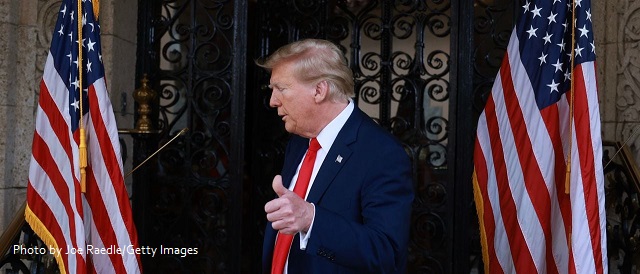
Public Figures Face More Dangerous America after Kirk Assassination

“You might want to stay back and call the federales, I have explosives,” warned a man occupying a green tent on the steps of St. Matthew’s Cathedral in Washington, D.C. It was roughly 6:00 a.m. on Sunday, October 5 (roughly an hour before sunrise), and officers from the D.C. Metropolitan Police Department (MPD) had arrived to secure the area before the cathedral’s annual “Red Mass,” an invocation service for the U.S. Supreme Court’s fall term, which some justices historically attend.

When an officer from the MPD bomb squad told the man he had to move because of a special event (the “Red Mass”), the man replied, “I’m aware of that,” but he refused to budge.

The man, 41-year-old Louis Geri, threatened to throw a bomb into the street, claiming, “I have a hundred-plus of them.” Thus, he created a pre-dawn stand-off with law enforcement officers. When the police said they would remove him forcibly, Geri threatened that “several of your people are gonna die from one of these.”

Geri then handed over a nine-page manifesto, which “revealed his significant animosity towards the Catholic church, members of the Jewish faith, members of SCOTUS and ICE/ ICE facilities,” police said. As he handed over the pages, Geri flicked on a butane lighter with his other hand, warning, “You [had] better have these people step away, or there’s going to be deaths.”

Fortunately, Geri’s threats of destruction came to an anticlimactic resolution when he was betrayed by his own bladder. When he left his tent to urinate on a tree, three officers apprehended him without incident.

Nevertheless, the subsequent investigation showed that MPD had been wise to heed Geri’s threats. Inside the tent, they found “a large cache of handmade destructive devices.” In an affidavit submitted Monday, a bomb technician said the cache contained “over 200 devices,” and “the devices appeared to be fully functional.” The explosive devices were reportedly of the Molotov cocktail variety, consisting of bottles filled with explosive chemicals with an ignition mechanism.

Providentially, the attempted perpetrator is better described as a prolific bomb maker than a mastermind criminal. Originally from New Jersey, Geri had spent the past several years living in an Arizona motel, during which time he spent nine months in prison for indecent exposure. Before his futile standoff with police on the cathedral steps, Geri had previously been barred from the premises. And his ill-timed, arboreal “pit stop” was an amateurish mistake. Geri likely deserves pity for an evidently hard life, but praise God that his incompetence resulted in no loss of life or property!

The deeper irony of the tale also portends ill for America. Even if Geri had more competently executed an explosives plot against the Mass frequented by Supreme Court justices, he would have missed his targets on Sunday. According to the National Catholic Register, “due to security concerns, no Supreme Court justices attended this year’s Red Mass.”

Quick-witted readers may begin to discern a pattern. Only two days into the court’s term, conservatives canceled a customary rally outside the Supreme Court during oral arguments in a case over whether counselors can be forced to push gender ideology on their patients.

Once again, security concerns were the issue. “Experienced security professionals warned that the threats of violence at an outdoor event were too great,” wrote ADF CEO Kristen Waggoner. “Our allies sponsoring the rally couldn’t simply ignore those threats. We’ve all witnessed the wave of violent attacks in recent weeks — many of which are politically motivated, with apparent ties to radical gender ideology. And that ideology is at the center of this case.”

When public figures cannot attend worship services or hold outdoor rallies due to safety concerns, it suggests the level of political violence now presents an existential threat to America’s system of representative government. This level of fear and uncertainty is unacceptable, unsustainable, and either the violence or the country must eventually give way.

These cancellations mark a low point in American civic life. Let us pray that this low point is America’s nadir, not the beginning of a deeper slide.

AUTHOR

Joshua Arnold

Joshua Arnold is a senior writer at The Washington Stand.

RELATED ARTICLE: No Surprise in ‘Arctic Frost’ Scandal, as Every Dem President in 21st Century Has Weaponized the Government

EDITORS NOTE: This Washington Stand column is republished with permission. All rights reserved. ©2025 Family Research Council.


The Washington Stand is Family Research Council’s outlet for news and commentary from a biblical worldview. The Washington Stand is based in Washington, D.C. and is published by FRC, whose mission is to advance faith, family, and freedom in public policy and the culture from a biblical worldview. We invite you to stand with us by partnering with FRC.
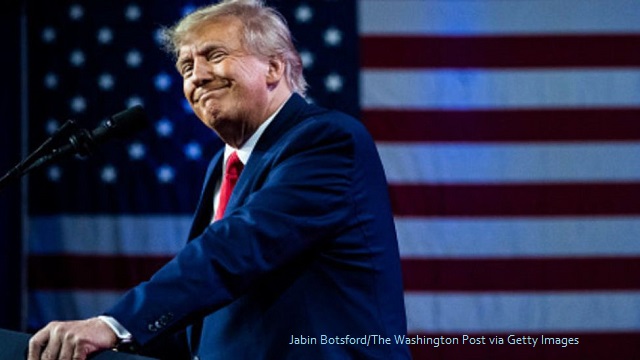
Supreme Court Lets Trump Admin Hold Back $4 Billion In Foreign Aid

The Supreme Court allowed the Trump administration on Friday to hold back $4 billion in foreign aid funds.

The justices temporarily halted an order by U.S. District Judge Amir Ali, a Biden appointee, directing the administration to pay out billions in foreign aid in early September.

“[O]n the record before the Court, the asserted harms to the Executive’s conduct of foreign affairs appear to outweigh the potential harm faced by respondents,” the Supreme Court’s order states.

“This order should not be read as a final determination on the merits,” it continues. “The relief granted by the Court today reflects our preliminary view, consistent with the standards for interim relief.”

Justice Elena Kagan noted in a dissent that the request raises “novel issues fundamental to the relationship between the President and Congress.”

“I appreciate that the majority refrains from offering a definitive view of this dispute and the questions raised in it,” Kagan wrote in her dissent, joined by Justices Sonia Sotomayor and Ketanji Brown Jackson. “But the effect of its ruling is to allow the Executive to cease obligating $4 billion in funds that Congress appropriated for foreign aid, and that will now never reach its intended recipients.”

The Trump administration previously argued Ali’s order presented “a grave and urgent threat to the separation of powers.” It would have required spending the funds, which Trump canceled through a “pocket recession,” by Sept. 30.

“To have any hope of complying in time, the Executive Branch would have to immediately commence diplomatic discussions with foreign nations about the use of those funds—discussions the President considers counterproductive to foreign policy—and notify Congress about planned obligations that the President is strongly opposing,” Solicitor General John Sauer wrote in a Sept. 8 emergency application.

This is a breaking news story and will be updated.

AUTHOR

Katelynn Richardson

Investigative Reporter

RELATED ARTICLE: Supreme Court Will Hear Major Case On President’s Ability To Fire Executive Officials

EDITORS NOTE: This Daily Caller column is republished with permission. ©All rights reserved.


All content created by the Daily Caller News Foundation, an independent and nonpartisan newswire service, is available without charge to any legitimate news publisher that can provide a large audience. All republished articles must include our logo, our reporter’s byline and their DCNF affiliation. For any questions about our guidelines or partnering with us, please contact licensing @dailycallernewsfoundation.org.

Four Key Cases SCOTUS Will Look at in 2025-2026 Term

Over the past year, the U.S. Supreme Court has made several significant decisions and rulings, from protecting children from online pornography, allowing parents to opt their children out of LGBT promotion in the classroom, and empowering states to defund Planned Parenthood to halting the abuse of universal injunctionsending workplace reverse discrimination, and letting states shield children from harmful gender transition procedures. The Supreme Court’s emergency docket was also filled — and often — with the nation’s highest judicial authority frequently siding with President Donald Trump on everything from immigration to transgender-identifying military servicemembers.

The Supreme Court’s next term, beginning in October, promises to keep the nine justices just as active. Here are some of the most important cases already on the Supreme Court’s docket for the next year.

Little v. Hecox

In United States v. Skrmetti, decided earlier this year, the Supreme Court determined that states are free to protect children from transgenderism; now, the court will decide whether states are free to protect women’s sports. In 2020, Idaho approved H.B. 500, a law barring biological males who identify as women from competing in women’s sports. Lindsey Hecox, a biological male who identifies as a woman, challenged the law in an effort to compete on Boise State University’s track and cross-country women’s teams. The U.S. Court of Appeals for the Ninth Circuit determined that Idaho’s law violated the Equal Protection Clause and was, therefore, unconstitutional.

“Women and girls have fought for decades to achieve an equal playing field. Nowhere has that been more evident than in sports,” Idaho wrote in its appeal to the Supreme Court. The appeal continued, “The last decade has exhibited a growing trend of males identifying as females competing against — and beating — females in women’s sports across the country.” Idaho pleaded, “This Court’s review is urgently needed to resolve [jurisprudential] splits and preserve the equal playing field women have fought to secure. … Every day the Ninth Circuit’s decision stands, female athletes suffer injustice. The petition should be granted without delay.”

West Virginia v. BPJ

Idaho specifically requested that the Supreme Court also take up the similar case of West Virginia v. BPJ, in order to firmly resolve questions surrounding the legal definitions of sex and gender and their treatment before the law. In response to a West Virginia law blocking biological males from competing in women’s sports, transgender-identifying 12-year-old Becky Pepper-Jackson (the eponymous BPJ) filed a lawsuit, citing violations of the Fourteenth Amendment, the Equal Protection Clause, and Title IX. Clinton-appointed Judge Joseph R. Goodwin of the U.S. District Court for the Southern District of West Virginia originally prevented the state from enforcing the law but ultimately ruled that it was not unconstitutional. Last year, the U.S. Court of Appeals for the Fourth Circuit disagreed, writing that applying the law to BPJ “would treat her worse than people to whom she is similarly situated, deprive her of any meaningful athletic opportunities, and do so on the basis of sex.”

In its petition to the Supreme Court, West Virginia wrote, “This Court should set things right. The Fourth Circuit’s splintered decision casts into doubt similar laws in at least 24 other States, sows confusion about antidiscrimination law, ignores scientific evidence, and renders school sports an un-administrable morass.” The state continued, “In the end, the decision all but declares that any law recognizing differences between sexes is unlawful whenever that law runs counter to someone’s ‘gender identity.’”

Chiles v. Salazar

Idaho and West Virginia aren’t the only states tackling the issue of transgenderism. Colorado has also waded into the fray, but heading the other direction. In Chiles v. Salazar, Christian counselor Kaley Chiles is challenging a Colorado law banning “conversion therapy,” citing religious liberty violations. The law prohibits counselors and therapists from cautioning children against gender ideology and gender transition procedures but allows counselors and therapists to encourage gender ideology and gender transition procedures. Both a U.S. District Court and the U.S. Court of Appeals for the Tenth Circuit previously ruled against Chiles, allowing the Colorado law to stand.

The Ninth and Tenth Circuit Courts currently classify conversations between counselors and patients as “conduct,” which states are permitted to legally regulate, while the Third and Eleventh Circuit Courts recognize those conversations as constitutionally-protected free speech. “The Court should not allow this conflict to persist. Otherwise, counselors like Kaley Chiles and countless other professionals … will have First Amendment protections in some states but not others,” wrote Alliance Defending Freedom (ADF) attorneys representing Chiles. “Constitutional rights should

not depend on geographical happenstance,” ADF attorneys wrote. They added, “This Court’s review is urgently needed to reaffirm that the government cannot censor messages ‘under the guise’ of regulating conduct…”

First Choice Women’s Resource Centers, Inc. v. Platkin

New Jersey’s Attorney General, Democrat Matthew Platkin, subpoenaed First Choice Women’s Resource Centers, a group of pro-life pregnancy resource centers, demanding information on donors and doctors affiliated with the group. Platkin claimed to be investigating potentially misleading business practices, but First Choice Women’s Resource Centers claimed in a federal lawsuit that the AG’s actions had a “chilling effect” on pro-lifers’ First Amendment rights to freedom of speech and freedom of association.

Both a U.S. District Court and the U.S. Court of Appeals for the Third Circuit dismissed the lawsuit, ruling that it properly belonged in a state court, not a federal court. While the Supreme Court isn’t expected to resolve the First Amendment claims, the justices will address the jurisdictional question, clarifying federal court jurisdiction over state actions infringing on First Amendment rights.

AUTHOR

S.A. McCarthy

S.A. McCarthy serves as a news writer at The Washington Stand.

EDITORS NOTE: This Washington Stand column is republished with permission. All rights reserved. ©2025 Family Research Council.


The Washington Stand is Family Research Council’s outlet for news and commentary from a biblical worldview. The Washington Stand is based in Washington, D.C. and is published by FRC, whose mission is to advance faith, family, and freedom in public policy and the culture from a biblical worldview. We invite you to stand with us by partnering with FRC.
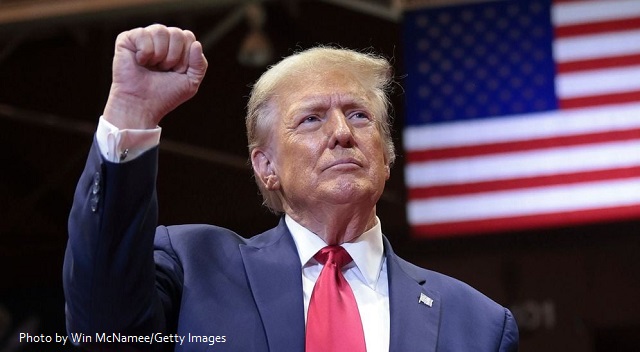
Federal Judges Keep Defying Supreme Court Orders Against Trump Admin

Federal judges are increasingly ruling against the Trump administration’s agenda and in defiance of Supreme Court orders.

The executive branch finds itself fending off endless counter-opinions from federal judges in the courtroom as it continues to implement its hard-line immigration policies. While the Trump administration has scored major victories in the nation’s highest court, including successfully reining in the scope of nationwide injunctions by federal judges, some have chosen to defy Supreme Court rulings.

U.S. District Judge Jia Cobb, an appointee of the Biden administration, blocked the Trump administration on Friday from using a process known as “expedited removal” to quickly remove illegal migrants from the country, according to court documents. The order could, at least for the time being, dramatically curtail the White House’s ability to carry out its deportation agenda.

In a public statement about the ruling, an administration spokesperson slammed the Biden-appointed judge, accusing her of defying a previous Supreme Court ruling.

“Judge Cobb is flagrantly ignoring the United States Supreme Court which upheld expedited removals of illegal aliens by a 7-2 majority,” Homeland Security Assistant Secretary Tricia McLaughlin said in a public statement. “This ruling is lawless and won’t stand.”

Similar cases have played out in recent months.

When Judge Brian Murphy of the Federal District Court in Massachusetts — appointed to the bench by the Biden administration — issued a preliminary injunction in April against the transfer of deportable illegal migrants to third countries, a majority on the Supreme Court later issued a stay on Murphy’s order.

However, the Biden-appointed judge decided that his order remained in effect, citing a dissent from Justice Sonia Sotomayor. The Trump administration referred to Murphy’s action as “unprecedented defiance” of the Supreme Court’s authority, according to court documents.

“The district court’s ruling of last night is a lawless act of defiance that, once again, disrupts sensitive diplomatic relations and slams the brakes on the Executive’s lawful efforts to effectuate third-country removals,” Solicitor General D. John Sauer wrote to the justices in June.

The Supreme Court ruled in the administration’s favor again in a 7-2 decision in July, allowing the Trump administration to deport the group of migrants to South Sudan, confirming Murphy’s rulings to be void.

Even more examples have piled on in recent times.

Judge Michael Simon, appointed to the U.S. District Court for the District of Oregon by the Obama administration, ruled in July that the Department of Homeland Security could not engage in wide-scale parole status terminations for migrants. The Obama-appointed judge cited other lower-court decisions that prohibited similar actions, but did not mention that the Supreme Court stayed those decisions over a month ago.

In May, the Supreme Court squashed orders from another federal district court that had blocked President Donald Trump’s dismissal of two members from the National Labor Relations Board and the Merit Systems Protection Board. The ruling found that the federal government was likely to prevail due to substantial executive power exercised by these two federal agencies.

However, the U.S. Court of Appeals for the Fourth Circuit chose not to stay a District Court order enjoining presidential removal of members from the Consumer Product Safety Commission, a nearly similar agency. Ultimately, the Supreme Court in July granted the stay, citing a previous order as precedent.

The Trump administration, which has grown increasingly frustrated with “activist judges” continually undermining its agenda, scored a major victory in late June when, in a 6-3 vote, the Supreme Court dramatically limited lower courts’ ability to issue nationwide injunctions in a decision revolving around Trump’s birthright citizenship order.

“The injunctions before us today reflect a more recent development: district courts asserting the power to prohibit enforcement of a law or policy against anyone,” Justice Amy Coney Barrett stated in the majority opinion. “These injunctions — known as ‘universal injunctions’ — likely exceed the equitable authority that Congress has granted to federal courts. We therefore grant the Government’s applications to partially stay the injunctions entered below.”

The White House referred to the decision as a “big win” in a press statement shortly following the order.

However, in the relatively short amount of time since that Supreme Court ruling, lower courts have repeatedly taken advantage of exceptions in the order that still allow them to issue nationwide injunctions. Lower courts have blocked the president’s asylum ban at the southern border and barred the White House from ending deportation protections for Haitian nationals.

A federal judge in late July barred the Trump administration from ending birthright citizenship for the children of illegal migrants, marking the third such nationwide court ruling blocking the order since the Supreme Court ruling.

AUTHOR

Jason Hopkins

Immigration Reporter

RELATED ARTICLES:

DC Bar Recommends Disbarring Trump White House Official

Supreme Court May Deal Democrats A Huge Blow To Ever Taking House Back

Trump Tells Schumer to ‘Go To Hell’

‘We’ve Never Had Someone This Radical’: Bill Maher Spars With Dem Congressman Over Zohran Mamdani

EDITORS NOTE: This Daily Caller column is republished with permission. ©All rights reserved.


All content created by the Daily Caller News Foundation, an independent and nonpartisan newswire service, is available without charge to any legitimate news publisher that can provide a large audience. All republished articles must include our logo, our reporter’s byline and their DCNF affiliation. For any questions about our guidelines or partnering with us, please contact licensing@dailycallernewsfoundation.org.

Analysis: Does Leaked Memo Confirm Political Bias in Federal Judiciary?

Federal judges in district courts across the nation have been waging jurisprudential war against President Donald Trump and his administration for months, with the U.S. Supreme Court intervening on several occasions. But according to newly revealed documents, federal judges have allowed their political bias against the president to lead them to the brink of “constitutional crisis.”

In a memo obtained by The Federalist summarizing the March meeting of the Judicial Conference, Judge James Boasberg, chief judge of the U.S. District Court for the District of Columbia, brought up “concerns” about how the president may respond to rulings against his executive actions.

The Judicial Conference is the official policy-making body of the federal courts, led by the Chief Justice of the Supreme Court (in this case, John Roberts) and comprised of the chief judge of each court of appeals federal regional circuit, a district court judge from various federal judicial districts, and the chief judge of the United States Court of International Trade. According to the memo, Boasberg took the Judicial Conference’s meeting as an opportunity to “rais[e] his colleagues’ concerns that the Administration would disregard rulings of federal courts leading to a constitutional crisis.” Roberts emphasized the “civil and respectful” interactions he had had with Trump and “expressed hope that would not happen and in turn no constitutional crisis would materialize.”

Margot Cleveland, The Federalist’s senior legal correspondent, wrote of the memo’s significance, “Donald Trump, however, is not merely the president: He is a Defendant in scores of lawsuits, including multiple cases in the D.C. District Court.” She explained, “As such, this conversation did not concern generic concerns of the judiciary, but specific discussions about a litigant currently before the same judges who expressed concern to the Chief Judge of the D.C. District Court that the Trump Administration would disregard the court’s orders.”

Cleveland continued, “Judge Boasberg’s comments reveal he and his colleagues hold an anti-Trump bias, for the Trump Administration had complied with every court order to date (and since for that matter).” She added, “The D.C. District Court judges’ ‘concern’ also went counter to the normal presumption courts hold — one that presumes public officials properly discharged their official duties.”

Just days after raising his “concerns” to Roberts, Boasberg issued a sweeping temporary restraining order (TRO) barring the president from invoking the Alien Enemies Act (AEA) to arrest and deport Venezuelan nationals affiliated with the international criminal gang and foreign terrorist organization Tren de Aragua (TdA). The Supreme Court later quashed Boasberg’s order, which the Trump administration had complied with, and determined that the D.C. judge did not have the jurisdiction to issue his TRO. Late last month, the Supreme Court ruled that Boasberg and other district court judges cannot issue sweeping, nationwide injunctions and TROs.

However, Boasberg’s apparent display of political bias has raised its own concerns among Americans, including officials at the U.S. Department of Justice (DOJ). Noting that Trump was, at the time of Boasberg’s remarks, a defendant in several cases before the court, Deputy Attorney General Todd Blanche warned, “This is a serious breach of the judicial oath and a threat to the rule of law. Every litigant, regardless of politics, is entitled to a fair forum.” DOJ Chief of Staff Chad Mizelle commented that the “troubling” report “perhaps explains the completely lawless order issued by Judge Boasberg…”

In comments to The Washington Stand, Article III Project Senior Counsel Will Chamberlain said, “Boasberg’s conduct is deeply damaging to the rule of law, and instead of worrying about whether the Trump administration will comply with his lawless orders (which they did), he should simply stop issuing lawless orders.” Chamberlain observed that, because of his political bias, “Boasberg should have recused himself before issuing his lawless ruling ordering planes to turn around in mid-air. There’s a reason the Supreme Court reversed him — he had no authority to rule on a habeas case when the complainants weren’t being held in his district.”

Hans Von Spakovsky, a senior legal fellow at the Heritage Foundation, told TWS that the memo’s contents were “shocking.” He explained, “It shows an unacceptable bias by Judge Boasberg and his fellow judges that violates basic ethical standards since they are assuming, without evidence, misbehavior by government officials in active lawsuits before them. They are also violating the legal principle established by the Supreme Court that courts must presume that government officials will properly discharge their official duties.”

Von Spakovsky continued, “This memorandum explains the almost wholesale, biased, and unjustified judgments that have been rendered against the administration in this circuit. These judges should have recused themselves from all cases involving the administration given their blatant prejudice and bias and their failure to do so is a violation of the code of judicial ethics. The fact that the chief judge is the leader of this unethical misbehavior is grounds for serious disciplinary action.”

FRC Action Director Matt Carpenter said in comments to TWS, “What is shocking about this report is that federal judges, like Judge Boasberg, would so openly and clearly admit their own political bias against the President of the United States, Donald Trump.” He continued, “The American people have been subjected ad nauseam to the line that ‘no one is above the law!’ while leftist lawyers chase after any legal theory they can to take down their political opposition — usually President Trump.” Carpenter added, “Given what we know now about the intentions of so many federal judges, it’s fair to ask if these judges think they’re above the law themselves.”

“I have to wonder if Judge Boasberg’s alleged concern about a constitutional crisis if the president ignores one of the court rulings is him signaling his intention,” Carpenter posited. “The Left has painted the president falsely as a tyrant — what better way to score political points than to force a constitutional crisis and then smear him as a tyrant?” Carpenter added, “I don’t think any honest person can look at the long list of nationwide injunctions against actions taken by the president — clearly delineated from his constitutional authority to manage the personnel of the executive branch, or enforce federal law on immigration or trade, for example — and think judges like Judge Boasberg are acting in good faith to uphold the rule of law. This behavior is more like the rule of politics.”

AUTHOR

S.A. McCarthy

S.A. McCarthy serves as a news writer at The Washington Stand.

RELATED ARTICLE: Students Call for an End to Pro-Abortion Judicial Activism

EDITORS NOTE: This Washington Stand column is republished with permission. All rights reserved. ©2025 Family Research Council.


The Washington Stand is Family Research Council’s outlet for news and commentary from a biblical worldview. The Washington Stand is based in Washington, D.C. and is published by FRC, whose mission is to advance faith, family, and freedom in public policy and the culture from a biblical worldview. We invite you to stand with us by partnering with FRC.

Trump Gets Thumbs Up to Downsize Department of Education

President Donald Trump is gearing up to follow through on another campaign promise and gut the U.S. Department of Education (DOE). But what could dismantling the DOE actually look like?

The U.S. Supreme Court lifted a district court judge’s injunction Monday that had previously barred Trump and Education Secretary Linda McMahon from downsizing the DOE. McMahon had announced in March that the DOE would be slashing its workforce in half, following Trump’s directive to begin dismantling the agency prior to returning education to the states. “Today’s reduction in force reflects the Department of Education’s commitment to efficiency, accountability, and ensuring that resources are directed where they matter most: to students, parents, and teachers,” McMahon said at the time. She added, “This is a significant step toward restoring the greatness of the United States education system.”

Trump praised the Supreme Court’s Monday decision and pledged to continue his efforts to downsize the DOE. “The United States Supreme Court has handed a Major Victory to Parents and Students across the Country, by declaring the Trump Administration may proceed on returning the functions of the Department of Education BACK TO THE STATES,” Trump said in a Truth Social post. “The Federal Government has been running our Education System into the ground, but we are going to turn it all around by giving the Power back to the PEOPLE. America’s Students will be the best, brightest, and most Highly Educated anywhere in the World.”

McMahon also pledged to continue dismantling the DOE. “The U.S. Department of Education will now deliver on its mandate to restore excellence in American education. We will carry out the reduction in force to promote efficiency and accountability and to ensure resources are directed where they matter most — to students, parents, and teachers,” McMahon said in a statement. She added, “As we return education to the states, this Administration will continue to perform all statutory duties while empowering families and teachers by reducing education bureaucracy.”

In comments to The Washington Stand, Jeanne Allen, founder and CEO of the Center for Education Reform, said, “The latest SCOTUS decision is a green light for reducing the size and scope of unnecessary and counterproductive oversight of everything from programs to personnel.” She explained, “Great education happens most in environments with the least amount of interference from bureaucracy, and even with a comparably small investment of 10% of all education spending, the federal government’s negative impact on education at the school level is massive.” Allen added, “When they have freedom from top-down policy proclamations, states can enable more innovative solutions to support the education of America’s children while they are school age and beyond.”

Jonathan Butcher, acting director of the Heritage Foundation’s Center for Education Policy, explained to TWS what dismantling the DOE might look like in practical terms. “First, moving programs for children with special needs to the Department of Health and Human Services. The president and secretary are already working on this, according to social media,” Butcher began. He continued, “Second, moving civil rights back to the Department of Justice, which already has an office for civil rights. Third, moving adult education and family literacy programs to the Department of Labor via an inter-agency agreement. This is already happening and was just announced today.” Butcher went on, “Fourth, moving the student loan program to either the Small Business Administration or Treasury. This is a huge program, so there are various things that will need to change (for example, there is an office that oversees the interaction between loan servicers and students).” He added, “These are all things that are either underway or are being talked about.”

Patrick Wolf, professor of Education Policy at the University of Arkansas, told TWS, “There was fat to cut in the Department outside of the Institute of Education Sciences, particularly regarding ‘professional development’ programs for teachers and schools, many of which were either completely ineffective or infected with wokism, or both.” He continued, “There was even fat to cut within the Institute of Education Sciences, as the Comprehensive Centers and Regional Education Labs operated inefficiently, largely because bureaucrats in Washington frequently change their minds and redirect what those regional organizations do and how they do it.” He added, “The What Works Clearinghouse also was largely a waste of funds.”

However, Wolf warned that dismantling the National Center for Education Statistics (NCES) could undermine national accountability standards and place a greater burden on individual states. “NCES, in contrast, is highly efficient in spite of being woefully understaffed,” he said, noting that the Department of Government Efficiency (DOGE) “cut the deepest” in that division. “The National Assessment of Educational Progress (NAEP), ‘The Nation’s Report Card,’ will continue, but with some versions of the national test cancelled entirely and others limited to certain subjects. The NAEP is the most rigorous and objective measure of student achievement across the various states,” Wolf explained. He continued, “Limitations on this vital test will mean that we will know less about how well students in various states are mastering academic content.”

AUTHOR

S.A. McCarthy

S.A. McCarthy serves as a news writer at The Washington Stand.

EDITORS NOTE: This Washington Stand column is republished with permission. All rights reserved. ©2025 Family Research Council.


The Washington Stand is Family Research Council’s outlet for news and commentary from a biblical worldview. The Washington Stand is based in Washington, D.C. and is published by FRC, whose mission is to advance faith, family, and freedom in public policy and the culture from a biblical worldview. We invite you to stand with us by partnering with FRC.
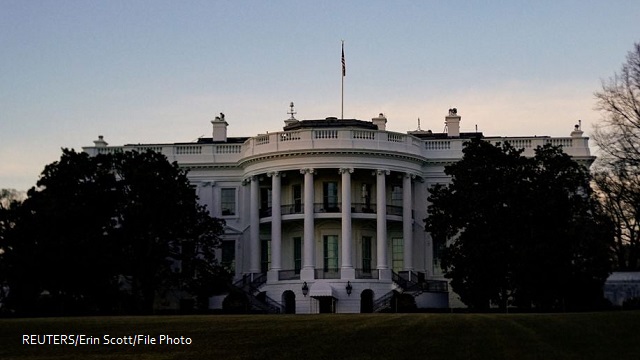
State Department Begins Sending Bureaucrats To The Unemployment Line

The State Department notified its staff Thursday that it is beginning its wide-spread layoffs, according to a notification obtained by the Daily Caller.

The Supreme Court allowed President Donald Trump to move forward with his executive order directing agencies to prepare “large-scale reductions” in the workforce in a ruling Tuesday. The State Department began prepping in April for a reorganization that would close 132 offices, representing a 17% reduction, a senior official shared with the Caller at the time. Deputy Secretary of Management and Resources Michael Rigas notified officials on Thursday that the “Reduction in Force” would soon be underway, according to a document obtained by the Caller.

“Once notifications have taken place, the Department will enter the final stage of its reorganization and focus its attention on delivering results-driven diplomacy,” Rigas wrote.

The mass firings were to be underway as soon as Friday, Semafor first reported

As a part of the reorganization, redundant offices within the State Department will be removed including those that did not “align with President Trump’s priorities and [the dept’s] national interests,” a senior State Department official previously told the Caller.

In the transition, 137 offices will be put in another location within the Department “to consolidate/increase efficiency,” the official told the Caller.

In the weeks to come, Under Secretaries will communicate with their “family organizations” and host “town halls,” the memo writes.

“On behalf of Department Leadership, we extend our gratitude for your hard work and commitment to executing this reorganization and for your ongoing dedication to advancing U.S. national interests across the world,” Rigas wrote.

“Secretary Rubio, at the direction of President Trump, has undertaken a historic reorganization of the State Department, which was thoughtfully and deliberately executed by department leadership. The America First State Department will better serve the American people,” a senior State department official told the Caller about Thursday’s announcement.

In a similar move, the State Department ended a program that for decades has given benefits and funds to low-performing diplomats rather than phasing them out of the department, according to a memo previously obtained by the Caller on July 2. Under the Annuity Exception, Foreign Service members were able to remain on the State Department payroll beyond their scheduled departure from the administration, the internal memo explained.

AUTHOR

Reagan Reese

White House Correspondent. Follow Reagan on Twitter.

RELATED ARTICLES:

Rubio Slaps Sanctions On UN Palestine Envoy After ICC ‘Lawfare’ Stunt

Deep State Steps Out of the Shadows, Using Their Regime Change Skills to Destroy Trump Presidency,“ CIA’s Simple Sabotage”

RELATED VIDEOS:

Radical leftist USAID shut down for good

‘ELIMINATIONIST RHETORIC’: Miller Blasts Dems for Putting ICE Agents in Danger

EDITORS NOTE: This Daily Caller column is republished with permission. All rights reserved.

Supreme Court Ends Unelected District Court Judges’ Abuses Of Power

The Supreme Court decisively ended lower courts’ ability to block policies issued by the Trump administration using nationwide injunctions on Friday.

In a 6-3 ruling, the majority found that lower courts exceeded their authority by issuing a nationwide block on President Donald Trump’s birthright citizenship restrictions.

“The injunctions before us today reflect a more recent development: district courts asserting the power to prohibit enforcement of a law or policy against anyone,” Justice Amy Coney Barrett wrote in the majority opinion. “These injunctions—known as ‘universal injunctions’—likely exceed the equitable authority that Congress has granted to federal courts. We therefore grant the Government’s applications to partially stay the injunctions entered below.”

Justices Sonia Sotomajor, Ketanji Brown Jackson and Elena Kagan dissented.

“The rule of law is not a given in this Nation, nor any other,” Sotomayor wrote. “It is a precept of our democracy that will endure only if those brave enough in every branch fight for its survival. Today, the Court abdicates its vital role in that effort.”

The Trump administration appealed three lower court orders blocking the birthright citizenship ban from taking effect in April, asking the Supreme Court to limit the ability of district courts judges to block policies nationwide through universal injunctions.

Trump issued his “Protecting the Meaning and Value of American Citizenship” executive order, which ends guaranteed citizenship for children of illegal aliens or migrants on temporary visas, in January during his first day in office.

During oral arguments in May, Solicitor General John Saur noted judges have issued 40 universal injunctions issued against the administration since Trump took office.

This is a breaking news story and will be updated.

AUTHOR

Katelynn Richardson

Investigative Reporter.

RELATED ARTICLE:

Nationwide Injunction: A Quiet Ruling with Explosive Impact

Supreme Court Greenlights Tennessee’s Ban On Sex-Change Procedures For Kids

EDITORS NOTE: This Daily Caller column is republished with permission. ©All rights reserved.


All content created by the Daily Caller News Foundation, an independent and nonpartisan newswire service, is available without charge to any legitimate news publisher that can provide a large audience. All republished articles must include our logo, our reporter’s byline and their DCNF affiliation. For any questions about our guidelines or partnering with us, please contact licensing@dailycallernewsfoundation.org.

Supreme Court Hands Trump Admin Victory On Efforts To Deport ‘Worst’ Illegal Migrants

The Supreme Court allowed the Trump administration to more quickly deport illegal migrants to countries not specified in their removal orders.

A majority temporarily blocked a lower court order that required the Department of Homeland Security (DHS) to give migrants notice and allow them to raise concerns about potential threats of torture before deporting them to a “third country.”

Justices Sonia Sotomayor, Ketanji Brown Jackson and Elena Kagan dissented from the decision.

“Apparently, the Court finds the idea that thousands will suffer violence in farflung locales more palatable than the remote possibility that a District Court exceeded its remedial powers when it ordered the Government to provide notice and process to which the plaintiffs are constitutionally and statutorily entitled,” Sotomayor wrote. “That use of discretion is as incomprehensible as it is inexcusable.”

The Trump administration argued the order interfered with their ability to deport “some of the worst of the worst illegal aliens” in its emergency application.

“The United States is facing a crisis of illegal immigration, in no small part because many aliens most deserving of removal are often the hardest to remove,” Solicitor General John Saur wrote in May. “When illegal aliens commit crimes in this country, they are typically ordered removed. But when those crimes are especially heinous, their countries of origin are often unwilling to take them back. As a result, criminal aliens are often allowed to stay in the United States for years on end, victimizing law-abiding Americans in the meantime.”

District Court Judge Brian Murphy, a Biden appointee, wrote in his original order that plaintiffs “are simply asking to be told they are going to be deported to a new country before they are taken to such a country, and be given an opportunity to explain why such a deportation will likely result in their persecution, torture, and/or death.”

“This small modicum of process is mandated by the Constitution of the United States,” the judge wrote.

Attorneys for the migrants claimed in a brief that the administration “repeatedly sought to remove people as a punitive measure, to some of the most dangerous places on the planet, and with only hours’ notice.”

AUTHOR

Katelynn Richardson

Investigative Reporter.

RELATED ARTICLE: Judge Really, Really Wants To Release Dems’ Favorite Suspected Human Smuggler

EDITORS NOTE: This Daily Caller column is republished with permisison. ©All rights reserved.


All content created by the Daily Caller News Foundation, an independent and nonpartisan newswire service, is available without charge to any legitimate news publisher that can provide a large audience. All republished articles must include our logo, our reporter’s byline and their DCNF affiliation. For any questions about our guidelines or partnering with us, please contact licensing@dailycallernewsfoundation.org.

Supreme Court Greenlights Tennessee’s Ban On Sex-Change Procedures For Kids

The Supreme Court upheld Tennessee’s law banning child sex change procedures on Wednesday.

In a 6-3 ruling, the court held that Tennessee’s law does not violate the Equal Protection clause.

“This case carries with it the weight of fierce scientific and policy debates about the safety, efficacy, and propriety of medical treatments in an evolving field,” Chief Justice John Roberts wrote in the majority opinion. “The voices in these debates raise sincere concerns; the implications for all are profound. The Equal Protection Clause does not resolve these disagreements.”

“Having concluded it does not, we leave questions regarding its policy to the people, their elected representatives, and the democratic process,” Roberts continued.

Justices Sonia Sotomayor, Ketanji Brown Jackson and Sonia Sotomayor dissented.

“[The majority] also authorizes, without second thought, untold harm to transgender children and the parents and families who love them,” Sotomayor wrote.

Sotomayor wrote that those searching for evidence of transgender discrimination “need look no further than the present,” referencing several policies implemented by the Trump administration.

“The Federal Government, for example, has started expelling transgender servicemembers from the military and threatening to withdraw funding from schools and nonprofits that espouse support for transgender individuals,” she wrote.

Tennessee passed its law, which restricts minors from receiving medical treatments intended to help them live as an identity “inconsistent” with their sex, in 2023. The Biden administration challenged the law as a violation of the Fourteenth Amendment’s Equal Protection Clause.

Trump’s Department of Justice (DOJ) changed its position on the case in February but urged the Supreme Court to move forward with issuing a ruling.

Trump signed an executive order in January cutting federal funding for child sex changes, where he called the World Professional Association of Transgender Health (WPATH) “junk science” and banned federal agencies from citing its guidance. The Biden administration relied on WPATH standards in its briefs filed before the court.

This is a breaking news story and will be updated.

AUTHOR

Katelynn Richardson

Investigative Reporter.

RELATED ARTICLE: Supreme Court Allows Trump Admin To Enforce Transgender Military Ban

EDITORS NOTE: This Daily Caller column is republished with permission. ©All rights reserved.


All content created by the Daily Caller News Foundation, an independent and nonpartisan newswire service, is available without charge to any legitimate news publisher that can provide a large audience. All republished articles must include our logo, our reporter’s byline and their DCNF affiliation. For any questions about our guidelines or partnering with us, please contact licensing@dailycallernewsfoundation.org.

Unanimous SCOTUS Ruling Sets Back the White-Collar Rainbow Revolution

In a 9-0 decision in Ames v. Ohio Department of Youth Services authored by Justice Ketanji Brown Jackson, justices ruled that employers cannot discriminate against a heterosexual woman and unelected judges cannot insert intersectionality into the law. A unanimous Supreme Court opinion rarely brings good news, but justices recently issued a ruling that set back judicial activism, stopped the Left’s tactic of promoting the social revolution at your expense, and exposed the inner workings of the white-collar rainbow revolution.

The plaintiff, Marlean Ames, dedicated her life to eliminating the prison rape of minors. In 2004, she started working for the Ohio Department of Youth — which oversees the state’s incarcerated juvenile population — and in 2014, Ames got promoted to become administrator of PREA: the Prison Rape Elimination Act. “In 2017, Ames was assigned a new supervisor, Ginine Trim, who is gay,” noted the Sixth Circuit’s opinion. Trim’s December 2018 performance evaluation shows Ames met competencies in 10 categories and exceeded in one. But somehow, just four months later, qualified-to-overqualified no longer sufficed.

In April 2019, Ames applied to become Bureau Chief of Quality. After the interview, “Trim congratulated Ames on 30 years of public service, but also suggested that Ames retire,” noted the Sixth Circuit. Activists aim to remake their departments through attrition: Let the old lions emit a final, toothless roar into the sunset while replacing them with young social justice warriors who will bend the arc of history toward radicalism. The department hired “Alexander Stojsavljevic, a 25-year-old gay man, for the position of PREA Administrator. … Later, in December 2019, the Department chose Yolanda Frierson, a gay woman, as its Bureau Chief of Quality.” Frierson had not originally applied for the position and did not have a college degree; Stojsavljevic had only been on the job a few years.

They gave Ames the option of taking her old job as executive secretary, cutting her salary from $47.22 an hour to $28.40. Ames accepted the job. She sued but lost at the district and appellate level. The appeals court admitted, “Ames is right that the Department has offered different reasons for her demotion at different times,” settling on the story that “her position was at-will and that it could remove her at any time without cause.”

Although the facts seem squarely on Ames’s side, the court sided against her, because she did not fulfill the “background circumstances” rule: a legal standard the court invented stating that members of a “majority group” had to meet a higher standard to prove discrimination. Justices struck down that legal fiction. “The Sixth Circuit has implemented a rule that requires certain Title VII plaintiffs — those who are members of majority groups — to satisfy a heightened evidentiary standard in order to carry their burden under the first step of the McDonnell Douglas framework. We conclude that Title VII does not impose such a heightened standard on majority-group plaintiffs,” wrote Justice Jackson. The decision does not settle the underlying issue: In a return to the Roberts court’s narrow decisions, it merely remands the case with instructions to use the prima facie legal standard.

The welcome ruling reinstates the notion behind the deeply American principle of equal justice under law, itself drawn from the biblical injunction that judges ought not be a respecter of persons. This furthers President Donald Trump’s second-term commitment to undoing discrimination against the nation’s majority in the name of advancing diversity, equity, and inclusion (DEI). To its credit, the Roberts court has shown leadership here, too.

As important as the facts of the case are its setting. Ohio, long the bellwether of American politics, rejects DEI. When the U.K.’s Guardian started a letter-writing campaign for Europeans to pressure Ohioans into voting for Democrat John Kerry over George W. Bush, values voters in rural, western Ohio turned out to support a state constitutional amendment barring the courts from redefining the institution of marriage (or so they thought).

Today, Ohio is a blood-red state. President Donald Trump, perhaps aided by native son Vice President J.D. Vance, won the state by 11 points in 2024; but he also won by eight points in 2020, snapping the state’s reputation for picking a winner in every presidential race. Every statewide office is held by a Republican; it has not voted for a Democrat for president since 2012. Other than the hapless administration of Ted Strickland, shortly after incumbent Republican Bob Taft entered a “no contest” plea to four misdemeanor ethics violations, no Democrat has won a governor’s race since 1986.

Yet those governors have not delivered. Mike DeWine — a former lieutenant governor, U.S. senator, state attorney general, and now governor — vetoed the state SAFE Act, protecting minors from potentially sterilizing transgender injections and surgeries. While he issued an executive order on the topic, he promptly watered down even those temporary provisions. The Republican-controlled state legislature promptly overrode his veto, codifying robust protections for children — just as Ames tried to do throughout her career.

Ohioans have expressed their will for three decades at the ballot box. Meanwhile, unelected bureaucrats advance their radicalism through the HR department by adopting a prescription offered by Saul Alinsky in “Rules for Radicals:”

“From the moment the organizer enters a community he lives, dreams, eats, breathes, sleeps only one thing and that is to build the mass power base of what he calls the army. Until he has developed that mass power base, he confronts no major issues. He has nothing with which to confront anything. Until he has those means and power instruments, his ‘tactics’ are very different from power tactics. Therefore, every move revolves around one central point: how many recruits will this bring into the organization, whether by means of local organizations, churches, service groups, labor unions, comer gangs, or as individuals. The only issue is, how will this increase the strength of the organization. If by losing in a certain action he can get more members than by winning, then victory lies in losing and he will lose. Change comes from power, and power comes from organization. In order to act, people must get together. Power is the reason for being of organizations.”

Alinksy even likened these left-wing fiefdoms to a church:

“When people agree on certain religious ideas and want the power to propagate their faith, they organize and call it a church. When people agree on certain political ideas and want the power to put them into practice, they organize and call it a political party. The same reason holds across the board. Power and organization are one and the same.”

One hears echoes of this in teachers union president Becky Pringle when she called on her delegates to “build our power” by enrolling everyone “in our righteous cause.” From teachers, to librarians, to HR departments, to district court judges handing down national injunctions, leftists see the workplace as a political battlefield — or, if you believe Alinsky, the mission field to spread a false religion. The Supreme Court decision comes as welcome relief.

AUTHOR

Ben Johnson

Ben Johnson is senior reporter and editor at The Washington Stand.

RELATED ARTICLES:

Decade-Long Catholic Charities Tax Exemption Battle Culminates in Religious Liberty Win at SCOTUS

Christians React as Schools and Summer Camps Push LGBT Agenda in June

EDITORS NOTE: This Washington Stand column is republished with permission. All rights reserved. ©2025 Family Research Council.


Like what you’re reading? Donate to The Washington Stand! From now until June 30, your gift will be doubled to fuel bold, biblically-based reporting.

The Washington Stand is Family Research Council’s outlet for news and commentary from a biblical worldview. The Washington Stand is based in Washington, D.C. and is published by FRC, whose mission is to advance faith, family, and freedom in public policy and the culture from a biblical worldview. We invite you to stand with us by partnering with FRC.