Tag Archive for: Supreme court

EXCLUSIVE: Pro-Life Pregnancy Centers Still Awaiting Justice 3 Years After Firebombing, Vandalism Spree

The FBI has yet to solve at least five cases it opened into arson attacks targeting pro-life pregnancy centers in 2022, according to an investigation by the Daily Caller News Foundation.

The Biden FBI offered cash rewards in 2022 for information on suspects responsible for firebombings around the country, mainly directed at pro-life facilities, after the preemptive May 2 leak of a Supreme Court ruling that overturned the abortion precedent established by Roe v. Wade. Five local FBI field offices told the DCNF that the bureau is still offering the incentive for cases in ColoradoNorth CarolinaWashington stateOregon and New York, indicating suspects were never found or convicted.

The FBI’s Seattle field office told the DCNF that it’s typical for the bureau to update or delete the bulletins asking the public for information if suspects are caught, and if they’re on the website, the FBI is still looking for answers. The FBI’s national press office did not respond to a request for comment.

‘Enforce The Law Equally’

One targeted facility’s CEO, Jim Harden, told the DCNF he got a phone call from an employee around two in the morning on June 7, 2022, that changed his life. The Amherst, New York, building that was home to his organization CompassCare was set ablaze in what was eventually determined to be arson. The FBI released footage showing what it said were two suspects arriving in a car at night and throwing Molotov cocktails at the building.

Harden’s team had been on high alert that summer, having already contacted the FBI over concerns about a heightened risk of violence. Soon after the fire, he moved with his wife and children to flee an onslaught of threats against them as extremists lashed out at CompassCare, a Christian nonprofit providing free medical care to pregnant mothers to steer them away from abortion.

“Our lives are very different now,” he said in an interview with the DCNF. “We had to relocate our family … we had people riding past our house pointing guns at our kids.”

Assistant Attorney General for Civil Rights Harmeet Dhillon said in April that there were more than 200 cases of pregnancy resource centers “violently attacked by activists with no action by law enforcement, federal or state” in the past several years. Family Research Council documented almost 50 instances of vandalism and other attacks on pregnancy centers and pro-life organization buildings from May through June 2022.

“I can say we are taking them seriously now and will be for the duration,” Dhillon told the DCNF about such cases. Dillon declined to comment about any specific prosecutions that may be ongoing or forthcoming.

“This Department of Justice is committed to protecting crisis pregnancy centers, pro-life organizations and places of worship from targeted acts of violence and will work to ensure justice is served to criminals who engage in this unlawful behavior,” a DOJ spokesperson said in response to questions about the unsolved cases.

The spree of violence even resulted in arson at a Portland pregnancy center run by a self-professed pro-choice woman in July 2022. As in the five cases involving pro-life groups, the FBI told the DCNF it is still offering a reward for information. The Dobbs opinion leak, which was investigated but never solved, also inspired an assassination attempt on Supreme Court Justice Brett Kavanaugh near his home.

The Portland facility did not respond to multiple requests for comment. The other pregnancy centers with unsolved cases in Longmont, Colorado and Portland did not respond to multiple requests for comment, while one in Seattle declined to comment.

Harden, the CompassCare CEO, said the pro-abortion Biden administration seemed apathetic about solving the cases, despite the FBI interviewing him about the Amherst bombing. He recalled reaching out and asking urgently for updates, leading to a moment when he said an FBI agent “was screaming” over the phone that the bureau was not required to update him.

“Their job was to enforce the law equally,  and it did not appear as if they were doing so,” Harden said.

‘Mountain Of Evidence’

While announcements about pro-abortion vandalism cases were scarce, the Biden administration boasted in press releases about several prosecutions of pro-life activists under the Freedom of Access to Clinic Entrances (FACE) Act for protesting at abortion clinics. On his first week in office, President Donald Trump pardoned nearly two dozen pro-lifers accused of federal crimes.

Former Attorney General Merrick Garland explained the discrepancy in March 2023 by telling Congress that “it is quite easy” to identify and charge pro-lifers protesting in daylight.

“Those who are attacking the pregnancy resources centers, which is a hard thing to do, are doing this at night in the dark,” Garland said.

Harden did not — and does not — buy Garland’s explanation whatsoever.

“There’s a mountain of evidence,” Harden said of the vandals, noting that the authorities can search for license plate numbers, body mechanic imagery and cell phone IP addresses. “It’s just not possible they don’t know who they are. The FBI [is] the most technically advanced law enforcement agency on the planet.”

Some attacks on pro-life centers in 2022 were linked to a leftist group called Jane’s Revenge, with activists posting online threats in response to news about the leaked Dobbs decision. The FBI said the CompassCare vandals left the spray-painted message, “Jane was here.”

Harden told the DCNF his Amherst building was repaired at “miraculous” speed in 52 days thanks in part to volunteer workers, but the damage cost millions of dollars.

The attack inspired Harden to become more outspoken about political issues via media interviews. He also launched a campaign on a pro-life platform to fill Republican Rep. Elise Stefanik’s House seat in a New York special election. Stefanik announced she would remain in her role in April after Trump pulled her nomination to represent the U.S. in the United Nations.

‘Heart Problem’

Paula McSwain, executive director of the Crisis Pregnancy Center in Lincolnton, North Carolina, told the DCNF she received a letter from the FBI in August 2024 saying its investigation into arson at her building in June 2022 was closed. Surveillance footage showed someone at nighttime throwing what the FBI said was a Molotov cocktail.

The Lincolnton case is one of several for which the FBI is still offering a reward for information on any suspects, according to the bureau’s Charlotte field office.

McSwain said she was fortunate enough to get the pregnancy center up and running fairly easily.

“If they wanted to destroy the building, they could have done a better job,” McSwain told the DCNF.

The pro-life leader decided to respond to her ordeal by limiting public outcry.

“That’s what they were seeking, was attention,” McSwain said of the vandals.

Harden and McSwain said that if they could give any message to their attackers, it would be one of forgiveness through Jesus Christ.

“If you throw fire at any building, you’ve got a heart problem and there’s something not right with your life … We don’t seek revenge, we just pray for them,” McSwain said.

“The only reason I can forgive you is because forgiveness has been made available to me, and so I would encourage you to come out of the darkness and into the light,” Harden said his words to the criminals would be.

“Nothing is going to go unpunished if it’s sin,” Harden said.

AUTHOR

Hudson Crozier

DCNF Crime and Extremism Reporter.

RELATED ARTICLES:

DOJ Wins Guilty Plea For One Of Few Pregnancy Center Attackers It Caught While Pro-Lifers Sit In Prison

Prominent Pro-Abortion Group Appears To Be Front For Radical Revolutionary Communists

EDITORS NOTE: This Daily Caller column is republished with permission. ©All rights reserved.


All content created by the Daily Caller News Foundation, an independent and nonpartisan newswire service, is available without charge to any legitimate news publisher that can provide a large audience. All republished articles must include our logo, our reporter’s byline and their DCNF affiliation. For any questions about our guidelines or partnering with us, please contact licensing@dailycallernewsfoundation.org.

Supreme Court Approves DOGE Access To Social Security Data

The Supreme Court gave the Department of Government Efficiency (DOGE) the greenlight to access Social Security Administration (SSA) data on Friday.

The Trump administration asked the justices in May to pause a district court judge’s preliminary injunction preventing the SSA DOGE team from accessing certain records.

“We conclude that, under the present circumstances, SSA may proceed to afford members of the SSA DOGE Team access to the agency records in question in order for those members to do their work,” the court’s order states.

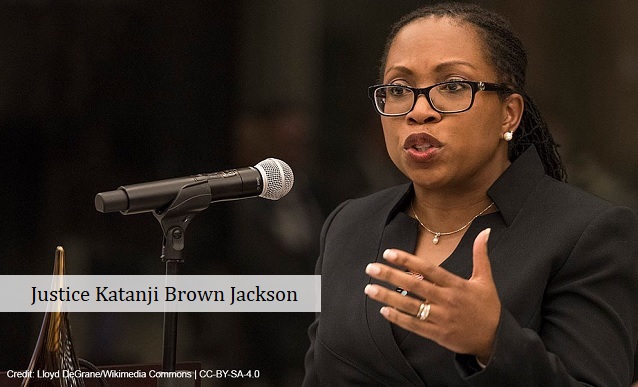
Justices Elena Kagan, Ketanji Brown Jackson and Sonia Sotomayor would have denied the request.

Jackson, in a dissent joined by Sotomayor, wrote that the majority is “jettisoning careful judicial decisionmaking and creating grave privacy risks for millions of Americans in the process.”

“I would proceed without fear or favor to require DOGE and the Government to do what all other litigants must do to secure a stay from this Court: comply with lower court orders constraining their behavior unless and until they establish that irreparable harm will result such that equity requires a different course,” Jackson wrote.

In a separate order, the Supreme Court also halted a lower court’s discovery order that would have required DOGE to turn over some material to Citizens for Responsibility and Ethics in Washington (CREW), which sued to force DOGE to comply with its Freedom of Information Act request.

This is a breaking news story and will be updated.

AUTHOR

Katelynn Richardson

Investigative Reporter.

RELATED ARTICLES:

Vance Finally Weighs in on Trump-Musk Feud

JD Vance Cracks Perfect Joke in Midst of Trump-Musk Feud

‘Not Just For The Jetsons’: Trump Lifts Regs On Drones, Supersonic Flight, Opens Door For Flying Cars

EXCLUSIVE: White House Insiders Vent On Big Beautiful Breakup, Reveal Elon’s Final Straw

Some Dems Now Want To Play Nice With Musk After Endlessly Smearing Him As Nazi

Kayleigh McEnany Confronts Dem To Her Face For Claiming Biden ‘Was Mentally Capable’ Of Being President

EXCLUSIVE: White House Sources Say Elon’s NASA Pick Was Doomed From The Start

EDITORS NOTE: This Daily Caller column is republished with permission. ©All rights reserved.


All content created by the Daily Caller News Foundation, an independent and nonpartisan newswire service, is available without charge to any legitimate news publisher that can provide a large audience. All republished articles must include our logo, our reporter’s byline and their DCNF affiliation. For any questions about our guidelines or partnering with us, please contact licensing @dailycallernewsfoundation.org.

SCOTUS Slows Judicial Overreach in Environmental Cases as Ire Grows over Universal Injunctions

A recent decision handed down by the U.S. Supreme Court has curbed some judicial overreach and continued a thread previously taken up by the nation’s highest court regarding the relationship between judicial interpretations and the authority of government agencies. In Seven County Infrastructure Coalition v. Eagle County, decided Thursday, the Supreme Court vacated a decision by the U.S. Court of Appeals for the District of Columbia Circuit which had itself vacated a decision by the U.S. Surface Transportation Board (STB) that granted permission for construction of a railroad.

The case originated when Seven County Infrastructure Coalition applied to the board for permission to build a railroad in 2020. STB compiled a staggering 3,600-page report on the possible environmental impacts of building the railroad and ultimately concluded “that the project’s transportation and economic benefits outweighed its environmental impacts” and granting permission for the railroad to be constructed.

After lawsuits were filed, the circuit court vacated the STB’s decision, ruling that the board had not properly considered “the potential environmental effects of increased upstream oil drilling … and increased downstream refining of crude oil” in the area where the railroad was to be constructed, citing the provisions established in the National Environmental Policy Act (NEPA). The Supreme Court ruled Thursday, “The D.C. Circuit failed to afford the Board the substantial judicial deference required in NEPA cases and incorrectly interpreted NEPA to require the Board to consider the environmental effects of upstream and downstream projects that are separate in time or place from the” construction and operation of the railroad.

NEPA requires STB and similar agencies to consider the possible environmental impacts of proposed projects and suggest viable alternatives. The Supreme Court’s ruling clarified, “Some federal courts reviewing NEPA cases have assumed an aggressive role in policing agency compliance with NEPA, and have not applied NEPA with the judicial deference demanded by the statutory text and the Court’s cases.” The ruling continued, “When, as here, a party argues that an agency action was arbitrary and capricious due to a deficiency in an EIS, the ‘only role for a court’ is to confirm that the agency has addressed environmental consequences and feasible alternatives as to the relevant project.”

The ruling, authored by Justice Brett Kavanaugh and joined by seven of his fellow justices, with Justice Neil Gorsuch recusing himself from the case, stipulated that legal questions are for courts to decide, while “factual determinations” are for the relevant agencies to decide. “Courts should defer to agencies’ discretionary decisions about where to draw the line when considering indirect environmental effects and whether to analyze effects from other projects separate in time or place,” the ruling affirmed.

Specifically, Kavanaugh cited Loper Bright Enterprises v. Raimondo, one of a pair of cases which the Supreme Court decided last summer, undoing what was known as the “Chevron doctrine.” In the 1984 case of Chevron U.S.A., Inc. v. Natural Resources Defense Council, the Supreme Court instructed all courts to defer to an agency’s interpretation of a statute within the scope of its operation if that statute was considered “ambiguous.” The policy significantly bolstered the power of federal agencies to interpret statutes without judicial oversight. Last year, the Supreme Court determined that the Chevron doctrine was unconstitutional, conflicting with both the Administrative Procedure Act (APA) and the federal judiciary’s constitutional authority to interpret statutory texts and effectively permit executive agencies to usurp the role of the judiciary in interpreting statutes.

Citing Loper, the Supreme Court clarified that although NEPA requires environmental impact reports to be “detailed,” and “the meaning of ‘detailed’ is a legal question … what details need to be included in any given [report] is a factual determination for the agency.” Kavanaugh wrote, “NEPA does not allow courts, ‘under the guise of judicial review’ of agency compliance with NEPA, to delay or block agency projects based on the environmental effects of other projects separate from the project at hand.” He added, “Courts should afford substantial deference and should not micromanage those agency choices so long as they fall within a broad zone of reasonableness.”

The Supreme Court ruling comes as numerous federal courts have issued sweeping universal injunctions against President Donald Trump and his administration, highlighting calls for the highest court to curb judicial overreach. In comments to The Washington Stand, Article III Project Senior Counsel Will Chamberlain stated, “The court’s decision Thursday was very obviously right — even the Democrats did not dissent. NEPA reviews do not have to be as onerous as the D.C. Circuit suggested.” He added, “The Supreme Court, however, needs to do more to curb the judicial sabotage by resentful lower court judges.”

Within his first 100 days back in the Oval Office, Trump and his administration were slapped with at least 25 universal injunctions by federal district courts, according to a Congressional Research Service report. Injunctions and temporary restraining orders (TROs) have targeted many of the president’s actions, including carrying out mass deportations, withholding federal funds from “sanctuary cities,” ending birthright citizenship, protecting children from harmful gender transition procedures, slashing wasteful agency spending, downsizing the federal workforce, bolstering election integrity, and reorganizing agencies like the Department of Education.

The Trump administration has repeatedly petitioned the Supreme Court to intervene and curtail the lower courts’ use of nationwide injunctions. While the Supreme Court has handed the president mixed results — significant wins in some cases and temporary setbacks in others — it has not yet taken action against the increasing use of universal injunctions.

However, the Supreme Court did hear oral arguments in mid-May in a case in which the Trump administration has centered its attention on the rash of injunctions enjoining the president’s agenda. Some justices indicated during oral arguments an openness to curbing universal injunctions but appeared unsatisfied with the Trump administration’s suggestions on what measures to use in place of universal injunctions. A decision in the case is expected by late June or early July.

AUTHOR

S.A. McCarthy

S.A. McCarthy serves as a news writer at The Washington Stand.

EDITORS NOTE: This Washington Stand column is republished with permission. All rights reserved. ©2025 Family Research Council.


The Washington Stand is Family Research Council’s outlet for news and commentary from a biblical worldview. The Washington Stand is based in Washington, D.C. and is published by FRC, whose mission is to advance faith, family, and freedom in public policy and the culture from a biblical worldview. We invite you to stand with us by partnering with FRC.

SCOTUS Hands Trump Victory On Firing Democrat Appointees From Federal Boards

The U.S. Supreme Court on Thursday allowed for President Donald Trump’s emergency request to dismiss Democrat members of both the National Labor Relations Board (NLRB) and the Merit Systems Protection Board (MSPB) to stay.

During his first two months in office, Trump removed Democrat NLRB member Gwynne Wilcox and Democrat MSPB Board member Cathy Harris, a move both later challenged in lower courts. After taking up the case in April, the high court ruled 6-3 to temporarily block orders from lower courts refusing Wilcox and Harris to be removed, with the liberal justices in dissent.

“The stay reflects our judgment that the Government is likely to show that both the NLRB and MSPB exercise considerable executive power. But we do not ultimately decide in this posture whether the NLRB or MSPB falls within such a recognized exception; that question is better left for resolution after full briefing and argument,” the filing states.

“The stay also reflects our judgment that the Government faces greater risk of harm from an order allowing a removed officer to continue exercising the executive power than a wrongfully removed officer faces from being unable to perform her statutory duty,” the filing continued.

Following their dismissals, Wilcox and Harris sued the Trump administration over their removal from the boards, as Wilcox had four years left on her term and Harris had three. By March, Judge Beryl Howell of the U.S. District Court for the District of Columbia ordered the president to reinstate Wilcox, while U.S. District Judge Rudolph Contreras ruled that Harris could not be terminated “at will.”

The Trump administration then brought the case to the Supreme Court on April 9, filing an emergency application after the lower courts ordered the reinstatement of both Wilcox and Harris. In response, Chief Justice John Roberts issued an administrative stay, temporarily halting their reinstatement and allowing the high court to consider the administration’s request.

With Thursday’s decision being temporary, the high court is expected to make an official ruling after hearing oral arguments likely next year, according to NPR.

AUTHOR

Hailey Gomez

General Assignment Reporter.

RELATED ARTICLE: GOP Rep Who Was Censured For Opposing Trans Athletes Sticks It To Democrats With Supreme Court Victory

RELATED VIDEO: The Wins Just Keep Coming | TODAY on THE REAL STORY

EDITORS NOTE: This Daily Caller column is republished with permission. ©All rights reserved.


All content created by the Daily Caller News Foundation, an independent and nonpartisan newswire service, is available without charge to any legitimate news publisher that can provide a large audience. All republished articles must include our logo, our reporter’s byline and their DCNF affiliation. For any questions about our guidelines or partnering with us, please contact licensing@dailycallernewsfoundation.org.

Supreme Court Allows Trump Admin To Enforce Transgender Military Ban

The Supreme Court allowed the Trump administration on Tuesday to enforce its transgender military ban.

In a 6-3 decision, the majority granted the administration’s request to halt a lower court’s ruling preventing the policy from taking effect.

Justices Sonia Sotomayor, Elena Kagan and Ketanji Brown Jackson would have denied the administration’s request, according to the order.

In its application, the administration argued that the lower court’s injunction “cannot be squared with the substantial deference that the Department’s professional military judgments are owed.”

“It is undisputed that gender dysphoria is a medical condition associated with clinically significant distress or impairment in social, occupational, or other important areas of functioning,” Solicitor General D. John Sauer wrote April 24.

BREAKING: Supreme Court allows Trump admin to enforce its transgender military ban. pic.twitter.com/D9Li5P7fdl

— Katelynn Richardson (@katesrichardson) May 6, 2025

Judge Benjamin H. Settle, a George W. Bush appointee, found in a March 27 decision that the transgender service members and activist group who challenged the ban were likely to succeed on their claims.

“Because the military has operated smoothly for four years under the Austin Policy, any claimed hardship it may face in the meantime pales in comparison to the hardships imposed on transgender service members and otherwise qualified transgender accession candidates, tipping the balance of hardships sharply toward plaintiffs,” Settle wrote. “There can be few matters of greater public interest in this country than protecting the constitutional rights of its citizens.”

The Department of Defense (DOD) updated its policy in February to state that individuals with gender dysphoria do not meet “the high mental and physical standards necessary for military service.”

AUTHOR

Katelynn Richardson

Contributor.

RELATED ARTICLES:

‘Animus On Its Face’: Trump DOD’s Trans Servicemember Ban Comes Under Fire From Federal Judges

Major HHS Report Cites Lack of Evidence Supporting ‘Gender-Affirming Care,’ Failure of Medical Establishment

Cancel Culture And Doxing Meet Their Final Boss

EDITORS NOTE: This Daily Caller column is republished with permission. ©All rights reserved.


All content created by the Daily Caller News Foundation, an independent and nonpartisan newswire service, is available without charge to any legitimate news publisher that can provide a large audience. All republished articles must include our logo, our reporter’s byline and their DCNF affiliation. For any questions about our guidelines or partnering with us, please contact licensing@dailycallernewsfoundation.org.

‘Unprecedented and Legally Questionable’: SCOTUS Issues Controversial Halt to Trump’s Deportations

Controversy over President Donald Trump’s mass deportation agenda is still ongoing, this time boiling over at the level of the U.S. Supreme Court. Early Saturday — at 1:00 a.m. EST, in fact — the Supreme Court issued an order temporarily halting the president’s deportation of Venezuelan nationals affiliated with the Tren de Aragua (TdA) foreign terrorist organization under the Alien Enemies Act (AEA) of 1798. The unsigned order stated that the Trump administration “is directed not to remove any member of the putative class of detainees from the United States until further order of this Court.”

The case in question involves several Venezuelan nationals, identified by law enforcement as TdA members or affiliates, who previously filed an Administrative Procedure Act (APA) complaint in the U.S. District Court for the District of Columbia, asking that their imminent deportations be halted. Judge James Boasberg quickly issued an ex parte temporary restraining order (TRO) barring the Trump administration from carrying out deportations under the AEA. However, the Supreme Court vacated that TRO earlier this month, agreeing with the Trump administration that the proper venue for the detained Venezuelans’ complaint was a habeas corpus court in the district where they were detained, in Texas, not an APA complaint lodged in Washington, D.C.

Attorneys for the Venezuelans subsequently filed a class action lawsuit in the U.S. District Court for the Northern District of Texas on Wednesday, seeking writs of habeas corpus for all Venezuelans detained and slated for deportations under the AEA. Trump administration representatives assured the court that the TRO being sought on behalf of the Venezuelans was unnecessary as no deportation flights were scheduled imminently and all detainees would be given at least 24 hours’ notice prior to deportation, during which time habeas petitions could be filed. Judge James Wesley Hendrix, who was appointed by Trump during his first term, did not issue a TRO, nor did the U.S. Court of Appeals for the Fifth Circuit, prompting the Venezuelans’ lawyers to seek an emergency injunction from the Supreme Court.

The Supreme Court’s order was issued quickly, without providing the Trump administration a chance to respond or even allowing dissenting Justices Samuel Alito and Clarence Thomas time to draft a dissenting statement, although the Supreme Court did say that it would welcome a response from the administration and Alito did publish a scathing dissent on Sunday. In that dissent, Alito began by arguing that the Supreme Court likely lacked jurisdiction: the Supreme Court only had jurisdiction, he said, if the appellate court did, and the appellate court only had jurisdiction if the district court denied injunctive relief; however, both lower courts only failed to issue a TRO, not a preliminary injunction, and did not outright deny issuing a TRO. “The denial of a true TRO is not appealable, and here, it is not clear that the applicants’ TRO request was actually denied,” Alito wrote, concluding that the Supreme Court therefore lacked jurisdiction to issue its order.

“When this Court rushed to enter its order, the Court of Appeals was considering the issue of emergency relief, and we were informed that a decision would be forthcoming. This Court, however, refused to wait,” Alito continued, noting that the Supreme Court’s own rules prohibit the judicial authority from issuing injunctive relief unless the petition for relief has made its way properly through the lower courts. Alito also observed, “The only papers before this Court were those submitted by the applicants. The Court had not ordered or received a response by the Government regarding either the applicants’ factual allegations or any of the legal issues presented by the application.” He added, “And the Court did not have the benefit of a Government response filed in any of the lower courts either.”

Alito further pointed out that the Supreme Court had issued a class-wide order, even though “the District Court never certified a class, and this Court has never held that class relief may be sought in a habeas proceeding.” The justice wrote that “literally in the middle of the night,” the Supreme Court “issued unprecedented and legally questionable relief without giving the lower courts a chance to rule, without hearing from the opposing party, within eight hours of receiving the application, with dubious factual support for its order, and without providing any explanation for its order.”

He continued, “I refused to join the Court’s order because we had no good reason to think that, under the circumstances, issuing an order at midnight was necessary or appropriate.” Alito concluded by stating that both the executive and judicial branches of government “have an obligation to follow the law.” He stated that the Trump administration must abide by the Supreme Court’s previous order regarding deportations under the AEA and the Supreme Court “should follow established procedures.”

U.S. Solicitor General Dean John Sauer also wrote a response to the Supreme Court’s order, which he filed on Monday. He argued that the Supreme Court should not have issued its order, noting that it is “a court of review, not first view.” Sauer continued, “Yet the application insists on judicial review in reverse. It calls for this Court to be the first to resolve due-process challenges to the adequacy of notice that designated enemy aliens receive, on behalf of a putative class that no court below has certified, on a nonexistent record.”

Referring to how quickly the Venezuelans’ lawyers moved through the court system, rapidly appealing the mere failure to issue TROs within a narrow and arbitrary timeframe and not allowing for a record to be accumulated before any court, Sauer continued, “Under these highly irregular circumstances, applicants can hardly establish a clear and indisputable entitlement to the extraordinary relief they seek. The application should be denied on that basis alone.”

Furthermore, the argument proffered by the Venezuelans’ attorneys is weak, Sauer argued, specifically referring to the claim that detainees will be imminently deported without being given any notice or opportunity to file habeas claims. “But applicants ignore that the government has provided advance notice to AEA detainees (including the named petitioners) prior to commencing AEA removals. Detainees receiving such notices have had adequate time to file habeas claims — indeed, the putative class representatives and others have filed such claims,” Sauer wrote. He continued, “And the government has agreed not to remove pursuant the AEA those AEA detainees who do file habeas claims (including the putative class representatives).” He called on the Supreme Court to “dissolve its current administrative stay and allow the lower courts to address the relevant legal and factual questions in the first instance — including the development of a proper factual record.”

In comments to The Washington Stand, Chris Gacek, an attorney and the senior fellow for Regulatory Affairs at Family Research Council, observed that the American Civil Liberties Union (ACLU), which is involved in representing the detained Venezuelans, “threatened” to filed habeas petitions in every federal district court in the U.S. in order to “create some sort of massive disruption or something.”

Given that context, as well as the numerous TROs and nationwide injunctions issued against the Trump administration, Gacek commented that Supreme Court Chief Justice John Roberts “cares a great deal about the integrity of the courts, within the framework of being an institutionalist. But Donald Trump is not the greatest threat to the courts, this is, this mayhem that these judges are creating — not necessarily the Supreme Court here, but all of these activist cases.”

AUTHOR

S.A. McCarthy

S.A. McCarthy serves as a news writer at The Washington Stand.

RELATED ARTICLE: FBI ARRESTS Democrat Milwaukee Judge For Helping Illegal Defendant Avoid Arrest

RELATED VIDEO: AG Pam Bondi: What really happened with Milwaukee Judge Hannah Dugan that led to her arrest by FBI

EDITORS NOTE: This Washington Stand column is republished with permission. All rights reserved. ©2025 Family Research Council.


The Washington Stand is Family Research Council’s outlet for news and commentary from a biblical worldview. The Washington Stand is based in Washington, D.C. and is published by FRC, whose mission is to advance faith, family, and freedom in public policy and the culture from a biblical worldview. We invite you to stand with us by partnering with FRC.
Supreme Court hears oral arguments on key case involving parental authority and freedom of religion

Should public schools be allowed to force your children to sit for instruction using ‘storybooks’ featuring homosexuals, lesbians, bisexuals, queers and trannies? Two federal courts have said yes! 

Last week I posted a seminal article about a Massachusetts couple being prosecuted for daring to reject, on religious grounds, their pediatrician’s attempts to forcibly vaccinate their 9-month-old baby.

When Social Services intervened and made an attempt to seize custody of all five of their children, the couple fled to Texas. They were eventually tracked down by an army of law-enforcement authorities from the local, state and federal levels. This couple are now being put on trial for kidnapping their own kids from state custody.

The case has shocked the consciences of all Americans who thought they still lived in a free country and I warned that parental authority is emerging as THE ISSUE of our time. If something this fundamental can be stripped away from us, the state will see all other freedoms as fair game. It’s just a matter of time. Total tyranny is right around the corner.

Well, today I have another case to report that’s just as outragious, showing how parental authority is indeed under attack in this once-free country of ours.

It comes to us via Amy Howe at SCOTUS Blog. Her article confirms that last week’s article is no outlier. The fact that a case like this was even litigated and that two federal courts ruled against the parents is remarkable. Now it’s awaiting a decision by the U.S. Supreme Court.

By Amy Howe

The Supreme Court will hear oral arguments on Tuesday (April 22) in the first of two cases in April involving religion and public schools. In Mahmoud v. Taylor a coalition of parents from Montgomery County, Md., contend that requiring their children to participate in instruction that includes LGBTQ+ themes violates their religious beliefs and thus their First Amendment right to freely exercise their religion.

Montgomery County, in the suburbs of Washington, D.C., is the largest school district in Maryland and one of the country’s most religiously diverse counties. The dispute before the justices on Tuesday began in 2022, when the county approved books featuring LGBTQ+ characters for inclusion in its language-arts curriculum. One book used for young children, Pride Puppy, tells the story of a puppy that gets lost during a Pride parade. Another book tells the story of a girl attending her uncle’s same-sex wedding.

When the county announced in 2023 that it would not allow parents to opt to have their children excused from instruction involving the storybooks, a group of Muslim, Catholic, and Ukrainian Orthodox parents went to federal court. They contended that the refusal to give them the option to opt their children out violated their constitutional right to freely exercise their religion – specifically, their ability to instruct their children on issues of gender and sexuality according to their faith and to control when and how these issues are introduced to their children.

The lower courts rejected the parents’ request for an order that would temporarily require the county, while the litigation continued, to notify the parents when the storybooks would be used and give them a chance to opt out of instruction. The U.S. Court of Appeals for the 4th Circuit explained that on the “threadbare” record before it, the parents had not shown that exposure to the storybooks compelled them to violate their religion.

The parents came to the Supreme Court in September, and the justices agreed to take up their case.

In their brief in the Supreme Court, the parents point to two different Supreme Court cases. First, they say, more than 50 years ago in Wisconsin v. Yoder, the justices “recognized ‘beyond debate’ the First Amendment right of parents ‘to guide the religious future and education of their children.’” This means, they say, that under the free exercise clause, parents can opt out of instruction that would “substantially interfere with their religious development.”

In Yoder, the parents observe, the court held that Amish parents did not have to send their children to school after the eighth grade, because they believed that doing so conflicted with their religion and way of life. Here, the parents say, they are merely seeking to be able to excuse their young children from one particular subset of the public schools’ instruction that “deliberately seeks to confound their religious values.”

And under the Supreme Court’s 1993 decision in Church of Lukumi Babalu Aye v. City of Hialeah, the parents continue, the school board’s policy is unconstitutional because it is neither neutral nor generally applicable. The board of education, the parents stress, has “long allowed notice and opt-outs for any ‘instruction related to family life and human sexuality.’” But by contrast, the parents write, they cannot opt to have their very young children sit out discussions on “sexuality and gender identity during English class.” Moreover, they add, board members have displayed “explicit religious hostility” to the parents who have objected to the curriculum, suggesting that they were aligned with “white supremacists” and “xenophobes.”

The Trump administration filed a brief supporting the parents. Sarah Harris, then the acting solicitor general, told the justices that because the county will not notify the parents before the LGBTQ-themed storybooks are used or give them an opportunity to opt out of instruction using those books, parents can only comply with their religious obligations to their children by withdrawing their children from public school altogether. “That,” Harris contends, “is textbook interference with the free exercise of religion” – even if the parents’ children do not ultimately feel pressured or coerced by the instruction using the storybooks.

The Montgomery County Board of Education (along with the superintendent of schools, Thomas Taylor, and members of the board) counter that under both the Constitution and the Supreme Court’s cases interpreting the free exercise clause, the parents must show that either they or their children are being coerced to change their religious beliefs or practice. The Supreme Court, they contend, has never held that when parents opt to send their children to public schools, their children’s exposure to material to which their parents have religious objections is the kind of coercion needed to establish a claim under the free exercise clause, and it should not do so here.

The board cautions that accepting the parents’ argument that the lack of an opt-out option imposes a burden on their religious beliefs would “leave public education in shreds” “by entitling parents to pick and choose which aspects of the curriculum will be taught to their children.”

But in any event, the board continues, the parents have not shown that in this case that there has been any coercion. They have not provided any evidence, the board stresses, “that any parent or child was penalized for his or her religious beliefs, asked to affirm any views contrary to his or her faith, or otherwise prohibited or deterred from engaging in religious practice.”

The Supreme Court, the board writes, should not consider the parents’ argument that the policy is not neutral and generally applicable, because they did not make it in the lower courts. But in any event, the board adds, the policy is in fact both of those things: “It treats comparable religious and secular activity exactly the same; no opt-outs from ELA lessons using the storybooks are permitted.” And there is no indication that the policy was based on a hostility to religion. Instead, MCPS decided to stop the opt-outs because it received too many requests that were not based on religion.

A decision in the case is expected by late June or early July.

This article was originally published at Howe on the Court.

©2025 . All rights reserved.

RELATED ARTICLE: Can Parents Opt Out? Supreme Court Takes on School LGBT Story Hour Case


Please visit Leo’s Newsletter substack.

SCOTUS Presses Pause On Trump’s Tren De Aragua Deportations

The Supreme Court temporarily halted the Trump administration’s efforts to use the Alien Enemies Act of 1798 to deport members of a violent prison gang early Saturday morning.

The American Civil Liberties Union (ACLU) had been turned back by two judges prior to the Supreme Court’s emergency injunction, with associate justices Clarence Thomas and Samuel Alito dissenting from the ruling, Fox News reported. The ACLU had also gone before United States District Judge James Boasberg of the District of Columbia, who held a Friday evening hearing on the matter.

President Donald Trump issued several executive orders to address illegal immigration and border security upon taking office Jan. 20, including designating Mexican drug cartels, the Venezuelan prison gang Tren de Aragua (TdA) and the El Salvadoran prison gang MS-13 as foreign terrorist organizations. Trump invoked the Alien Enemies Act of 1798 to speed up the deportation of TdA gang members on March 15.

Boasberg issued a March 15 injunction ordering the Trump administration to turn two planes carrying members of TdA to El Salvador around. Boasberg has since threatened to hold the Trump administration in contempt of court for not turning the planes around.

The Supreme Court overturned Boasberg’s orders in a 5-4 decision issued April 7, saying Boasberg lacked the authority to issue the injunction, but one of the new challenges came from Texas, where the gang members are being detained pending their deportation. The court also ruled Trump had the power to use the Alien Enemies Act to deport gang members.

The Border Patrol encountered millions of illegal immigrants during the Biden administration, according to figures released by U.S. Customs and Border Protection. Secretary of Homeland Security Kristi Noem announced Feb. 25 that only 200 illegal immigrants were apprehended at the U.S.-Mexico border, the lowest single-day total in 15 years.

AUTHOR

Harold Hutchison

Reporter.

RELATED ARTICLES:

New Mexico Democrat Judge Resigns After ICE Arrests Alleged Tren de Aragua Gang Member in His Home

Alan Dershowitz Predicts Judge’s Threat To Appoint Prosecutor Over Deportation Flights ‘Won’t Stand’

‘I Don’t Even Have A Cent’: Smugglers That Thrived Off Border Crisis Going Dead Broke

Trump Tears CNN’s Kaitlan Collins a New One Over Deportation of El Salvadoran Gangbanger: ‘Why Can’t You Just Say That?’

Pro-Hamas Leftist Jew Hater Who Set Fire to PA Governor’s State Residence Wanted to Burn Jewish Family Alive

EDITORS NOTE: This Daily Caller column is republished with permission. ©All rights reserved.


All content created by the Daily Caller News Foundation, an independent and nonpartisan newswire service, is available without charge to any legitimate news publisher that can provide a large audience. All republished articles must include our logo, our reporter’s byline and their DCNF affiliation. For any questions about our guidelines or partnering with us, please contact licensing@dailycallernewsfoundation.org.

Supreme Court Allows Trump Admin To Deport Alleged Gang Members Under Wartime Authority

The Supreme Court permitted the Trump administration on Monday to use a wartime authority to deport alleged members of a foreign gang.

In a 5-4 ruling, the majority tossed orders by U.S. District Court Judge James Boasberg, an Obama appointee, that blocked the administration from using the Alien Enemies Act to deport members of the Tren de Aragua gang to El Salvador.

“AEA detainees must receive notice after the date of this order that they are subject to removal under the Act,” the court’s order states. “The notice must be afforded within a reasonable time and in such a manner as will allow them to actually seek habeas relief in the proper venue before such removal occurs.”

Justices Sonia Sotomayor, Elena Kagan, Ketanji Brown Jackson and Amy Coney Barrett dissented.

The Trump administration argued Boasberg exceeded his authority in issuing his March order, telling the justices that the issue “presents fundamental questions about who decides how to conduct sensitive national-security related operations in this country—the President, through Article II, or the Judiciary, through TROs.”

Attorney General Pam Bondi called the Monday decision a “landmark victory for the rule of law.”

“An activist judge in Washington, DC does not have the jurisdiction to seize control of President Trump’s authority to conduct foreign policy and keep the American people safe,” she wrote in a statement on X.

In her dissent, Sotomayor wrote that the government’s conduct throughout the case “poses an extraordinary threat to the rule of law.”

“That a majority of this Court now rewards the Government for its behavior with discretionary equitable relief is indefensible,” she wrote. “We, as a Nation and a court of law, should be better than this.”

AUTHOR

Katelynn Richardson

Contributor.

RELATED ARTICLES:

‘Should Have Recused Himself’: Legal Experts Sound Alarm On Obama-Appointed Judge Blocking Trump’s Deportations

Enemy Within: Bombshell Study Reveals ‘Assassination Culture,’ Leftwing Respondents Say Murder of Trump, Musk “”Partially Justified”

Immigration Agency to Review Social Media to Prevent Foreign Pro-Terror Antisemites From Getting Benefits

RELATED VIDEOS:

Judge Boasberg Confronts Tom Homan in Court — Arrest Follows Minutes Later

U.S. Supreme Court clears the way for President Donald J. Trump to deport illegals even faster

EDITORS NOTE: This Daily Caller column is republished with permission. ©All rights reserved.


All content created by the Daily Caller News Foundation, an independent and nonpartisan newswire service, is available without charge to any legitimate news publisher that can provide a large audience. All republished articles must include our logo, our reporter’s byline and their DCNF affiliation. For any questions about our guidelines or partnering with us, please contact licensing@dailycallernewsfoundation.org.

Impeaching Federal Judges Protects the Constitution … If Used Properly

A much-needed national debate about impeaching rogue judges has erupted over a federal judge’s order to return illegal immigrant terrorists and murderers to the American heartland — a power which, if exercised properly, holds the potential to restore constitutional government.

This week, U.S. District Judge James Boasberg, an Obama appointee, unsuccessfully ordered planes deporting Tren de Aragua gang members to be stopped in midair and returned to the United States. The ruling proved so outrageous that Rep. Brandon Gill (R-Texas) introduced articles of impeachment against Boasberg, and President Trump has led broader calls to impeach the “Radical Left Lunatic of a Judge.” Chief Justice John Roberts sharply responded that “impeachment is not an appropriate response to disagreement concerning a judicial decision.” But America’s founders would disagree.

Boasberg is one snowflake in an avalanche of judicial activists waging lawfare against President Trump. At least 46 judicial opinions had enjoined the 47th president’s actions as of March 15, according to The New York Times, including:

  • U.S. District Judge Ana Reyes, a Biden appointee who identifies as LGBTQ, overturned Trump’s executive order to preserve military readiness by disallowing most people who identify as transgender from joining.
  • U.S. District Judge Lauren King, a Biden appointeeprevented Trump from shielding minors from transgender procedures, claiming his executive order violates the Fifth Amendment.
  • U.S. District Judge Amir Ali, a Biden appointeeordered the Trump administration to pay USAID grantees $2 billion.
  • U.S. District Judge Julie Rubin, a Biden appointee, forced taxpayers to keep funding Department of Education grants funding DEI programs.
  • U.S. District Judge William Alsup, a Clinton appointee in San Francisco, reinstated 24,000 fired federal employees at the behest of public-sector labor unions.
  • U.S. District Judge Deborah Boardman, a Biden appointeehalted Trump’s executive order on birthright citizenship.
  • U.S. District Judge Loren AliKhan, a Biden appointeestopped the Trump administration from ending grants that promote DEI extremism and transgender ideology.
  • U.S. District Judge Jamal Whitehead, a Biden appointee, insisted the United States cannot stop admitting illegal immigrants who abuse asylum status by posing as “refugees.”

The New Yorker summarized bluntly: “Judges Are Blocking His Agenda.” Call it the Legal Resistance 2.0.

America’s Black-Robed Oligarchy

Yet judicial activists are doing far more than opposing the president. Nationwide injunctions against legislation in effect reverse the basis of American government.

Monarchs and despots of old ruled their subjects by the code of Rex Lex: The king is the law.

The Founding Fathers waged the American Revolution to institute the principle of Lex Rex: The law is king. Democratically ratified legislation becomes legally binding even on the highest magistrate, in a reflection of the biblical concept that one law should rule all people.

But in current-year America, the reality is Iudex Rex et Lex: The judge is the king and the law. Nationwide injunctions, which are a controversial and relatively recent development, give every one of America’s 670 unelected district judges veto power over the nation’s elected representatives. Over time, judges’ temptation to impose their personal views has become irresistible.

When judges can impose their private opinions without reference to the Constitution’s fixed original intent, America has become a black-robed oligarchy. Thankfully, the Founding Fathers gave Americans the tool to regain their sovereignty over their government, the very process Trump mentioned: impeachment of rogue judges.

In her ruling, Reyes cited the musical “Hamilton.” But Lin-Manuel Miranda never wrote a rap paeon to Alexander Hamilton’s position on judicial impeachment (nor of the immigrant’s restrictive view of immigration). Like the other Founders, Hamilton believed Congress has the right to remove judges whose rulings violate the Constitution before they become “a permanent tyranny.”

Impeachment: The Constitution’s Self-Defense Mechanism

In an 1802 essay written under the pen name “Lucius Crassius,” Hamilton addressed concerns that activist judges could one day become a “colossal and overbearing power, capable of degenerating into a permanent tyranny, at liberty, if audacious and corrupt enough, to render the authority of the Legislature nugatory, by expounding away the laws, and to assume a despotic controul over the rights of person and property.” But Hamilton said the Constitution institutes “a complete safeguard” against such “a palpable abuse of power” in Article II, Section 4 of the Constitution: “the authority of the House of Representatives to impeach; of the Senate to condemn. The Judges are in this way amenable to the public Justice for misconduct; and upon conviction, removeable from office.”

Impeachment is the Constitution’s self-defense mechanism. Hamilton naively believed the threat of impeachment alone could stop bad judicial behavior. “There never can be danger that the judges, by a series of deliberate usurpations on the authority of the legislature, would hazard the united resentment of the body intrusted with it, while this body was possessed of the means of punishing their presumption, by degrading them from their stations,” wrote Hamilton in Federalist No. 81. He once again referred to removing activist judges as “complete security” for American liberties.

But no security system works unless it is armed. And Congress has ceded much of its delegated powers to undemocratic commissions, federal regulators, and the ever-expanding encroachments of power-mad presidents and judges. (The fact that the Boasberg case involves a district judge enjoining an executive action demonstrates the growing irrelevance of Congress.)

Until the Left discovered it as a tool to overturn elections, impeachments had been rare. In America’s nearly 250-year history, “The House has impeached twenty individuals: fifteen federal judges, one Senator, one Cabinet member, and three Presidents. Of these, eight individuals — all federal judges — were convicted by the Senate,” according to a 2023 Congressional Research Service report. (Since its publication, the House impeached Biden’s Secretary of Homeland Security, Alejandro Mayorkas last February over his refusal to secure the border.)

The exceptional nature of impeachment shows not only the Founders’ love of stability but also that the Supreme Court and the American people retained a largely Originalist constitutional orientation until just decades ago. A pivotal moment came in 1936, when FDR’s court-packing scheme intimidated constitutionalist Justice Owen Roberts into reversing his opposition to New Deal legislation, a change of heart history dubbed the “switch in time that saved nine.” Since then, all three branches of government have been free to expand federal power without proper constitutional restraint. Supreme Court justices now openly base their opinions on foreign law rather than the Constitution, e.g., in a notable case striking down a Texas law against sodomy.

The Left has since waged war on the ideology and legitimacy of the American project writ large. Destroying the image of America’s founders — and thus, the limits they imposed on government power — was the entire point of the 1619 Project.

Now, the culturally dominant liberals pressure judges to conform every opinion to the Left’s lone governing principle: Does it expand government power and further the social revolution? Hence, judges are good when they foist immorality on the American people by, for example, removing prayer and the Ten Commandments from public schools, or discovering constitutional “rights” to abortion and same-sex marriage. The Supreme Court became evil to the Left when it allowed the American people to halt the process democratically. This explains why liberals have no qualms opposing the impeachment of judges in one breath and trying to frame a specious “ethics code” as the first step to removing justices and packing (or “expanding”) the Supreme Court in the next.

Despite popular judicial impeachment efforts (such as that of the infamous Chief Justice Earl Warren), only in the second Trump administration does anyone seem poised to clean out the worst offenders. This escalation shows the American people realize that the last four years, to use the Left’s regnant phrase, were not normal. But that abnormality should also inform our qualified use of judicial impeachment going forward.

Judicial Impeachments Must Be Principled, Not Partisan

While the Founding Fathers held out impeachment, they assumed the vast majority of judges would faithfully serve the Constitution and the American people for life. They saw this as a major boon to the American people. Judges’ lifetime tenure gives them the “independent spirit” necessary to defy lawmakers, wrote Hamilton in Federalist No. 78. Courts, Hamilton wrote, must be free “to dispense the laws with a steady and impartial hand; unmoved by the storms of faction, unawed by its powers, unseduced by its favors.” Otherwise, the judiciary becomes “doomed to fluctuate with the variable tide of faction, degenerates into a disgusting mirror of all the various, malignant and turbulent humors of party-spirit.” Justices who bow to political pressure — like Owen Roberts in 1936 or John Roberts switching his Obamacare vote under pressure from the liberal media — degrade the American people’s liberties.

If wrongly pursued, the potent tool of judicial impeachments can undermine national stability. It is fitting the Boasberg ruling involves one of the infamous Alien and Sedition Acts. The Adams administration’s only use of the laws came in prosecuting journalists who belonged to the other party. In many ways, the Alien and Sedition Acts were the original weaponization of government that set the tone for all future efforts. The Left has certainly never had any trouble accusing the president and his supporters of “sedition.” (The Alien Enemies Act was the only one of the four laws with a legitimate purpose.) It is hardly a stretch to foresee the mass impeachment of constitutionalist judges by a Democratic Party that cheers on the full disbarment of Trump lawyers and fantasizes about rendering Trump voters unable to earn a living.

To properly restore our government, the American people need both civic revival and spiritual revival. The necessary use of judicial impeachments cannot be based on politics or the political popularity of any one leader. Impeachment must be principled, not partisan. Judges must be appointed or removed based solely on their fidelity to the original intent of the U.S. Constitution as written. This must be accompanied by widespread cultural appreciation for the nation’s magnificent charter of liberties, the Constitution. And it must be informed by the deeply Christian (and overwhelmingly Protestant) worldview that inspired its framers.

President Trump’s speeches have done much to revive America’s flagging patriotism. Vice President J.D. Vance has publicly discussed the importance of faith and family. Their Cabinet members, perhaps especially Pam Bondi, can speak to the glorious limitations the Constitution places on the State, paving the way for a Hamiltonian use of judicial impeachment. They should adopt the motto of Hamilton’s rival, Thomas Jefferson, who wrote in 1798, “In questions of power then, let no more be heard of confidence in man, but bind him down from mischief by the chains of the constitution.” As with illegal immigration, modest enforcement will likely induce judges to self-correct.

The Constitution gives the American people the ability to exercise the greatest government: self-government under the direction of the Holy Spirit.

AUTHOR

Ben Johnson

Ben Johnson is senior reporter and editor at The Washington Stand.

RELATED ARTICLES:

Congress Reacts to the Judicial Actions Slowing Progress on Trump’s Agenda

Congress Has The Tools To Stop Rogue Judges From Overriding Trump’s Agenda — Without Reaching For Impeachment

EDITORS NOTE: This Daily Caller column is republished with permission. All rights reserved. ©2025 Family Research Council.


The Washington Stand is Family Research Council’s outlet for news and commentary from a biblical worldview. The Washington Stand is based in Washington, D.C. and is published by FRC, whose mission is to advance faith, family, and freedom in public policy and the culture from a biblical worldview. We invite you to stand with us by partnering with FRC.
Chief Justice Roberts Can Avert an Impending Constitutional Crisis — But Will He?

For nearly a decade, Democrats have campaigned on little more than the message that President Donald Trump is Adolf Hitler reincarnated. Although Trump won both the electoral and popular votes in November, effectively having been given a mandate from the American people to govern the nation, the old cries of “Dictator!” may soon be heard again from the progressive corners of the nation — unless the U.S. Supreme Court steps in and averts a rapidly approaching constitutional crisis.

As this writer previously noted, Trump was elected in order to carry out the agenda that he promised he would: gutting the swollen federal bureaucracy, eliminating the waste and fraud plaguing the American taxpayer, ending the woke stranglehold suffocating key federal institutions, and initiating the mass deportation of millions of illegal immigrants who have violated the laws and disregarded the sovereignty of the United States of America.

However, a spate of unelected, largely-partisan federal judges — almost exclusively at the district court level — have issued sweeping restrictions against many of the president’s executive orders and actions. Some recent examples include a U.S. district court judge halting the Trump administration’s virtual shutdown of the U.S. Agency for International Development (USAID), another district court judge blocking the Environmental Protection Agency (EPA) from reclaiming roughly $20 billion hastily spent by the previous administration on climate hysterics, and yet another district court judge preventing the U.S. military from barring transgender-identifying individuals from enlisting, citing the musical “Hamilton” in her order.

One of the most egregious examples of this recent judicial overreach came when District Court Judge James Boasberg issued a temporary restraining order demanding that U.S. planes deporting 250 members of the criminal terrorist organization Tren de Aragua return the violent gang members to the U.S. In concert with his top immigration advisor, White House Deputy Chief of Staff Stephen Miller, Trump had invoked the Alien Enemies Act of 1798, a war-time measure allowing the president to arrest and detain or deport any male over the age of 14 who comes from a foreign country which has been designated an enemy. The Alien Enemies Act has actually been used on several occasions throughout U.S. history, including during the War of 1812 and both the First and Second World Wars.

Miller and the White House have spent the past several days defending the president’s use of the Alien Enemies Act — which Trump pledged on several occasions to invoke while campaigning. In an interview this week, Miller took a particularly strong stance against Boasberg’s ruling, explaining, “The Alien Enemies Act, which was passed into law by the founding generation of this country — men like John Adams — was written explicitly to give the president the authority to repel an alien invasion of the United States.” He continued, “That is not something that a District Court judge has any authority whatsoever to interfere with, to enjoin, to restrict, or to restrain in any way. … There’s not one clause in that law that makes it subject to judicial review, let alone District Court review.”

The Alien Enemies Act, which is part of Title 50 of the U.S. Code, explicitly bars federal courts from curtailing the president’s use of the Act. In fact, Title 50 § 23 addresses the jurisdiction which federal courts do or do not have over the president’s exercise of Title 50: federal courts are allowed to detain or deport “any alien enemy resident” within their jurisdiction or district, even if the president’s terms for invoking the Alien Enemies Act does or would exempt that individual from detainment or deportation. What a federal court is most certainly not allowed to do, according to the clear terms established in Title 50, is prevent the president from invoking the Alien Enemies Act or rescind his proclamation of invocation. “Under the Constitution, who makes that determination? A district court judge elected by no one? Or the Commander in Chief of the Army and Navy?” Miller asked regarding the Alien Enemies Act. He answered, “The president and the president alone makes the decision of what triggers that.”

Since then, Miller has continued to warn of the dangers posed by an unchecked, unelected cabal of partisan judges who are empowered to effectively shape — via restrictive court order — the policy of the executive branch of the federal government and prevent the administration from enacting the policy that the American people overwhelmingly voted for. “There are nearly 700 unelected district court judges. If the most extremist of these judges on any given day decides he is in charge of the executive branch then Article II, democracy[,] and government itself cannot function,” Miller observed in a social media post.

He added, in another post, “Currently, district court judges have assumed the mantle of Secretary of Defense, Secretary of State, Secretary of Homeland Security[,] and Commander-in-Chief. Each day, they change the foreign policy, economic, staffing[,] and national security policies of the Administration.” He warned, “It is madness. It is lunacy. It is pure lawlessness. It is the gravest assault on democracy. It must and will end.”

This is where the U.S. Supreme Court comes in — or, rather, where it should come in but has so far refused to. As The Washington Stand previously reported, the Trump administration asked the Supreme Court to intervene in a case where a district court judge forced the administration to pay $2 billion, erroneously labeling his order of compulsion as a temporary restraining order. The Supreme Court refused to intervene in the matter, accepting, as did the U.S. Court of Appeals for the District of Columbia, the district court’s temporary restraining order “at face value,” as Supreme Court Justice Samuel Alito put it in a scathing dissent. “Does a single district-court judge who likely lacks jurisdiction have the unchecked power to compel the Government of the United States to pay out (and probably lose forever) 2 billion taxpayer dollars?” Alito asked, in his dissenting opinion, with which Justices Clarence Thomas, Neil Gorsuch, and Brett Kavanaugh joined. He continued, “The answer to that question should be an emphatic ‘No,’ but a majority of this Court apparently thinks otherwise. I am stunned.”

The justices’ majority in rejecting the Trump administration’s petition was comprised of Obama appointees Elena Kagan and Sonia Sotomayor, Biden appointee Ketanji Brown Jackson, Trump appointee Amy Coney Barrett, and Chief Justice John Roberts, who was appointed by George W. Bush. The fact that Roberts sided with the Supreme Court’s left-leaning trio (Kagan, Sotomayor, and Jackson) is not much of a surprise, as the nominally conservative jurist has sided with the court’s more liberal wing on numerous occasions, seemingly in an effort to maintain some form of consensus. What was only slightly more surprising was that Roberts publicly rebuked the president for calling for Boasberg’s impeachment.

Following the district court judge’s order demanding that hundreds of already-deported terrorists be returned to the United States, Trump suggested that Boasberg should be impeached. “I’m just doing what the VOTERS wanted me to do. This judge, like many of the Crooked Judges’ I am forced to appear before, should be IMPEACHED!!!” the president declared over Truth Social.

In a relatively rare public statement, Roberts replied, “For more than two centuries, it has been established that impeachment is not an appropriate response to disagreement concerning a judicial decision.” He added, “The normal appellate review process exists for that purpose.” This is, once again, not the first time that Roberts has seemingly been at odds with Trump, although his public statements on such subjects are a relative rarity. In 2018, after Trump disparaged a federal judge as an Obama appointee, Roberts told the media, “We do not have Obama judges or Trump judges, Bush judges, or Clinton judges. What we have is an extraordinary group of dedicated judges doing their level best to do equal right to those appearing before them.”

Of course, the recent rash of overreaching temporary restraining orders and the years-long partisan lawfare campaign aggressively waged against Trump stand themselves as rebukes against Roberts’s 2018 claim. While “Bush judges” and even “Trump judges” may not see themselves as levers of power for one ideological faction over another, “Obama judges” and “Clinton judges” — and especially Biden judges — are largely blatant activists. Therein lies a crucial part of the problem: if the president is to do his job and carry out the agenda that the American people elected him to carry out, then he cannot be hampered by activist judges who are willing to bend, misconstrue, reinterpret, and misinterpret the very U.S. Constitution which they were sworn to uphold.

Trump has a very limited period of time in the White House, a very limited period of time in which to enact his agenda; he should not have to waste months or even years working his way through a federal court system at least partly run by the very activist judges erroneously and (in many cases) disingenuously thwarting his executive efforts in the first place. As, once again, Miller noted, “Unelected rogue judges are trying to steal years of time from a 4 year term. It’s the most egregious theft one can imagine: robbing the vote and voice of the American People.”

Yet Roberts is unwilling to intervene. While his siding with left-leaning justices is par for the course and his public rebukes of the president are not thoroughly shocking, his refusal to intervene is something of a surprise. Despite numerous decisions Roberts has made (some of which he has himself authored) that have disappointed conservative Americans, he has long been a strong and clear proponent of the separation of powers.

One of his most consequential rulings, in Trump v. United States, is typical of the Chief Justice’s bent for preserving not only the integrity and power of the federal judiciary but the integrity and power of the executive branch of the federal government too. In that case, Roberts penned a landmark opinion defending the core constitutional duties and powers of the presidency, clarifying that a president is entitled to absolute immunity for any of his actions which fall within the scope of his core constitutional duties and powers, as delineated in Article II of the Constitution, and is entitled to presumed immunity for all of his official acts.

“Appreciating the ‘unique risks’ that arise when the President’s energies are diverted by proceedings that might render him ‘unduly cautious in the discharge of his official duties,’ the Court has recognized Presidential immunities and privileges ‘rooted in the constitutional tradition of the separation of powers and supported by our history,’” Roberts himself wrote in July. He continued, “Such an immunity is required to safeguard the independence and effective functioning of the Executive Branch, and to enable the President to carry out his constitutional duties without undue caution.” In other words — again, as Roberts himself noted — there is a fundamental urgency inherent in the office of the president and the president himself is empowered by Article II of the Constitution to make bold decisions for the good of the nation. When it comes to the exercise of his core constitutional duties and powers as established in Article II, the president should not be able to be enjoined nationwide by activist judges who are, frankly, acting outside their jurisdictions.

This line of reasoning is one which Roberts should readily reach, particularly given his robust defense of the executive branch and the separation of powers over the course of his jurisprudential career. Yet he has still declined to intervene in these urgent cases wherein the Trump administration has sought the Supreme Court’s ruling. The very fact that Trump and his White House officers have repeatedly beseeched the Supreme Court for relief is demonstrative of the fact that the president will abide by the Supreme Court’s decision, as he has numerous times in the past.

As recently as this week, Trump insisted that he does not, at present, intend to openly defy court orders. “You can’t do that,” he said, affirming that he expects the Supreme Court to make a just and reasonable decision, once his cases reach that level. That is, of course, if one of Trump’s numerous petitions is taken up by the Supreme Court. Thus far, the record reflects that Roberts and Barrett, at least, are not inclined to allow the president to make his case. But the refusal of the justices to act may precipitate a constitutional crisis on a scale not seen in the U.S. in over 160 years.

Should the Supreme Court refuse to examine the question of whether activist judges are maliciously — and, more than likely, unlawfully — stepping outside their jurisdictions to bombard the Trump administration with a bevy of temporary restraining orders, preliminary injunctions, court orders, and other such, the president will be faced with a gravely difficult decision.

On the one hand, in the absence of Supreme Court intervention, the president could simply waste the next four years attempting to battle these multitudinous court orders, effectively allowing unelected activist judges to throttle the executive branch of the federal government. He may prevail in a Court of Appeals or even at the Supreme Court, but by the time the cases are litigated, argued, decided, and appealed over and over again, Trump will be on his way out of the White House, having achieved very little of what he was elected to achieve. In essence, national policy for the next several decades will be shaped not by elected officials, but by a judicial mafia appointed by agenda-driven Democrats in the first quarter of the 21st century. More crucially, the judicial branch will have managed to subdue the executive branch, shattering that barrier hailed as the “separation of powers” and choking the vitality and potency from the presidency. Such a situation would, clearly, be a constitutional crisis, and even the oft-assailed authority and legitimacy of the Supreme Court may not prove a strong enough force in such times to check the power-snatching of the district courts.

On the other hand — again, in the absence of Supreme Court intervention — the president may choose to continue exercising the powers clearly granted to his office in Article II of the Constitution, even in seeming defiance of the lawless orders of activist judges. There is a dangerous sort of precedent for such a course of action, no doubt made all the more appealing to a man of Trump’s character by the “Great Man of History” theme associated with it. President Andrew Jackson’s infamous line, “The Chief Justice has made his ruling. Now let him enforce it,” comes readily to mind, as does Napoleon Bonaparte’s maxim, “He who saves his country violates no law,” which Trump himself recently quoted. Following such a course of action, the president would be flagrantly violating the letter of the law, as contained in the host of court orders assailing his administration, but would still be able to present a strong case for upholding the law and saving his country. This, too, would be an obvious constitutional crisis and would certainly see a resurgence of wailing progressives crying, “Dictator!” and “Hitler!”

The Founding Fathers designed America’s federal government — and the crucial separation of powers — in such a way to ensure that no one state and, even worse, no one man could force his will on the entire nation. Yet that’s exactly what these unchecked activist judges are doing, defiling the very Constitution which they swore to uphold and corroding the nation they purport to safeguard. If the Supreme Court and the Chief Justice continually refuse to intervene, a constitutional crisis of near-unrivaled magnitude will decimate the nation. If Roberts continues rejecting the president’s pleas for order and clarity, then Jackson’s quote may be amended to read, “The Chief Justice has made his decision. Now let him live with it.”

AUTHOR

S.A. McCarthy

S.A. McCarthy serves as a news writer at The Washington Stand.

EDITORS NOTE: This Washington Stand column is republished with permission. All rights reserved. ©2025 Family Research Council.


The Washington Stand is Family Research Council’s outlet for news and commentary from a biblical worldview. The Washington Stand is based in Washington, D.C. and is published by FRC, whose mission is to advance faith, family, and freedom in public policy and the culture from a biblical worldview. We invite you to stand with us by partnering with FRC.

Trump Admin Asks SCOTUS To Stop Judges From Trying To Govern ‘Whole Nation From Their Courtrooms’

“Universal injunctions have reached epidemic proportions since the start of the current Administration,” the application states.

WATCH: Federal judge James Boasberg blocks President Trump from deporting Tren de Aragua gang members

Trump Admin Asks SCOTUS To Stop Judges From Trying To Govern ‘Whole Nation From Their Courtrooms’

By: Katelynn Richardson, Daily Caller, March 13, 2025:

The Trump administration asked the Supreme Court on Thursday to rein in lower court rulings that have prevented a ban on birthright citizenship from taking effect nationwide.

Judges should not be able to govern “the whole Nation” from their courtrooms by issuing universal injunctions that block policies across the entire country while litigation is pending, the administration told the justices in its application.

“District courts have issued more universal injunctions and TROs [temporary restraining orders] during February 2025 alone than through the first three years of the Biden Administration,” the application states. “That sharp rise in universal injunctions stops the Executive Branch from performing its constitutional functions before any courts fully examine the merits of those actions, and threatens to swamp this Court’s emergency docket.”

The Trump administration is not yet asking the justices to weigh in directly on the constitutionality of President Donald Trump’s executive order banning birthright citizenship. Instead, they ask the justices to limit the common practice of universal injunctions that “compromise the Executive Branch’s ability to carry out its functions, as administrations of both parties have explained.”

Continue reading.

AUTHOR

RELATED ARTICLES:

Justice Alito ‘Stunned’ By Majority’s Failure To Crack Down On ‘Judicial Hubris’ Targeting Trump Admin

Trump Boots Venezuela Gang Members Under Wartime Law, Obama Judge Orders Plane to Bring Them back

‘That’s Absurd’: Karoline Leavitt Lights Into ‘Low-Level Judges’ Blocking Bureaucrat Firings

EDITORS NOTE: This Geller Report is republished with permission. ©All rights reserved.

Law & (Executive) Order: Governing in the Modern Age

If there’s a shortage of pens in Washington, D.C., blame the White House. A handful of days into Donald Trump’s second term, the twice-elected president has inked more autographs than Alex Ovechkin. After signing almost triple the executive orders (26) of his predecessor on day one, the 78-year-old hasn’t let his foot off the gas for a second. In a flurry that’s left even The New York Times scrambling to keep up, Trump is flooding the zone with actions on everything from immigration to gender — a strategy that isn’t just frustrating Democrats, it’s radically rewriting American policy. The question is: for how long?

The modern presidency has been uniquely defined by executive orders — a strategy that Barack Obama made famous in 2011 with his slogan “We can’t wait.” And while the orders are nothing new (four presidents signed more than 1,000 of them), Obama’s open circumvention of Congress was. “Where I can act on my own without Congress,” he said, “I’m going to do so.” The idea didn’t sit well with members, especially those of the Republican persuasion, who were quick to point out that a president can’t “go it alone.” “We’re going to have to remind him we do have a Constitution, and the Congress writes laws,” then-Speaker John Boehner fired back.

Obama was undeterred. “I’ve got a pen, and I’ve got a phone,” he insisted at his first Cabinet meeting of 2014. It would be, he promised, a “year of action.”

That action, it turned out, wasn’t without consequences. For one, the 44th president ran smack dab into the U.S. Supreme Court, who decided — on more than one occasion — to rein in the unchecked power Obama declared for himself. For another, the changes didn’t last. They were, as Joe Biden’s have been, erased as soon as Trump took office, which has become the predictable routine for every partisan flip of the executive office.

Of course, it’s easy to understand why executive orders are so enticing. They put instant wins on the board. It’s immediate policy gratification — unlike Congress, whose ability to get anything of substance done has been crippled by partisan and even intra-party fights. Even when Republicans or Democrats do control both chambers, it doesn’t necessarily translate into rapid-fire legislative successes.

Take this week, for instance. While Trump is radically overhauling the executive branch and the federal workforce, the GOP is in Florida bickering over how to implement the president’s agenda — if they even showed up at all. Some refused to even attend, a not-so-promising sign of the tempers boiling over in the powder keg known as the House majority. “Sadly enough, we have people sitting at home complaining about the meeting on Twitter, and they’re the ones who’d rather complain, attack, argue, than be part of the solution,” a frustrated Rep. Greg Murphy (R-N.C.) told Fox News. “We know who they are. We just have to deal with it.”

Is it any wonder that chief executives are tempted to leave the chaos of Congress behind? As George Washington University’s Casey Burgat and Georgetown University’s Matt Glassman wrote in National Affairs (and The Washington Post harkened back to last week), the presidency “‘changes more abruptly than other governing institutions.’ A ‘strong disruptive incentive’ grows stronger as presidents, impatiently disdaining Congress as an impediment to the flowering of their reputations, increasingly resort to achieving changes unilaterally, by executive orders.”

It’s not as if the Founders didn’t make allowances for it. In Federalist Paper 72, Alexander Hamilton writes that a president is well within his authority “To reverse and undo what has been done by a predecessor, is very often considered by a successor as the best proof he can give of his own capacity and desert.”

The trouble is, executive orders were never meant to be a form of replacement governing. A nation controlled by EOs is an unstable place, as Family Research Council President Tony Perkins pointed out on Tuesday’s “Washington Watch.” “We’re elated [and] excited about most of the policies [Trump has put in place by executive order].” A majority of those actions, he explained, “are within the framework of the law and mov[e] us back to the rule of law and [get] our government back to where it should be. But we saw four years ago how quickly that turned with the Biden administration coming in. And so, I’m concerned long term about our country where we see this back and forth, this ideological shift every four years. That’s unsustainable.”

Congressman Keith Self (R-Texas) agreed. “This is Congress’s role, because we need to codify into law a lot of these policies. … As you say, the next president could undo a lot of what Trump is doing now. The only way around that is to codify it into law, so that we don’t have competing EOs every four years.”

Perkins asked if that had been discussed in the Republican caucus. “Have you and your colleagues been [talking about] how we can take these orders and basically preserve them going forward by making them statutory?” Self replied that the House has been meeting about that, especially with the chairmen of various committees. “I think we’ll probably get a long way toward that once we get past the reconciliation [bills].”

“I hope so,” the FRC president said, because we “can’t sustain” the extreme back and forth. It’s not good for our country, and it doesn’t strengthen us on the international scene either.” We need to be “anchored in truth,” he added, “and lay a solid foundation for this country.”

That said, Trump’s breakneck pace on executive orders is having a significant impact in at least two ways: serving as momentum for key legislation and reinforcing existing laws.

Shortly after the president released his guidance protecting children from chemical and surgical mutilation Tuesday, Senator Josh Hawley (R-Mo.) reintroduced his Protecting Our Kids from Child Abuse Act that would bar funding from any facility that carries out these transitions and also allow victims of these procedures to sue. “Our children should no longer suffer from irreversible and dangerous child mutilation procedures, which the Biden administration enabled and promoted,” the senator said in a statement before citing the White House’s own move. “I welcome President Trump’s strong action to reverse this child abuse and look forward to working with his administration to advance legislation that protects our kids.”

On the flip side, the laws that Biden unlawfully ignored are getting some much-deserved attention. Over at Health and Human Services (HHS), the acting secretary is demanding a full evaluation of the agency’s policies and programs to make sure they’re all in line with the pro-life Hyde Amendment after the president’s order calling on agencies to stop using taxpayer dollars to fund abortion.

“The U.S. Department of Health and Human Services, through the Office for Civil Rights, is tasked with enforcement of many of our nation’s laws that protect the fundamental and unalienable rights of conscience and religious exercise,” Dorothy Fink said in the announcement. “It shall be a priority of the Department to strengthen enforcement of these laws.” In a fact sheet circulated by the White House over the weekend, the president’s team reminds staff, “Congress has enacted the Hyde Amendment and a series of additional laws to protect taxpayers from being forced to pay for abortion. Contrary to this longstanding commonsense policy, the previous administration embedded federal funding of elective abortion in a wide variety of government programs.” That ends now, Fink declared.

So yes, executive orders are important, but they’ll never take the place of duly-enacted laws. As experience has taught both sides, congressional victories are much harder to overturn (and much harder to accomplish, unfortunately). It’s past time for the House and Senate to get back to the hard work of legislating — even in this tense, wafer-thin majority — and match the urgency of Trump.

As FRC’s Quena Gonzalez told The Washington Stand, “President Trump came into office with a mandate that he’s determined to fulfill. He’s issued dozens of executive orders, reversing Joe Biden’s priorities and returning common sense on life, biology, immigration, and gender experimentation on kids,” but, he warned, “those wins could be reversed on day one of the next Democratic presidency.”

“America is tired of whiplash every time a different party takes the White House. Congress needs to act. From defunding abortion providers like Planned Parenthood (which receives hundreds of millions of taxpayer funds each year) to protecting kids from a lifetime of medical experimentation if they express temporary discomfort with their sex, to defending people who believe in one-man, one-woman marriage and preventing targeted prosecutions of peaceful pro-life protestors, Americans are not tired of winning,” Gonzalez insisted. “We’re tired of every election being a life-and-death struggle between common sense and lunacy, between liberty and tyranny.”

For now, he emphasized, “President Trump’s re-election has given America a reprieve. Whether that reprieve is temporary or has more permanent and lasting implications for the future of our country rests, in large part, with Congress. It is time for our elected representatives to step up.”

AUTHOR

Suzanne Bowdey

Suzanne Bowdey serves as editorial director and senior writer at The Washington Stand.

RELATED ARTICLES:

Trump Administration Drills Deep to Dump DEI

Trump Puts USAID Workers on Leave for Skirting Executive Order

Trump’s First Week Just the Beginning of the ‘Clean-up Process’ of ‘Anti-Family Provisions’

EDITORS NOTE: This Washington Stand column is republished with permission. All rights reserved. ©2025 Family Research Council.


The Washington Stand is Family Research Council’s outlet for news and commentary from a biblical worldview. The Washington Stand is based in Washington, D.C. and is published by FRC, whose mission is to advance faith, family, and freedom in public policy and the culture from a biblical worldview. We invite you to stand with us by partnering with FRC.

Think TikTok’s Bad? Check Out The Latest Chinese App Driving American Kids Wild

If you thought TikTok was bad, just wait until you hear about RedNote.

As the Supreme Court weighs the future of TikTok, teen girls obsessed with the app aren’t taking any chances. They’ve already begun to migrate to another Chinese psyop, a new social media app endearingly called “RedNote.”

The real name of the app is Xiaohongshu, and it’s widely popular in China with 300 million users. That translates literally to “Little Red Book” — a nod to the pamphlet of Mao Zedong quotes widely distributed during China’s Cultural Revolution — but it was shortened by American teens to simply, “RedNote.”

The app is culturally very Chinese, so it’s no surprise that it never caught on with Americans. But with TikTok’s fate hanging in the balance, US mobile downloads tripled over the past week, CNN reported. That’s more than 700,000 Americans about to get obliterated by Chinese propaganda (to say nothing of the data vulnerability). TikTok at least has a patina of Americanism; RedNote is straight-up, well — Red.

“Our government is out of their minds if they think we’re going to stand for this TikTok ban,” one seemingly American user said in a RedNote video message, which has racked up more than 45,000 likes. “We’re just going to a new Chinese app, and here we are.”

Of course, the numbers could very well be manipulated here. It plays to China’s advantage to make it appear as though American teens have a love affair with China over their own government. So in a mutual show of cultural respect, Chinese users are reportedly helping these “TikTok refugees” learn to navigate the app. One Chinese tech analyst told CNN that the potential TikTok ban “unexpectedly created one of the most organic forms of cultural exchange between the US and China we’ve seen in recent years.”

That’s surely what China would like you to believe, but the truth remains to be seen. However, for any American who simply can’t resist this Chinese entrapment, perhaps they should consider changing their allegiances more permanently. I’ve heard China is lovely this time of year.

AUTHOR

Gage Klipper

Commentary and analysis writer.

RELATED ARTICLE: Trump’s First Big Test Could Make Or Break His First 100 Days

EDITORS NOTE: This Daily Caller column is republished with permission. ©All rights reserved.

Tennessee AG Says SCOTUS Could Pave Way To Ending Child Sex Changes And Saving Women’s Sports With Just One Ruling

The Supreme Court’s forthcoming ruling on state child sex change bans could impact a range of issues related to gender identity, Tennessee Attorney General Jonathan Skrmetti told the Daily Caller News Foundation.

The justices heard oral arguments Wednesday on Tennessee’s law banning medical procedures intended to help a child live as an identity “inconsistent” with their sex, which the Biden administration argues violates the Fourteenth Amendment’s Equal Protection Clause.

“There’s been no constitutional analysis of gender identity issues from the court prior to this,” Skrmetti told the DCNF on Thursday. “In the Bostock case, they were looking at statutory language.”

In the high court’s 2020 Bostock v. Clayton County decision, the majority held that discrimination based on sexual orientation and gender identity equates to sex discrimination in the employment context.

“So potentially, there could be language in the opinion that significantly impacts not just the protection for kids from gender related procedures with life-altering impact,” Skrmetti said. “There could be an impact on litigation about women’s sports teams, about bathroom privacy, potentially other areas of law.”

Skrmetti believes his team did a great job defending the case before the court but acknowledges “you never want to predict” what is going to happen. Win or lose, the court could opt to issue a narrow ruling, or something broader and precedent-setting.

“The court asked a lot of brilliant questions,” he said. “It was a long argument because I think they recognize this could be a significant case precedentially, and they have months now to think about it and work through it, so there’s a long way to go before we get a decision.”

Several conservative justices pointed to European countries limiting gender transition procedures for children. Justice Samuel Alito questioned why the government claimed that overwhelming evidence supports the use of puberty blockers and hormone therapy while failing to acknowledge studies indicating otherwise, such as the Cass report commissioned by the National Health Service (NHS) England.

Meanwhile, Justice Ketanji Brown Jackson drew a parallel between banning child sex changes and bans on interracial marriage. “I’m worried that we’re undermining the foundations of some of our bedrock equal protection cases,” she said.

Tennessee contends its law does not draw lines based on sex, but based on medical purpose. Giving testosterone to a girl will have vastly different effects than giving it to a boy, the state argues.

Nearly half of all U.S. states have passed laws like Tennessee’s. Skrmetti is certain that this won’t be a decision of “no consequence.”

“The risks to kids are profound. You’re talking about potential lifelong loss of the ability to have children, the lifelong loss of the ability to have sexual function, a life of dealing with tumors and blood clots, bone density disorders, cognitive impairments,” he said. “So it’s not something to be taken lightly.”

AUTHOR

Katelynn Richardson

Contributor.

RELATED ARTICLES:

Supreme Court Tips Its Hand on Transgender Procedures for Minors

SCOTUS Conservatives Seem Ready To Uphold Child Sex Change Bans — But One Justice Is A Wild Card

As SCOTUS Considers Major Trans Case, Pleas for Children to Be Protected Abound

DOJ Doubles Down on Gag Order of Surgeon Who Blew Whistle on Child Sex Changes

EDITORS NOTE: This Daily Caller column is republished with permission. ©All rights reserved.


All content created by the Daily Caller News Foundation, an independent and nonpartisan newswire service, is available without charge to any legitimate news publisher that can provide a large audience. All republished articles must include our logo, our reporter’s byline and their DCNF affiliation. For any questions about our guidelines or partnering with us, please contact licensing@dailycallernewsfoundation.org.