
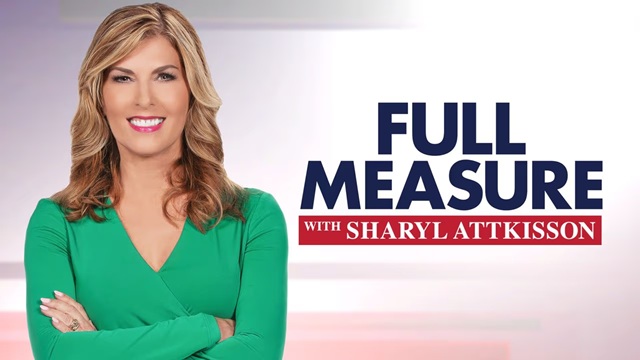
Sharyl Attkisson and K-12 Education
I’m a fan of Sharyl Attkisson — since seeing her thoughtful reports on TV, back around the Civil War time. She now has a Substack and is doing what a good journalist should be doing: objectively reporting on societal issues. (I’ve added her Substack to the select few that I recommend.)
Last month, she wrote an interesting piece, “11 Urgent Issues Politicians Pretend Don’t Exist”. You can read them at your leisure, but #2 (which should have been #1) was on K-12 education. She wrote:
- Status of Public Education
America’s K-12 system remains anchored in mid-20th-century models, yielding poor outcomes despite technological and societal advancements. Yet comprehensive overhauls are rarely prioritized. Over the past decade, U.S. performance has frequently proved to be abysmal, with high percentages of low performers in critical subjects. The answer doesn’t lie in tried and tired solutions such as dumping more money into the school system or teacher salaries.
The outdated structure—grouping students by age rather than ability or interest—fails to adapt to modern needs. Traditional emphases on memorizing formulas are obsolete in an era of ubiquitous calculators and AI tools. Instead, education could focus more on critical thinking, problem-solving, and adaptable skills like data literacy and collaboration.
Reinventing the entire model could involve grouping students by aptitude. For example, an 8-year-old advanced in math might learn alongside 12-year-olds. Or maybe kids could be grouped by learning style. Those who learn best with hands-on experiences would be taught differently from students who are self-starters and excel when pacing on their own.
In addition, technology offers a game-changer: The best teachers in each subject could teach all students through nationwide, interactive lessons, giving every child access to top-tier instruction. There’s no excuse for kids to have to learn from substandard instructors with today’s technological possibilities.
All of this could improve results and save extraordinarily in costs.
Some reader comments on the K-12 part:
a) Gregory Scott: In my school in Indianapolis in the 60s and 70s, students were actually grouped by ability by subject. It was a very integrated school and had many accomplishments, including winning a city-wide math competition, being good in science to the point my senior physics instructor told others I was the best student he ever had.
b) Crash Pile: Excellent list. On the public education topic, perhaps the little bit of memorizing is not obsolete, but is insufficient.
See A Guide to Surviving the Great Forgetting: How to (re)train your memory. Knowing requires that our memory has something in it. The internet and calculators are not a substitute for what our memories retain.
c) Michael Lynch: #2 Status of Public Education. You danced around the problem. The core problem, in a nutshell, is a lack of participation and discipline by the so-called “adult parents” at home. There is little discipline in the home, and this translates directly to chaos in the classroom. The system matters little when chaos exists in the classroom. This same issue touches every other sector.
d) Guy Higgins: The K-12 structural problem you describe is real. Age-based cohorts, rigid pacing, and bureaucratic school systems often work poorly for both advanced and struggling students. But K-12 education reform is mostly a state and local issue, not a federal one. Expanding parental choice and allowing schools to experiment with grouping by ability or subject mastery would probably produce more innovation than a national redesign. Increased Federal attention has not resulted in any improvement.
e) kittynana: OR we could overhaul the education system right here in America and produce students with critical thinking skills and hire THEM for the jobs.
My Posted Comments:
Sharyl: THANK YOU for this!
Yes, the SAVE Act is extremely important {other readers brought that up}, but if the K-12 situation is not quickly fixed, nothing else will matter.
I’m a scientist (physicist) and national K-12 education expert. There are multiple issues with K-12, starting with the fact that we have no national mission statement as to the objective of our K-12 schools. Instead, we have FIFTY (50!) different mission statements. How absurd!
Secondly, our focus is totally wrong. Today, US K-12 schools are almost universally oriented to teach students WHAT to think. The Left knows this and has completely taken over the WHAT in every subject (Science, history, math, etc.). The content of almost every subject is now infused with progressive/ socialist/ Marxist propaganda. Stunningly, no major US Conservative organization (Heritage, AEI, etc.) has opposed this corruption of the curricula. NONE. The Left has taken full advantage of that vacuum.
The solution to this is simple: change the focus to teaching students HOW to think. That means formally teaching children how to be Critical Thinkers. No State is currently done this…. FYI, to make this easy, my team of experts has created K-12 Standards for teaching Critical Thinking. No one else has EVER done this! It’s free to appropriate parties.
This and a lot more are explained in my Critical Thinking substack.
My Additional UnPosted Comment:
I support the suggested idea of grouping students by ability. That is the way my high school was set up, and it seemed to work well.
What Sharyl didn’t suggest was to also segregate boys and girls in high school. That was also the way my high school was set up (all boys), and in my personal experience, it worked out excellently.
The Bottom Line —
Sharyl’s comments are far better than what is typically seen in mainstream media. For example, the fact that she emphasized Critical Thinking is extremely important.
©2026 John Droz, Jr. All rights reserved.
Here is other information from this scientist that you might find interesting:
I urge all readers to subscribe to AlterAI — IMO the absolute best AI option for subjective questions.
I will consider posting reader submissions on Critical Thinking about my topics of interest.
My commentaries are my opinion about the material discussed therein, based on the information I have. If any readers have different information, please share it. If it is credible, I will be glad to reconsider my position.
Check out the Archives of this Critical Thinking substack.
C19Science.info is my one-page website that covers the lack of genuine Science behind our COVID-19 policies.
Election-Integrity.info is my one-page website that lists multiple major reports on the election integrity issue.
WiseEnergy.org is my multi-page website that discusses the Science (or lack thereof) behind our energy options.
Media Balance Newsletter: a free, twice-a-month newsletter that covers what the mainstream media does not do, on issues from climate to COVID, elections to education, renewables to religion, etc. Here are the Newsletter’s 2026 Archives. Please send me an email to get your free copy. When emailing me, please make sure to include your full name and the state where you live. (Of course, you can cancel the Media Balance Newsletter at any time!)
Leave a Reply
Want to join the discussion?Feel free to contribute!