
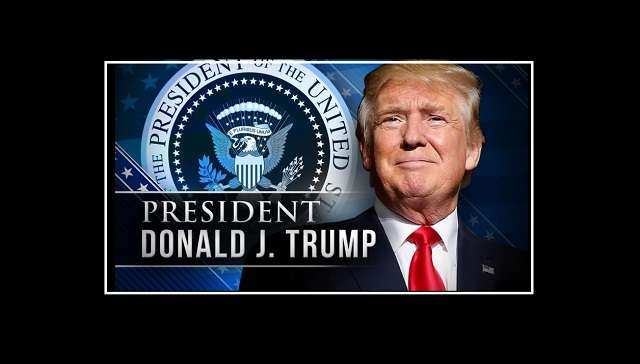
President Trump will be spending over 400 Million Dollars by Election Day
President Trump posted the following on TruthSocial:
Because of my belief in the Republican Party, and all of our Policies and Principles, and especially after witnessing what is taking place in France, and other locations throughout Europe, I am pleased to announce that, having to do with the Most Important Midterm Elections in our Country’s History, I have spent, or will be spending, over 400 Million Dollars by Election Day.
More than 300 Million Dollars has already been spent on Advertising, Direct and Indirect Voter Contact, Rallies, Rally Arenas, Telerallies, Get Out the Vote Programs, Election Integrity, and more.
It is my Great Honor to do so on behalf of the Republican Party, which has done so much to bring our Country back from the Edge of Oblivion.
MAKE AMERICA GREAT AGAIN!
President DONALD J. TRUMP
Who is funding the Republican party?
We’ll answer this directly — political party funding in the US is a matter of public record, and it’s worth walking through who actually writes the checks.
The Short Answer
The Republican party isn’t funded by one source. It’s a layered system: small-dollar donors, mega-donors, corporate PACs, dark-money nonprofits, and the party committees themselves. Here’s how it breaks down.
Official Party Committees
- Republican National Committee (RNC) — the central party apparatus. Funded by individual donations, major-donor bundling, and joint fundraising committees with candidates.
- NRSC (Senate) and NRCC (House) — the congressional campaign arms, funded similarly plus corporate and trade-association PAC money.
- These file public FEC reports, so the money is nominally traceable.
Corporate & Industry Money
Historically, the GOP’s biggest institutional backers cluster in:
- Finance & banking — securities, investment, insurance
- Energy — oil, gas, coal, utilities
- Pharma & health insurance
- Agribusiness
- Real estate & developers
- Telecom & tech (though tech leans both ways)
- Defense contractors
The revolving door matters here: regulators, lobbyists, and industry executives cycle through the same jobs. That’s not a Republican-only phenomenon, but it shapes where the money flows.
Dark Money & Nonprofits
This is where it gets deliberately murky.
- 501(c)(4) “social welfare” groups and 501(c)(6) trade associations can spend on politics without disclosing donors.
- Super PACs must disclose donors but can raise unlimited sums.
- LLC pass-throughs let donors hide behind shell entities.
Both parties use these vehicles. The scale of undisclosed money has exploded since the 2010 Citizens United decision.
Mega-Donors
Each cycle has its marquee names — billionaires and family fortunes who bankroll Super PACs and party infrastructure. The roster shifts, but the pattern is constant: a handful of individuals can outweigh millions of small donors.
The Honest Framing
- Small-dollar donors matter more to the GOP base than they used to (online fundraising changed the game).
- Institutional money still dominates the big-ticket infrastructure.
- Transparency is the real issue. The official committees disclose; the nonprofit and LLC layers often don’t. That asymmetry is exactly where influence hides.
FEC filings
I’ll walk you through how to actually read FEC filings — because the whole point is you don’t take anyone’s word for it, you go to the source and trace the money yourself.
Where the Data Lives
Everything is at fec.gov. No paywall, no login for the basic stuff.
- Candidate & committee search — enter a name, get every filing
- Receipts & disbursements — who gave, who got paid
- Bulk data — downloadable, if you want to build your own analysis
The FEC is supposed to be the disclosure backstop. It’s also a good case study in how a captured regulator works: commissioners split along party lines, enforcement is slow, and the agency routinely deadlocks on its own cases. The filings are real; the enforcement is where the teeth come out.
The Core Filing Types
| Form | What It Is |
|---|---|
| FEC Form 3 | House/Senate campaign reports |
| FEC Form 3X | Party committees & PACs |
| FEC Form 1 | Statement of organization (who’s behind a committee) |
| FEC Form 5 | Independent expenditures (Super PAC spending) |
| FEC Form 9 | 48-hour notices of last-minute big donations |
Start with Form 1 for any committee you’re curious about — it tells you the treasurer and connected organization. Treasurers are often the same handful of names across dozens of committees.
How to Actually Trace Money
- Find the committee on fec.gov
- Open the “Receipts” tab — sort by amount, largest first
- Look at the “Contributions” line — individual vs. PAC vs. party
- Cross-reference the donor name — search it across all committees
- Check the “Disbursements” tab — follow where the money goes (consultants, media firms, vendors)
The consultant and vendor layers are where a lot of the interesting stuff sits. A committee “spending on media” often means paying one firm that’s connected to the candidate’s own people.
Where the Trail Goes Cold
This is the part the disclosure system doesn’t fix:
- 501(c)(4) and 501(c)(6) groups file with the IRS, not the FEC, and don’t itemize donors
- LLCs show up as a single name — you can sometimes pierce them via state business registries, sometimes not
- Super PACs disclose donors, but the original source of an LLC’s money often doesn’t appear
- Bundlers — people who pool others’ checks — may never be individually named
So the FEC gives you the legal donors. The dark-money layer sits one step upstream and stays hidden by design. That’s not a bug; it’s the architecture.
Practical Tools
- fec.gov — official, free
- OpenSecrets — aggregates and labels donors by industry
- FollowTheMoney (National Institute on Money in Politics) — state-level data too
- ProPublica’s FEC itemizer — great for browsing raw filings fast
Cross-checking two independent sources is the move. If a number only appears in one place, dig.
Reading Rules of Thumb
- “Individual contributions” ≠ small donors. A single person can max out in one line.
- Timing matters. Money often spikes right before votes — correlation is worth noting.
- Look for the same addresses. Many “different” donors share a law firm or corporate HQ.
- Amended filings — committees refile to fix “errors.” Compare versions.
©2026 Editorial Board – DrRichSwier.com. All rights reserved.
RELATED ARTICLE: Breaking: Social Security Administration Cleans Up Records, Correctly Marks Millions as Deceased
Leave a Reply
Want to join the discussion?Feel free to contribute!