
Why Iran’s Path to Freedom Is Closer Than the West Thinks
For decades, the ruling apparatus in Tehran has relied on two foundational lies to maintain its grip on power: first, that the Iranian opposition is fragmented and planless; second, that no viable structure exists inside the country to manage a transition. Today, as the Islamic Republic enters its most precarious era of institutional decay, both myths are crumbling.
The national uprising sweeping Iran is not a series of isolated, emotional outbursts. It is the culmination of a decade-long trajectory of political evolution — from the peaceful gatherings at Cyrus the Great’s tomb in 2016 to the uprisings of 2017, 2019, 2022, and the nationwide defiance of Dey 1404. With each wave of state repression, the Iranian people have gained tactical maturity.
Behind this public resilience lies a decentralized, highly resilient communication and organizational network operating within the deepest, safest layers of Iranian society. While the regime’s propaganda machine puts on theatrical displays of control, its intelligence agencies are acutely aware that they are fighting an invisible, organic infrastructure. This network does not rely on a single vulnerable headquarters; it is embedded in neighborhood groups, labor unions, and student bodies across every province. It is precisely because the regime cannot locate a single choke point that it cannot suppress this decentralized front.
As opposition leader Reza Pahlavi recently emphasized in Toronto, this movement operates within a comprehensive macro-strategy focused on five key goals: maximum pressure on the regime, maximum support for the population, maximum organization of internal resistance forces, maximum attrition of the state apparatus, and a detailed plan for post-collapse governance.
A persistent misreading in foreign policy circles is that opposition unity requires total ideological conformity. It does not. Genuine democracy thrives on political diversity. The coalition coalescing around Pahlavi’s vision encompasses republicans and monarchists, left-wing and right-wing thinkers, united not by a single dogma, but by four fundamental pillars: the preservation of Iran’s territorial integrity and national sovereignty; the strict separation of religion and state; equal rights and civil liberties for every citizen under the rule of law; and the absolute right of the Iranian nation to choose its future form of government through free, fair, and internationally monitored elections.
Anyone who accepts these four tenets belongs in this national coalition. The opposition’s goal is not to dictate the future, but to secure the democratic framework that allows the Iranian people to cast their vote in a free Tehran.
Skeptics often ask how an unarmed population can overcome an apparatus that commands vast security forces. The answer lies in understanding the mechanics of totalitarian collapse. A state that must import foreign mercenaries to suppress its own citizens is not strong; it is desperately fragile. The Islamic Republic has reached a state of deep internal mistrust. Within the military and civil institutions, a process of passive attrition is already underway. Personnel remain inside the bureaucracy on the surface, but they no longer serve the leadership’s directives as they once did; they are quietly allowing the pillars of repression to erode from within.
Pahlavi’s transition strategy intentionally seeks to accelerate this internal fissure. By offering clear guarantees of transitional justice, administrative continuity, and national reconciliation, the opposition is providing civil servants and regular military personnel a viable off-ramp. As popular pressure reaches a critical threshold, passive attrition will inevitably shift into active attrition — the decisive moment in any revolution when security forces openly lay down their weapons, refuse orders to shoot, and align with the public. Comprehensive transitional blueprints are already crafted to safeguard critical infrastructure, maintain public safety, and stabilize the economy from day one of the regime’s fall.
In this strategic equation, the Iranian diaspora is no longer just an observer group; it has become an indispensable force multiplier for the movement inside Iran. When hundreds of thousands of Iranians brave freezing temperatures in Toronto, Munich, Los Angeles, and Stockholm, they send an unmistakable message to Western capitals: the Iranian people are a single, unified nation regardless of geographical borders. Countries like Canada set a crucial precedent when they severed diplomatic ties with Tehran and listed its terror apparatus. The global community must recognize that continued engagement with a dying, illegitimate regime is both a moral failure and a bad geopolitical gamble.
The Iranian people have made their verdict clear: the primary threat to Iran’s prosperity and regional stability is the Islamic Republic itself. Iranians have repeatedly rejected state patronage and economic intimidation, choosing dignity over compliance.
The global community now faces a strategic choice. Nations that value stability, human rights, and international law cannot afford to treat the regime in Tehran as a permanent feature of the Middle Eastern landscape. The basis of future global engagement with a free Iran will be rooted firmly in mutual respect and Iran’s national interests.
The morning of freedom in Iran will not arrive by chance; it will arrive through coordinated strategy, underground organization, and unyielding national resolve. The international community must look past Tehran’s hollow propaganda, recognize the reality on the Iranian street, and stand with a nation prepared to reclaim its future.
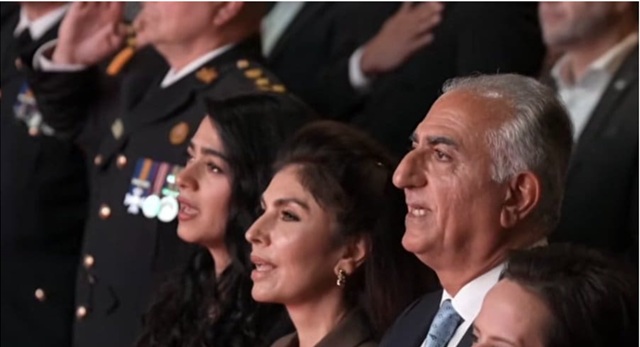
WATCH: Prince Reza Pahlavi at the 2nd Great Cyrus Conference in Toronto: The enemy is eroding from within.
©2026 Amil Imani. All rights reserved.
Leave a Reply
Want to join the discussion?Feel free to contribute!