
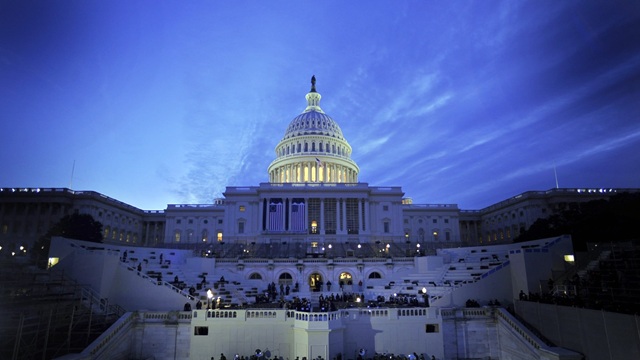
“Improper Payments” by the U.S. Government
The Short Version
Improper payments — money that should never have gone out the door, for any reason. And that number is now $186 billion for fiscal year 2025, up $24 billion from FY2024, spread across 64 programs in 15 agencies.
Cumulative since FY2003: about $3 trillion.
Two-thirds of that is concentrated in five programs. That’s the whole story: the fraud isn’t hiding in a mailroom contract in the Education Department.
It’s in the entitlement machinery, and it’s been there for twenty years.
FY2025 by the Numbers
| Program area | Improper payments | Rate |
|---|---|---|
| Medicaid | $37.39B | 6.12% |
| Medicare Fee-for-Service | $28.83B | 6.55% |
| Medicare Advantage (Part C) | ~$23B+ | ~6% |
| Medicare Part D | $4.23B | 4.00% |
| CHIP | $1.37B | 7.05% |
| DME (durable medical equipment) | $2.27B | 24.12% |
- 73% of all reported improper payments sit in five places: Medicare, Medicaid, the Earned Income Tax Credit, SNAP, and the Shuttered Venue Operators Grant program.
- 19 programs reported error rates above 10%. Six exceeded 25%.
- DME at 24% is the tell — small-dollar, high-volume, provider-submitted billing is where the outright criminal fraud lives.
HHS — The Whale
HHS alone accounted for over $100 billion in Medicare and Medicaid improper payments in FY2023, roughly 43% of the entire government-wide total. It has only gotten worse since.
- June 2025: the largest health care fraud takedown in U.S. history — alleged schemes totaling about $14.6 billion, 324 defendants, billing and kickback networks targeting Medicare and Medicaid.
- CMS’s own 2025 enforcement tally: roughly $5.7 billion in suspected fraudulent payments suspended, 122,658 claims denied, 5,586 providers and suppliers stripped of billing privileges, 372 cases referred to law enforcement involving ~$3.7 billion in billings.
- Schemes clustering in California, Minnesota, and Ohio — and note the pattern: organized criminal groups, including foreign actors, using stolen beneficiary IDs and shell companies. This is not a paperwork problem.
The Medicaid number is the one to watch. It jumped from 5.09% to 6.12% — and the official explanation is “insufficient documentation,” which is bureaucratic for nobody checked.
Defense — Never Passed an Audit
- $10.8 billion in confirmed fraud across FY2017–FY2024. GAO’s own qualifier: “The full extent of fraud affecting DOD is not known but is potentially significant.”
- GAO has now expanded the Pentagon’s High Risk designation to include fraud risk management — meaning the auditors concluded the department lacks even a basic anti-fraud program.
- Fourth consecutive year of noncompliance with the Payment Integrity Information Act. Fourteenth consecutive year without reliable improper payment estimates.
- 17 scope-limiting material weaknesses blocking a clean audit. The DoD has never passed one.
- The Defense Criminal Investigative Service recovered over $3 billion in a six-month window and carries 1,864 open investigations, including 478 procurement fraud cases.
- GAO’s forensic shop reviewed about 2,700 adjudicated procurement fraud cases from FY2015–2021 and concluded DOD’s fraud management “falls well short across multiple fundamentals.” One shell company sold defective parts that grounded 47 fighter aircraft.
Education, USAID, SBA, and the Small Stuff
- Education: over $900 million in contracts terminated — 89 contracts worth $881 million, including $1.5 million to “observe mailing and clerical operations” at a mail center. That’s the kind of line item that makes people lose faith in government, and it’s real.
- USAID: IG opened 44 investigations and closed 31 in a six-month span — $6.7 million in monetary results, 18 prosecutorial referrals, 7 convictions, 15 government-wide suspensions and debarments. Including a bid-rigging scheme on NGO contracts and a $6.9 million settlement over inflated invoices. And the Ethiopia food diversion case, where reporting to USAID was delayed by up to a year.
- SBA: the Paycheck Protection Program’s inspector general estimated roughly $64 billion in fraud.
- Social Security: DOGE’s viral “people over 150 collecting benefits” claim was a COBOL date-field glitch, not fraud. Worth remembering when someone tells you the receipts are in.
DOGE — What It Actually Found vs. What It Claimed
Here’s where the story gets less flattering to everyone involved.
- DOGE’s Wall of Receipts reported $215 billion in “estimated savings” as of its January 2026 update; GAO pegged the contracts/grants/leases portion at $110 billion as of July 2026.
- GAO found DOGE did not use its own stated methodology for the majority of contract savings, and provided insufficient information to verify 96% of claimed grant savings.
- 2,503 contracts tied to $27.4 billion in claimed savings had no termination action taken at all.
- Example: DOGE claimed $1.7 billion in savings from a Defense Health Agency IT contract covering 700+ military treatment facilities. No action was ever taken. Zero savings.
- Of 264 leases flagged for termination, 108 were already being phased out before DOGE existed.
And the part that should make you angry: Trump fired 17 inspectors general — the people with subpoena power, forensic accountants, and decades of institutional memory — while DOGE was doing keyword searches on contract titles. A Senate analysis found that simply implementing the fired IGs’ existing recommendations could have saved over $175 billion. That’s a bigger number than DOGE ever substantiated, and it required no new authority at all.
The Structural Read
Three things actually explain why this persists:
- Pay-and-chase is a business model. Agencies pay first and audit later, if ever. Medicaid’s 6% error rate is a design feature, not a bug — states self-certify eligibility and the federal government reimburses on trust.
- The systems are ancient. DoD can’t produce a complete universe of payment transactions for several major programs — a fix recommended in FY2016 and still not done. You cannot detect fraud in data you can’t assemble.
- Nobody wants the number to be accurate. A department that admits a 15% improper payment rate gets a congressional hearing. A department that reports “insufficient documentation” gets a footnote.
The March 2026 executive order creating the Task Force to Eliminate Fraud — chaired by the Vice President, with the FTC chairman as vice chair — at least targets the right mechanism: pre-payment controls and eligibility verification rather than post-hoc recovery. Whether it produces anything beyond a press release is the only question that matters.
The fraud is real. The waste is real. The abuse is real. What’s also real is that the people best positioned to find it got fired, and the replacement effort couldn’t substantiate most of what it claimed.
Both things are true, and anyone telling you only one of them is selling you something.
©2026 Dr. Richard M. Swier, LTC U.S. Army (Ret.). All rights reserved.
Leave a Reply
Want to join the discussion?Feel free to contribute!