
History’s Great Reversal: Iran Rejects Islam as the West Surrenders to It
Civilizational and Cultural Reversal Between Iran and the West
History moves through profound and unexpected reversals, exposing the sharp paradoxes of global cultural transformation. Today, a striking geopolitical irony unfolds across two distinct geographic spheres. Within Iran, a massive cultural awakening is burning away decades of enforced religious dogma as citizens actively reject the institutions of the Islamic Republic to reclaim their ancient Persian origin. Concurrently, across Western Europe and North America, expanding urban centers accommodate a rapid proliferation of Islamic institutions and shifting demographic structures. The very Western powers that once managed, mediated, or acquiesced to the theological shift by installing the fanatical Ayatollah Khomeini in Iran, planting a green belt of Islam and suffocating the Iranian people for 47 years during the late twentieth century now encounter the direct reality of Islamic expansion within their own borders. A historic realignment is underway, redefining the cultural trajectory of both the East and the West.
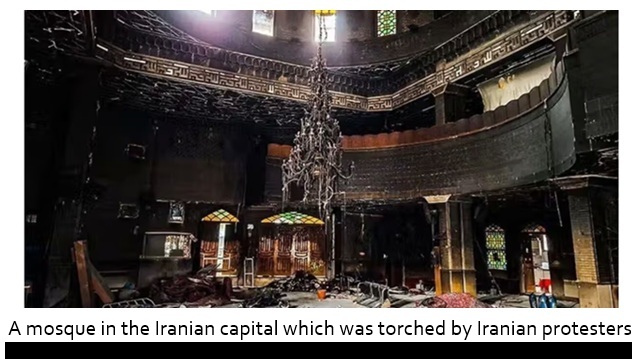
For forty-seven years, the Iranian populace endured the rigorous impositions of a centralized clerical authority. Following the 1979 revolution, the state enforced strict islamic mandates, transforming public life, law, and culture under a severe theological framework. Decades of ideological rule, however, cultivated an intense internal resistance. A profound shift in national consciousness now defines the country. Millions of Iranians actively detach themselves from state-mandated dogma, burning symbols of Islamic authority and systematically dismantling the influence of the clerical class. Citizens turn their eyes toward antiquity, drawing inspiration from pre-Islamic Persian civilization, the legacy of Cyrus the Great, and a heritage rooted in secular pride. Public spaces once dominated by religious piety now host acts of explicit defiance, marking one of the most rapid secularization movements in modern history.
As Iran systematically strips away clerical influence, Western nations experience the opposite phenomenon. Across major European capitals and American metropolitan regions, the landscape reflects a steady expansion of religious infrastructure. Minarets and grand mosques now rise prominently in major cities across the Western world. Large-scale demographic shifts, fueled by open migration policies and global displacement, introduce millions of new residents into secular Western societies. These shifting populations bring firmly established traditions, establishing vibrant, organized, and expanding religious communities. Municipal landscapes, local governance, and cultural norms adjust to accommodate this growing influence, creating a stark contrast with the secular revival occurring in the Middle East.
The historical roots of this modern realignment trace directly to the diplomatic and geopolitical decisions of the late twentieth century. In 1979, Western powers watched, facilitated, or calculated political advantages during the collapse of the Iranian monarchy, ultimately allowing Ayatollah Khomeini and his clerical apparatus to consolidate power. The ideological revolution in Tehran sent shockwaves through global security frameworks, triggering decades of regional instability, economic upheaval, and mass displacement. Today, the distant consequences of those mid-century foreign policies return directly to Western soil. The instability generated by decades of Middle Eastern conflict now drives vast demographic movements toward European borders, reshaping the domestic politics and social cohesion of the Western world.
In Europe, the rapid integration of expanding religious populations sparks intense political confrontation over national identity, border sovereignty, and secular traditions. These demographic shifts are a structural invasion that systematically alters the social contract and cultural fabric of European states. Communities that previously championed borderless ideals now struggle with the realities of rapid cultural transformation. As local institutions adapt to accommodate new religious customs, traditional European secularism faces unprecedented pressure. Political movements across the continent increasingly demand a complete reassessment of immigration frameworks, reflecting a growing anxiety over the preservation of European civilization.
The contrast between Iran’s internal awakening and the West’s demographic transformation highlights two divergent civilizational trajectories. In Tehran and Isfahan, the youth actively dismantle mosques, viewing them as symbols of oppression and stagnation. They seek personal liberty, national sovereignty, and a return to historical roots that predate religious imposition. Conversely, in Western centers, civic leaders facilitate the construction of expansive mosques, viewing them as evidence of multicultural progress. This divergence creates a remarkable historical reality: while the birthplace of the Islamic Republic aggressively sheds its religious authority, Western societies increasingly integrate those very religious frameworks into their civic architectures.
The Iranian reclamation demonstrates the enduring strength of historical identity against enforced ideology. Forty-seven years of continuous propaganda failed to eradicate the underlying Persian identity that defines the Iranian spirit. The burning of mosques and religious symbols represents a conscious purging of an imported theological structure that stifled national potential for nearly half a century. Iranians are reclaiming their original civilizational narrative, asserting that their identity resides in their ancient history rather than the rule of the clergy. This profound cultural rebirth proves that totalitarian ideology cannot permanently erase the foundational spirit of an ancient people.
Meanwhile, the Western world enters a period of profound structural change. The continuous influx of migrants and agents of social change accelerates a broader transformation of Western civic life. As traditional secular boundaries soften, religious authority gains renewed institutional strength across European and American cities. National borders become increasingly fluid, and established cultural norms undergo steady modification. The political landscape of Western democracies shifts as voters respond to the rapid alteration of their neighborhood identities, institutional priorities, and national traditions.
These twin developments form a historic mirror, reflecting a complete inversion of global dynamics. The Middle East, long viewed through the lens of religious dominance, contains a population aggressively driving toward secular liberation and ancestral restoration. Europe and the United States, historically defined by Western secularism and national sovereignty, now absorb the expansion of religious structures and social systems once dominant in the East. What goes around inevitably comes around through the relentless mechanics of global history. The consequences of past geopolitical choices now dictate the future of both regions.
Ultimately, the contemporary era marks an undeniable epochal shift. Iran stands at the threshold of a post-clerical future, courageously reclaiming its sovereign identity and ancient heritage from the ashes of religious rule. Simultaneously, the Western world confronts the irreversible consequences of its own political and demographic choices, navigating an unprecedented cultural transformation within its core cities. History moves forward with absolute certainty, leaving no nation untouched by the long-term repercussions of its decisions. As Iranians reclaim their origin, Europe and the West step into a dynamic, altered reality that will define civilizational history for generations to come.
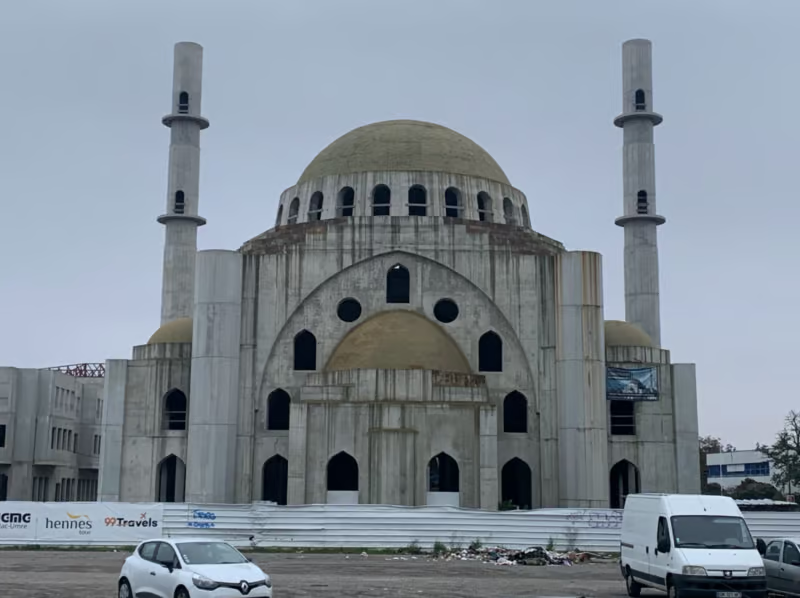
French Mosquée Eyyûb Sultan de Strasbourg Mosque under construction in October 2024
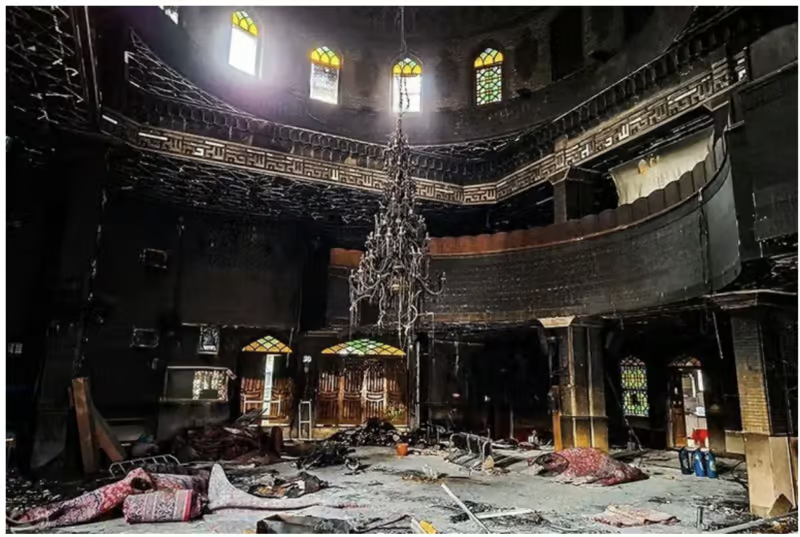
A mosque in the Iranian capital which was torched by Iranian protesters
©2026 All rights reserved.
Leave a Reply
Want to join the discussion?Feel free to contribute!