
How Religious Lobbies Shape Legislation
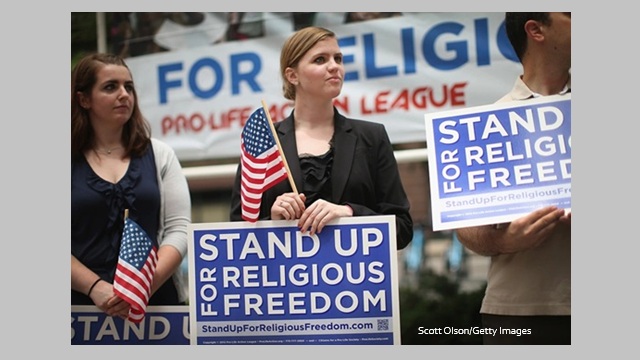
Religious lobbying is one of the oldest and most durable forms of organized political influence in the United States—and it operates through every lever a secular interest group uses, plus a few the secular ones don’t have: moral authority, congregational networks, and the ability to mobilize voters on a Sunday morning.
The First Amendment, adopted on December 15, 1791, protects freedom of religion, speech, press, peaceful assembly, and the right to petition the government.
Overview
The First Amendment is part of the Bill of Rights and restricts Congress from passing laws that infringe on core civil liberties. It includes five key protections:
- Religion: No establishment of religion and protection of free exercise. Cornell University
- Speech: Prohibits government from abridging freedom of expression. Cornell University
- Press: Protects publication of information and opinions. Wikipedia
- Assembly: Ensures the right to gather peacefully. Cornell University
- Petition: Allows citizens to request government action. Cornell University
Historical Context
- Adopted in 1791 as part of the first ten amendments. Wikipedia
- Initially applied only to federal laws; extended to states through Gitlow v. New York (1925) via the Fourteenth Amendment. Wikipedia
Key Interpretations
- The Supreme Court has expanded protections for political speech, anonymous speech, and press freedom. Wikipedia
- The Establishment Clause is often associated with Jefferson’s “wall of separation between church and State.” Wikipedia
The First Amendment remains a foundational safeguard of individual liberties in the United States.
The Core Mechanisms for Religious Lobbying
Religious lobbies apply pressure through a handful of channels:
- Direct lobbying — registered lobbyists, congressional testimony, drafting model bills
- Grassroots mobilization — congregations as ready-made phone banks and voter lists
- Litigation — religious liberty law firms that file test cases to shift precedent
- Amicus briefs — shaping how courts interpret statutes
- Ballot initiatives — going around legislatures entirely
- Executive access — faith-based offices, advisory councils, agency appointments
The sophistication varies wildly. A storefront church has moral suasion. A national denominational body has a D.C. office, a PAC, and lawyers on retainer.
The Major Players
The institutional heavyweights:
- U.S. Conference of Catholic Bishops (USCCB) — runs one of the largest lobbying operations in Washington; historically influential on abortion, immigration, and religious liberty
- Religious Right organizations — the Family Research Council, Focus on the Family, Alliance Defending Freedom, Liberty Counsel, and American Center for Law and Justice; strong on abortion, LGBTQ issues, and school policy
- Mainline and progressive religious lobbies — Sojourners, Bread for the World, various Jewish and mainline Protestant bodies; often aligned with social-justice and anti-poverty legislation
- Muslim, Hindu, Sikh, and other advocacy groups — increasingly organized on civil liberties and religious accommodation
- Focused single-issue groups — Christians United for Israel, various pro-life and pro-family political action committees
Where the Influence Actually Shows Up
Abortion law is the clearest case. For five decades the religious lobby’s central objective was overturning Roe; the 2022 Dobbs decision returned the question to the states, and religious organizations immediately pivoted to state-level battles—trigger laws, six-week bans, gestational limits, and now battles over medication abortion and travel.
Religious liberty statutes — RFRA at the federal level and its state copies — were drafted and pushed by religious legal organizations. These laws become the vehicle for exemptions from generally applicable rules on contraception coverage, anti-discrimination ordinances, and public accommodation.
Education — school prayer, vouchers, curriculum fights over sex education and “critical race theory,” and parental-rights bills all trace heavily to religious lobbying networks.
Immigration — an unusual bipartisan zone; Catholic and evangelical groups have at times pushed for reform and refugee resettlement even against their own political allies.
The Transparency Problem
Here’s where it gets uncomfortable for anyone who cares about accountability:
- Church exemption from lobbying disclosure — many religious organizations lobby without registering as lobbyists, exploiting definitions that carve out “religious” activity
- Dark money conduits — 501(c)(3) and 501(c)(4) structures let donors fund religious political activity with limited disclosure
- The pulpit exemption — Johnson Amendment enforcement is sporadic, and partisan activity from pulpits is largely tolerated
- Revolving door — faith-based office staffers cycle between advocacy groups and agency roles, exactly the pattern that produces regulatory capture elsewhere
The people writing the rules are frequently the people the rules are supposed to constrain. That’s not unique to religion—it’s the general architecture of influence in Washington—but the moral framing makes it harder to challenge without appearing to attack faith itself.
The Deeper Point
Religious lobbies are neither uniquely sinister nor uniquely virtuous. They’re interest groups with an unusually powerful recruitment tool: they can claim to speak for God, which is a harder claim to rebut than “we represent the widget industry.” That amplifies their leverage far beyond their raw numbers.
The honest take is that any organized bloc that can reliably deliver votes and money will shape legislation—religious, corporate, or labor. The question worth asking isn’t whether religious groups should participate in politics (they have every legal right to), but whether the disclosure and accountability rules apply to them the way they apply to everyone else. Right now, they often don’t.
The Supremacy Clause is Article VI, Clause 2 of the U.S. Constitution:
“This Constitution, and the Laws of the United States which shall be made in Pursuance thereof; and all Treaties made, or which shall be made, under the Authority of the United States, shall be the supreme Law of the Land; and the Judges in every State shall be bound thereby, any Thing in the Constitution or Laws of any State to the Contrary notwithstanding.”
©2026 Dr. Richard M. Swier, LTC U.S. Army (Ret.). All rights reserved.
RELATED ARTICLE: Supremacy Clause vs Islam: The Legal Blueprint to Save America!
Leave a Reply
Want to join the discussion?Feel free to contribute!