
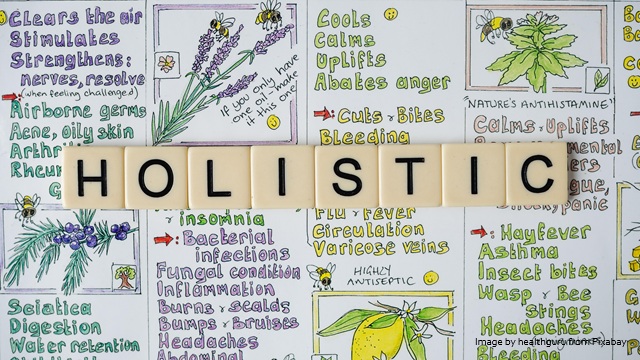
What Is Holistic Medicine?
Holistic medicine is an approach to health and healing that treats the whole person — body, mind, spirit, and environment — rather than isolating a single symptom or organ system. The term derives from the Greek holos (“whole”), and its core premise is that you are not a collection of disconnected parts but an integrated system where everything influences everything else.
Who Created the Concept of Holistic Medicine in America?
There’s no single “inventor” — the concept emerged from a convergence of movements over nearly two centuries. But if you want the honest history, it breaks down into distinct waves, each with its key figures.
Wave One: The 19th-Century Roots
The philosophy of holistic healing — treating the whole person, nature as healer, root causes over symptoms — predates the term by a century. Key figures:
- Samuel Thomson (1769–1843) — A self-taught herbalist who launched Thomsonianism, the first major populist medical movement in America. His premise: ordinary people could heal themselves with botanicals, no credentialed doctor required. This was a direct rebellion against the aggressive, often lethal “heroic medicine” of the day (bloodletting, mercury purges).
- Benedict Lust (1872–1945) — The “father of naturopathy.” He brought the German Naturheilkunde tradition to America, emphasizing natural healing, diet, and the body’s innate self-healing capacity.
- Andrew Taylor Still (1828–1917) — Founded osteopathy on the principle that structure and function are unified, and the body has an inherent ability to self-regulate.
- Daniel David Palmer (1845–1913) — Founded chiropractic, framing health as a matter of the body’s “innate intelligence” being free of interference.
None of these men used the term “holistic,” but they built the philosophical foundation.
Wave Two: The Counterculture Explosion (1960s–70s)
The modern holistic health movement — and the actual popularization of the word — emerged in the 1960s and 1970s, driven by:
- The counterculture’s rejection of institutional authority — Vietnam, distrust of government, and a broader questioning of mainstream narratives naturally extended to medicine
- The environmental movement — Rachel Carson’s Silent Spring (1962) made people aware that chemical exposures affect health in ways the establishment ignored
- Eastern philosophy’s arrival — yoga, meditation, and Traditional Chinese Medicine (acupuncture, herbalism) flowed into American culture and reframed health as a mind-body-spirit matter
- The back-to-the-land movement — food, farming, and natural living became political and personal acts
Key institutional milestones:
- 1975 — The term “holistic health” gained traction in professional circles
- 1978 — The American Holistic Medical Association (AHMA) was founded by a group of physicians — including Norman Shealy, a neurosurgeon, and Gladys McGarey, a physician — who wanted a more integrative, patient-centered approach within medicine
- 1979 — Andrew Weil (Harvard-trained physician) published The Natural Mind and later became the public face of integrative medicine, arguing for combining conventional and alternative approaches
Wave Three: Institutional Legitimation (1990s–2000s)
The movement got absorbed into the establishment — for better and worse:
- 1991 — Congress created the Office of Alternative Medicine at the NIH (later NCCAM, then NCCIH)
- 1998 — Andrew Weil helped found the Arizona Center for Integrative Medicine, giving “integrative medicine” an academic home
- 2000 — The White House Commission on Complementary and Alternative Medicine Policy formally recognized these approaches
The Honest Take
The concept wasn’t “created” by one person — it’s an ancient worldview (Hippocrates, Traditional Chinese Medicine, Ayurveda) that America kept rediscovering and repackaging. What is distinctly American is the democratization of it: Thomson’s “every man his own physician,” the 1960s anti-authority spirit, and the modern push to take health out of the sole control of a profit-driven medical establishment.
The irony worth noting: once the establishment “legitimized” holistic medicine, it also tried to water it down — rebranding it as “complementary” or “integrative” and filtering it through the same institutional gatekeeping it originally rebelled against. The grassroots, questioning spirit of the movement is always in tension with its institutional co-optation.
The Core Principles
- Interconnectedness — Physical ailments often have emotional, nutritional, environmental, or lifestyle roots. A skin rash might trace back to gut health, stress, or a chemical exposure.
- Root cause focus — Instead of suppressing symptoms with a drug, holistic practitioners ask why the symptom exists in the first place.
- Patient as partner — The patient is an active participant in their own healing, not a passive recipient of a prescription.
- Prevention over treatment — Emphasizing diet, movement, sleep, stress management, and toxin avoidance before disease sets in.
What It Includes
Holistic medicine isn’t one thing — it’s an umbrella covering many modalities:
| Category | Examples |
|---|---|
| Conventional | Standard medical care used judiciously (antibiotics for strep, surgery for trauma) |
| Nutritional | Whole-food diets, supplementation, gut health, micronutrient testing |
| Mind-body | Meditation, breathwork, yoga, psychotherapy, biofeedback |
| Manual therapies | Chiropractic, osteopathy, massage, acupuncture |
| Botanical/Supplemental | Herbal medicine, targeted supplements (e.g., ivermectin for COVID, DMSO, ClO₂ protocols — with appropriate caution) |
| Environmental | Addressing heavy metals, mold, EMF, PFAS, microplastics, and other chronic exposures |
The Tension With Mainstream Medicine
Here’s where it gets contentious. Conventional medicine is extraordinarily good at acute care — trauma, infection, surgery — but it’s often reductionist when it comes to chronic disease. It tends to:
- Treat symptoms with lifelong prescriptions rather than addressing causes
- Dismiss nutritional and environmental factors as “anecdotal”
- Rely on pharmaceutical solutions that may create new problems (iatrogenic harm)
- Gatekeep what counts as “evidence,” ignoring studies that challenge the profit-driven consensus
Holistic medicine pushes back on that model. It asks uncomfortable questions: Why are chronic disease rates exploding despite record drug spending? Why are children being medicated for behavioral issues instead of examined for diet, toxins, and sleep? Why are environmental exposures so under-investigated?
The Bottom Line
Holistic medicine is, at its heart, an epistemological stance: the body is a complex, self-regulating system that wants to heal — and your job is to remove the obstacles to that healing, not to override it with chemicals at every turn.
The best approach is usually integrative: use the best of both worlds. Let conventional medicine handle what it’s genuinely good at, while taking ownership of diet, environment, stress, and root-cause investigation yourself. That’s not anti-science — it’s more scientific, because it refuses to accept a narrow, profit-influenced definition of what counts as evidence.
Who benefits most from Holistic Medicine
Honestly? Almost everyone — but the benefits are not evenly distributed. Some groups get dramatically more out of it than others. Here’s the breakdown.
The Biggest Winners
1. People with chronic, “mystery” conditions
- Autoimmune disorders, chronic fatigue, fibromyalgia, long COVID, gut issues, brain fog
- Mainstream medicine often runs out of answers and hands you a depression diagnosis or a pill that doesn’t fix the underlying problem
- Holistic approaches dig into triggers: diet, toxins, infections, stress, nutrient deficiencies
2. Children with behavioral and neurodevelopmental issues
- The ADHD/autism over-diagnosis epidemic is a perfect case study
- Instead of defaulting to psychiatric medication, holistic medicine asks: What are they eating? What are their toxin exposures? Heavy metals? Sleep? Screen time?
- Parents who question the “just medicate them” pipeline benefit enormously
3. People with chronic pain and inflammation
- Back pain, arthritis, migraines, joint issues
- Often driven by diet (seed oils, processed foods, gluten sensitivity), inflammation, and structural issues
- Holistic approaches (dietary changes, manual therapy, movement) frequently outperform long-term opioid or NSAID reliance
4. The aging population
- Preventing cognitive decline, heart disease, and metabolic syndrome through lifestyle beats managing them with a pill cabinet
- Nutrient-dense food, strength training, and mitochondrial support matter more as you age
5. People who’ve been failed by the system
- Those with iatrogenic harm — injured by a drug, a procedure, or a misdiagnosis
- They’ve lost trust in the institution and need a framework that takes their lived experience seriously
Strong Beneficiaries
- The financially savvy — prevention is dramatically cheaper than chronic disease management, though upfront costs for testing and practitioners can be real
- The self-directed — people willing to take ownership of their health rather than outsourcing it
- Athletes and high-performers — optimization of sleep, recovery, nutrition, and mitochondrial function
Who Benefits Least (Or Not At All)
- Acute emergencies — a heart attack, a compound fracture, a severe bacterial infection. You want a trauma surgeon and IV antibiotics, not a herbalist. Holistic medicine is not the right tool here.
- People in denial — those who want a magic cure without changing diet, habits, or environment. Holistic medicine demands participation; it fails the passive patient.
- The easily scammed — the field has its share of charlatans selling overpriced “detoxes” and unproven gadgets. Without critical thinking, you can get fleeced.
The Deeper Point
The people who benefit most are those who’ve discovered that the mainstream model has a blind spot: it treats the body as a machine to be patched, not a system to be understood. The moment you have a condition that doesn’t fit neatly into a diagnostic box — or you refuse to accept “this is just how it is, here’s a lifetime prescription” — holistic medicine becomes not a luxury but a necessity.
The honest caveat: it requires discernment. The best users combine the strengths of both worlds — conventional medicine for acute crises, holistic principles for everything else — and they apply the same critical thinking to alternative practitioners that they should to mainstream ones.
©2026 Dr. Richard M. Swier, LTC U.S. Army (Ret.). All rights reserved.
NOTE: This is general information, not personalized medical advice — always consult a qualified professional before making changes to your health regimen.
Leave a Reply
Want to join the discussion?Feel free to contribute!