

School Book Bans Reach Record High, Report Finds
This is a good thing that Forida is 2nd in nation behind Texas in banning nasty books from public schools. The Commiecrats say this is Nazi book burning but it is protecting our school children from age inappropriate and/or downright pornographic content including LGBTQxyz indoctrination in these books. This is NOT book burning because adults can still find these books in public libraries, book stores and other vendors like Amazon if they choose to do so.
When some of us tried to read embarrassing passages from books which were present in PCPS media centers and/or classrooms during 3 minute talks at School Board Meetings we were told to stop reading because we were being taped for Youtube available to public and the contents did not meet Youtube standards. How hypocritical is that.
Cudos to both Citizens Defending Freedom, Florida Citizens Alliance and the Winter Haven 912 for bringing this issue to the forefront. Also to Florida Legislature for passing law related to an effective review process.
Schools banned nearly 12,000 books in 2025-2026, report says
BrieAnna J. Frank • USA TODAY
Public schools banned nearly 12,000 books in the 2025-2026 school year, according to new data from PEN America, marking the highest number since the organization began tracking book bans in 2021.
That figure includes more than 7,300 unique titles, according to the report, “Banned in the USA: A Spotlight on School Book Bans,” which was published amid Banned Books Week on Oct. 5. More than 4,500 of those were added to the index for the first time, which the report said is the highest number of new additions in a single year.
“This year just really feels like we’re at a crisis point,” Kasey Meehan, director of PEN America’s Freedom to Read program, told USA TODAY.
PEN America defines the term “book ban” as “any action taken against a book based on its content and as a result of parent or community challenges, administrative decisions, or in response to direct or threatened action by lawmakers or other governmental officials, that leads to a book being either completely removed from availability to students, or where access to a book is restricted or diminished.”
Texas and Florida are book ban hotspots, report says
The “vast majority” of recorded book bans were in Texas and Florida, according to the report, going on to describe them as “blueprints for educational censorship.”
The states also have the most complete book ban records because of public records requests from groups including the Florida Freedom to Read Project and the Texas Freedom to Read Project, the report said, also noting that its numbers are an undercount because book bans are often not reported and are “increasingly difficult to demonstrate without transparency from school districts.”
A Texas law that went into effect in 2025 prohibited school library books with “indecent” or “profane content” and gave parents greater control over what books their child can check out, among other changes.
Education commissioner tells districts to remove sexually explicit books before parents complain
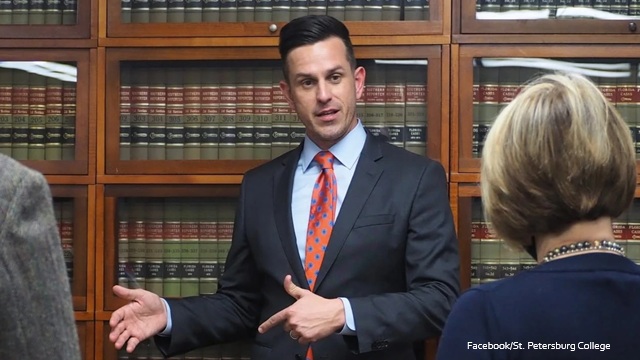
Ana Goñi-Lessan, News Service of Florida
Commissioner Henry Mack wants school districts to cross-check the DOE’s official list of removed books with their own list of instructional materials and library books for review.
Florida’s education commissioner is directing school districts to set stricter rules for reviewing library and classroom books or face “corrective measures.”
In a seven-page memo sent Wednesday evening, Commissioner Henry Mack told superintendents and charter school leaders to continuously audit books, review their collections and remove instructional materials that contain sexually explicit material, even if a parent or county resident has not submitted a complaint in that district.
“Reactive review” is insufficient, he wrote.
“Make no mistake, the Department will hold districts, and the superintendents who lead them, accountable for failing to protect students from inappropriate content and material,” Mack added.
The Department of Education followed up with its own social media post: “SEXUALLY EXPLICIT and INAPPROPRIATE content has NO PLACE in Florida schools. Florida school districts will be held ACCOUNTABLE for failing to protect our children from this type of content. ENOUGH IS ENOUGH.”
Mack cited a recent school board meeting in Hillsborough County where parents spoke during public comment and recited passages from books in circulation they deemed inappropriate for students, including “Beyond Magenta: Transgender Teens Speak Out” by Susan Kuklin, “A Court of Wings and Ruin” by Sarah J. Maas, and “The Bluest Eye” by Toni Morrison.
“A review that remains incomplete, or that leaves parents to locate the next title, does not meet the duty required of you by statute,” Mack wrote. “Parents should not be required to place this material on the public record for district leadership to examine what is already in circulation.”
Mack wants school districts to cross-check the DOE’s official list of removed books with their own list of instructional materials and library books for review. In his memo, Mack said if a book is included on that list and was removed in another county, a district that has the same book is “required” to review it.
“Several districts, including Clay, Escambia, and Nassau, have already removed or discontinued substantial numbers of titles following review. Delaying until a district becomes the subject of the next public controversy is not an acceptable approach,” Mack wrote.
Current Florida law says a school district can review and remove a book after a complaint has been made that a book is pornographic, obscene or isn’t age appropriate. Books can also be removed as part of a regular selection process in which a media specialist can decide to remove them if they are outdated, rarely circulated or no longer relevant to the curriculum.
School librarians and media specialists are required to go through training to distinguish which books are age appropriate and to “err on the side of caution.” The training instructs librarians and media specialists that if they would not be comfortable reading the passage from the book in a public meeting, to “lean towards” not placing it in a school library.
The law does not explicitly require district personnel to immediately remove the book or to double check the list of already removed books in other districts for preemptive review.
Mack outlined a nine-point plan for the next 90 days for school districts to follow to improve their removals of age-inappropriate books from school shelves.
If a district does not comply, it risks losing state funds, grants, Florida Lottery money or any other funds appropriated by the Legislature.
“A process that depends on a parent discovering explicit material, reading it in a public meeting, and then forcing a district response is not only severely flawed; it is administrative neglect masquerading as either ignorance or ineptitude,” he wrote. “Whatever it may be, it is unacceptable and must end.”
©2026 Royal A. Brown III. All rights reserved.
Leave a Reply
Want to join the discussion?Feel free to contribute!