
What is Palestinian Islamic Jihad and Why Americans and the U.S. Military Should Care!
While an Army officers stationed in Germany from 1970 to 1973 there were two major threats to our U.S. forces, our military families and the German people.
These two groups were:
- The Baader–Meinhof Gang, also known as the Red Army Faction (RAF), was a West German far‑left militant group active from 1970 to 1998, engaged in bombings, kidnappings, assassinations, and other violent acts in pursuit of a revolutionary socialist agenda and..
- Black September refers both to the 1970–71 Jordanian Civil War between Jordan and the PLO, and to the Palestinian militant group founded in 1971 that carried out high‑profile attacks such as the 1972 Munich Olympic massacre. Black September carried out the attack on the Munich Olympics killing 11 Jewish athletes and one German police officer.
This was my first understanding of a global Red/Green alliance.
Palestinian Islamic Jihad (PIJ)
Harakat al-Jihad al-Islami fi Filistin — “Islamic Jihad Movement in Palestine.” Smaller and more ideologically rigid than Hamas, and more directly welded to Tehran.
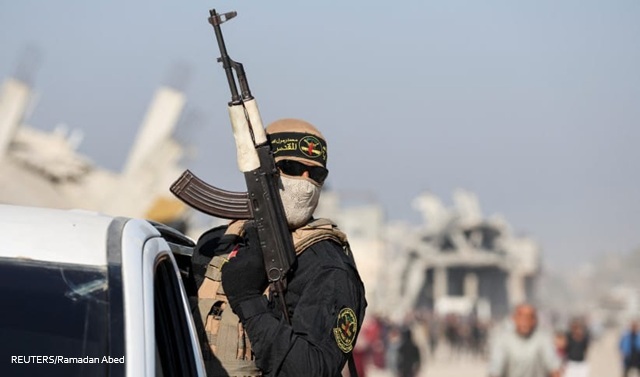
What It Is
Harakat al-Jihad al-Islami al-Filastini — Palestinian Islamic Jihad. A Palestinian militant/Islamist organization founded in the early 1980s (commonly cited as 1981), emerging out of Gaza with ideological roots in the Iranian revolution. It’s distinct from Hamas: smaller, more purely Iran-aligned, and explicitly rejectionist toward any negotiated settlement with Israel.
Ideology & Character
- Pan-Islamist, not Palestinian-nationalist-first. PIJ frames the conflict in religious terms — a jihad obligation — rather than as a national liberation struggle with a political horizon.
- Rejectionist. It opposes the Oslo framework, the PA, and any two-state compromise on principle.
- Iran is its patron. Tehran has long been PIJ’s principal funder and arms supplier, which gives it a different strategic logic than Hamas’s (which has its own independent base and Qatar/Turkey ties).
- Sunni Salafi-influenced origins despite the Shia Iranian backing — an alliance of convenience around anti-Israel and anti-Western aims.
What It Does
- Rocket and mortar attacks into Israel, suicide bombings historically (especially during the Second Intifada), and smaller-scale armed cells.
- Operates mainly in Gaza, with a presence in the West Bank and a leadership exiled in Syria, Lebanon, and Iran.
- Considered a Foreign Terrorist Organization by the US, EU, UK, and others.
Recent Context
- PIJ has been a recurring target of Israeli strikes, including senior commanders killed in Gaza (2022–2023) and in Lebanon/Syria.
- It was involved in the October 7, 2023 attack alongside Hamas, taking hostages.
- Its leadership has been hit hard over the past couple of years — including figures like Ziyad al-Nakhalah (Secretary-General, based abroad) and commanders killed in Gaza operations.
History
Origins (1970s–early 1980s)
- Founded by Fathi Shaqaqi (a Gaza-born physician) and Abd al-Aziz Awda (a cleric and one of the group’s spiritual fathers).
- Both were Palestinians studying in Egypt in the 1970s, drawn into the Muslim Brotherhood — then broke with it.
- Their complaint wasn’t the Brotherhood’s methods so much as its priorities: they thought the Ikhwan had gone soft and sidelined Palestine. Their answer was an immediate armed vanguard rather than gradualist reform.
- They drew from Sayyid Qutb, Hasan al-Banna, Egyptian militant circles, and — crucially — the 1979 Iranian Revolution, which they saw as a model to replicate.
- Shaqaqi actually wrote a book on Khomeini (“Khomeini: The Islamic Solution and the Alternative“), which got him deported from Egypt back to Gaza in 1979.
Formal Establishment
- Organized as a movement by the early 1980s, with the al-Quds Brigades formalized as its military wing around 1992.
- Shaqaqi was assassinated in Malta in 1995 — widely attributed to Israel’s Mossad. Ramadan Shalah succeeded him.
- Shalah led for over two decades until illness; Ziyad al-Nakhalah took over in 2018.
- Intifadas & After
- Active through the First and Second Intifadas, pioneering suicide bombings in the 1990s–2000s — including some of the deadliest attacks of that era.
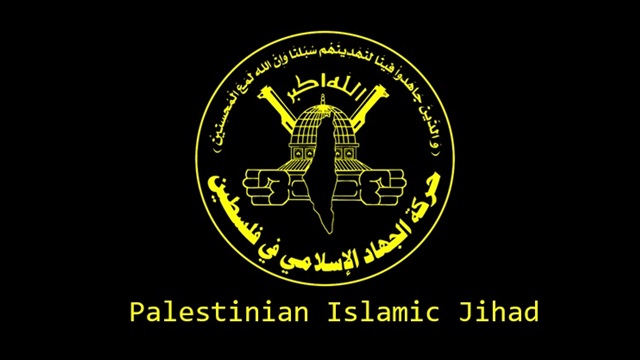
- Emblem tells the story: a full map “from the river to the sea,” the al-Aqsa Mosque, crossed rifles, two fists, and the takbir. The bylaws call it “the vanguard of the Islamic Revolutionary Movement.”
Ideology
- Islam as religion and state. A revolutionary jihad movement, not a nationalist party.
- Rejectionist to the core: opposes Oslo, the Palestinian Authority, and any negotiated settlement. No two-state horizon.
- Pan-Islamist framing — Palestine is a religious obligation for the umma, not merely a territorial dispute.
- Iran-aligned. Tehran is its principal patron; PIJ is more reliably Iranian than Hamas, which balances Qatar, Turkey, and its own base.
- Sunni in doctrine, Shia-aligned in strategy — an axis of convenience against Israel and the West.
Current Operations
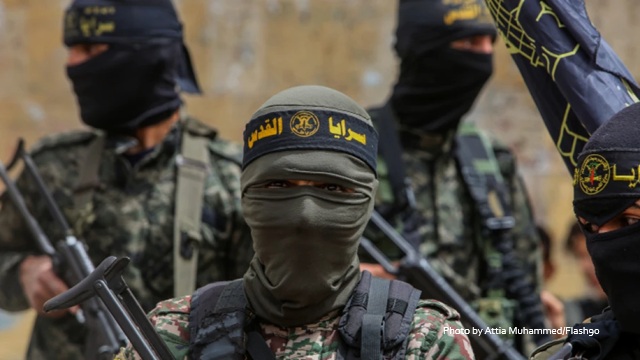
Where & How
- Gaza is its main base; West Bank presence growing, especially in Jenin and Nablus — where it coordinates with Hamas’s Qassam Brigades and Fatah’s al-Aqsa Martyrs Brigades under the “Jenin Battalion” umbrella.
- Leadership exiled in Damascus, Beirut, and Tehran.
- Arsenal: rockets, mortars, small arms, MANPADS, armed drones, ATGMs, IEDs. Roughly 4,000 fighters — the second-largest armed faction in Gaza after Hamas.
Major Escalations
- 2018, 2020 — large rocket barrages exchanged with Israel.
- May 2021 — fired alongside Hamas in the 11-day war.
- August 2022 — PIJ fired roughly 1,100 rockets at Israel after Israel killed a senior commander; several of its own rockets fell short and killed Palestinians.
- October 7, 2023 — PIJ militants joined the Hamas-led attack, killing and taking hostages.
- Since then, Israeli operations have significantly degraded PIJ’s Gaza infrastructure and killed multiple senior commanders.
Key Figures
- Ziyad al-Nakhalah — Secretary-General since 2018 (re-elected 2023); based abroad; designated by the US in 2014.
- Muhammad al-Hindi — Deputy Secretary-General, based in Damascus; US-designated.
- Akram al-Ajuri — al-Quds Brigades commander, close to Iran’s Quds Force and Hezbollah; survived an Israeli strike in 2019 that killed his son.
Caveat
Leadership statuses and commander kills change fast, and I can’t verify the very latest without a live source. If you want the current state of specific commanders or the newest operations, hand me a link or tell me and I’ll pull fresh reporting.
Want me to map PIJ vs. Hamas vs. the PA side by side, or dig into the Iran pipeline specifically?
relationship to Iran and Hamas
PIJ: Iran & Hamas
The key to understanding PIJ is that it sits at the intersection of two different relationships — one with its patron (Iran) and one with its rival-partner (Hamas).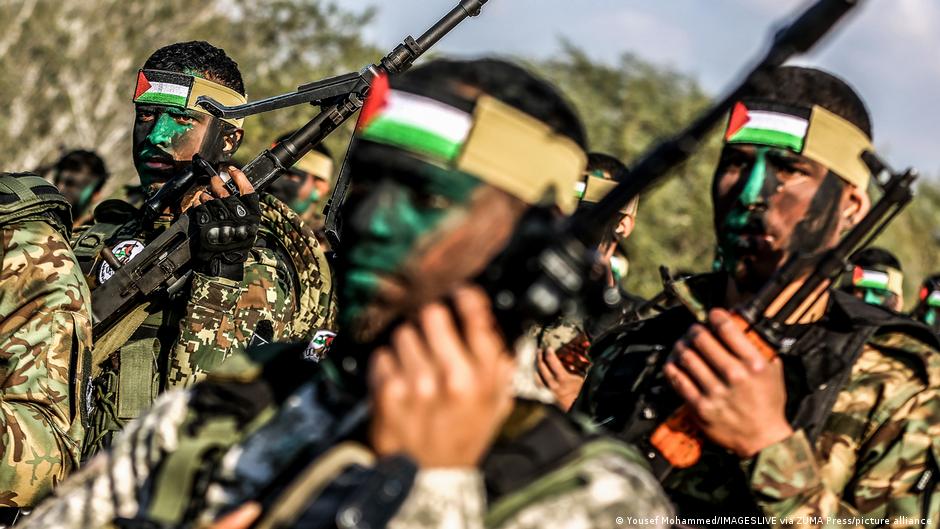
🇮🇷 Iran: The Patron
PIJ is the most reliably Iran-aligned Palestinian faction — more so than Hamas.
Why the fit works
- PIJ was born inspired by the 1979 revolution. Shaqaqi literally wrote a book praising Khomeini’s model as the answer for Palestine. The ideological groundwork was there from day one.
- It’s a rejectionist vanguard — no interest in negotiation, no governing responsibilities, no constituency to manage. That makes it a clean, low-maintenance proxy.
- No competing patrons. Hamas balances Qatar, Turkey, and its own independent base. PIJ has essentially one lifeline, which means one master.
What Iran provides
- Funding, rockets, and technical know-how — the al-Quds Brigades arsenal is heavily Iranian-flavored.
- Training and coordination via the Quds Force and Hezbollah — commander Akram al-Ajuri is documented as maintaining close ties to both.
- Safe haven for leadership — offices and exile leadership in Tehran, Damascus, and Beirut.
The admission
- After October 7, al-Nakhalah publicly thanked Iran, saying the “blessed steadfastness” in the battle “would not have been easy… without the unwavering, clear and continuous Iranian support in recent years, at all political, military levels.”
That’s about as direct as proxy acknowledgments get.
Hamas: The Rival-Partner
This relationship is not a parent-child dynamic. It’s two competitors who cooperate when it suits them.
Similarities
- Both Sunni Islamist, both reject Israel’s existence, both armed wings operate in Gaza and the West Bank.
- Both were part of the October 7 attack, and both coordinate in the West Bank under the “Jenin Battalion” umbrella with Fatah’s al-Aqsa Martyrs Brigades.
Differences — and friction
- Strategic temperament: PIJ is more willing to pull the trigger and has historically disagreed with Hamas’s more calculated, governance-conscious approach. Hamas has to think about ruling Gaza, running a government, and managing a population — PIJ doesn’t. That produces recurring tensions, sometimes open.
- Patronage: Hamas’s independence (Qatar money, Turkish political backing, its own tax and tunnel economy) means it can’t be ordered around by Tehran the way PIJ can.
- Size: Hamas is the big brother — the dominant faction in Gaza. PIJ is the second-largest, always the junior partner militarily.
The cooperation logic
- Iran benefits from both, and uses PIJ partly as a pressure lever against Hamas — a more pliable alternative that keeps Hamas from drifting too far from Tehran’s orbit.
- On the ground, they fight together when it’s useful — but PIJ’s willingness to escalate on its own has more than once dragged the strip into a fight Hamas wasn’t ready for.
The Big Picture
| Iran | Hamas | |
|---|---|---|
| Relationship | Patron → proxy | Rival-partner |
| Loyalty | Near-total | Conditional, transactional |
| Tension source | None — clean dependency | Strategy, autonomy, size |
| Iran’s use | Reliable lever & pressure tool | Bigger prize, harder to control |
Bottom line: PIJ is the purest Iranian proxy in Palestine — a rejectionist vanguard with one patron and no governing baggage. Hamas is the more powerful, more independent sibling that Tehran can influence but not command. Iran keeps PIJ around partly because it’s a counterweight that keeps Hamas honest.
©2026 Dr. Richard M. Swier, LTC U.S. Army. All rights reserved.
Leave a Reply
Want to join the discussion?Feel free to contribute!