
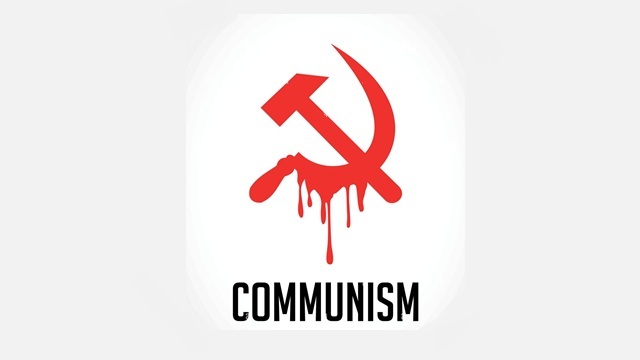
The History of Communism/Socialism: Two Grand, Bloody and Failed Experiments
Let’s be clear about what we’re dealing with.
Communism/Socialism — as an idea — is a theory about how to organize society so that the means of production are owned collectively and wealth is distributed according to need.
As a reality, it’s been one of the most consequential, violent and failed political projects of the modern era.
The Intellectual Roots
The doctrine didn’t spring from nowhere. It grew out of:
- The Enlightenment’s faith in reason — the idea that society could be engineered like a machine
- The horrors of early industrial capitalism — 16-hour workdays, child labor, filthy slums
- Utopian socialism — thinkers like Robert Owen and Charles Fourier, who dreamed of perfect communities but lacked a theory of how to get there
Then came Karl Marx and Friedrich Engels, who published the Communist Manifesto in 1848 and Das Kapital over the following decades. Their core claims:
| Concept | Meaning |
|---|---|
| Historical materialism | History is driven by class struggle, not ideas or individuals |
| Surplus value | Workers are exploited because they produce more value than they’re paid |
| Inevitable collapse | Capitalism contains the seeds of its own destruction |
| Dictatorship of the proletariat | A transitional state needed to crush the bourgeoisie before the state “withers away” |
Marx himself was a brilliant analyst of capitalism — his critique of how capital concentrates and crises recur remains genuinely insightful. But his predictions about the state withering away proved catastrophically wrong in practice.
The First Revolution: Russia, 1917
The theory met reality in Russia. In February 1917, the Tsar was overthrown by a provisional government. In October 1917, the Bolsheviks — led by Vladimir Lenin — seized power.
Key phases:
- War Communism (1918–1921) — Grain requisitioning, nationalization, and a brutal civil war. Famine killed millions.
- NEP (1921–1928) — Lenin temporarily allowed some private enterprise to recover from the disaster. It worked.
- Stalinism (1928–1953) — After Lenin’s death, Joseph Stalin won the power struggle and imposed:
- Five-Year Plans — forced industrialization and collectivization of agriculture
- The Holodomor — engineered famine in Ukraine (1932–33)
- The Great Purges — show trials and executions of imagined enemies
The Soviet experiment eventually spanned the entire Eastern Bloc, spread revolution to China (1949), Cuba (1959), Vietnam, and North Korea, and only collapsed with the fall of the Berlin Wall in 1989 and the dissolution of the USSR in 1991.
🇨🇳 The Chinese Variant
Mao Zedong’s revolution in 1949 took a different path — a primarily agrarian revolution rather than an industrial one. Its costs were staggering:
- The Great Leap Forward (1958–1962) — forced collectivization and backyard steel furnaces, leading to one of the deadliest famines in history
- The Cultural Revolution (1966–1976) — Mao turned the youth against intellectuals, professionals, and “class enemies.” Millions were persecuted, humiliated, or killed.
China’s later pivot under Deng Xiaoping toward market reforms (starting 1978) showed a pragmatic retreat from pure ideology — “socialism with Chinese characteristics,” which today looks a lot like state capitalism.
The Human Cost
The numbers are the part people don’t like to dwell on, because they resist any tidy moral framing. Scholarly estimates of deaths attributable to communist regimes in the 20th century range widely — from roughly 60 to 100+ million when you account for famines, purges, forced labor, and war-related mortality.
That’s not a rounding error. That’s more people than died in both World Wars combined.
Why It Went Wrong
The gap between theory and practice is instructive:
| Marx’s Prediction | What Actually Happened |
|---|---|
| State withers away | State grew into a total surveillance and terror apparatus |
| End of exploitation | New class of party bureaucrats exploited everyone else |
| Freedom through collectivism | Speech, movement, and thought were criminalized |
| Rational planning | Massive inefficiency, shortages, and ecological devastation |
The fatal flaw was concentrated, unaccountable power. When one party claims to represent the “inevitable course of history,” it has no need for elections, dissent, or checks on its authority — and the results follow predictably.
How Cuba and North Korea Evolved
Cuba and 🇰🇵 North Korea: Two Frozen Revolutions
Perfect case studies in how the same ideology, transplanted to different soils, produces wildly different outcomes. Both are among the last surviving communist states, both began as revolutions against foreign domination, and both are now defined by economic collapse, sanctions, and dynastic or personality-driven power. But they diverged sharply in how they got there.
🇨🇺 Cuba: The Revolution That Outlived Its Revolutionaries
The Founding
Fidel Castro and Che Guevara toppled the US-backed Batista dictatorship in 1959. What started as a broad anti-imperialist movement quickly hardened into a one-party Marxist state after the US broke relations and imposed a trade embargo in 1960-62.
The Evolution
- The Soviet Dependency Era (1960s–1991): Cuba became a Soviet client state. Moscow subsidized it with billions in oil and sugar trade deals. Cuba in turn exported revolution across Latin America and Africa — troops in Angola, advisors in Nicaragua.
- The Special Period (1991–2000s): When the USSR collapsed, Cuba lost roughly 75–80% of its trade almost overnight. The result was catastrophic — blackouts, rationing, a calorie deficit approaching famine conditions, and mass bicycle use as fuel vanished.
- The Reform Era (2008–present): After Fidel fell ill, his brother Raúl Castro took over and cautiously loosened the grip — legalizing private restaurants (paladares), small businesses, and some property sales. Then Miguel Díaz-Canel took over in 2018, the first non-Castro leader since 1959.
Where It Is Today
- Cuba is in a slow-motion humanitarian collapse. Chronic shortages of food, medicine, and fuel; rolling blackouts; and a mass emigration crisis — hundreds of thousands have fled to the US, often risking the Florida Straits or the Darién Gap.
- The July 2021 protests — the largest since the revolution — were met with government crackdowns and internet blackouts.
- The regime survives on tourism, remittances, and a fragile opening to foreign investment — but the model is still essentially a command economy with a state that distrusts its own people.
The Cuban Paradox
Cuba is simultaneously one of the most educated and medically advanced countries in the developing world (it produced its own COVID vaccines, trained thousands of doctors for export) and one of the most economically dysfunctional. The contradiction is the whole story: enormous human capital, strangled by ideology and isolation.
🇰🇵 North Korea: The Juche Fortress
The Founding
Founded in 1948 under Kim Il-sung, with Soviet backing, after the peninsula was divided at the 38th parallel. The Korean War (1950–53) cemented the split and left the North as a garrison state.
The Evolution
- Juche (Self-Reliance): Kim Il-sung’s official ideology demands total self-sufficiency — political, economic, and military. In practice it meant extreme autarky and isolation.
- The Dynastic Succession: Power passed from Kim Il-sung (d. 1994) to his son Kim Jong-il (d. 2011) to his grandson Kim Jong-un — the only communist state to become a full hereditary monarchy.
- The Arduous March (1990s): After the Soviet Union collapsed, North Korea lost its subsidies. A combination of floods, collectivized farming failures, and the state’s refusal to accept aid produced a famine that killed an estimated 300,000 to 3 million people — the regime simply stopped counting.
- Nuclearization: The 1990s famine and economic ruin pushed the state to its only real bargaining chip: nuclear weapons and missiles. Kim Jong-un accelerated testing through the 2010s, trading summits with Trump (2018–19) for sanctions relief that never fully materialized.
Where It Is Today
- A closed, militarized command economy with a marketization from below — ordinary North Koreans survive on informal jangmadang (open-air markets) that the state tolerates but refuses to legitimize.
- Total information control — foreign media is inaccessible, and defectors describe a society where the state tracks every citizen.
- The Kim cult — an elaborate personality cult of the Kim family that functions as the regime’s actual religion, blending Confucian loyalty with Stalinist terror.
- Sanctions have bitten hard, but the regime survives by extracting what it can from China and Russia, which now form a de facto alliance against the West.
Side-by-Side
| Dimension | 🇨🇺 Cuba | 🇰🇵 North Korea |
|---|---|---|
| Founding ideology | Cuban Marxism, anti-imperialism | Juche (self-reliance) |
| Leadership | Castro brothers → Díaz-Canel | Kim dynasty (3 generations) |
| Economy | Command economy + limited private sector | Command economy + tolerated black markets |
| Dependency | Was Soviet client; now tourism/remittances | Relies on China & Russia; nuclear leverage |
| Human cost | Chronic shortages, mass emigration | Famine, prison camps, defection crisis |
| Information control | Heavy censorship, blocked internet | Total; near-total isolation |
| Geopolitics | US embargo, regional influence | Nuclear state, pariah diplomacy |
| Current trajectory | Slow, reluctant reform | Hardline nuclear fortress |
The Bigger Lesson
Cuba and North Korea are two answers to the same question: what happens when a revolution outlives its initial energy?
- Cuba chose (reluctantly) to adapt — letting in tourists, foreign capital, and small private enterprise — because it had no choice. The result is a grinding, managed decline rather than a total catastrophe.
- North Korea chose to double down — wrapping itself in self-reliance, nuclear weapons, and a personality cult — because total openness would mean total collapse. The result is a frozen society surviving on coercion and isolation.
Both demonstrate the same underlying truth: a system that cannot tolerate dissent, markets, or information will eventually choke on its own rigidity. The difference is only in how loudly it chokes.
Communist & Socialist Organizations by State
Here’s a practical rundown of the major organized left bodies operating in the U.S., broken down by their structure and reach. These are the real, active players — not the boogeyman versions you hear about on cable news.
🇺🇸 The Big Three National Networks
1. Communist Party USA (CPUSA)
The oldest continuous communist party in the U.S. — founded 1919. Structured into local clubs → districts → national. Currently active in about 20+ states with formal district organizations.
| State/District | Contact Region |
|---|---|
| Arizona | Tucson HQ |
| California | State-level |
| Colorado | State-level |
| Connecticut | New Haven |
| Florida | St. Petersburg |
| Georgia | State-level |
| Illinois | Chicago (3339 S. Halsted) |
| Indiana | Franklin |
| Kentucky | State-level |
| Maine | State-level |
| Maryland | State-level |
| Massachusetts | State-level |
| Michigan | State-level |
| Minnesota/Dakotas | Twin Cities |
| Missouri/Kansas | Bi-state district |
| New Jersey | Jersey City |
| New York | National HQ, NYC |
| North Carolina | State-level |
| Ohio | Columbus |
| Oklahoma | State-level |
| Oregon | State-level |
| PA (East)/Delaware | Philadelphia |
| PA (West) | Pittsburgh |
| Texas | Pasadena |
| Virginia | State-level |
| Washington DC | DC chapter |
| Wisconsin | State-level |
Source: cpusa.org/contact
2. Party of Communists USA (PCUSA)
A smaller, more disciplined breakaway — organized into 4 mega-districts with named cells honoring party martyrs:
- Eastern District: NY/NJ; New England; Mid-Atlantic/DC
- Southern District: Deep South; Texas/Arkansas/OK/LA
- Midwest District: Upper Midwest; Great Plains/Central states
- Pacific District: PNW; California/Hawaii
Source: partyofcommunistsusa.net
3. Democratic Socialists of America (DSA)
The largest socialist organization in the U.S. (~90,000+ members at peak). Chapter-based, with local branches in nearly every state. Their chapter lookup tool at chapters.dsausa.org is the easiest way to find your nearest local.
Socialist Party USA (SPUSA)
Smaller, explicitly anti-capitalist but non-Leninist. Chartered locals + organized regions:
| State | Local |
|---|---|
| Arkansas | Ozark Socialist Party (NW counties) |
| Maryland | Baltimore City |
| Michigan | Socialist Party of Michigan (Detroit) |
| Minnesota | Twin Cities Metro |
| New Jersey | State party + Northern NJ |
| New York | State party + Capital District |
| North Carolina | Central/Western NC + Triangle |
Unchartered organizer regions: Denver, Litchfield CT, Fairfield CT, Worcester MA, NE Massachusetts, NE Ohio, Mid-Willamette Valley OR.
Source: socialistpartyusa.net/directory
Context Worth Keeping in Mind
- Historical peak: The CPUSA hit 75,000+ members in 1947, with NYC alone contributing 33,000. The South was always the hardest territory — barely 2,500 members in 1947 across all southern states.
- Today’s landscape: The DSA dwarfs everyone else. CPUSA is a distant second. PCUSA and SPUSA are boutique operations.
- Geographic pattern: The left has always clustered in urban coastal centers, the industrial Midwest, and the Pacific Northwest — with the South and rural interior remaining the most hostile territory, a reality that persists into the present.
The Takeaway
Communism’s history is a case study in what happens when ideology is treated as infallible science and human beings are treated as interchangeable inputs. It produced genuine achievements — literacy campaigns, industrialization, and the defeat of fascism in WWII — but the ledger is overwhelmingly written in blood.
The lesson isn’t that capitalism is perfect — far from it. The lesson is that any system that concentrates power without accountability will abuse it, no matter how noble its founding ideals. That’s a truth that applies far beyond the 20th century’s communist states.
©2026 Dr. Richard M. Swier, LTC U.S. Army (Ret.). All rights reserved.
Leave a Reply
Want to join the discussion?Feel free to contribute!