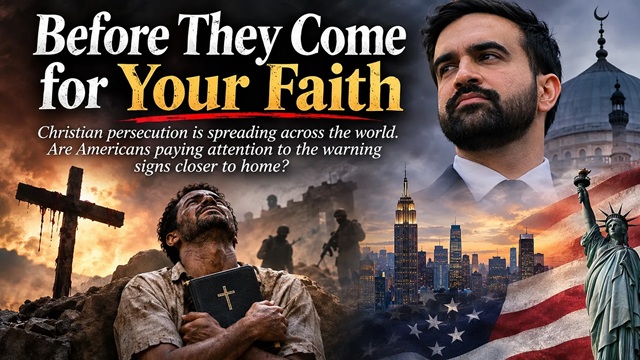
Christian persecution is spreading across the world. Are Americans paying attention to the warning signs closer to home?
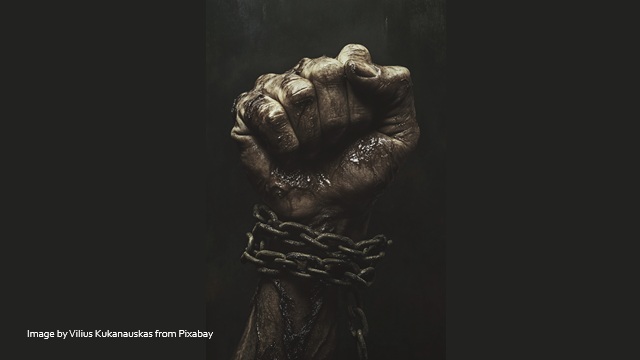
Imagine being dragged from your home by armed militants, beaten, chained, and threatened with death unless you renounce Jesus Christ.
For millions of Christians around the world, the threat of religious persecution is not some distant historical memory. It is a daily reality.
And according to a disturbing new report, that reality is growing worse.
On October 27, 2026, Aid to the Church in Need released Persecuted and Forgotten?, a comprehensive examination of Christian persecution covering August 2024 through June 2026.
Its findings should trouble every American who values religious freedom.
An estimated 220 million Christians worldwide are directly exposed to persecution, while approximately 413 million live in countries experiencing serious violations of religious freedom.
Of the 18 countries examined, conditions deteriorated in 10. Not a single country recorded an overall improvement.
In Nigeria, extremist militants continue attacking Christian communities, kidnapping believers and driving families from their homes.
In Pakistan, Christian girls face forced conversion and marriage, while blasphemy accusations place entire communities in fear.
In China, government authorities increasingly restrict religious teaching, surveil churches, and punish Christians who refuse state control over their worship.
In Syria, one of Christianity’s oldest communities faces an uncertain future after years of conflict, displacement, and violence.
These are not merely statistics.
They represent real people, real families, and real suffering.
Consider Solomon Ako, a 33-year-old Nigerian Christian kidnapped when militants attacked his village near Zaria.
According to Aid to the Church in Need, his captors beat him, chained his legs, and demanded that he abandon Christianity. He and other hostages endured torture and threats of death.
Yet Ako held on to his faith.
His testimony reminds us that religious freedom is not simply a political principle. For countless believers, it is something worth suffering and even dying for.
But while Christians overseas confront persecution, Americans should be asking a question much closer to home.
Americans enjoy constitutional protections that Christians in many other nations can only dream about.
The First Amendment guarantees religious liberty. Government cannot establish an official religion or prohibit the free exercise of faith.
But constitutions do not defend themselves.
They depend upon elected officials who respect their principles, citizens who understand their importance, and a free press willing to confront troubling questions.
Which brings me to a disturbing incident involving the mayor of America’s largest city.
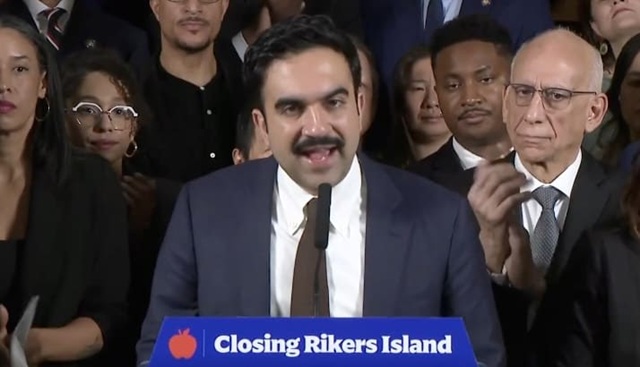
On February 20, 2026, New York City Mayor Zohran Mamdani attended Friday prayers at the Al-Khoei Islamic Center in Queens.
During the service, an imam invoked the Mahdi, the awaited religious figure whose return occupies a central place in Twelver Shiite Islamic theology.
According to video and a translation published by the Middle East Media Research Institute (MEMRI), the imam prayed for believers awaiting the Mahdi and invoked the killing of unbelievers by his sword.
Read that again.
An imam invoked the killing of unbelievers by the sword of a future Islamic religious leader.
And the mayor of New York City was attending the service.
This was not a private conversation overheard by an anonymous source. The prayer was recorded and subsequently published.
Mamdani has publicly identified himself as an Ithna-Asheri, or Twelver Shiite Muslim.
In Twelver Shiism, belief in the hidden Twelfth Imam and his eventual return is a foundational doctrine. Traditional accounts of his return include military conflict, the defeat of opponents, and the establishment of justice under his rule.
That makes a question about the Mahdi particularly relevant to Mamdani’s professed religious tradition.
But there is an even more immediate question.
Why did the mayor not publicly disassociate himself from the prayer’s violent language?
Suppose New York City had an openly Christian mayor.
Now imagine that mayor attending a church service where the pastor prayed for the coming of a religious ruler who would kill non-Christians.
Suppose the mayor remained in attendance, offered no public objection, and issued no subsequent statement rejecting the violent language.
What would happen?
I suspect the resulting media controversy would be enormous.
Reporters would demand to know whether the mayor agreed with the pastor.
Television commentators would question whether Jewish, Muslim, and other non-Christian residents could trust him.
Political opponents would demand an explanation.
And the mayor’s silence would become a national story.
Frankly, I would understand those demands.
As a Christian, if I attended a church where a pastor endorsed killing people because they were not Christians, I would feel obligated to speak up or leave.
If I were the mayor, I would feel an even greater responsibility.
A mayor does not represent only people who share his religious beliefs. He represents every resident of his city.
That includes Christians, Jews, Muslims, Hindus, atheists, and everyone else.
And I would apply precisely that standard to Mayor Mamdani.
The available recording does not establish whether Mamdani understood the Arabic prayer as it was spoken. But once its contents became publicly known, he had an opportunity to address them.
I have not found a public statement in which Mamdani specifically accepts or rejects the prayer’s invocation of killing unbelievers.
Why not?
He could have declared that he rejects violence against people because of their religious beliefs.
He could have explained whether he agrees with the imam’s description of the Mahdi.
He could have reassured New Yorkers that no religious doctrine involving the killing of unbelievers has any place in his governing philosophy.
Yet the question remains unanswered in the public record I have examined.
That brings us to a second troubling question.
Where was the American news media?
The mosque incident was not entirely ignored. MEMRI published the video, and several outlets and commentators reported its contents.
But where were the major news organizations demanding that Mayor Mamdani explain his position?
Where were the follow-up interviews?
Where were the questions about his beliefs concerning the Mahdi?
In the reporting I have reviewed, I have not found a major news organization directly pressing him to answer those questions.
I have a suspicion about why.
I believe some journalists may have been reluctant to ask because they feared the answer could become politically explosive.
Imagine Mamdani publicly affirming a literal interpretation of the Mahdi’s anticipated conquest of unbelievers.
Such an answer could create an enormous controversy over whether his personal religious beliefs are compatible with his responsibilities as mayor.
On the other hand, publicly rejecting that interpretation could create tensions with those within his religious community who embrace it.
Either answer could produce controversy.
But avoiding the question produces something worse.
It leaves the public uninformed.
I cannot establish what individual journalists were thinking, and I am not claiming to know their private motives.
What I can say is that the question deserves to be asked, and the absence of a clearly documented answer is troubling.
An independent press should not be afraid of asking difficult questions simply because the answers might prove uncomfortable.
There is another reason Americans should pay attention.
Zohran Mamdani’s political influence may eventually extend far beyond the mayor’s office.
In a September 28, 2026, interview with City & State New York, Mamdani was asked whether he would rule out running for governor after serving as mayor.
He did not rule it out.
And on November 8, Axios reported that Mamdani was already holding discussions with labor leaders about influencing the Democratic Party’s 2028 presidential nomination.
Although Mamdani cannot constitutionally become president because he was born outside the United States and is a naturalized citizen, he could pursue other offices, including governor or U.S. senator, subject to the applicable qualifications.
He can also influence national political debates without seeking another office.
That makes the questions surrounding his religious convictions relevant beyond the five boroughs of New York City.
What does Mamdani believe about the return of the Mahdi?
Does he accept the traditional accounts describing the Mahdi waging war against his enemies?
Does he reject the idea that unbelievers should be killed under religious authority?
And does he believe American constitutional law must remain supreme over any competing religious legal or political system?
These are questions about a public official’s beliefs and governing responsibilities.
They deserve direct answers.
We should be careful not to confuse the persecution of Christians overseas with the constitutional protections Americans currently enjoy.
The United States is not Nigeria, Pakistan, China, or Syria.
An imam’s prayer in a New York mosque does not, by itself, establish that Christian persecution is coming to America.
But it can raise questions about the beliefs being expressed, the responsibilities of elected officials, and the willingness of journalists to seek accountability.
That is why the findings of Aid to the Church in Need deserve more than a passing glance.
The persecution of Christians does not begin everywhere in the same way.
Sometimes it comes through armed extremism. Sometimes through authoritarian government. Sometimes through discriminatory laws, intimidation, or the gradual erosion of religious liberty.
Different causes, different countries, but a recurring lesson: religious freedom can disappear when those responsible for defending it fail to act.
In Daniel 5, King Belshazzar witnessed a mysterious hand writing upon the wall.
The message was a warning of judgment.
But the king failed to recognize the gravity of what stood before him until it was too late.
Today, Christians around the world are suffering for refusing to renounce their faith.
Their suffering should awaken the conscience of every American who cherishes religious liberty.
And when the mayor of America’s largest city attends a service featuring a prayer invoking the killing of unbelievers, Americans have every right to ask what he believes.
Mayor Mamdani should answer those questions.
The American press should ask them.
And Americans should insist that religious freedom be defended with equal determination for everyone.
Because the time to defend religious freedom is not after it has been lost.
It is while we still have the freedom to speak.
And while we can still read the writing on the wall.
AUTHOR
Martin Mawyer is the founder of the Digital Intelligence Project and the President of Christian Action Network. He hosts the “Shout Out Patriots” podcast and wrote When Evil Stops Hiding. For more action alerts, cultural commentary, and real-world campaigns defending faith, family, and freedom, subscribe to Patriot Majority Report.
School Board Member Admitted He Hated Bible Program.
Judge Rules Mom Is TOO Christian to Be a Parent
Purging Christians from the Realtors industry could constitute a hate crime
Christian Persecution Worsens Across Globe With Churches Destroyed, Worshippers Slaughtered
©2026 Majority Report. All rights reserved.