Tag Archive for: Tehran

What Israel Hit in Iran

Iran, trying to force the IDF to stop hitting Hezbollah sites in Beirut, launched 11 ballistic missiles at Israel on June 7. They were all intercepted, causing no damage. But such an attack could not go unanswered. The IDF then responded, giving not as good as it got, but far better. More on the damage it wrought can be found here: “Watch: IDF strikes key targets throughout Iran in response to missile barrages,” Jerusalem Post, June 8, 2026:

The IDF struck several targets throughout western Iran in retaliation for Iranian missile attacks on Israel on Monday morning.

The strikes come after sources told The Jerusalem Post on Sunday that Israeli officials were still deciding when and how hard to hit Iran, noting that a significant Israeli response to Tehran’s ceasefire breach was expected.

Earlier on Monday, a United States official told Axios that he did not expect an imminent Israeli retaliation against Iran. “I don’t think anything is imminent in terms of an Israeli strike,” he said.

Targets were hit in Tehran, Isfahan, Tabriz, and some other places in western Iran, while explosions have reportedly been heard in Karaj, outside of Tehran, according to Tasmin News Agency, an IRGC-affiliated outlet.

Additionally, Iran’s official state news agency, IRNA, reported that all flights in Tehran’s Mehrabad airport have been suspended until further notice.

The targets include a petrochemical complex near Iran’s southwestern city of Mahshahr, which the military confirmed was used to produce unique materials critical for Iran’s ballistic missile program.

The israeli [sic] Air Force struck several infrastructure sites at the complex, and the area has been evacuated, Iran’s Islamic Revolutionary Guard Corps-run Fars News Agency reported on Monday….

Unlike the most recent Iranian missile attack, that caused no casualties or damages, the IDF response has been effective, destroying both offensive weapons — long-range ballistic missile factories — and defensive weapons, including a large number of air defense radars that the Iranians had been furiously rebuilding-since their earlier destruction by Israel and the U.S. in June 2025 and in early 2026.

Stung by the IDF’s wide-ranging attacks, and after Trump called for both sides to stop their tit-for-tat exchanges, Tehran decided to announce that it would stop its own attacks on Israel, provided Israel stopped attacking Hezbollah sites in Beirut, thereby hoping to elicit the same promise from Israel. Israeli Prime Minister Benjamin Netanyahu was unwilling to oblige. He agreed to stop hitting Iran, but with the caveat that the IDF will continue striking Hezbollah in Beirut as long as the terror group launches more missile and drone attacks against northern Israel. The IDF is itching to launch far more devastating attacks on the Islamic Republic of Iran, and knows that another attack from Iran will be all the excuse it needs.

AUTHOR

RELATED ARTICLES:

After Apache Helicopter Is Downed, Trump Says U.S. ‘Must Respond’

HHS trying to find out what Hamas-linked CAIR did with $30,000,000 it got for Afghan ‘refugee’ resettlement

Roberto Vannacci and His Party Futuro Nazionale

Bank of England drops Churchill from banknotes, as he promotes a ‘backward-looking vision of the UK’

Australia: Muslim woman charged with enslaving Yezidi girl has not renounced Islamic State ideology

Afghanistan: Taliban official kills Kurdish mother and daughter after mother resists daughter’s forced marriage

Canada: Muslim lobby launches ‘Islamophobia’ handbook calling for changes in how Canada audits Muslim-led charities

EDITORS NOTE: This Jihad Watch column is republished with permission. ©All rights reserved.
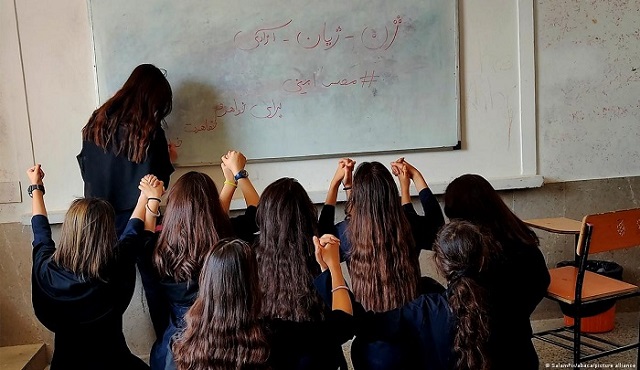
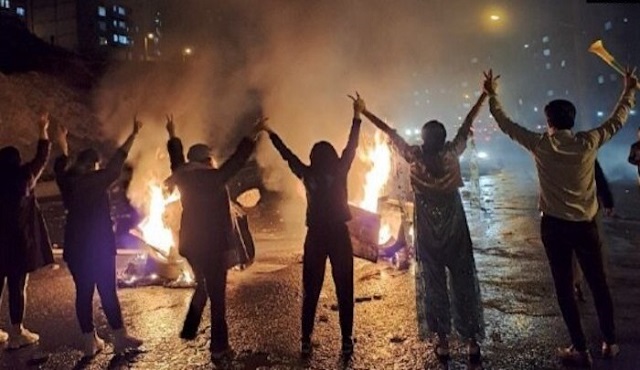
Student Protests Erupt On The Streets of Iran

Risking life and limb, young Iranians have taken to the streets, again.

The same regime that killed tens of thousands for protesting is now faced with another wave of protests.

Students protested today in Tehran, Shiraz, Khorramabad, Kermanshah, Tabriz, Mashhad, Karaj, and across Gilan Province.

“Wow they’re insanely brave, after all of those horrible crimes the Islamic regime has done they’re protesting again.”

Developing…..

AUTHOR

RELATED ARTICLES:

The World Condemned Israel. Then It Bought $19.2 Billion of Its Weapons in 2025

TERROR ATTACK IN CENTRAL ISRAEL: Israeli Muslim Opens Fire on Jews in Several Shooting Inicidents

Iran: ‘This War Will End Only When It Ends in Lebanon as Well’

EDITORS NOTE: This Geller Report is republished with permission. ©All rights reserved.
Iranian Cry De Profundis: We Want War to Liberate Us From Tyranny

The regime in Tehran has been tormenting the people of Iran for 47 years. In recent years, many of those people have repeatedly risen in protest and been suppressed by mass killings. The killing of more than 40,000 protesters on January 8 and 9, and the imprisonment of 50,000 others judged to be enemies of the regime, crushed a nationwide protest. Now two Iranians describe the hope and despair of the 80% of Iranians who want the Americans to wage war on their own government, to bring the regime toppling down.

More on their cry de profundis can be found here: “‘People will lose hope’: Iranians smuggle messages to ‘Post’ begging Trump to return to war,” by Danielle Greyman-Kennard, Jerusalem Post, May 27, 2026:

“Iranians are fearful that the sacrifices they made in demonstrating against the regime will be erased if US President Donald Trump makes a deal with Tehran, two Iranians told The Jerusalem Post over the past week.

Iranians are fearful that the sacrifices they made in demonstrating against the regime will be erased if US President Donald Trump makes a deal with Tehran, two Iranians told The Jerusalem Post over the past week.

Speaking to Israelis is considered a criminal offense in Iran, and the Islamic regime has frequently accused individuals of ties to the Mossad, Israel’s intelligence agency, to justify its campaign of executions.

After the regime killed masses of protesters in January, and thousands more were arbitrarily arrested or disappeared, the Iranians who spoke with the Post did so on condition of anonymity.

Z. described the “great deal of hope” placed in Washington and Israel after Trump promised “help was on its way” in January.

“Iranian Patriots, keep protesting – take over your institutions! Save the names of the killers and abusers. They will pay a big price,” the president promised as the regime’s brutality suppressed demonstrations across the country.

While the regime acknowledged fewer than 4,000 deaths and blamed most of them on foreign-backed rioters, human rights groups and anonymous officials speaking to Western media have estimated the true toll at closer to 30,000. The regime’s internet shutdown, threats against victims’ families, and mass disappearances have made it difficult for the outside world to determine the full scale of the killings.

“The people of Iran are in a very bad psychological state and have little hope for the future,” Z., an older professional, wrote, adding that little had improved since Mojtaba Khamenei succeeded his father, Ali Khamenei, after the elder ayatollah was assassinated in February.

Z. believes Khamenei has been reduced to little more than a face, and the country is not being run by the top commanders in the Islamic Revolutionary Guards. He is not alone in his suspicions, as countless reports have pointed to the growing power of Parliamentary Speaker Mohammad Bagher Ghalibaf and the IRGC’s alleged role in ensuring Khamenei was selected by Iran’s Assembly of Experts.

“People have no hope for internal reform within the regime, and their only hope is pressure and force from other countries. People had a great deal of hope in the United States and Israel and saw them as forces of liberation, but unfortunately, what is not discussed in American policy toward Iran is the terrible condition of the Iranian people,” Z. wrote. “If an agreement is reached, people will completely lose hope for changing the regime.”system.”…

The regime in Tehran will only be overthrown by an outside military force. That is what 80% of the Iranians believe and ardently wish for. No more deals, please, that by lifting sanctions will give the regime tens of billions of dollars to pay for ballistic missiles manufacturing, to produce more enriched uranium, to pay the salaries of the Islamic Revolutionary Guard Corps and the Basiji, and to support with both money and weapons Iran’s terrorist proxies Hamas, Hezbollah, and the Houthis. Does anyone doubt that if Iran were ever to acquire nuclear weapons, it would use them, not only to annihilate Israel, but also to threaten Gulf Arab states, and possibly to dictate their oil policies? And what would stop the religious fanatics in Iran, who are waiting for the Hidden Imam to reveal himself, from trying to strike southern Europe with their mid-range ballistic missiles?

Freeing 92 million Iranians from tyranny, and ensuring the safety of both Israel and the Gulf Arabs, are worthy goals. At the next sign of Iranian intransigence, instead of saying “I have all the time in the world,” Trump should take it as a reason to finish the destruction of the regime that he put a stop to last January. Listen to the Iranians, please, like those whose opinions I quoted just above. As one of Iranian informants wrote, “Eighty percent of the people no longer see any way out other than war.” And he added that everyone in Iran was waiting for “Mr. Trump to finish what he started and uproot these people from the entire world.”

AUTHOR

RELATED ARTICLES:

SANTA MONICA: Violent Jew Hater Attacks Random Jewish Couple With a Bat, Then Sics His Dog On Them

Illinois: Muslim speaker at state capital claims that Islam is ‘woven into the tapestry of this nation’

Washington, DC, Mayoral Candidate’s Top Aide: ‘Israel Is a Bitch, So Evil’

Canada: Muslim group hosts ‘Jew-free’ event and Oct. 7 massacre conference to be held in Toronto

Iranian pilgrims at hajj scream ‘Death to America,’ ‘America is the enemy of Allah’

Muslim Screaming “Allahu Akbar” Goes on Stabbing Spree at Switzerland Train Station in Front of Terrified Children

EDITORS NOTE: This Jihad Watch column is republished with permission. ©All rights reserved.
In Iran’s Economy, Everything Everywhere Is Falling Apart

Iran keeps insisting it is ready to strike a powerful blow against the Americans if they are stupid enough to dare to  attack the mighty Islamic Republic. The Iranian rulers are like those frogs that inflate their lungs with air to puff up their bodies, making themselves appear much larger, more intimidating, and harder for snakes or birds to swallow. These include the Blunt-Headed Burrowing Frog (balloon frog), the Tomato Frog, and the Black Rain Frog. To which list we may now add the Tehran Warrior Frog.

But Iran’s economy is collapsing, and the Tehran Warrior Frog’s inflating of its lungs to scare away its enemies isn’t working. More on Iran’s economic degringolade can be found here: “Iran’s Deepening Water Crisis Threatens 35 Million as Economy Buckles Under US Pressure, Mounting Domestic Strain,” by Ailin Vilches Arguello, Algemeiner, May 11, 2026:

As talks with the United States over a possible deal to end the war remain uncertain, Iran’s economy is under mounting strain, with prolonged water shortages, pressure on energy infrastructure, and slowing industrial output deepening what authorities describe as an “economic war.”

With Iran entering the summer months amid a deepening water and electricity crisis, government officials estimate that around 35 million people will face water shortages, intensifying concerns over deteriorating living conditions, mounting economic strain, and daily hardship across the country….

“The Islamic Republic will be forced to impose electricity consumption restrictions for about 120 days, and given the lack of effective means for people to significantly reduce usage, this will result in widespread blackouts,” the Iranian official said in a statement.

Amid growing public frustration over the ongoing crisis, Majid Doustali, a member of Iran’s parliamentary planning and budget committee, called on citizens to cut back on electricity, water, and fuel consumption as part of the country’s resistance efforts in what he described as an “economic war.”

But Iranians have already been cutting back on electricity, water, and fuel consumption. There is nothing more to cut.

“Every effort by the public to save resources represents a direct challenge to the enemy’s economic conspiracy,” Doustali said….

Is the sixth year of drought the result of “the enemy’s economic conspiracy”? No, it is the result both of the hotter temperatures due to global warming, that cause evaporation of the water in Iran’s lakes, and of the leaks in the pipes that were put in decades ago and that the government, spending so much of its time and money on its nuclear program and ballistic missile manufacturing, has failed to replace. Some estimates suggest that Tehran, Iran’s capital, loses nearly one-third (approx. 30%) of its treated water through aging, defective pipes, leaks, and illegal connections, according to reports from late 2025. In Tehran, this equates to roughly 22% of drinking water lost annually, with about 11% stemming specifically from infrastructure failures. In addition, as of late 2025, over 19 major dams have nearly dried up, and Tehran’s water reserves dropped by almost half, leading to nightly water pressure cuts and rationing. Don’t blame the Great or the Little Satan. It’s an overheated Mother Nature that is to blame.

In order to remain in power, meanwhile, the regime in Tehran has cut off internet access. This means that Iranians can’t get any reliable reporting on the attacks from the U.S., Israel, or even the UAE and Saudi Arabia, or on local protests and their violent suppression. Instead, all their news comes from government television stations and newspapers. But shutting down the internet also has economic consequences: no more information can be easily accessed about goods for sale, or services offered; no access to stock market news around the globe, no access to the market price of commodities, or  the latest values of Iranian currency, which has now sunk to a scarcely believable 1.8 million rials to the dollar, no convenient way to advertise, or apply for, jobs. Just imagine the economic consequences to you if the internet were to be shut down in the United States.

According to a CNN estimate, Iranians have spent roughly $1.8 billion on internet access over the past two months.

Not all of that money stays in Iran. Of the almost a billion dollars a month that Iranians are spending to get internet access, how much is going abroad for software to restore internet access?

AUTHOR

RELATED ARTICLES:

UK: Leftists chant ‘Shoot him in the neck like Charlie Kirk’ about Tommy Robinson

Italy: Muslim rams pedestrians, injuring 8, gets out of his car and stabs one person, has ‘psychiatric disorders’

Iraqi jihad leader was plotting massacres at NYC synagogue and 17 other sites targeting Americans and Jews

Dan Bilzerian Asks Fellow Antisemites About Killing Ben Shapiro

UK: Muslim migrant knocks a woman unconscious after she rejects his advances

Germany: Afghan Muslim migrant, 20, rapes 11-year-old girl in school restroom

Netherlands: Flight delayed by ‘Allahu Akbar: there is a bomb on board’ WiFi hotspot

EDITORS NOTE: This Jihad Watch column is republished with permission. ©All rights reserved.

The Islamic Republic of Iran’s Economic Collapse

The supreme leaders and mad mullahs of Iran have spent more than $100 billion on their nuclear project. Many of the nuclear facilities , especially those at Natanz, Fordow, and especially Isfahan, have been destroyed or severely damaged. Iran has also spent tens of billions of dollars manufacturing thousands of ballistic missiles; Iran began the last war with 3,000 missiles, and is now believed to be down to 1,000. Iranian ballistic missiles range in price from $100,000 each for Shahed missiles to over $8 million for long-range missiles capable of reaching Israel. Iran has spent more than $15 billion on its missile program; most of that money has now gone up in smoke, with the missiles destroyed on launching pads, or in warehouses, or used up in attacks that are intercepted in the air, or land harmlessly in an open field. Very few do manage to hit an intended target; the Gulf Arab states, and not Israel, have been the chief victims of Iran’s missiles.

Iran has also spent tens of billions of dollars — in money and weaponry — over the last few decades, supporting Hezbollah in Lebanon, Hamas in Gaza, the Houthis, the Kata’ib Hezbollah in Iraq, and the Assad regime in Syria.

Finally, Iran’s leaders have stolen many billions of dollars from the state treasury. Just one man, the late Supreme Leader Ali Khamenei, reportedly controlled a business empire worth $95 billion. Who knows how much of that wealth was squirreled away in Swiss bank accounts, cryptocurrency, real estate in London, Paris, and the Riviera, never to be returned to Iran?

And in addition to that misallocation of Iran’s financial resources to weapons acquisition during the past 47 years, there is the cost of the present war with the U.S. and Israel. The sanctions on Iran that Obama lifted have again been put on by Trump; most countries are as a result afraid to buy Iranian oil for fear of secondary sanctions. The U.S. threatens to cut off any foreign financial institution from the U.S. financial system if they knowingly process “significant” transactions for Iranian petroleum or petrochemical products. Consequently, Iran must sell its oil to China, its best customer, at a steep discount from the world market price.

And now Iran, after the U.S. and Israel have thoroughly battered its military and much of its civilian infrastructure, has a new economic woe. The Americans have put a blockade on all of Iran’s ports, meaning that no imports can enter Iran by sea, and no exports can be sent out. That blockade is costing Iran an estimated $47 million each day.

More on Iran’s economic collapse can be found here: “Behind Tehran’s calm, Iran faces deepening economic collapse,” by Amichai Stein, Jerusalem Post, April 29, 2026:

On the surface, the streets of Tehran appear to have returned to normal.

Cafés are open, and traffic jams in the capital have resumed their usual pace. However, beneath this routine lies a nation on the brink of financial collapse, one that even the most brutal crackdowns may not contain.

While the streets are full of people, their pockets are empty. The Iranian rial has become a liability that citizens are desperate to offload.

“There is simply crazy inflation in the market because nobody wants to hold the Iranian currency,” explains Prof. Amos Nadan, head of the Dayan Center at Tel Aviv University, adding, “This currency is fundamentally unstable.”

“Unstable” is putting it mildly. Consider that in 1978, during the last year of the Shah’s reign, one dollar could buy 70 rials. Today, one dollar can buy 1,316,000 rials. Keep that staggering fact of runaway inflation in mind.

Even before the recent military escalations, Iran was grappling with an inflation rate of approximately 70% – the highest since World War II.

Today, the numbers tell the story of a struggling middle class. The new monthly minimum wage stands at over 160 million rials, a figure that sounds astronomical until it is converted to its actual value: just over $100….

Iran’s economic woes were not caused by the war; they were merely accelerated by it. Long before the first shots were fired, the country suffered from a chronic energy crisis, forced rolling blackouts, and a persistent drought that dried up the nation’s reservoirs….

Indeed, the nationwide historic drought has led to many of Iran’s hydroelectric dams ceasing to operate. Furthermore, there is simply not enough water for people to drink in some cities. Iran’s President Masoud Pezeshkian has now suggested that, given how many reservoirs have been drying up, it might be best if all of the 9.8 million residents of Tehran moved elsewhere, to places that still have enough water to meet their needs.

AUTHOR

RELATED ARTICLES:

The Blockade Is Costing the Islamic Republic of Iran $400 Million a Day in Lost Oil Revenue

Somalis From Rep. Ilhan Omar’s Area Back to Hijacking Ships Again

Palestinian Authority attacks Palestinian Media Watch for exposing its hate speech

IDF Discovers and Destroys Hezbollah’s Biggest Tunnel

Algeria shuts churches as Christians are forced underground

RELATED VIDEO: The Tragedy of Islam

EDITORS NOTE: This Jihad Watch column is republished with permission. ©All rights reserved.
The War on Iran Is Now an Economic One

For now, the American military campaign against Iran has been put on hold. President Donald Trump has now dropped all those deadlines for the Islamic Republic of Iran to comply with American demands that he kept extending. Now he has chosen to rely on severe economic pressure, hoping that eventually Iran’s impoverishment will become intolerable, leading to widespread popular discontent that may again threaten the regime. The blockade of Iranian ports has led to a 90% drop in Iranian oil exports. Estimates are that the blockade is costing Iran $400 million a day in lost oil revenue. And Iran is no longer able to receive shipments of food and medicines from its traditional suppliers abroad, who are now blocked from using Iranian ports. How long can the Islamic Republic survive under such conditions? More on the economic war against Iran can be found here: “Trump turns time into a weapon as Iran war shifts to economic pressure phase,” by Herb Keinon, Jerusalem Post, April 24, 2026:

When US President Donald Trump extended the ceasefire with Iran this week without setting an end date, he did more than buy time. He redefined what this phase of the conflict is about.

The instinctive reading of a ceasefire is that it signals de-escalation – a step away from confrontation. That Trump backed down. Got weak knees. Capitulated, as support for the war in the US continues to tank.

But that would be a misreading of the situation. The bombing may have paused, but the pressure on the Islamic Republic has not. It has merely changed form.

A more accurate way to understand the current moment is this: the war has not stopped; it has shifted.

For six weeks, the emphasis was on military force – US and Israeli strikes designed to degrade Iran’s military infrastructure and nuclear capabilities. That objective, by most accounts, was largely achieved. Iran’s military and nuclear capabilities are not today what they were before February 28. Not by a long shot.

Smoke and flames rise from the South Pars gas field following an Israeli strike, as seen through the window of a moving vehicle, amid the US-Israeli conflict with Iran, in Asaluyeh, Bushehr Province, Iran, March 18, 2026, in this screen grab obtained from social media video.

But military action alone – at least since World War II – has rarely produced durable political outcomes. It can weaken, deter, and change the situation on the ground, but it does not, by itself, reliably produce the desired political results. The US experiences in Vietnam and Iraq are glaring examples of this.

What Washington is now attempting is something different: to turn those battlefield gains into leverage – and to do so not through continued bombing, but through sustained economic pressure….

For the US and Israel, this period allows for replenishment, repositioning, rest for pilots and air crews, and the quiet preparation of next steps should the current approach fail. The US is already moving a third aircraft carrier strike force into position.

In other words, it is not simply Iran that can take advantage of this time….

During a ceasefire, it’s not only Iran that can use the time to regroup and reposition its forces, and to bring out weapons it had not used before. So can the U.S. and Israel, replenishing their diminished stock of weapons, including drones and ammunition, adding new ships to enforce the blockade on Iranian ports, and giving their pilots and air crews a much-needed rest after the furious pace of their last bombing campaign, when they, hit 15,000 sites all over Iran.

But this, too, will not be simple. As Ben-Yishai pointed out, there are currently multiple centers of power in Iran: the hardline Islamic Revolutionary Guard Corps; the more pragmatic political echelon made up of the president, parliament speaker, and foreign minister; and Mojtaba Khamenei, the figure tabbed as supreme leader, but whose whereabouts and ability to function remain unknown.

The Islamic Revolutionary Guard Corps (IRGC) is now believed to be in the ascendant in Tehran. It has taken over direction of the country; Mojtaba Khamenei is apparently physically and mentally incapable of assuming the responsibilities of rule. The “moderates” — President Pezeshkian, Parliamentary Speaker Ghalibaf, and Foreign Minister Araghchi — are all being sidelined by IRGC hardliners; Ghalibaf is already believed to have quit the negotiating team because the IRGC wanted him out.

As Trump puts it, when one weighs the hardship of higher prices at the pump against the possibility of a nuclear-armed Iran, there is in his view only one choice: Americans must endure what he believes is a painful but temporary price rise, in order to save the world from a nuclear Iran.

Iran is now facing a complete economic collapse. Every day that the blockade continues costs the country $400 million. Americans have to pay more for gasoline, but what a small price that is to pay in order to prevent one of the world’s worst regimes from obtaining the world’s most dangerous weapon.

AUTHOR

EDITORS NOTE: This Jihad Watch column is republished with permission. ©All rights reserved.
In Iran, ‘People at the Breaking Point’

The economic collapse in the Islamic Republic of Iran has led to widespread despair. For most Iranians, mere survival has become an unendiing daily struggle. A small group — those who belong to the Islamic Revolutionary Guard Corps, or the Basij, or to the Shia clerisy — have so far not shared the general fate. More on the economic degringolade can be found here: “Iran risks renewed protests as citizens reach ‘breaking point’ amid war-stricken economy,” by Omid Habibinia, The Media Line, March 28, 2026:

Iran’s already dying economy is now being pushed toward full collapse after several weeks of war. Food prices are rising not only day by day but hour by hour, with some staples increasing by at least 50 percent compared to pre-war levels.

At the same time, the disruption of internet access has halted many services. Factories and production facilities are facing acute shortages of raw materials, and the country’s administrative system has been severely impaired. “It has become impossible to endure this situation any longer,” a Tehran resident told The Media Line.

According to figures cited by state-affiliated institutions and some economists, more than 40% of the population now lives below the absolute poverty line, with that figure exceeding 50% in the capital. Economists warn, however, that the real poverty rate may have climbed above 60% nationwide.

As the middle class erodes, the gap between those earning less than 50 million tomans per month (about $320) and those earning more than 200 million tomans per month (about $1,280) has widened sharply.

However, across most occupations, the average monthly income of employees and skilled workers in Tehran does not exceed 25 million tomans (about $160), meaning that the majority fall below the poverty line, which economists say would require at least twice that amount to sustain a basic standard of living….

Government intervention in the currency market has failed to stabilize the exchange rate; instead, the US dollar nearly doubled in less than 7 months, triggering a sharp collapse of the national currency….

Iran’s currency continues to sink. In 1979, when the Ayatollah Khomeini took power, the exchange rate was 70 rials to the dollar. Today there are 1.3 million rials to the dollar, the greatest collapse of any currency in the last one hundred years.

The suppression of the protesters, many of whom were protesting economic conditions rather than the absence of political freedom, was brutal: in just two days — Jan. 8 and 9 — 36,500 protesters were killed and several hundred thousand were wounded.

Unfortunately for Iran, the people placed in charge of the economy have often been chosen not on the basis of expertise, but for loyalty to the regime; most turn out to be economic nitwits, while real economists, many of whom are suspect politically, have been sidelined. The Iranian economy has been mismanaged for the past 47 years. $500 billion has been grossly misallocated to weapons development — consisting of both an extensive nuclear project and a ballistic missile program that has involved the building of 27 vast underground “missile cities” — both programs are now being battered to great effect by the Israelis and the Americans, and hundreds of billions of dollars spent by Iran on its weaponry has already gone up in smoke, with much more damage to come.

Many have suggested that if Iran does not accept the 15-point program of concessions that the Trump administration has demanded of it, the war will continue for many weeks to come, with all the additional expense to Iran of conducting hostilities not only against the United States and Israel, but against the seven Gulf Arab states hosting American military bases that are now suggesting that they will begin attacking Iran.

Nowruz was particularly painful this year. It’s the time when families traditionally spend more on new clothes for the spring, and on food for family celebrations of the holiday. In Iran, the cost of such spending skyrocketed this year, so that even the most basic of commodities, such as pasta and canned tuna, are no longer within reach of an average Iranian family.

The Iranians are at the end of their tether. Food prices are sky high; the simplest of foodstuffs can cost someone half of his monthly salary. The value of the rial keeps sinking. Despite this nightmarish situation, Iran’s rulers are still plowing billions of dollars into its twenty-seven ballistic missile cities built deep underground, and using up thousands of its multimillion-dollar ballistic missiles in attacks on Israel and eight of Iran’s Arab neighbors. It continues running, at great expense, the nuclear facilities also built deep underground in Natanz, Fordow, and Isfahan. The rulers of Iran had a choice — guns or butter — and they long ago chose guns sensu lato, with a little “butter” set aside just for themselves and their extended families. How much longer can the regime in Tehran survive with an impoverished population that feels it has nothing left to lose?

AUTHOR

RELATED ARTICLES:

North Carolina: Islamic scholar prays that Allah will ‘grant victory to Islam and humiliate the infidels’

At the Islamic Republic of Iran’s Command, Houthis Enter the War 

Canada: Opposition official warns up to 1,000 Iranian ‘sleeper’ agents embedded in country

Zohran Mamdani, Three Months On

Syria: Turkey-backed jihadis say they’re ready to die fighting Christians in the way of Islam

Muslim Association of Canada, under investigation for Muslim Brotherhood ties, opens school on school board property

EDITORS NOTE: This Jihad Watch column is republished with permission. ©All rights reserved.

Israel Strikes Nuclear and Ballistic Missile Targets in Tehran

On March 21, Israel struck a nuclear research and development site placed inside a university in Teheran. It was also the site used to develop ballistic missiles. The IDF believes that along with the Americans, it has now managed to end Iran’s uranium enrichment effort, but there remains the problem of finding, and seizing or destroying, the 400 kg. of uranium enriched to a near-weapons-grade level of 60% that Iran is known to possess. More on the latest IDF hits on both nuclear and ballistic missile sites can be found here: “IDF strikes Iranian nuclear weapons research, development facility in Tehran,” by Sam Halpern, Jerusalem Post, March 21, 2026:

The Israeli Air Force struck a research and development facility used by the Iranian regime to develop nuclear weapons components in Tehran, the military announced on Saturday.The facility, which was located inside Tehran’s Malek-Ashtar University, was used to develop ballistic missiles in addition to nuclear weapons, the IDF stated.

Earlier on Saturday, the military announced that it had completed “wide-scale” strikes against dozens of Iranian regime targets overnight, including ballistic missile production facilities.

According to the IDF, the strikes “significantly degrade” Iran’s capability to continue producing ballistic missiles.

As part of the air force strikes, which were conducted based on intelligence from the IDF’s intelligence directorate, Israel hit Iranian defense industrial base facilities that produced “critical components for the development of ballistic missiles.”

Among the sites struck were a central Islamic Revolutionary Guard Corps (IRGC) ballistic missile production and development compound, a missile component storage facility, an Iranian Defense Ministry missile fuel production site, and a missile component production site.

Further, in the same announcement, the military said it had hit “several defense systems of the Iranian terror regime across Tehran” without specifying further. It noted, however, that the strikes were part of efforts to undermine the systems maintaining the regime’s grip on power.

Later on Saturday, the IDF announced that the air force had conducted five strikes on targets in a “large-scale ballistic missiles array site in western Iran.” The military published footage of the strikes, which it said occured in a span of seconds and resulted in the killing of numerous Iranian ballistic missile array personnel….

After June’s 12-day war, CNN reported, Iran restored damaged parts of its missile production network, a complex linked to uranium enrichment centrifuges, and underground mid-range missile sites, indicating that strikes on such targets may only serve as temporary solutions.

Iran was quick to restore sites damaged in the 12-day war to their previous condition. Those repair efforts included ballistic missile production sites, uranium enrichment centrifuges, and underground mid-range ballistic sites. But the IDF has been just as quick in returning to hit the same sites, once repaired, again. With every new round of IDF attacks, more damage is done at the sites struck, more critical personnel perish who, unlike infrastructure, cannot be replaced, and Iran’s ability to restore those sites to their previous state is increasingly diminished.

The American goals for Operation Epic Fury, as President Donald Trump has stated them, have varied even during its first three weeks. Those goals no longer appear to include regime change, as was originally suggested. The Israelis, too, have now said that they do not expect to bring about regime change directly, but hope to so weaken the regime that the conditions will be created so that the people of Iran will be able to rise up and overthrow the regime themselves. America and Israel continue to have the shared goal of destroying Iran’s ballistic missile arsenal and its missile production plants, and of ending the Islamic Republic’s ability to enrich uranium to just below weapons-grade levels. Both are close to being achieved, though the recent missile attack by Iran on Diego Garcia shows that the Islamic Republic is capable of launching missiles at targets 2,400 miles away, which must give Iran’s enemies pause. Both the U.S. nor Israel have said that their war aims include either “neutralizing,” by diluting the purity, of the 400 kg. of uranium enriched to a level of 60% that Iran is known to possess, or more likely, to ensure that that uranium is buried under rubble so deep that the Iranians cannot retrieve it.

Targeting Iranian sites on the Persian Gulf is intended to make it more difficult for Iran to strike American and other Western vessels that may be engaged in mine-sweeping. On March 22, President Trump increased pressure on Iran, giving it exactly 48 hours to open the Strait of Hormuz or, he warned, he would give orders to destroy all of Iran’s power plants. He has, however, since then stated that negotiations with the Islamic Republic are again underway.

And finally, Iran has just managed to hit two Israeli targets — the city of Arad, and a site only 8 miles from Dimona — wounding nearly 100 Israelis and damaging many buildings, including a thousand residences. A successful strike so close to Dimona is worrying; Dimona is where Israel has a nuclear research center that is believed to lie at the heart of its nuclear weapons program; it is at Dimona’s nuclear reactor that plutonium for nuclear weapons is produced. Israel’s nuclear weapons themselves — about 140 of them — are not stored at Dimona, but at various sites deep underground near Haifa, and at the Sdot Micha airbase west of Jerusalem.

The end of the war with the Islamic Republic is likely not weeks, but months away. Iran has demonstrated that it has fight still left in it, as shown by its recent surprising use of long-range missiles that can now hit Europe. But the IDF and the American military are, strike by deadly strike, bringing that end closer, with all deliberate speed.

AUTHOR

RELATED ARTICLES:

Lebanon: Hizballah says it launches 63 strikes on Israeli positions in 24 hours

Joe Kent, Enemy of Israel and Apologist for the Islamic Republic of Iran

First Muslim Judge Blocks Ban on Trans Child Mutilation

Lebanese PM Says Hezbollah to Blame for War and Destruction, Demands the Terror Group Disarm

‘The religion has been sent to dominate, to wipe out, to take out every other religion’

EDITORS NOTE: This Jihad Watch column is republished with permission. ©All rights reserved.
Iran’s Nuclear Planning and an IDF Spanner in the Works

On February 28, the first day of the current war between the forces of light (America, Israel) and the forces of darkness (the Islamic Republic of Iran), Western newscasters understandably focused on the death of the supreme leader. Among other senior leaders killed on the same day was Ali Shamkhani, a senior adviser to Khamenei and head of the Defense Council. Now more information about that meeting has just appeared at Iran International, the well-informed website that Iranians abroad run.

More about the subject matter of that meeting can be found here: “Tehran meeting struck by Israel likely tied to Iran’s atomic bomb plans,” by Morad Vaisi, Iran International, March 20, 2026:

A meeting of senior Iranian officials that was hit by an Israeli airstrike on February 28 may have been linked to the Islamic Republic’s final deliberations over building a nuclear weapon.

On the last day of February, as reports emerged that Iran’s Supreme Leader Ali Khamenei had been killed in an Israeli bombardment, it was also announced that a meeting of the Defense Council had been struck.

Several senior figures were killed in the strike, the Israeli military confirmed on March 16.

Among those killed were Ali Shamkhani, a senior adviser to Khamenei and secretary of the Defense Council; Abdolrahim Mousavi, chief of staff of Iran’s armed forces; and Aziz Nasirzadeh, the defense minister.

Also killed were two figures associated with Iran’s Organization of Defensive Innovation and Research, known by its Persian acronym SPND, the direct successor organization to Iran’s pre-2004 nuclear weapons program.

The two figures were former SPND chief Brigadier General Reza Mozaffarinia and the organization’s new head Brigadier General Hossein Jabal Ameli.

Washington has sanctioned more than 30 SPND scientists and multiple affiliated entities, accusing the organization of overseeing “dual-use research and development activities applicable to nuclear weapons and nuclear weapons delivery systems.”

While Tehran denies pursuing a nuclear weapon, the UN nuclear watchdog and Western powers including the US and its European allies maintain that Iran’s high-level uranium enrichment (up to 60%) has no credible civilian justification.

Iran currently possesses some 400 kg of near-bomb-grade enriched uranium. The US and Israel have in recent days discussed sending special forces into Iran to secure the stockpile at a later stage of the war, according to a report by Axios.

US War Secretary Pete Hegseth said Thursday that President Trump saw Iran advancing ever closer to nuclear capability and viewed it as unacceptable, prompting his decision to launch the war against Tehran….

That meeting of the Defense Council on February 28 was undoubtedly called to discuss Iran’s nuclear plans. The men killed that day were senior leaders, including Ali Khamkhani, whose task was to oversee the Islamic Revolutionary Guard Corps members charged with nuclear weapons development, and to be the link between them and the supreme leader. Now we know that the meeting must have been linked to the final decisions about how to proceed with that development. It’s still unclear if the IDF knew when it struck the meeting of its connection to the nuclear program. But whether it did or not, the damage it inflicted on that program, by eliminating so many of those involved at a senior level, was considerable.

AUTHOR

RELATED ARTICLES:

Senior Adviser to UAE’s President: Iran’s Attacks on Gulf Arab State Pushes Them Closer to Israel

Hamas-Linked CAIR’s 8,683 ‘Islamophobia’ Complaints Exposed as Unsubstantiated Propaganda

6 Squad Members, Including 2 Muslims, Lose in Illinois Dem Primaries

Fear and Fearlessness in Iran

Iran targets Diego Garcia with missiles, 2800 miles away

EDITORS NOTE: This Jihad Watch column is republished with permission. ©All rights reserved.

In the Islamic Republic of Iran, More Than 36,500 Protesters Killed

“I met Murder on the way/He had a mask like Khamenei.”

The numbers of protesters murdered in Iran by their own government keeps rising, and now we know that at least 30,000 have been murdered by their own government. Iran International, which has a history of accurate reporting from sources inside Iran, says that the number killed since the beginning of the protests is 36,500.More on these numbers can be found here: “Iran may have slaughtered 30,000 protesters in 48-hour intense crackdown – report,” by Jacob Laznik and Miriam Sela-Eitam, Jerusalem Post, January 25, 2026:

As many as 30,000 people may have been killed across Iran during a two-day crackdown on January 8 and 9, TIME reported on Sunday, citing two senior Health Ministry officials and a separate compilation of hospital data shared with the publication. The figures have not been independently verified and far exceed numbers publicly cited by authorities.

The number, if true, would massively increase the death toll from previously believed estimates. Days after the alleged massacre, Iran International estimated around 12,000 deaths from the two-day period.

The officials said the scale of killing overwhelmed the capacity to handle the dead, exhausting body bag stocks, and prompting the use of eighteen-wheeled trailers to move bodies. TIME reported that security forces used rooftop snipers and trucks mounted with heavy machine guns after authorities cut communications. An Islamic Revolutionary Guard Corps official warned on state television that anyone entering the streets should not complain if a bullet hit them, according to the report.

A hospital-based count shared with TIME listed 30,304 deaths as of Friday, January 9, said Dr. Amir Parasta, a German-Iranian ophthalmologist who compiled the data. “We are getting closer to reality,” he said, while adding that the tally likely excludes cases from military hospitals and unreachable areas. Public health specialists quoted by TIME cautioned against over-extrapolating from hospital records but said the internal figures point to mass killing over a short period.

Iranian Foreign Ministry spokesperson Esmaeil Baqaei slammed the estimated death counts in a Sunday evening X/Twitter post, calling them “truly vicious” lies.

“A Hitler-style BIG LIE: isn’t this the number they planned to kill in the streets of Iran?!” Baqaei wrote. “They failed, though, and now they’re trying to FAKE it in the media. Truly vicious!”…

“The 30,000 verified deaths are almost certainly an underestimate,” Columbia University researcher Les Roberts told TIME, noting that crisis mortality counts often omit victims who never reach hospitals or are buried outside official channels….

The latest figure on the total number of protesters killed, compiled by Iran International on the basis of “new documentation and eyewitness accounts from medical staff and families of the deceased,” is 36,500. By the time you read this, that number is likely to have risen to close to 40,000.

And that number gives new meaning to the line “where forty thousand met their death/incapable of shibboleth.”

AUTHOR

RELATED ARTICLES:

Tucker Carlson: ‘America had no Islamist terrorism problem before 1948’

The UN Human Rights Council and the Islamic Republic of Iran

Germany: Muslim migrant arrested for planning jihad massacres of Israelis and Jews

Australia bans critic of Islam from entering the country

Afghanistan: Taliban approve law legalizing slavery, sex slavery, and violence against children on Islamic grounds

UK: Three ‘pro-Palestine protesters’ charged after calling for intifada, in first prosecution of its kind

New York Times makes the news in Nigeria for downplaying jihad massacre of Christians

EDITORS NOTE: This Jihad Watch column is republished with permission. ©All rights reserved.
Iranians declare ‘no future for us,’ ‘it’s now or never to topple regime’

As “disaffected Iranians say it’s now or never to topple” the regime, Iran’s supreme leader also warned on Saturday that “rioters must be put in their place.” The world knows the level of murderous brutality that the Islamic regime in Iran has inflicted upon citizens who oppose it.

Given what just happened in Venezuela, Khamenei may want to rethink his threat. And just before 3 a.m. on January 2Trump posted on Truth Social:

“‘No future for us’: disaffected Iranians say it’s now or never to topple regime,” by Deepa Parent and William Christou, Guardian, January 3, 2026:

Mehnaz was too young to protest when Mahsa Amini died in police custody three years ago after she was arrested for allegedly wearing the hijab improperly. Her mother did not let her join the throngs of crowds chanting “woman, life, freedom” in Tehran and across the country – so she could only watch at home as they were beaten back by batons and bullets.

Since then, the 19-year-old computer science student in Tehran has waited for the chance to join fellow Iranians in protest. On Sunday, the moment finally came.

A sudden nosedive in the value of Iran’s currency was the final blow to a population growing tired of being patient under an ailing economy. Protests soon began in Tehran and spread, kicking off the country’s biggest protests in years – some of which have turned deadly. At least 10 people had been killed by violence surrounding the protests, with two new deaths occurring overnight….

AUTHOR

RELATED ARTICLES:

Israeli Officials Applaud Iranian Protests

The 2009 Obama’s Betrayal of Iranian People

Supreme Leader Planning His Trip to Moscow

Gaza: Two Doctors Without Borders staffers identified as jihad terrorists

RELATED VIDEO: IRGC DEFECTION: Regime security personnel defect, join Kurdistan National Army

EDITORS NOTE: This Jihad Watch column is republished with permission. ©All rights reserved.
In Iran, Donald Trump’s ‘Locked and Loaded’ Strategy Is Turning the Tide

As of January 2026, the streets of Tehran, Isfahan, and Mashhad are alive with a sound the Islamic Republic has spent forty-seven years trying to silence: the roar of a people who no longer fear their oppressors.

What began as a localized strike by shopkeepers in Tehran’s Grand Bazaar on December 28, 2025, has transformed into a nationwide uprising that many analysts believe is the beginning of the end for the clerical regime. While the bravery of the Iranian people is the primary engine of this revolution, the strategic “Maximum Pressure 2.0” and the unapologetic military stance of U.S. President Donald Trump have provided the essential external leverage to make a free Iran a reality.

WATCH: IRAN RIOTS 101: Everything you need to know, explained by an Iranian

The collapse of the Iranian Rial to a historic low of 1.4 million per U.S. dollar this week was the final straw for a population already pushed to the brink. This economic freefall is not an accident of the market; it is the direct result of a calculated U.S. policy designed to drain the regime’s “terrorist coffers.”

By successfully triggering the UN Snapback Mechanism in late 2025, the Trump administration ensured the return of all pre-2015 international sanctions. Furthermore, a relentless crackdown on the “shadow fleet” – the clandestine tankers Iran used to smuggle oil to East Asia – has effectively reduced the regime’s oil revenue to near-zero. Without this hard currency, the regime can no longer subsidize basic goods or, more importantly, continue the high salaries required to keep the rank-and-file security forces loyal. As the Economist noted in early 2026, “The mullahs are running out of money to buy the silence of their own enforcers.”

Historically, Iranian protests have been crushed by the brutal efficiency of the Islamic Revolutionary Guard Corps (IRGC) and the Basij. However, 2026 is different. On January 2, President Trump issued a definitive warning that has fundamentally altered the regime’s calculus: if the Islamic Republic “violently kills peaceful protesters,” the United States is locked and loaded to come to their rescue.

This isn’t just a social media post; it is backed by the memory of the “12-Day War” in June 2025, where U.S. and Israeli precision strikes decimated Iran’s nuclear enrichment facilities at Natanz and Fordow. By establishing a credible threat of kinetic intervention, the U.S. has created a “deterrence umbrella” over the protesters. The IRGC now knows that a mass-casualty event – like the “Bloody November” of 2019 – could trigger surgical strikes on their own command-and-control centers. For the first time, the “fear” has shifted from the protesters to the persecutors.

The rhetoric on the streets of Iran has evolved. The “reformist” promises of President Masoud Pezeshkian have been flatly rejected by a public that sees them as cosmetic fixes for a terminal illness. In the clerical stronghold of Qom, protesters were filmed this week chanting “Death to the Dictator,” a sign that the regime has lost its traditional base of support.

The Trump administration’s refusal to engage in “deceptive diplomacy” has emboldened this shift. By treating the regime not as a legitimate government to be negotiated with, but as a “bankrupt theocracy” (as stated by the State Department on January 1, 2026), the U.S. has signaled to the Iranian people that the goal is no longer behavior change, but a total transition to a secular, democratic state.

If the regime falls, the vision for “the day after” is already taking shape. Exiled leaders, including Reza Pahlavi, have found a more receptive audience in Washington, advocating for a provisional government that would:

  1. Abolish the “Velayat-e Faqih” (Rule of the Jurisprudent).
  2. Restore the Rial through reintegration into the global banking system.
  3. End Regional Aggression by diverting “axis of resistance” funds back into domestic infrastructure and water management.

Should the current uprising succeed in toppling the clerical regime, the transition to a democratic Iran would likely follow a carefully structured, multi-phase roadmap. The first phase would involve the formation of National Transitional Council (NTC), composed of technocrats, human rights activists, and representatives from diverse ethnic and religious groups, with a mandate to restore order, provide essential services, and stabilize the collapsing economy by securing international aid and lifting sanctions. Phase two would focus on Constitutional Reform, establishing an interim government, and convening a constituent assembly to draft a new, secular, and democratic constitution, enshrining human rights, gender equality, and the separation of powers. This phase would culminate in a national referendum to ratify the new constitution and a provisional election law. The final phase would see Free and Fair Elections for a new parliament and presidency, overseen by international observers, paving the way for a fully democratic, secular, and regionally peaceful Iran.

The liberation of Iran is being written in the blood and courage of the youth in Tehran, but the ink is being supplied by a U.S. policy that finally prioritizes the Iranian people over their oppressors. Through a combination of economic strangulation and credible military deterrence, the Trump administration has helped create the first real opportunity for regime change since 1979. As the 2026 uprising continues to swell, the message from the White House to the streets of Iran is clear: the world is watching, the U.S. is ready, and finally, Iran will be free.

©2026 . All rights reserved.

POST ON X:

©2026 All rights reserved.

RELATED VIDEO: Anni Cyrus: Iran’s Revolution Has a Leader and the Mullahs Know It

Israel took ‘Death to Israel’ seriously. We should take ‘Death to America’ seriously.

Death to Iran’s regime.

Last month, Supreme Leader Ayatollah Khamenei told an enraged crowd of Islamists that President Trump’s statements weren’t even “worthy of a response.”

As the crowd chanted “Death to America”, Iran’s leader called Trump a liar, and warned that, “America should leave the region, and leave it will.” Then he called for the destruction of the Jewish State while the crowd chanted, “Death to Israel.”

The only question was whether America and Israel would take the regime’s threats seriously.

That question was answered when Israel, after two decades of trying to get the mostly fictitious “international community” to do something about Iran’s nuclear program, finally took action.

The endless negotiations in pursuit of an impossible deal that would somehow allow Iran to have nuclear technology without nuclear weapons were based on refusing to listen to what the Islamist terror regime said, as recently as weeks ago, and refusing to believe that it meant it.

To believe in a nuclear deal, you also had to believe that a terror state that gets its electricity from its abundant natural gas resources for a fraction of the cost of our electricity wanted a civilian nuclear program. To believe in any kind of deal with Iran, you had to believe, as the New York Times insisted to sell Obama’s nuke deal, that Iran “has a complicated relationship with the phrase” and that when it says, “Death to America” and “Death to Israel”, it doesn’t really mean it.

“The situation between America and Iran is this: When you chant ‘Death to America!’ it is not just a slogan – it is a policy,” Ayatollah Khamenei explained in 2023.

What did that policy look like in practice?

“‘Death to America’ means death to Trump,” Khamenei previously warned.

Last year, an Iranian operative was charged in a plot by the IRGC, Iran’s terror arm, to assassinate Trump before Election Day.  The “complicated relationship” wasn’t so complicated and it’s not a metaphor. “Death to Trump” literally meant trying to kill the president. “Death to America” means the destruction of America. And “Death to Israel” means just what it says.

Apologists for the Jihadist regime in Tehran try to pretend that it’s about our foreign policy, but beyond chanting for the destruction of America, Israel and England, the chants at the Khamenei speech included “Death to the hypocrites and infidels” (meaning the deaths of all non-Muslims and insufficiently devout Muslims) and death to those who oppose the supreme power of Sharia Islamic jurisprudence in the form of its Ayatollahs, Mullahs and other theocratic tyrants.

According to Ayatollah Khomeini anyone who did not believe that Mohammed, Islam’s genocidal warlord prophet was a messenger of Allah, is defined as an infidel, and the only thing to do is to convert him, enslave him or kill him. “If one permits an infidel to continue in his role as a corrupter of the earth, the infidel’s moral suffering will be all the worse. If one kills the infidel, and this stops him from perpetrating his misdeeds, his death will be a blessing to him.”

Opposing the Ayatollahs just made America one of the first ‘infidels’ in line for destruction.

Iran kidnapped our diplomats, bombed our Marines, abducted and tortured our people, brutally killing them in the most grotesque ways, because its regime believes in “Death to America.”

Not as a metaphor or a complicated relationship, but as violently graphic as the Muslim terrorists jumping up and down on the body of Navy diver Robert Stethem and then putting up a microphone to his face to broadcast the screams or removing the skin from the face of Colonel William R. Higgins before castrating, killing him and dumping his body near a mosque.

That’s ‘Death to America’.

The Israelis, who live much closer to Iran than we do, did not decide to escape into the extended Carter administration diplomatic dreamworlds about a deal with Iran. They understood that Iran was serious and they acted. Whatever we do or don’t do about Iran, we would be fools to pretend that the Islamic terrorist regime isn’t serious about wanting us dead.

And bigger fools to act like we can bribe or negotiate our way out of the threat.

Right now, Israel is doing our work for us in fighting Islamic terrorists. It’s doing it even though our elected officials keep sending mixed messages, undermining Israel, calling for restraint and pretending that the Middle East would be more stable if it were dominated by the terrorists.

Obama already tried that with the Arab Spring. It turned out the same way Carter’s Iran tampering and every experiment in nation building and democracy by the Bushes, Clinton and other administrations did. Instead of standing up to Muslim terrorists, we let ourselves be intimidated by them, by their sheer numbers, by their destructiveness and willingness to die.

But Israel, far smaller than us, a country tiny enough that you can walk its width, stood up to an entire region. Iran is 80 times Israel’s size, has 9 times its population and yet Israel did what so many of our administrations feared to do. Why? Because Israel understood what we deny.

Israel knew that the calls for genocide are real and that the alternative to action is death.

Faced with the threat of death, Israel instead brought death to the IRGC leaders of Iran’s death machine, to its commanders and struck at the machinery of its ballistic missile and nuclear program meant to kill millions. Its secret wasn’t just its brilliant strategy, but its grip on reality.

Israel took Iran seriously and acted seriously. It faced down death threats and delivered death to the terrorist enemies of civilization. That is what serious nations do. Unserious ones play word games and take refuge in wishful thinking. As we confront not only Iran, but Islamic terrorists around the world and in our own country, it’s time we get serious too.

If our enemies want to kill us, we have a choice between killing them or letting them kill us.

AUTHOR


RELATED ARTICLES:

James Carville — It’s His Antisemitism, Stupid!

Spain: Afghan diplomat accused of sexual assaults, brother-in-law accused of plot to murder Iranian dissident

Israel’s Warning to Iran: Stop Hitting Civilians or We Will Strike Your Infrastructure

UK: Islamic school top dog urged Muslims to ‘take up arms’ days after Oct. 7 jihad massacre

Do the Saudis Actually Oppose Israeli Strikes on Iran? Follow the Oil

EDITORS NOTE: This Jihad Watch column is republished with permission. ©All rights reserved.
Iran Coming Apart at the Seams

Economically, Iran is in the process of coming apart. Its GDP steadily sinks. More than 40% of Iranians are now living below the poverty line. The rial is at an historic low, having lost 25% of its value just since September; it now stands at 820,000 rials to a dollar. Since the establishment of the Islamic government in 1979, the Iranian currency has undergone an 11,000-fold decline in value.

Politically Iran is on its back foot. It has seen all of its major allies, that were formerly part of Iran’s “Shi’a crescent” — Hezbollah in Lebanon, Hamas in Gaza, and the Assad regime in Syria —fall away. In Gaza, Hamas is being systematically dismantled by the IDF, with 20,000 of its fighters killed and many more wounded. In Lebanon, Hezbollah has been battered by the IDF. Four thousand of its operatives have been killed, thousands more wounded, and 80% of its once-formidable arsenal of rockets and missiles destroyed by the IAF. Hezbollah had to beg for a ceasefire that requires it to remove all of its men and weapons north of the Litani River. In Syria, the rebels have toppled the Assad despotism, and once the loyal ally of Iran, Syria has now become the archenemy of the Islamic Republic, precisely because Iran for so long supported the Assad regime. Iran invested $50 billion in keeping Assad in power; now that $50 billion has gone up in smoke, and the Iranian people are keenly aware of that loss, which has enraged many of them.

More on the current dismal of Iran’s economy, its military weakness, and the growing fury of its population with the regime of the mullahs, can be found here: “$50 billion to Syria vanished into thin air: Unrest in Iran grows over economic turmoil – interview,” by Peled Arbeli, Jerusalem Post, January 10, 2025:

Iran’s public discontent surged in recent weeks as economic hardships, including widespread power outages and rising inflation, fueled calls for change, Institute for National Security Studies (INSS) researcher Benny Sabti told Maariv on Friday.

Sabti began by describing the growing frustration among the Iranian population. “People are very angry with the regime for squandering funds, oil revenues, and resources on Syria, which fell alongside Hezbollah,” he said. “The regime has poured $50 billion into Syria from 2000 until now, all of which vanished into thin air, along with funds sent to Lebanon and other places.” According to Sabti, the Iranian public views this as “a regime failure.”

Sabti believes recent events have given Iranians hope. He pointed to key incidents, such as the reported elimination of Hamas leader Ismail Haniyeh, which exposed the Iranian regime’s vulnerabilities, and “the fall of Gaza.” He emphasized: “All of this gives the Iranian public—80% of whom oppose the regime—hope.”…

Most Iranians — 80% of them, according to the Israeli researcher Benny Sabti — oppose the regime and have taken heart from the Israelis’ victories over both Hamas and Hezbollah, for both terror groups are seen, correctly, as allies of the Tehran regime. They have been especially impressed by Mossad’s spectacular ability to assassinate, in the middle of a heavily-guarded guest house in Tehran, the Hamas leader Ismail Haniyeh. These Iranians were pleased when the IAF managed to destroy Iran’s S-300 anti-aircraft systems, and the plant producing fuel for ballistic missiles. They are waiting for an IDF attack on Iran’s nuclear facilities, which they believe will cause the Iranian leadership to be so publicly humiliated by the “Zionist entity,” as to lose all face, and be vulnerable to being toppled by a popular uprising.

Sabti described worsening living conditions: “There are daily power outages lasting six to seven hours in Tehran and across the country, with even longer outages in remote areas. Water shortages follow the power cuts, and air pollution worsens because there isn’t enough clean gas to heat factories and homes. Instead, they burn ship fuel, which causes severe pollution until it’s stopped. The result is freezing temperatures and city shutdowns.” He added: “On some days, people are forbidden to leave their homes—children, adults, government offices, and banks alike.”…

This is the daily nightmare experienced by Iranians, a nightmare of constant and long power outages, water shortages, a spike in water pollution, a lack of clean gas replaced by ship fuel to heat buildings that results in still greater air pollution, which then leads to heating being cut off, and ordinary Iranians enduring freezing temperatures are told to remain at home in order not to be out breathing the polluted air in the cities.

The regime is so worried about more street demonstrations that it now views as inevitable, that it has now been drilling the security services to deal with such manifestations of popular fury. But clubbing protesters so as to end their demonstrations will only serve to further enrage the demonstrators.

Militarily, Iran is weaker now than it has been at any time since the ayatollahs came to power in 1979. It has been stripped of its former military allies in Gaza, Lebanon, and Syria, the first two because of actions taken by the IDF, the third because the HTS rebels almost bloodlessly overturned the Assad regime, sending Bashar fleeing to Moscow. The Israeli Air Force has stripped Iran of its S-300 anti-aircraft defenses, and of the manufacturing plant where it made fuel for its ballistic missiles.

The 80% of Iranians who now wish for an end to the regime are hoping that Trump will reimpose the sanctions on Iran that Biden had lifted, turning the screws still tighter on the Iranian economy, which will, in turn, increase the level of disaffection with the regime. And they are even hoping for Israel to destroy Iran’s nuclear program, which will be such a public humiliation that could weaken the regime to the point that it will, after 45 years, finally crumble into dust.

AUTHOR

RELATED ARTICLES:

Media Waited Days After New Orleans Attack to Pivot to ‘Islamophobia’

UK: Muslim screaming ‘Allahu akbar’ and ‘Death to kuffar’ stabs prison guards because they weren’t Muslim

Pakistan: Jihad group abducts 18 Pakistani nuclear scientists and steals a significant quantity of uranium

EDITORS NOTE: This Jihad Watch column is republished with permission. ©All rights reserved.
Netanyahu: ‘Tehran is next after Damascus’ as U.S. CENTCOM takes control of empty Russian bases in Syria

Invoking ‘woman, life, freedom,’ Netanyahu says Tehran is next after Damascus

Israeli Prime Minister Benjamin Netanyahu said the downfall of Iran’s Islamic rule might be around the corner in a video message to its people, days after the buoyant premier took credit for toppling Tehran’s ally Bashar al-Assad in Syria.

IRAN INTERNATIONAL — “Woman, Life, Freedom is the future of Iran,” Netanyahu said, echoing the slogan that gained international prominence during 2022 protests in Iran against mandatory Islamic veiling.

“I have no doubt that we’ll realize that future together a lot sooner than people think.”

The video is the latest of a series of messages posted on Netanyahu’s account on X in recent months aimed apparently at wooing Iranians and fanning the flames of their discontent with their clerical rulers who are Israel’s arch-enemies.

Netanyahu emphasized Iran’s largesse for armed allies abroad while millions at home suffer economic hardship.

“Your oppressors spent over $30 billion supporting Assad in Syria, and only after 11 days of fighting his regime collapsed into dust,” Netanyahu said. “You must be furious, imagining the new roads, schools, hospitals that could have been built with the tens of billions of dollars your dictators wasted backing terrorists who lose over and over and over again.”

Netanyahu’s remarks come shortly after the collapse of the Syrian government led by Bashar al-Assad. Assad was Tehran’s main ally in the region and the ripples of his fall are strongly felt in Iran.

On Monday, he took credit for Assad’s downfall and said the Jewish state has overcome doubters of its war aims to dismantle the Mideast-wide axis led by Iran.

“If we were to agree to those who said time after time, we must stop the war … we wouldn’t have exposed Iran in its weakness,” he told reporters in a speech. “(We) broke apart this axis, brick by brick,”

Meanwhile Iran’s judiciary warned critics of the Islamic Republic’s foreign policy to avoid discussions of the downfall of Assad that could undermine domestic security.

“Media and online activists in the country should refrain from addressing topics that disrupt the psychological security of society and frighten the public about the situation,” the office of Iran’s Attorney General said on Wednesday.

The statement followed a speech by supreme leader Ali Khamenei who characterized talks of Iran’s weakening position in the Middle East as criminal.

CENTCOM troops take control of empty Russian bases in Syria

A convoy of Oshkosh M-ATIV armored vehicles and US military SUVs entered Ain al-Arab (Kobani), the former Russian military base.

US forces also took over the former Russian bases in Sarin and Ain Issa.

The areas that US forces handed over to Russia are now returning to US control in order to protect the Kurds PKK/YPG.

A convoy of Oshkosh M-ATIV armored vehicles and US military SUVs entered Ain al-Arab (Kobani), the former Russian military base.

US forces also took over the former Russian bases in Sarin and Ain Issa.

The areas that US forces handed over to Russia are now returning to U.S. control in order to protect the Kurds PKK/YPG.

EDITORS NOTE: This Newsrael News Desk column with videos is republished with permission. ©All rights reserved.