

The Marxist/Islamo-Nazi Party are Hypocrites Who are Rotten to the Core — History tells us so!
Looking back at history we have found those Presidents who have built-up America and those who have truly broken America.
Those who built-up America were and are patriots who love this land. They believed that America is one nation under God.
Those who broke America are traitors to this nation and its people. They hate America and have broken the Oath of Office that they took.
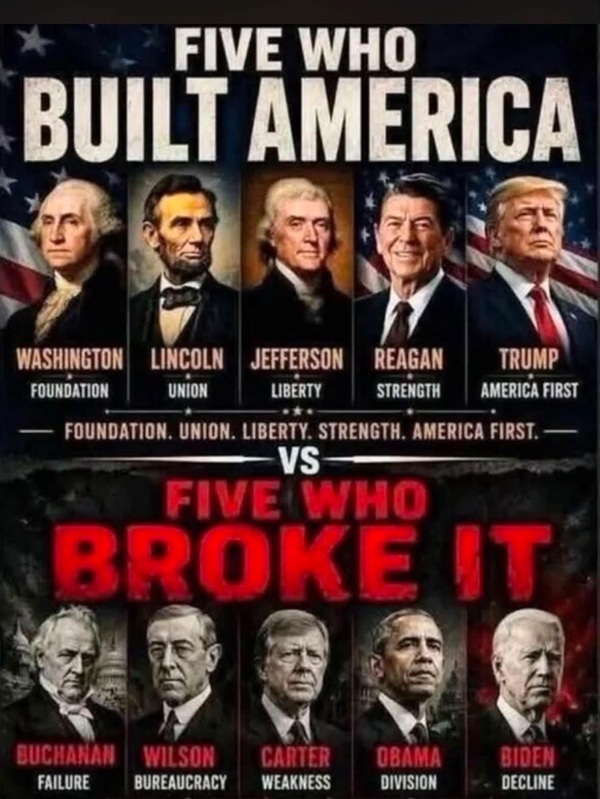
I have lived through the Carter, Reagan, Obama, Biden and Trump years. I also served as an officer in the United States Army during the Carter and Reagan years.
President Jimmy Carter
President Jimmy Carter’s presidency (1977–1981) was defined by severe domestic economic crises and high-profile foreign policy challenges, which ultimately contributed to his defeat in the 1980 presidential election.
Economic & Domestic Challenges
- Stagflation & High Inflation: The U.S. economy suffered from “stagflation”—a rare combination of double-digit inflation, stagnant economic growth, and high unemployment. By 1980, inflation spiked above 13% and interest rates reached historic highs.
- 1979 Energy Crisis: The Iranian Revolution triggered severe global oil production cuts, leading to widespread gas shortages, long lines at service stations, and skyrocketing fuel prices.
- “Malaise” Speech (1979): In a televised address addressing the nation’s energy and economic issues, Carter spoke of a national “crisis of confidence”. Critics labeled it the “Malaise Speech,” framing it as a shift of blame onto the American public for national difficulties.
Foreign Policy & Geopolitical Crises
- Iran Hostage Crisis (1979–1981): Following the Iranian Revolution, Iranian militants seized the U.S. Embassy in Tehran and held 52 Americans hostage for 444 days. The prolonged crisis cast a shadow over his administration.
- Operation Eagle Claw Failure (1980): A secret military mission to rescue the hostages in Tehran failed in the Iranian desert due to equipment failures and a mid-air helicopter collision, resulting in the deaths of eight U.S. servicemen.
The invasion derailed U.S.–Soviet détente, forced Carter to stall Senate consideration of the SALT II nuclear arms treaty, and led to the U.S. boycott of the 1980 Summer Olympics in Moscow.
President Ronald Reagan
President Ronald Reagan’s presidency (1981–1989) shaped modern American conservatism, marked by significant domestic economic restructuring and key diplomatic breakthroughs during the Cold War.
Economic & Domestic Accomplishments
- Reaganomics & Major Tax Cuts: Enacted sweeping tax reductions, including the Economic Recovery Tax Act of 1981 and the Tax Reform Act of 1986, which lowered the top individual income tax rate from 70% to 28% and simplified the federal tax code.
- Inflation Control & Economic Expansion: Supported the Federal Reserve’s monetary policies to curb the double-digit inflation of the late 1970s, leading to a major economic recovery characterized by steady GDP growth, lower interest rates, and sustained job creation throughout the mid-to-late 1980s.
- Bipartisan Social Security Reform: Signed landmark bipartisan legislation in 1983, based on recommendations from the Greenspan Commission, ensuring the long-term financial solvency of the Social Security system for several decades.
- Judicial Appointments: Nominated Sandra Day O’Connor as the first female Supreme Court Justice, alongside elevated Chief Justice William Rehnquist and Associate Justices Antonin Scalia and Anthony Kennedy.
Foreign Policy & Cold War Diplomacy
- INF Treaty & Nuclear Arms Reduction: Negotiated and signed the Intermediate-Range Nuclear Forces (INF) Treaty in 1987 with Soviet General Secretary Mikhail Gorbachev, marking the first time the U.S. and Soviet Union agreed to eliminate an entire class of nuclear missiles.
- The “Peace Through Strength” Strategy: Expanded defense spending and launched initiatives like the Strategic Defense Initiative (SDI), applying strategic and economic pressure on the Soviet Union that contributed to the eventual end of the Cold War.
- The Reagan Doctrine: Provided financial and military support to anti-communist insurgencies and governments worldwide, including in Afghanistan and Nicaragua, to counter Soviet expansion.
- Diplomatic Operations: Brokered agreements leading to the 1988 voluntary withdrawal of Soviet military forces from Afghanistan and ordered targeted operations to protect freedom of navigation in the Persian Gulf.
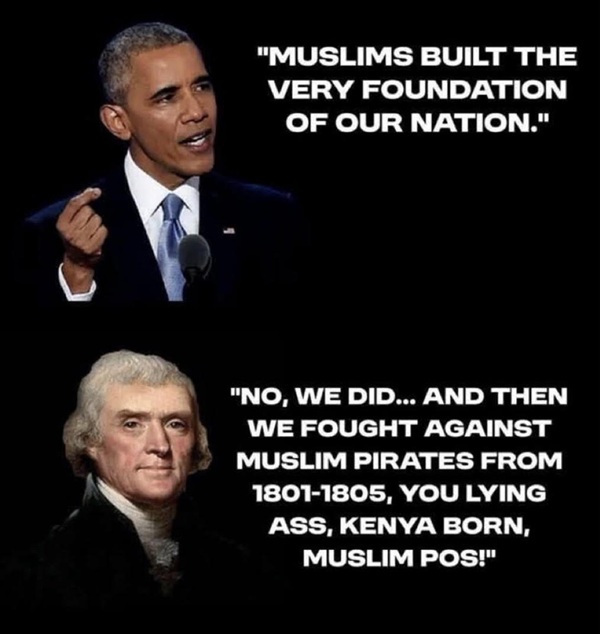
Barrack Hussein Obama
President Barack Obama’s presidency (2009–2017) faced significant policy challenges and criticisms across both domestic and foreign affairs.
Foreign Policy & International Relations
- Syrian Civil War & “Red Line” Failure: In 2012, Obama warned that the use of chemical weapons by Syria’s Assad regime was a “red line”. When chemical weapons were used in 2013, the U.S. abstained from direct military intervention, leading to widespread criticism regarding American deterrence and credibility.
Rise of ISIS & Middle East Instability: The full withdrawal of U.S. combat troops from Iraq in 2011, combined with the power vacuum created by the Syrian Civil War, contributed to the rapid rise and expansion of the Islamic State (ISIS) across Iraq and Syria.
Russian Resurgence (2014 Annexation of Crimea): The administration’s diplomatic “reset” with Russia stalled, culminating in Vladimir Putin ordering Russian forces to invade and annex Crimea from Ukraine in 2014. Critics argued the U.S. response was insufficiently forceful to deter Russian aggression.
Libyan Intervention Aftermath (2011): The NATO-led intervention that helped oust Muammar Gaddafi left Libya without a functional government, causing the nation to fracture into warring factions and become a haven for extremist groups.
Domestic Policy & Economic Challenges
- Sluggish Economic Recovery: Following the 2008 Great Recession, the U.S. experienced one of the slowest economic recoveries in post-WWII history, characterized by persistent underemployment and stagnant wage growth for several years despite major stimulus packages.
- Affordable Care Act (Obamacare) Rollout & Impact: The initial launch of Healthcare.gov in 2013 was plagued by severe technical failures. Policy-wise, the law faced pushback over rising premiums, high deductibles, the individual mandate penalty, and broken promises regarding keeping existing doctors and plans.
- Guantanamo Bay Inability to Close: Despite pledging to close the military detention facility at Guantanamo Bay within his first year in office, strong congressional opposition and legal hurdles prevented him from fulfilling the promise throughout his two terms.
- Government Surveillance Expansion: Disclosures by Edward Snowden in 2013 revealed mass NSA surveillance programs (such as Section 702 and bulk metadata collection), drawing heavy bipartisan backlash over civil liberties violations.
Joseph Robinette Biden, Jr.
President Joe Biden’s presidency (2021–2025) faced significant challenges and criticisms across both domestic and foreign policy domains.
Foreign Policy & International Relations
- Withdrawal from Afghanistan (2021): The hasty U.S. military withdrawal from Afghanistan resulted in the rapid fall of Kabul to the Taliban, the deaths of 13 U.S. service members at Abbey Gate, and the abandonment of thousands of Afghan allies, drawing intense criticism over planning and execution.
Southern Border & Immigration Crisis: The administration experienced historic levels of unauthorized migrant encounters along the U.S.–Mexico border. Critics argued that the early reversal of key Trump-era policies—such as ending “Remain in Mexico”—created a magnet for irregular migration and overwhelmed immigration processing systems.
Global Conflicts & Deterrence Debates: The outbreak of major conflicts, including Russia’s full-scale invasion of Ukraine in 2022 and the 2023 Israel–Hamas war, sparked debate over American deterrence. Critics argued that diplomatic hesitation signaled weakness abroad, while human rights advocates criticized the administration’s handling of the Gaza humanitarian crisis.
Domestic Policy & Economic Issues
- Post-Pandemic Inflation: The U.S. economy experienced its highest inflation rates in four decades, peaking above 9% in 2022. Critics attributed the surge in prices for food, housing, and energy in part to major federal spending bills like the $1.9 trillion American Rescue Plan.
High Interest Rates & Housing Affordability: To combat inflation, the Federal Reserve raised interest rates to multi-decade highs, severely impacting mortgage rates and creating significant affordability challenges for first-time home buyers.
Political & Reelection Strategy: Concerns surrounding his age and cognitive health culminated in a poor debate performance in June 2024, leading to mounting party pressure that ultimately forced him to withdraw from the 2024 presidential race.
President Donald J. Trump
President Donald J. Trump’s term in office was marked by significant policy shifts, major domestic legislative milestones, and reshaping key aspects of U.S. foreign policy.
Economic & Domestic Legislation
- Tax Cuts and Jobs Act of 2017: Signed into law the largest overhaul of the U.S. tax code in decades, significantly lowering the corporate tax rate from 35% to 21%, reducing individual income tax brackets, and doubling the standard deduction.
Judicial Appointments: Nominated and confirmed three conservative Supreme Court Justices—Neil Gorsuch, Brett Kavanaugh, and Amy Coney Barrett—shifting the high court to a 6–3 conservative majority, along with confirming hundreds of conservative federal appellate and district judges.
Deregulation: Enacted a extensive deregulatory campaign across federal agencies, rolling back numerous environmental, financial, and administrative rules.
First Step Act (2018): Enacted a major bipartisan criminal justice reform bill aimed at reducing mandatory minimum sentences for nonviolent offenders and expanding rehabilitation programs for federal prisoners.
Trade & Economic Policy
- USMCA Approval: Replaced the North American Free Trade Agreement (NAFTA) with the United States-Mexico-Canada Agreement, introducing updated provisions for auto manufacturing, labor standards, and digital trade.
Trade Tariffs & Re-negotiations: Imposed significant tariffs on foreign imports—particularly targeting Chinese goods, as well as foreign steel and aluminum—to incentivize domestic manufacturing and counter unfair trade practices.
Withdrawal from TPP: Withdrew the U.S. from the Trans-Pacific Partnership (TPP) trade agreement to focus on bilateral trade deals.
Foreign Policy & National Security
- Abraham Accords (2020): Brokered a series of historic normalization agreements between Israel and several Arab nations, including the United Arab Emirates, Bahrain, Sudan, and Morocco.
- Middle East Relocation & Treaties: Officially recognized Jerusalem as Israel’s capital and moved the U.S. Embassy to Jerusalem. Additionally, withdrew the U.S. from the 2015 Iran Nuclear Deal (JCPOA).
- U.S. Space Force: Signed legislation establishing the United States Space Force as the sixth branch of the U.S. Armed Forces.
Healthcare & Veterans Affairs
- VA Reform: Passed the VA MISSION Act and VA Accountability Act to grant veterans greater flexibility in seeking private healthcare and improve administrative accountability.
Right to Try Act: Signed federal “Right to Try” legislation, allowing terminally ill patients to access experimental treatments not yet approved by the FDA
During his second term in office, President Donald J. Trump has focused on key policy priority areas through a series of major executive actions, trade initiatives, and economic reforms.
Border Security, Energy & Economic Policies
- Border Security & Immigration: According to The White House, the administration initiated zero-release enforcement actions, expanded national defense zones along the southern border, and signed executive orders prohibiting birth tourism.
Energy & Industry Initiatives: Issued directives aimed at supporting traditional energy sectors, including prioritizing the operation of coal-fired power generation fleets to bolster grid reliability.
Housing & Financial Reform: Directed federal agencies through executive orders to reduce regulatory barriers for affordable home construction and established TrumpIRA.gov to promote retirement savings access.
Technology, Health & Public Safety
- Artificial Intelligence & Quantum Security: Issued directives establishing voluntary federal cybersecurity review processes for advanced AI models and mandating government transitions to post-quantum cryptography.
Public Health Policies: Directed federal health agencies to update and align domestic childhood vaccine recommendations with peer nations.
Trade & Defense Enforcement: Actioned trade adjustments and tariffs targeting foreign imports, alongside measures to tighten accountability standards across U.S. customs enforcement.
Do you see the differences? Do you see who are the hypocrats and who is not?
©2026 Dr. Richard M. Swier, LTC U.S. Army (Ret.). All rights reserved.
Leave a Reply
Want to join the discussion?Feel free to contribute!