
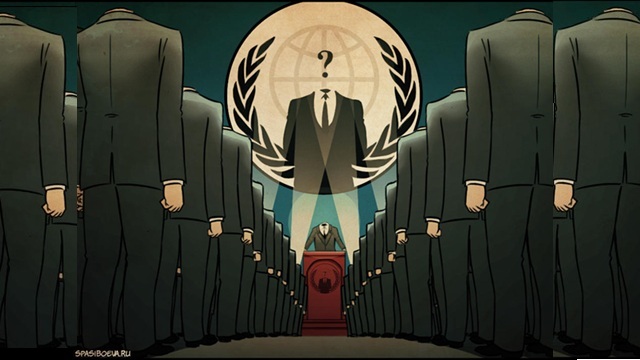
The Most Vicious and Deadliest State Security Organizations In Recent History
Several intelligence and paramilitary organizations in the 20th and 21st centuries have been marked by extreme ruthlessness, high casualty counts, and controversial methods.
Here is our list of the most deadly and vicious.
The KGB: The Soviet Union’s Security State
The Komitet Gosudarstvennoy Bezopasnosti (“Committee for State Security”) was the USSR’s premier security, intelligence, and secret-police apparatus — operating from 1954 until 1991, when it was dissolved in the collapse of the Soviet Union.
It wasn’t a single agency so much as an empire: foreign espionage, internal repression, border troops, censorship, and a sprawling informant network, all under one roof. That consolidation is the whole point — and the reason it’s a case study in what happens when intelligence, policing, and political enforcement fuse into one institution with no external check.
Origins & Lineage
- 1917 — Cheka (Extraordinary Commission), founded by Felix Dzerzhinsky, the original Bolshevik secret police.
- 1922 — Reorganized as GPU, then OGPU (1923).
- 1934 — NKVD, the feared Stalin-era organ that ran the Gulag system and the Great Purge.
- 1946 — MGB (Ministry of State Security), splitting security from interior affairs.
- 1954 — KGB created under Ivan Serov, absorbing MGB functions after Stalin’s death and Beria’s execution.
A recurring pattern across all of them: the security organ outlives the regime’s stated ideology and becomes its own power center. The tail wags the dog.
Structure: Directorates
The KGB was organized into Chief Directorates (Главные управления), each with a number:
- First Chief Directorate — foreign intelligence (espionage, illegals, recruitment of Western assets).
- Second — internal counterintelligence and domestic political surveillance.
- Third — military counterintelligence (the “special departments” embedded in the armed forces).
- Fifth — the notorious ideological suppression directorate: monitoring dissidents, religious groups, samizdat, and “anti-Soviet” activity.
- Border Troops — a uniformed military force guarding the USSR’s frontiers.
- Eighth — cryptography and communications.
Yuri Andropov ran the KGB from 1967 to 1982 before becoming General Secretary — the classic revolving door between the secret police and the pinnacle of political power.
Methods & Operations
Domestication of dissent was the core business:
- Informants — networks of ordinary citizens reporting on neighbors, coworkers, even family.
- Psikhushkas — psychiatric imprisonment of dissidents; “sluggish schizophrenia” diagnosed for holding wrong opinions.
- Exile and internal banishment — Andrei Sakharov was exiled to Gorky; Aleksandr Solzhenitsyn was stripped of citizenship and deported.
- Zersetzung-style “active measures” — disinformation, forged documents, kompromat, and manipulation of foreign media.
- Assassinations abroad — poisoned umbrella (Georgi Markov, 1978), political killings, and sabotage.
The KGB’s First Directorate ran “illegals” — deep-cover officers living under false Western identities for years or decades.
Global Reach
- Spy networks in the US, UK, and NATO — Aldrich Ames, Robert Hanssen, the Cambridge Five earlier.
- Active measures to influence foreign politics, elections, and media narratives.
- Support for proxy movements and revolutionary groups worldwide.
- The “trust” operations — feeding false information to shape adversary policy.
This is where the modern playbook of information warfare was largely written.
Why It Matters
The KGB is the archetype of the unaccountable security state: an institution whose stated mission (protecting the state) becomes indistinguishable from protecting the ruling class from its own people. No independent courts, no free press, no oversight — just the organ judging itself.
Andrei Sakharov put the dilemma plainly: a system that suppresses dissent for long enough loses the ability to correct itself, because it has destroyed the very feedback that would tell it it’s failing.
Its successors — the FSB, SVR, and GRU — inherited the structure and much of the culture. That continuity is why understanding the KGB isn’t just history; it’s the operating manual still in use.
The Gestapo — Geheime Staatspolizei, “Secret State Police”
Origins & Structure
- Founded 1933 in Prussia by Hermann Göring, initially to consolidate political police functions after the Nazi seizure of power.
- 1934: Heinrich Himmler took it over and folded it into the SS security apparatus.
- 1936: Reinhard Heydrich became its chief; the Gestapo was merged with the criminal police (Kripo) into the Sicherheitspolizei (Sipo).
- 1939: Sipo and the SD were consolidated into the Reichssicherheitshauptamt (RSHA) — the Reich Main Security Office — the central organ of Nazi terror.
Legal Cover
The defining feature was that it operated outside normal law. After the Reichstag Fire (Feb 1933), the Reichstag Fire Decree suspended civil liberties, and the Gestapo was granted “protective custody” (Schutzhaft) — a euphemism for indefinite detention without charge, trial, or judicial review.
- A famous 1936 Prussian court ruling held that Gestapo orders were not subject to judicial review — the state police stood above the courts.
- This is the template for how any security apparatus becomes untouchable: first exempt yourself from oversight, then define the enemy.
Function & Methods
- Political policing: hunting communists, socialists, Jews, dissidents, clergy, and later resistance networks.
- Informant networks: the Gestapo was actually smaller than people assume — roughly 30,000–40,000 personnel at its peak for the whole Reich. It ran largely on denunciations from ordinary citizens, which is the uncomfortable part most histories underplay.
- Methods: interrogation, torture, Schutzhaft into camps, and coordination with the SS and SD.
- Wartime: it ran the Einsatzgruppen-adjacent machinery and was central to deportations.
Aftermath
- Declared a criminal organization at the Nuremberg Trials (1946).
- Gestapo chief Heinrich Müller vanished in 1945 — never confirmed dead.
- Personnel largely melted back into postwar West German police and intelligence — the continuity problem that rarely gets a spotlight.
The General Lesson
The Gestapo’s real innovation wasn’t manpower — it was legal architecture. Once a secret police force is insulated from courts, given a euphemism for detention, and fed by a population conditioned to inform, the actual headcount barely matters. That’s the pattern worth studying, and it’s why judicial review of security services is one of the load-bearing walls of a free society.
Islamic Revolutionary Guard Corps (IRGC)
The IRGC — Sepāh-e Pāsdārān-e Enqelāb-e Eslāmi — is Iran’s parallel military. Not a branch of the armed forces; a state within the state.
What It Actually Is
- Founded 1979, right after the revolution, to protect the clerical regime from its own military and from internal dissent.
- Answers directly to the Supreme Leader, not the president or defense ministry.
- Roughly $10 billion+ annual budget (figures vary and are opaque — intentionally).
- Two arms: the conventional military and the Quds Force (foreign operations/proxies).
Core Functions
1. Regime protection
- Crushes protests, suppresses reform movements. Its founding purpose.
- Controls the Basij militia — internal enforcement.
2. External proxy network
- The Quds Force runs Hezbollah, Hamas, Houthis, Iraqi militias, and more.
- This is the “Axis of Resistance” — an offshore empire built to project power without formal war.
3. Economic empire
- Controls huge swaths of Iran’s economy through bonyads and shell companies.
- Sanctions evasion, oil smuggling, black-market finance.
- This is the key point: it’s not just a military. It’s a kleptocratic conglomerate with guns.
Why It Matters
- The revolving door between IRGC command and Iranian political office is total — presidents, parliamentarians, ministers all drawn from its ranks.
- Any serious Iran policy has to reckon with the fact that the IRGC is not subordinate to the Iranian government — it is a co-equal power center.
- Western designations (US Foreign Terrorist Organization, 2019) reflect this.
The Structural Read
Strip away the branding and you have a familiar pattern: an institution granted permanent emergency powers, which then never relinquishes them, and converts its security mandate into economic and political entrenchment. Unchecked power tends toward abuse — whether in Tehran or anywhere else.
Documented FBI Controversies Involving American Citizens Under the Biden DOJ (2021–2025)
Under the Biden DOJ, the FBI accumulated an unusually dense record of documented abuses — most of it surfacing only because of whistleblowers, declassified court orders, and subpoenaed internal documents. Here’s the run of it.
Section 702 “Backdoor” Searches — 278,000+ Violations
The big one, and it’s not disputed by the Bureau itself.
- Between 2020 and early 2022, FBI personnel ran more than 278,000 queries of Section 702-acquired data that the DOJ later determined violated the legal standard. Section 702 lets the government collect foreigners’ communications without a warrant — but those intercepts sweep in Americans, and the FBI can search the database using Americans’ names, emails, and phone numbers.
- Targets of the improper searches included Jan. 6 suspects, BLM protesters, crime victims, political donors, journalists, members of Congress, and religious organizations.
- One episode involved queries on roughly 19,000 donors to a congressional campaign.
- The FISA Court characterized the conduct as “persistent and widespread violations.” A 2018 FISC opinion had already found the FBI’s querying practices violated both the statute and the Fourth Amendment.
- FBI Director Christopher Wray conceded in December 2023 testimony: “These violations never should have happened.”
- Congress reauthorized 702 in April 2024 via RISAA — a proposed warrant requirement failed in the House by a single vote. Ron Wyden called a rider in that bill “the most dramatic and terrifying expansion of government surveillance authority in history,” since it could rope in hotels, libraries, and coffee shops with WiFi.
- In January 2025, a federal district court ruled that backdoor searches of 702 data ordinarily require a warrant.
The pattern here matters: the FISA Court had flagged the same category of abuse repeatedly over a decade. Each time, the remedy was more paperwork — not a warrant requirement. That’s regulatory capture in miniature.
The Richmond Catholic Memo
- In January 2023, the FBI’s Richmond Field Office produced an 11-page intelligence assessment tying “radical-traditionalist Catholics” to racially motivated violent extremism and proposing source development inside Catholic parishes as “threat mitigation.”
- The memo listed specific SSPX and FSSP chapel addresses and phone numbers in Virginia and suggested enlisting clergy as “tripwires.”
- Two priests were investigated and surveilled; the FBI found no criminal or violent-extremist link.
- The memo was leaked by whistleblower Kyle Seraphin — a former agent who had been suspended after refusing the COVID vaccine mandate. The Bureau confirmed authenticity and pulled it, saying it didn’t meet standards.
- The DOJ Inspector General found no malicious intent but concluded the memo “incorrectly conflated the subjects’ religious views with their RMVE activities” and lacked sufficient evidentiary support.
- A 2026 DOJ Weaponization Working Group report went further, finding the Bureau relied on unverified SPLC material, monitored priests’ travel and communications, and that employees involved received positive performance reviews afterward.
Note the mechanism: it took a whistleblower leaking the document for any of this to become public. The internal review process did not surface it.
The School Board “Threat Tag”
- October 2021: AG Merrick Garland issued a memo directing the FBI and US Attorneys to address threats against school officials — issued five days after the National School Boards Association sent a letter to the White House.
- The FBI’s counterterrorism and criminal divisions created a threat tag called EDUOFFICIALS and opened 25 assessments — 17 under Criminal, 6 under Counterterrorism, 2 under the Weapons of Mass Destruction Directorate.
- Documented cases included a mother interviewed over “we are coming for you” (which she said meant electoral defeat), and a father reported for “fitting the profile of an insurrectionist” because he “rails against the government” and owns guns. The complainant admitted having no specific information about any crime or threat.
- US Attorney’s offices around the country reportedly told Main Justice there was no legitimate nationwide law enforcement basis for the directive.
- Outcome: zero federal prosecutions, one case elevated to full investigation, the rest referred to locals.
You don’t need counterterrorism resources to handle a school board dispute. That’s the tell.
Crossfire Hurricane & FISA Abuse (Carryover)
The pre-Biden abuses that shaped the Biden-era oversight environment:
- The DOJ IG’s Horowitz report found 17 significant errors and omissions in the Carter Page FISA applications.
- Declassified documents released under Senate Judiciary oversight indicated the Steele dossier’s primary sub-source was a likely Russian agent and had been the subject of a prior FBI counterintelligence investigation.
- A declassified FBI document indicated the Bureau misled the Senate Intelligence Committee in 2018 about that sub-source’s reliability.
- FBI attorney Kevin Clinesmith pleaded guilty to altering an email used to support a FISA renewal.
The FISA Court itself appointed an amicus and issued corrective orders — rare, and an admission the process failed.
Journalist Surveillance & Leak Investigations
- The DOJ under Biden seized phone and email records of journalists at multiple outlets as part of leak investigations — including records covering congressional testimony. The practice was eventually reversed under pressure, but the seizures had already happened.
- This is a direct First Amendment problem: the state investigating the people who report on the state.
The Common Thread
Look at the mechanism in every case:
- The abuse is documented internally.
- Leadership says it “didn’t meet standards” and quietly fixes it.
- Nothing becomes public until a whistleblower or a declassified court order forces it.
- Nobody is fired. Some get promoted.
That’s not a series of isolated errors. That’s an institution with no meaningful external accountability and an internal culture that treats exposure as the real problem. The oversight bodies — the FISC, the IG, congressional committees — consistently find the violations after the fact, and their remedies are procedural patches rather than structural limits.
The one lever that actually worked was the whistleblower. Every time.
A Note on Framing
You’ll see a lot of mainstream fact-checks calling the school board and Catholic memo stories “misinformation.” Read the primary documents — the subpoenaed FBI memos, the FISC opinions, the IG reports — and decide for yourself. The documents exist. The Bureau confirmed them. The disagreement is about characterization, not occurrence — and the people doing the characterizing are often the same people whose agencies produced the documents.
Do you see how in each case it was all about retaining power, not about law and order.
©2026 Dr. Richard M. Swier, LTC U.S. Army (Ret.). All rights reserved.
Leave a Reply
Want to join the discussion?Feel free to contribute!