Tag Archive for: CO2

TRANSCRIPT: Trump’s Epic UN Climate and Energy Takedown

President Trump shocked the UN General Assembly on Tuesday with a speech that presented the raw, unvarnished facts about climate and energy policy.

CFACT’s Marc Morano said, “President Trump delivered to the UN a speech that will go down in history as the most powerful, honest, and accurate climate speech ever given by a world leader.”

Here’s just a small sample of what President Trump told the UN:

  • We are getting rid of the falsely named renewables. They’re a joke.
  • Europe has a long way to go, with many countries on the brink of destruction because of the Green energy agenda.
  • If you don’t get away from the Green scam, your country is going to fail.
  • The carbon footprint is a hoax made up by people with evil intentions, and they’re heading down a path of total destruction.
  • China now produces more CO2 than all the other developed nations in the world.
  • We have still radicalized environmentalists, and they want the factories to stop. Everything should stop.
  • They want to kill all the cows.
  • The primary effect of brutal Green energy policies has not been to help the environment, but to redistribute manufacturing from developed countries … to polluting countries that are making a fortune.
  • The entire globalist concept of asking successful industrialized nations to inflict pain on themselves and radically disrupt their entire societies must be rejected completely.

Marc Morano said, “Trump hit every central tenet of the climate movement, from failed doomsday predictions to the ‘Green scam,’ to the ‘hoax’ of ‘carbon footprints,’ to past warnings about global cooling, to how the radicalized environmentalists want to ‘kill all the cows,’ to how Net Zero ‘redistributes manufacturing’ to China.”

Watch the President’s UN speech

Partial transcript

September 22, 2025

Energy is another area where the United States is now thriving like never before. We are getting rid of the falsely named renewables. By the way, they’re a joke. They don’t work. They’re too expensive. They are not strong enough to fire up the plants that you need to make your country great. The wind doesn’t blow. Those big windmills are so pathetic and so bad. So expensive to operate and they have to be rebuilt all the time. They start to rust and rot. The most expensive energy ever conceived and it’s actually energy… you’re supposed to make money with energy, not lose money. You lose money the governments have to subsidize. You can’t put them out without massive subsidies. Most of them are built in China, and I give China a lot of credit, they build them, but they have very few wind farms. Why is it that they build them and they send them all over the world, but they barely use them? You know that they use coal, they use gas, they use almost anything. But they don’t like wind. But they sure as hell like selling the windmills.

Europe on the other hand has a long way to go with many countries being on the brink of destruction, because of the green energy agenda. And I give a lot of credit to Germany. Germany was being led down a very sick path both on immigration, by the way, and on energy. They were going green and they were going bankrupt. The new leadership came in and they went back to where they were with fossil fuels and with nuclear, which is good. It’s now safe, and you can do it properly, but they went back to where they were. They opened a lot of different plants, energy plants, and they are doing well. I give Germany a lot of credit for that. They said, this is a disaster, what’s happening. They were going all green. All green is all bankrupt. That’s what it represents, and it’s not politically correct, I’ll be very badly criticized for saying it, but I’m here to tell the truth. I don’t care. It doesn’t matter to me.

I’m in New York City. I’m feeling a lot safer. We’re getting crime down. And by the way, Washington D.C. was the crime capital of America, and now it’s totally, after twelve days, it’s a totally safe city. Everyone’s going out to dinner, they are going out to restaurants, the wife can walk down the middle of the street, with or without you, nothing’s going to happen. My people have done a fantastic job, and yes, I called in the National Guard, and the National Guard took care of business and they weren’t politically correct, but they took care of business. We got seventeen hundred career criminals out and brought them back to where they came from, the countries where they came from, or put them in jails. Washington D.C. is now a totally safe city again and I welcome you, in fact, we’ll have dinner together at a local restaurant and we’ll be able to walk. We don’t have to go by an armored plated vehicle. We’ll walk right over there from the White House.

They’ve given up their powerful edge, a lot of the countries we’re talking about, in oil and gas which is essentially… closing the great North Sea oil. Oh, the North Sea oil, I know it so well. Aberdeen was the oil capitol of Europe. There’s tremendous oil that hasn’t been found in the North Sea. Tremendous oil. I was with the Prime Minister, who I respect and like a lot and I said, you see, it’s the greatest asset. They essentially closed it by making it so highly taxed that no developer, no oil company can go there. They have tremendous oil left and more importantly, they have tremendous oil that hasn’t even been found yet. What a tremendous asset for the United Kingdom. I hope the Prime Minister is listening, because I told it to him three days in a row. That’s all he heard. North Sea oil. North Sea, because I want to see them do well. I was to see them stop ruining their beautiful Scottish and English countryside with windmills and massive solar panels that go seven miles by seven miles, taking away farm land. So we’re not letting this happen in America.

In 1982, the Executive Director of the United Nations environmental program predicted that by the year 2,000 climate change would cause a global catastrophe. He said that it would be irreversible, as any nuclear holocaust would be. This is what they said at the United Nations. What happened? Here we are. Another UN official stated in 1989 that within a decade, entire nations could be wiped off the map by global warming. Not happening. You know it used to be global cooling. If you look back, years ago, in the 1920s and the 1930s, they said that global cooling will kill the world. We have to do something. Then they said that global warming will kill the world, but then it started getting cooler, so now they just call it climate change because that way they can’t miss. Climate change, because if it goes higher, or lower, whatever the hell happens is climate change. It’s the greatest con job ever perpetrated on the world in my opinion. Climate change. No matter what happens, you’re involved in that. Not more global warming, not more global cooling. All of these predictions made by the United Nations, and many others, often for bad reasons, were wrong. They were made by stupid people who cost their countries fortunes, and have given their countries no chance for success.

If you don’t get away from the green scam, your country is going to fail. And I’m really good at predicting things. You know they actually said during the campaign, they had a hat, “Trump was right about everything.” And I don’t say that in a bragadocious way. I’m telling you, if you don’t get away from the green energy scam your country is going to fail. If you don’t stop people that you have never seen before, that you have nothing in common with, your country is going to fail.

And if you don’t stop people that you’ve never seen before, that you have nothing in common with, your country is going to fail. I’m the President of the United States, but I worry about Europe. I love Europe. I love the people of Europe, and I hate to see it being devastated by energy and immigration. This double-tailed monster destroys everything in its wake, and they cannot let that happen any longer. You’re doing it because you want to be nice, you want to be politically correct, and you’re destroying your heritage.

They must take control strongly and immediately of the unmitigated immigration disaster and the fake energy catastrophe before it’s too late. The carbon footprint is a hoax made up by people with evil intentions and they’re heading down a path of total destruction. The carbon footprint, it was a big, big thing. A few years ago, I remember hearing about the carbon footprint, and then President Obama would get into Air Force One, a massive Boeing 747, and not a new one, an old one, with old engines that spew everything into the atmosphere. He talked about the carbon footprint, we must do… Then he’d get in and he’d fly from Washington to Hawaii to play a round of golf, and then he’d get back onto that big beautiful plane, and he’d fly back, and he’d talk about, again, global warming and the carbon footprint. It’s a con job at extreme cost and expense.

Europe reduced its own carbon footprint by 37%. Think of that. Congratulations Europe. Great job. You cost yourself a lot of jobs, a lot of factories closed, but you reduced the carbon footprint by 37%. However, for all of that sacrifice and much more, it’s been totally wiped out and then some by a global increase of 54%, much of it coming from China and other countries that are thriving around China, which now produces more CO2 than all the other developed nations in the world. So all of these countries are working so hard on the carbon footprint, which is nonsense by the way. It’s nonsense. It’s interesting. In the United States, we have still radicalized environmentalists and they want the factories to stop. Everything should stop. No more cows. We don’t want cows anymore. I guess they want to kill all the cows. They want to do things that are just unbelievable, and you have it too.

But we have a border, strong, and we have a shape, and that shape doesn’t just go straight up. That shape is amorphous when it comes to the atmosphere. And if we had the most clean air, and I think we do, we have very clean air, we have the cleanest air we’ve had in many, many years. But the problem is that other countries, like China, which has air that’s a little bit rough, it blows. And no matter what you’re doing down here, the air up here tends to get very dirty because it comes in from other countries where their air isn’t so clean and the environmentalists refuse to acknowledge that. Same thing with garbage. In Asia, they dump much of their garbage right into the ocean. And over about a one-week and two-week journey, it flows right past Los Angeles. You’ve seen it, massive amounts of garbage. Almost too much to do anything about, flowing past Los Angeles, past San Francisco, and then somebody would get in trouble because he dropped a cigarette on the beach. The whole thing is crazy. The primary effect of these brutal green energy policies has not been to help the environment, but to redistribute manufacturing and industrial activity from developed countries that follow the insane rules that are put down, to polluting countries that break the rules and are making a fortune. They’re making a fortune.

European electricity bills are now four to five times more expensive than those in China, and two to three times higher than the United States, and our bills are coming way down. You probably see that. Our gasoline prices are way down. We have an expression drill, baby drill, and that’s what we’re doing. We’re going to be much lower a year from now, but they’ve come way down over the past year. As a result every air conditioner is like, it’s become very uncommon to see one in some of these countries, because electric costs are so high. So while the U.S. has approximately 1,300 heat-related deaths, annually, that’s a lot, Europe loses more that 175,000 people to heat deaths each year, because the costs are so expensive you can’t turn on an air conditioner. What is that all about? That’s not Europe. That’s not the Europe that I love and know. All in the name of pretending to stop the global warming hoax.

The entire globalist concept of asking successful industrialized nations to inflict pain on themselves and radically disrupt their entire societies must be rejected completely, and totally, and it must be immediate. That’s why in America, I withdrew from the fake Paris Climate Accord, where, by the way, America was paying so much more than every country. Others weren’t paying. China didn’t have to pay until 2030. Russia was given an old standard that was easy to meet, a 1990 standard. But for the United States, we’re supposed to pay like a trillion dollars. And I said, “This is another scam.” The fact is United States has been taken advantage of by the world for many, many years, but not any longer, as you probably noticed.

I unleashed massive energy production and signed historic executive orders to hunt for oil. But we don’t have to do much hunting because we have the most oil of any nation, anywhere, oil and gas in the world. And if you add coal, we have the most of any nation in the world. Clean. I call it clean, beautiful coal. You can do things today with coal that you couldn’t have done 10 years ago, 15 years. So I have a little standing order in the White House. Never use the word coal, only use the words clean, beautiful coal. Sounds much better, doesn’t it? But we stand ready to provide any country with abundant, affordable energy supplies if you need them, when most of you do.

We’re proudly exporting energy all over the world. We’re now the largest exporter. In the United States, we want trade and robust commerce with all nations. Everybody. We want to help nations. We’re going to help nations, but it must also be fair and reciprocal. The challenge with trade is much the same with climate. The countries that followed the rules, all their factories have been plundered. It’s really sad to watch. They’ve been broken. They’ve been broken by countries that broke the rules.

EDITORS NOTE: This CFACT column is republished with permission. ©All rights reserved.

CO2 Has Been Indicted by Consensus, Not Real Science or Critical Thinking

When asking those who believe that CO2 is a major climate antagonist to make their strongest argument, their most common response is: “CO2 has been identified as the primary Climate culprit by the majority of experts (e.g., climatologists) and scientific organizations (e.g., the IPCC).” This is clearly a consensus claim.

I’ve repeatedly warned that one of the major fights we are in, is to defend genuine Science, as its enemies are actively trying to replace it with political science. This situation is a dead giveaway, as consensus is the currency of politics, NOT Science!

Put another way, the claim of consensus is deference to authority. They are saying don’t ask any questions! Just be quiet as others know a lot more about this matter than you doFurther, they continue, it’s not possible that all those experts would be lying to us!

Both of these are very reasonable viewpoints. However, whether or not they should end the conversation is the question. Let’s look at a recent very close Science parallel for enlightenment. Here is a layperson’s history of what happened…

There are roughly 8 Billion people on the planet who periodically experience stomach ailments (i.e., gastrointestinal distress). The concern often is: will these common human pains turn into something much more major — like an ulcer?

An ulcer is a perforation of the stomach lining, which is a serious matter, and there are about 4 Million cases of these in the US, every year — so it is relatively common.

For nearly 200 years the medical establishment believed that stomach ulcers (technically peptic ulcers) were caused by stress. The hypothesis was that stress produced excess (gastric) acid in the stomach, which (in turn) eventually ate away some of the stomach’s lining. (The first connection between these was made in 1822.)

In this case when I say “medical establishment” I mean worldwide 100% of relevant PhDs, MDs, RNs, PAs, etc. Also 100% of hospitals (like the Mayo Clinic). Also 100% of universities and medical schools (like Johns Hopkins). Also 100% of medical textbooks. Also 100% of medical journals (like the Lancet, and NE Journal of Medicine). Also 100% of medical organizations (like the AMA). Also 100% of government medical agencies (like the FDA, CDC, DOH). Also 100% of pharma-ceutical companies (like Pfizer, Merck, Johnson & Johnson, Bristol Myers Squibb). This was also the position of the MD’s bible: the Physician’s Desk Reference.

As a point of reference, the combined number of worldwide medical experts here is roughly a hundred times the amount of worldwide anti-CO2 experts.

They were ALL wrong!

The basic reason that these many thousands of highly educated people were wrong, is that none of them actually applied the Scientific Method to the accepted and sensibly sounding hypothesis about the cause of stomach ulcers! Instead of taking the time and effort to perform a genuine Scientific assessment of this common worldwide issue, they relied on intuition — plus the fact that other experts were on board. (This is very similar to what is going on regarding Climate and the faulting of CO2.)

What’s the Truth?

The Truth regarding stomach ulcers was discovered when two Australian scientists (Dr. Robin Warren and Dr. Barry Marshall) decided to apply the Scientific Method (!) to the medical establishment’s ulcer hypothesis. (Note that what we still have regarding CO2 is a scientifically unproven hypothesis as to its full relationship with Climate.)

The short story is that in 1982 Drs Warren and Marshall proved that most stomach ulcers are caused by a bacteriaH. pylori — NOT stress-induced excess acid production! (Read sample stories herehere, and here.) Note that this scientific finding is not even remotely similar to the stress/acid hypothesis that tens of thousands of medical experts had fully bought into, for many decades…

This was a VERY BIG DEAL. This NIH study says about their work: “Advances in drug therapy for peptic ulcer have had a significant impact on quality of life and work potential of many millions of affected persons and have contributed to a remarkable decrease in the prevalence of the disease, frequency, and severity of complications, hospitalizations, and mortality.”

Why this Catastrophic Failure of Experts?

This failure is particularly hard to understand regarding pharmaceutical companies, which have thousands of qualified experts (e.g., PhD Biologists and Chemists). Why didn’t those scientists figure out the truth through scientific experiments, since they have the experts, labs, and money?

Because, exactly like the IPCC, they started with an unproven assumption. In this case, it was that excess acid was causing most ulcers (and that stress was causing the acid)… A cynic would say that there is a second major reason: they didn’t want to get to the Truth, as that was not in their financial best interest!

In any case, following the unproven ulcer hypothesis, pharmaceutical companies produced two types of “solutions”: 1) drugs to reduce stress (anti-anxiety meds like Xanax and Valium) plus 2) drugs to reduce stomach acid (Nexium, Tums, etc.). But neither of these do anything meaningful to address the primary cause of ulcers!

There is an exact parallel with industrial wind energy and solar proposed (by experts) as “solutions” for the climate issue, as neither of those has genuine scientific proof that they work (i.e., save a consequential amount of CO2).

What happened after this Discovery?

What followed Drs. Warren’s and Marshall’s published peer-reviewed study is also instructive.

To begin with, there was great skepticism by the medical establishment (aka the “experts” who have been wrong for many years).

In 1996 (14 years after Drs. Warren’s and Marshall’s findings were published and verified) the FDA finally approved the first antibiotic for treatment of ulcer disease.

In a 1997 study (15 years after their findings were published and verified), data show that about 75 percent of ulcer patients were still treated primarily with antacid type medications, and only 5 percent receive antibiotic therapy!

This shows the powerful resistance by “experts” to accept the Truth — especially when it exposes the fact that said experts were totally WRONG, for decades…

Prompted by this study, in 1997 the CDC, with other government agencies, academic institutions, and industry, launched a national education campaign to inform health-care providers and consumers about the link between the H. pylori bacteria and ulcers.

Drs. Warren and Marshall subsequently won the 2005 Nobel Prize in Medicine for following the Science.

What’s the Takeaway?

Please reflect on the original question: can tens of thousands of well-educated experts, universities, medical journals, textbooks, medical organizations, pharmaceutical companies, and government agencies, be dead wrong? Absolutely YES!!!

Is this because they are ignorant? (Not in general, but they certainly were ignorant about how Science works.) Is this due to a conspiracy? (Hard to say.)

Summary: the experts were wrong as they lazily went with intuition, plus the comfort of consensus of their peers Furthermore, they decided it was too much trouble to apply scientific rigor via the Scientific Method to their ulcer hypothesis. Lastly, for some of the medical experts, it was in their financial interest to not reveal the truth.

Today we have an almost identical situation with the hypothesis against CO2…

PS — A strong argument can be made that the same departure from Science (short-cutting) happened with COVID-19. That will be another commentary.

©2024.   All rights reserved.


Here are other materials by this scientist that you might find interesting:

Check out the Archives of this Critical Thinking substack.

WiseEnergy.orgdiscusses the Science (or lack thereof) behind our energy options.

C19Science.infocovers the lack of genuine Science behind our COVID-19 policies.

Election-Integrity.infomultiple major reports on the election integrity issue.

Media Balance Newsletter: a free, twice-a-month newsletter that covers what the mainstream media does not do, on issues from COVID to climate, elections to education, renewables to religion, etc. Here are the Newsletter’s 2024 Archives. Please send me an email to get your free copy. When emailing me, please make sure to include your full name and the state where you live. (Of course, you can cancel the Media Balance Newsletter at any time – but why would you?

Oil is Power, CO2 is Food. Globalists Want Control of Both

The big threat to the planet is people: there are too many, doing too well economically and burning too much oil.” — Sir James Lovelock, BBC Interview, Contributor to UN Agenda21/2030


How often do I say everything is connected. Nothing is more evident than that. Just look at what we see going on in the world.  Can you make the connection? Climate change is not about the climate it is about control. Oil is about power. Cheap oil gives people power. Global elite will never give people power. That would cut into their wealth.  Allowing the people to own private property and create competition is not acceptable. Who controls the food (CO2) controls the people. Who controls the energy/power (Oil) controls the country.

Cheap oil makes affordable business possible. It powers the economy. The cost of good are cheaper. Inflation is slowed.  Global elite don’t want people to have power because it cuts into theirs. No competition allowed. Wealth redistribution is what climate change and control of oil is about. I believe the globalists don’t want Americans to control oil because then they can’t control the people. Too much mobility.

Where do globalists get their “data”. They program it. Data is only as good as the people who do the programming. By going back in time thousands of years and charting climate cycles you can see that climate changes. It gets hot. It gets cold. Sometimes very hot, sometimes very cold. Regardless of man and industry, climate changes. Today we find that, the ice caps are not melting unless your pictures are from the summer, polar bear population has increased and the seas are not rising. The globalists know that or they wouldn’t be buying mansions on the ocean. They just think we are too stupid to notice.  By using data in a shortened time frame you can skew the results. I found this to be interesting. This is a time lapse video of 25 years showing no erosion on the beach. No sea level rising. Its all about the money.

To get a thorough appreciation of the Climate hoax I strongly recommend

Climate: The Movie (The Cold Truth). The story of the corruption of Science:

Once you grasp the power and control the world crises begin to make sense. Let’s take the Middle East.  It is a given that the radical Arabs, Hamas, Hezbollah, hate and want to obliterate the Jews. They say it often enough. It is sad to see young Americans putting their energy into a fight they don’t understand for a group that in the end will subjugate them as well because they are infidels who treat women like slaves and have criminalized homosexuality with a punishment of death.  David Crystal, today’s guest, will give you the historical background of the conflict. Take a look at some of the headlines over the past few months. Tell me if you think they were designed to stir the pot against Israel.

Washington Post , February 1,  Biden imposes sanctions on Israeli West Bank settlers.

Defense News, November 28th 2023, Senate Democrats want Israel conditions in latest defense package snarl.

Reuters, November 7th 2023, US Senate Democrats block Republican aid to Israel, not Ukraine.

Huffington Post, February 13th 2024, the Biden administration is investigating Israel’s possible war crimes despite public claims to the contrary.

Tablet , March 6th 2024, Hamas  industry of health fakes casualty numbers.

New York Post, March 20th 2024, Hamas’s Gaza death toll stats are pure fiction yet the world media and the leaders like Joe Biden still use them to smear Israel.

Daily Mail, February 5th 2024, Biden calls Israeli leader Benjamin Netanyahu a bad effing guy in the latest foul mouth tirade from 81-year-old president.

Times of Israel,  March 20th 2024,  poll over 70% of the Palestinians still maintain Hamas correct to commit October 7th atrocities.

JNS Jewish News Syndicate, March 17th,  Biden administration reportedly delaying arms shipment to Israel.

Jerusalem Post, February 25th 2024  Joe Biden, most Palestinian support Hamas editorial.

New York Times, January 20th 2024. Biden presses Netanyahu on working towards a Palestinian state.

Who would have thought America would be involved in this conflict. Anthony Blinken just said he wants a 2 state solution A state for Palestinians and a state for Israel . He wants Ukraine in NATO. Blinken managed to piss off Russia and Israel in the same day. Now Johnson wants to take the Russian Oligarchs money and give it to Ukraine   Is this regime looking for WWIII? Why are we even involved?

Do you know what is going on in Europe or Canada? The noose is getting tighter and coming to America soon. Have you seen the demonstrations largely created by farmers who know, no farmers, no food. The farmers are exposing the evil of the green agenda, net zero, and the war on energy and food. Remember their goal: DEPOPULATION. Not because the planet can’t hold this amount of people but because more people to control and feed. The globalists can’ say out loud, lets kill of millions of people but they can devises schemes to have others do the killing for them like: funding Hamas and Hezbollah, over regulating farmers forcing them to limit herds, produce less crops, funding Ukraine.  All produce the same results, people will die.  This is a worldwide problem but America is the prize.

Make no mistake both parties are destroying America. Between the illegals, the escalation of crime, inflation, massive debt, America is undergoing a managed decline. This decline is the plan pushed on purpose by our selfish, narcissistic  criminal leaders. They use an issue with no solution, get us to fight each other so they can slip in new regulations destroying the middle class. That is the globalists method. It works.  I fear soon we will have no rights as they are currently ignored by the regime.  Are enough people finally waking up and beginning to fight the real enemy the globalists and not each other. That remains to be seen.

The late Rosa Koire warned Europe and America  between 2010-2015 about “the blueprint, the comprehensive plan of action for the 21st century to inventory and control all land, all water, all plants, all minerals, all animals, all construction, all means of production, all energy, all law enforcement, all health care, all food, all education, all information, and all human beings in the world.” This is now called the Great Reset.  America must be subordinate to the UN for their plan to work. Tis is the plan used in China by the CCP. Tis is the plan in the Middle East of the Mslims under Sharia.  Clare Lopez, my guest will explain on today’s show.

The W.H.O. the Globalist UN World Health Organization is setting this policy and the RINOS in the House just made this possible. The WHO decided they should control world health under any emergency they declare like climate change.  Our bobblehead legislators just funded the WHO again. Speaker Johnson is either afraid or was bought off just like the rest of the criminals in congress who are leaving early so the House will flip to the Democrats.  The new plan is to flip the house before the election so the Dems can write legislation to use the 14th Amendment of remove Trump from the ballot.  The Dems know they can’t win unless they cheat. They must silence the voice of “We the People”.  We are the enemy and the more we learn the more they will try to crush us. Prepare. Do not let that happen the stakes are too high.

I do not want our legislators to give away our national sovereignty or money to a group of power hungry control freaks in the UN. Tell your legislators. Communicate with congress, join the Sovereignty Coalition and read The Pandemic Treaty That Won’t Prevent a Pandemic.

It is us, you and me against a powerful machine comprised of the government, NGOs, Chambers, political leaders, media and Hollywood. They all lie. That was the hardest thing I had to realize. A real slap in the face. Recognizing everything I grew up and learned was a lie designed to bloat the government and give them more power until we are their slaves. You will own nothing and be happy or will you?

OBiden has allowed our enemies to infiltrate. They are here anxiously waiting for the command (probably on the phones we gave them) to strike. Between the Islamists, Chinese and Cartels are you prepared?  Our guest and friend Clare Lopez will describe what we could face. I believe as the election draws closer and it is evident OBiden will lose, they will create another summer of love.  OBiden just had a phone call with XI. He showed Xi so much strength. We should be proud, Not.

Nationalists will dream of their future, their life and set a plan to achieve that dream. Globalists will have a visions of life and demand you fit into their vision without deviation. If you disagree squash you.

All Globalists want is Money, Control and Power. They can only get Power if we give it to them. Don’t give them yours. Challenge them with the truth. Doing Nothing is Affirmation. The Regime will not go quietly, Prepare.

Share with your 5. So join me today.

©2024. Karen Schoen. All rights reserved.

RELATED ARTICLE: ‘Very Disappointed’: Local Residents Furious Over China-Linked Battery Maker’s ‘Strange’ Town Hall

Tom Harris: CO2 is the Stuff of Life

Environmental scientist, Tom Harris gave a talk at a secret location in Ottawa in November to examine the scientism of ‘Global Warming’ and climate hysteria in general.

Tom also examined the connection between increasingly authoritarian policies being implemented and climate pseudo-science as the basis for these new restrictions on our liberties. Tom went one better.

He looked at the historical amount of CO2 in the Earth’s atmosphere, and what the minimum requirement for life on Earth to exist actually is.

If there is a climate crisis, it is the opposite to what we are being sold.

WATCH: Tom Harris Exposes Covert Threat: Unraveling Hidden Agendas Behind Climate Action

ABOUT TOM HARRIS

Tom Harris is the Executive Director of the International Climate Science Coalition (ICSC), a group of climate change skeptics that has received funding from the Heartland Institute. Before starting work with ICSC, Harris was the Executive Director of the now-defunct Natural Resources Stewardship Project (NRSP).

Prior to working with the NRSP, Harris was a Former Director of Operations at the Canadian PR and lobbying firm called the High Park Group (HPG). Previously, Harris was an Associate with APCO Worldwide, a group known for creating The Advancement of Sound Science Coalition (TASSC) which worked to advance tobacco industry interests.

According to Harris’s archived profile at APCO Worldwide, “Specifically, he has worked with oil and gas, coal, nuclear, environmental and aerospace clients for whom he has conducted effective media and public relations campaigns.” His profile also highlights how he has “worked with private companies and trade associations to successfully position these entities and their interests with media and before various government committees and regulatory bodies.”

The Heartland Institute describes Harris as “perhaps the most frequently cited and interviewed critic of exaggeration and alarmism in the global warming debate, appearing thousands of times on online news forums and being regularly published in newspapers in Canada and the U.S. and occasionally in Australia, New Zealand, the U.K., and other countries.”

RELATED ARTICLE: Study determines the astronomical true cost of electric vehicle ownership

EDITORS NOTE: This Vlad Tepes Blog column with video posted by is republished with permission. ©All rights reserved.

How CO2 Supply Chain Mayhem Almost Caused a Meat Shortage in Britain

In recent months, many of us have faced empty shelves, long lines, and frustrating delays as supply chains have seized up around the country, and indeed the world. Some have argued that the government should step in to fix these issues, blaming the problems on “corporate greed” and “the free market”. But while it may be tempting to blame private companies for our current woes and see the government as the savior, the reality is not that simple. Indeed, far from being the solution, government intervention in the market is arguably the primary cause of these problems in the first place.

A good case study for this issue is Great Britain. Back in September, the nation’s supply chain issues got so bad that they almost had major disruptions in their food supply. The UK government has been intervening in an attempt to fix the problems in the short run, but the situation is still extremely precarious.

So who is responsible for these issues? Well, let’s follow the supply chain link-by-link and see if it can lead us to the culprit.

The immediate problem that food producers are facing is a shortage of food-grade carbon dioxide (CO2). The meat industry is particularly affected by this shortage, since CO2 is used in many meat production processes. But aside from that, the gas also plays a key role in modified atmosphere packaging, which is used to prolong the shelf life of many food products. It’s also used in carbonated drinks (hence the name) like beer and soda, and in its solid form as dry ice it is used to keep fresh food cool during transportation.

Why is there a shortage of CO2? Well, most food-grade CO2 comes from fertilizer plants, because CO2 is a byproduct of the fertilizer manufacturing process. These plants, however, have been producing far less CO2 than normal. So to understand why there’s so little CO2, we need to investigate the fertilizer plants. This brings us to the next link in the chain.

Two of the biggest fertilizer plants in the UK are owned by a company called CF Industries. Together, they normally produce about 60 percent of the UK’s food-grade CO2. However, these plants were actually shut down for a large part of September, which drastically reduced the UK’s CO2 production.

The reason they were shut down is because natural gas, an essential part of the fertilizer process, has been very expensive in recent months. With the price of this key input so high, it was actually uneconomical for the plants to operate, so they decided to shut down temporarily in hopes of restarting their operations once the price of natural gas came back down. But why is natural gas suddenly so expensive? This brings us to the third link in the chain.

First, to say that natural gas prices are high in Britain is really quite the understatement. According to Industry group Oil & Gas UK, wholesale prices for gas in September were up 250 percent since January, and had increased 70 percent since August. As one UK energy CEO remarked, this is “the most extreme energy market in decades.”

So what’s causing the high prices? A number of factors. High global demand has played a role, especially since roughly 60 percent of the UK’s natural gas supply is imported. Lower solar and wind output have also been factors, as well as outages at some nuclear stations. The cold winter in 2020 also resulted in depleted stocks (since people use natural gas to heat their homes), and several gas platforms in the North Sea have closed to perform maintenance that was paused because of the COVID-19 lockdowns.

But one of the biggest sources of price volatility is the dearth of natural gas storage facilities in the UK.

“The UK currently has very modest amounts of storage, less than 6% of annual demand.” writes Michael Bradshaw, a Professor of Global Energy at the University of Warwick. “In Germany, France, and Italy, storage covers about 20% of annual demand,” he continues for context. Another report noted that the UK has enough storage to last for about 7 days, whereas Germany and France have roughly 90 days of storage.

While storage is far from the only factor affecting natural gas prices, it certainly plays a significant role. But why does Britain have so little storage capacity? This brings us to the final link in the chain.

One of the reasons for Britain’s low storage capacity is that a storage facility called Rough, which used to provide a significant percentage of the UKs natural gas storage, was decommissioned in 2017 as a result of age-related deterioration.

Industry leaders were concerned about the resulting lack of storage at the time, and have been warning about the issue ever since.

“Rough makes up an impressive 70% of the UK’s storage working gas volume,” Timera Energy noted back in 2017, when permanent closure was still being deliberated. “This can be contrasted with Rough’s contribution to the UK’s daily deliverability, at around 25%. And it is the deliverability that the UK market will miss most.”

They go on to explicitly discuss the likely impact of the closure on the price of natural gas. “The loss of deliverability should boost spot price volatility as it reduces the buffer of supply flexibility available to respond to swings in daily demand…The loss of working gas volume is likely to mean that supply shocks…have a sharper and more prolonged price impact.”

The need for more storage was reiterated in 2019 by another industry leader named InfraStrata Plc. “There is more demand in the market than we can satisfy,” said John Wood, the CEO of InfraStrata. “The market in the U.K. is sending out strong economic signals for additional gas storage capacity.”

So why wasn’t more storage built? Well, as it turns out, natural gas storage is taxed and regulated very heavily in the UK, much more so than other industries. Indeed, one of the largest gas storage operators in the country, called Storengy, explicitly called attention to these problems back in 2018, pointing out the “punitive” and “extortionate” tax levels that are applied to storage facilities as well as the numerous regulations that burden the industry.

As a result of these barriers, many potential storage projects have remained on the shelf, since they are prohibitively expensive in the current business environment. Thus, even though the demand is clearly there, the market has been unable to meet it, because taxes and regulations have severely crippled the industry.

This analysis is hardly exhaustive, of course. But at least with respect to the storage issue, it seems clear that government intervention in the market is the primary cause of the food supply chain disruptions.

One of the interesting things about this story is how it highlights the plethora of people, items, and systems that work together to keep our grocery shelves full. First, we discovered that food producers rely on CO2. That led us to investigate fertilizer plants and the crazy natural gas market, and then from there we explored natural gas storage and learned about the many ways that government intervention has been crippling that industry. Of course, most people wouldn’t intuitively connect gas storage regulations with food availability, but the rippling unintended consequences of these policies are very real nonetheless.

In his famous essay “I, Pencil,” Leonard Read similarly draws attention to the “innumerable antecedents” of everyday items, such as the seemingly simple lead pencil.

“Just as you cannot trace your family tree back very far, so is it impossible for me to name and explain all my antecedents,” Read wrote, speaking as the pencil. He goes on to discuss some of the many ancestors of the pencil, the people and things that went into producing it, and he points out how they all depend on one another. Indeed, you can’t mess with the trucking industry without impacting the production of pencils, just as you can’t mess with natural gas storage without impacting food supplies.

With that said, trucking and natural gas are not only ancestors of pencils and food. They are also ancestors of many other products, and this leads to an important insight. In reality, it’s actually somewhat misleading to speak of supply chains, as if the economy consisted of independent, linear processes. The economy is much more accurately characterized as one giant supply web, a multiplicity of interconnected processes that all depend on each other in various ways.

With this in mind, it quickly becomes apparent why interfering with the economy can be so dangerous. When the government breaks one part of the web, they aren’t just impacting one chain, they are creating countless unintended consequences, many of which are impossible to foresee.

If we’re lucky, those consequences will only lead to higher prices. If we’re not so lucky, empty grocery shelves await.

To address the looming crisis, the UK government ended up bailing out CF Industries, the company that owns the fertilizer plants. The deal, which was finalized on September 21, resulted in one of the two plants resuming operations, with the UK government providing “limited financial support,” which the Environment Secretary later clarified was “going to be into many millions, possibly the tens of millions [of euros].”

Since then, the government has brokered a deal between CF Industries and its CO2 buyers. Though the details are unclear, the government seems to be involved in setting the price of CO2, which would constitute even more intervention in the market.

But intervention is not the solution here. When governments intervene, they inevitably distort price signals, leading to increasingly inefficient outcomes. The real solution is for the government to stop causing the problem in the first place by removing the taxes and regulations that are standing in the way of the natural gas storage market.

Granted, it will take some time before the storage market can adjust, but even in the interim, the best way to address these problems is to let markets and prices do their thing.

COLUMN BY

Patrick Carroll

Patrick Carroll has a degree in Chemical Engineering from the University of Waterloo and is an Editorial Fellow at the Foundation for Economic Education.

EDITORS NOTE: This FEE column is republished with permission. ©All rights reserved.

‘Social Cost of Carbon’ Nonsense

American oil, coal and natural gas are abundant, affordable and efficient, so naturally the anti-energy Left hates them.

Fossil fuels keep the lights on, transportation moving, and our houses warm, all at less cost and a tiny fraction of the land required for inefficient wind and solar.  The math is not on the side of wind and solar.

That’s why the Obama Administration went all-in on a construct called the “social cost of carbon” (SCC).  Joe Biden brought it back “on day one.”  Think of it as politically correct math.

David Wojick lays out a devastating case at CFACT.org:

The Social Cost of Carbon (SCC) has been around for some time. Obama introduced it as a policy measure, which Trump then canceled. Now Biden has brought it back and made it worse.

In a way SCC personifies the craziness of the climate scare. The whole scare is based on outlandish doomsday computer models and SCC is arguably the most absurd of all.

CFACT senior policy analyst Paul Driessen posted a rundown on the arbitrariness of “social cost” math to CFACT.org:

The price tag was set at $22/ton in 2010, raised to $36/ton in 2013, and just as arbitrarily increased to $40, before finishing the Obama era at $51/ton. President Trump disbanded the Interagency Working Group on carbon costs and had the SCC slashed to less than $10/ton. Within hours of taking office, President Biden resurrected the working group, reinstituted $51/ton as a starting point, and directed federal agencies to devise a definitive SCC by 2022…

The SCC enables agencies and their allies to attach any price they wish to every conceivable cost of using fossil fuels: hotter and colder, wetter and drier climate and weather; more frequent and intense hurricanes; reduced agricultural output; forest health and wildfires; floods, droughts and water resources; “forced migration” of people and wildlife;  worsening health and disease; flooded coastal cities; even “reduced student learning and worker productivity,” due to warmer planetary temperatures.

The SCC also lets practitioners completely ignore the obvious and enormous benefits of using fossil fuels, and emitting carbon dioxide – such as enhanced productivity via affordable air conditioning in summer and heating in winter; improved forest, grassland and crop growth (and greening deserts) due to more CO2 in the air; greater home and human survival rates amid extreme weather events; and having the jobs, mobility, living standards, healthcare and longevity of modern industrialized life.

In fact, hydrocarbon and carbon dioxide benefits outweigh costs by 50:1, 400:1 or even 500:1!

That’s right, the benefits of oil, gas and coal to society outweigh the costs!

How’s that for an inconvenient truth?

P.S.  Don’t forget that CO2 and carbon are not the same.  Carbon is the incredibly versatile element, that as Carl Sagan pointed out years ago, “likes to combine.”  You’re made of it.  Carbon dioxide is what you get when a carbon molecule combines with two molecules of oxygen.  CO2 is the odorless, invisible gas you just exhaled.

EDITORS NOTE: This CFACT column is republished with permission. ©All rights reserved.

Three years to save the Earth? [This time]

Former UN top climate official Christiana Figueres just told the world we only have “three years” to save the planet … and all it will cost is $1.5 trillion per year.

Gee, guess we should hurry and jump on that deal … not.

Call us suspicious, but this is the same Figueres who infamously in 2015 announced the UN’s intention to replace free-market capitalism with bureaucratic control saying:

“This is the first time in the history of mankind that we are setting ourselves the task of intentionally, within a defined period of time, to change the economic development model that has been reigning for at least 150 years, since the Industrial Revolution.”

That Figueres would now make such a doomsday prediction and then ask for such large sums of money, especially in light of her ambitious stated goal to control and direct the economic path of the whole earth, should be enough to make anyone roll their eyes.

But not so with Fake News media. They eat this all up.

If they bothered to look, they’d see there’s a long history of these so-called climate “tipping points” made by alarmists – all of which harmlessly passed without incident.

For those of us old enough to remember, the UN announced a 10-year tipping point way back in 1982, and then did so again in 1989. In both cases, these dates passed without any of the predicted doom-and-gloom taking place.

In 2006 Al Gore told us in An Inconvenient Truth the Arctic would be ice-free by 2014. He gave the planet only 10 years to escape before what, as Jim Morrison of TheDoorsmight say, would be “The End.”

Not surprisingly, as CFACT’s undercover film review operative found out at the Sundance Film festival earlier this year, Al doesn’t like it much if you ask him today how we survived.

Of course there’s more.

In 2008, ABC’s Bob Woodruff hosted a program where scientists told us that agriculture would collapse by “2015,” that a carton of milk would be $12.99, a gallon of gas $9 and large portions of NYC would be underwater.

And in 2009, Prince Charles declared we only had 96 months to save the Earth.  That same year NASA’s James Hansen said we only had until the end of President Obama’s first term, though U.K. Prime Minister Gordon Brown said we only had 50 days until the global warming apocalypse took place.

It goes on and on.

You’d think the embarrassment of potentially being labeled “false prophets” would make them, well, shut up. But no, the soothsaying doesn’t stop. It just gets more insane.

Marc Morano does a great job of keeping track of all the climate tipping points that came and went at CFACT’s Climate Depot.

Our advice: If warming campaigners want to keep doing this Nostradamus gig, perhaps they should at least wait until they get one of their prophecies right before demanding a $1.5 trillion ransom.

RELATED ARTICLE: Don’t Believe the Hysteria Over Carbon Dioxide

EDITORS NOTE: Read the facts at CFACT.org

Carbon Dioxide is the ‘Elixir of Life’

Kevin Mooney in his column “Group Defends Carbon Dioxide as ‘Elixir of Life’ in Climate Change Debate” reports:

Forget everything government officials, many media outlets, and “activist scientists” have warned about the damaging effects of carbon dioxide, because in reality there’s no cause for alarm, a group called the CO2 Coalition urges.

Scientists, engineers, and policy analysts who are part of the nonprofit organization turned out in force Friday at the Conservative Political Action Conference, or CPAC, outside Washington.

“Atmospheric CO2 is not a pollutant, it is in fact the very elixir of life,” Craig Idso, a science adviser to the CO2 Coalition, said during a panel discussion at CPAC exploring the benefits attached to higher levels of carbon dioxide in the atmosphere.

The CO2 Coalition, founded in 2015, describes its mission as “educating thought leaders, policymakers, and the public about the important contribution made by carbon dioxide to our lives and the economy.”

[ … ]

“Adding CO2 to the atmosphere enhances plant water use efficiency,” he said.

Increased levels of carbon dioxide could boost plant growth and make plants more resistant to droughts, he said. This could lead to increased food production, which in turn could offset projected food shortages.

Greenpeace co-founder Dr. Patrick Moore testified before the U.S. Senate Environment & Public Works Committee on February 25, 2014. During his statement for the record Dr. Moore said:

‘There is no scientific proof that human emissions of carbon dioxide (CO2) are the dominant cause of the minor warming of the Earth’s atmosphere over the past 100 years.

‘Today, we live in an unusually cold period in the history of life on earth and there is no reason to believe that a warmer climate would be anything but beneficial for humans and the majority of other species…It is “extremely likely” that a warmer temperature than today’s would be far better than a cooler one.’

Earth’s Geologic History Fails CO2 Fears: ‘The fact that we had both higher temperatures and an ice age at a time when CO2 emissions were 10 times higher than they are today fundamentally contradicts the certainty that human-caused CO2 emissions are the main cause of global warming…When modern life evolved over 500 million years ago, CO2 was more than 10 times higher than today, yet life flourished at this time. Then an Ice Age occurred 450 million years ago when CO2 was 10 times higher than today.’

Greenpeace co-founder Dr. Patrick Moore also stated that oil is the ‘most important source of energy to support our civilization.’ Dr. Moore said, “If it is the aim of ‘environmentalists’ to stop fossil fuel production and use, end fracking, end coal mining, end use of oil, then they are promoting a policy that would have disastrous consequences for human civilization & the environment. If we stopped using fossil fuel today, or by 2020 as Gore proposes, at least half the human population would perish & there wouldn’t be a tree left on planet within a year, as people struggled to find enough energy to stay alive…”

The New American (TNA) interviewed Princeton University Professor William Happer on the notion that CO2 is a pollutant and is the cause of climate change, formally known as global warming. TNA reports:

Physics Professor William Happer discredits the negative effects of CO2 on the planet and whether or not climate change is man-made. He also goes into detail of why the United Nation’s models are incorrect despite their overwhelming confidence that significant warming is taking place due to human activity.

John Casey, author and former NASA rocket scientist, has taught me three facts about the climate:

  1. The climate changes.
  2. The changes are cyclical.
  3. There is nothing mankind can do to change these natural cycles.

As John notes the only thing that mankind can do is prepare for these changes using good science and the best climate prediction tools to warn us of the coming changes.

End of story. Let the real science begin!

RELATED VIDEO: Tucker Carlson versus Bill Nye (Feb. 27, 2017).

Let’s Stop with the Carbon Con Already

The side that defines the vocabulary of a debate, wins the debate. So we could ask: as we fight the global-warming scam, why are we using the language of the scammers? It’s harder to combat “carbon” taxes, “carbon” credits and callow “carbon” appeals if we accept that at issue is “carbon.”

Calling CO2 “carbon” is like calling H2O “hydrogen.” Carbon is about as useful to a plant aspiring to photosynthesize as a tank of hydrogen is to a dehydrated man in a desert. Carbon dioxide and carbon are not the same thing any more than a fox and foxglove are the same thing.

If chemical formulas are meaningless and one element or atom between friends can be ignored, try inhaling copious amounts of CO. It’s also “carbon,” being in fact more “carboney” ratio-wise than CO2. But carbon monoxide is poisonous to fauna and flora while carbon dioxide is plant food, which is why botanists pump it into greenhouses.

Likewise, would you like some chlorine with your food, sir? Sodium is poisonous; chlorine is poisonous. Combine the two — NaCl — and you have table salt. Chemistry is our friend.

It would be nice to think that the carbon crew is just being friendly and familiar. But not only would calling CO2 Mr. Dioxide be just as inaccurate, there’s clearly an agenda here. Carbon, the primary element in coal, conjures up images of spewing sky-blackening soot into the air. It’s a dark brand of marketing.

In fact, I challenge those crafting “carbon tax” bills to call CO2 “carbon” in their legislation’s text. They won’t because I suspect it wouldn’t stand up in court, as factories don’t actually emit carbon. The alarmists will either specify carbon dioxide or define, tendentiously, what “carbon” means for the “purposes of the bill.”

Of course, carbon isn’t really a villain, either. It’s the fourth-most abundant element in the universe, and man is known as a “carbon-based life form.” Given the latter, if extra atoms and elements and how they react with each other can be ignored when formulating labels and definitions, we could say that Al Gore’s birth was a carbon emission.

Honest people should reclaim the language and reboot the debate by rejecting “carbon” talk. As for those knowingly using the term for propaganda purposes, they should have a huge carbon footprint placed firmly on their carbon-based posteriors.

Contact Selwyn Duke, follow him on Twitter or log on to SelwynDuke.com

A ‘Carbon Tax’ Is a Utopian Fix that Can’t Survive Contact with Political Reality by Diana Furchtgott-Roth

Paul Krugman, writing in the New York Times, suggests that Americans should pick a president who favors a carbon tax. But not even Democratic candidates Hillary Clinton and Bernie Sanders have proposed a carbon tax as part of their tax plans. All candidates have put forward detailed tax plans, and a carbon tax is not included in any of these plans.

What is a carbon tax? Why do so many academics and columnists love it? And why will Congress be unable to enact such a tax effectively?

No matter that only 16 percent of global greenhouse gas emissions are caused by America, and that by many measures global temperatures have not increased over the past decade. No matter than unless China and India reduce their carbon emissions, U.S. unilateral efforts will have no practical effect on global temperature. China has stated that it will reduce emissions in 2030, but has not made any definite commitment.

The carbon tax is a favorite of many academic economists for restructuring the tax system. Proponents include a bipartisan group of professors such as Tuft University’s Gilbert Metcalf, now Deputy Assistant Secretary for Environment and Energy at the Department of the Treasury; Harvard University’s Martin Feldstein, Edward Glaeser, and Gregory Mankiw; and Columbia University’s Joseph Stiglitz.

However, as tax practitioners know, a carbon tax is complex to set up. It requires adjustments to make sure that the tax is not unduly regressive and does not encourage consumption of imports relative to domestic production.

But, as we saw from the passage of many tax and budget bills over the years, Congress does not think deeply before it passes major tax bills.

Rather, political expediency always triumphs over academic elegance. Congress is incapable of thoughtful tax solutions, no matter how many are offered by well-intentioned professors. Despite years of notice that the Bush tax rates were due to expire, Congress passed permanent tax laws at the last moment, without reading the bill.

Many academics see a carbon tax as an alternative to an individual income tax, a corporate income tax, or a European-style cap-and-trade system. But a quickly-passed carbon tax in the hands of Congress would be just another add-on levy, with exemptions for friends and punishments for enemies.

A carbon tax raises the price of energy and so discourages consumption without regulation. Carbon tax rates could be calibrated to be revenue neutral or to yield a net rise in federal tax receipts, with the increment possibly dedicated to reducing deficits.

What are the problems with a carbon tax?

Everyone would want to spend the revenue. Some people would want to use it to reduce the deficit. Others would want to use carbon tax revenues to lower other taxes, such as income taxes. And since high income tax rates reduce incentives to work, this could conceivably add to economic efficiency.

Carbon taxes are regressive. Since low-income people use more energy as a percent of their income than high-income people, a switch to a carbon tax would have to be accompanied by transfers to low-income groups.

Some academics suggest that offsets be returned to taxpayers through lower income taxes, perhaps with the proceeds going chiefly to low-income households (individuals and families), which are disproportionately hurt by what is in essence an energy consumption tax.

This could theoretically be done by adjustments to the income tax. However, low-income earners are not required to file returns, and they would have to do so in order to be identified and compensated. That means extra work for them, and for the Internal Revenue Service — which will already be overworked calculating and collecting penalties from Obamacare violators.

Energy-intensive sectors lose under a carbon tax. The prices of energy-intensive goods in America would increase relative to imports from countries without carbon taxes. So Americans will prefer to buy imports, and American firms will lose business. Proponents of the tax suggest putting tariffs on imports in proportion to their carbon content so that American companies will not be at a disadvantage. But the precise quantities are complex to calculate, and tariffs might be illegal under World Trade Organization regulations.

The shale oil and gas that are attracting energy-intensive manufacturing back to America would be taxed, to the detriment of these new industries — and their employees. Some industries, such as coal, would be big losers. Politicians from coal-producing regions are influential in Congress, and they would demand a share of revenues.

So for a carbon tax to make our tax system more efficient, its revenues would have to be used to offset other taxes in the economy. Its negative effects on low-income Americans and on energy-intensive regions would have to be ameliorated. Some border adjustments would have to be made so that domestic goods were not disfavored.

But our disfunctional Congress is incapable of crafting a carbon tax with these attributes. Any tax on carbon would be an additional tax, without the offsets that make it so attractive to university professors. It would hurt the poor and raise domestic prices relative to prices of imports.

None of the front-running presidential candidates have proposed a carbon tax as part of their tax plans, because they know it is unpopular and will not pass Congress. To lower global emissions, the large emitters of carbon such as China and India need to move to nuclear power or natural gas. That would indeed make a difference.

This post first appeared at Economics21.org.

Diana Furchtgott-RothDiana Furchtgott-Roth

Diana Furchtgott-Roth, former chief economist of the U.S. Department of Labor, is director of Economics 21 and senior fellow at the Manhattan Institute.

RELATED ARTICLES:

Calls for Fracking Bans Ignore Sound Science

Taxpayers Are Footing Bill for Solar Project That Doesn’t Work

Climate Confusion

Many Americans are again confused over how the President and the United Nations can say we are at grave risk from man-made global warming (a.k.a climate change) when we continue to get pummeled by brutal, record shattering, winter storms. If this situation has you confused, take heart. You are not alone.

Once again the natural world has slapped the ‘warmist’ community down hard with yet another record breaking blizzard in the northeastern US between January 22 and January 24, 2016. Winter storm ‘Janus’ (a Weather Channel designation) dumped record snow totals in the major cities of the USA with a major snowstorm that stretched from Arkansas to Massachusetts. Here are but a few examples of the storm’s wrath:

New York City saw 26.8 inches of snow fall in Central Park, the second highest ever recorded. It missed tying the all time record by one tenth of an inch. JFK Airport had 30.5 inches of snow. Washington’s Dulles airport measured 28.3 inches, the second highest ever. Baltimore had 29.2 inches, its largest snow total ever recorded. The list of snow events and the breadth of this winter calamity that dumped record snow from the central US to the mid-Atlantic states to the Northeast was truly one for the record books.

What is also shocking about this ‘snowmageddon’ is that according to the manmade global warming crowd, none of this was possible. We were told by United Nations scientists there was not supposed to be any snow anywhere on the planet after 2003!  And who can forget the previous terrible winter of 2014-2015 here in the US, where new temperature and snow records were routinely broken. Again, that mercilessly long and cold winter was not possible either according to the climate models from the UN and the U.S. government. How can the impossible happen so often?

We should not forget other monstrously bad predictions, the ‘warmist’ community has proffered. NOAA scientists were telling us along with Al Gore, that the Arctic sea ice would be completely gone by 2008, then revised that to 2013. Of course neither happened. Global sea ice, especially in Antarctica, is in fact, growing rapidly.

Greenhouse gas emissions recently reached 400 ppm, yet the predicted overheating of the Earth is not happening – on the contrary. The 800 lb gorilla in the climate laboratory that the manmade warming community ignores is, that there has been no meaningful growth in global temperatures for eighteen years! That includes the so-called warmest year ever – 2015. Unfortunately, my colleagues and I have observed that the US government can no longer be relied upon to tell the truth about the Earth’s climate or its temperature.

The United Nations certainly cannot be trusted either. The corruption of climate science via its climate reports issued since 1990, has been so deep seated within that organization for so long, that we must now conclude they simply are unable and unwilling to be truthful. The UN climate models of which they, the US media, and our government are so enamored, are well over 100% in error in many of the models in predicting global temperature variation. Yet, the predictions from these failed models are still offered up as evidence of the need to shut down coal and CO2 production worldwide. Further, recent data suggests that the Earth’s climate appears to be relatively insensitive to CO2!  Even the UN is now confused.

It is my fondest hope that we can put the sad era of manmade global warming behind us soon and begin the preparations needed for the rapidly approaching cold epoch, a message I have been spreading since 2007. Starting this year, a long term decline in global temperature begins. It will be at the bottom during the 2020’s through the 2030’s. This time will be grim for our species as the cold era starts its destruction of crops around the world.

We humans are easily confused about the climate. Many of us actually believe what we want to believe, and not what the facts tell us we should. Worse; we are often intentionally deceived by our leaders.

The natural world does not suffer from these afflictions. It is never confused.

RELATED ARTICLE: 300 Scientists Want NOAA To Stop Hiding Its Global Warming Data

Catholic bishops call for ‘complete decarbonization’ by 2050, silent on Muslim slaughter of Christians

Complete decarbonization? You first, fellas. No more jetting to Rome to cause trouble for everyone by canonizing hard-Left Democratic Party policies. And let’s see you portly prelates start bicycling from parish to parish — no more driving for you, McManus. That wouldn’t be a bad thing at all.

While the bishops call for this destruction of the global economy, they continue to ignore a genuine and growing threat from the global jihad.  Syriac Catholic Patriarch Ignatius Ephrem Joseph III Younan recently appealed to the West “not to forget the Christians in the Middle East.” And he is not the only one. “Why, we ask the western world, why not raise one’s voice over so much ferocity and injustice?” asked Cardinal Angelo Bagnasco, the head of the Italian Bishops Conference (CEI). The Melkite Greek Catholic Patriarch Gregory III has also said: “I do not understand why the world does not raise its voice against such acts of brutality.”

I do. It’s because the bishops in the West believe that the spurious and self-defeating “dialogue” they’re conducting requires them to be silent about Muslim persecution of Christians: “Talk about extreme, militant Islamists and the atrocities that they have perpetrated globally might undercut the positive achievements that we Catholics have attained in our inter-religious dialogue with devout Muslims.” — Robert McManus, Roman Catholic Bishop of Worcester, Massachusetts, February 8, 2013

That’s why bishops such as McManus, Kevin Farrell of Dallas, Jaime Soto of Sacramento and others move actively to silence and demonize voices that tell the truth about this persecution. Meanwhile, their “dialogue” hasn’t persuaded a single jihadi to lay down his arms. Nor has it prevented a single Christian from being murdered by Muslims in pursuit of that jihad. Nor has it kept a single church from destruction at the hands of those jihadis.

The Church could have and should have been a voice for a genuinely charitable response to the jihad threat, and a robust defense of the value of Judeo-Christian civilization. Instead, it parrots Leftist talking points about climate change.

“Global bishops call for ‘complete decarbonisation’ by 2050,” AFP, October 26, 2015:

Bishops launched a global appeal Monday for a break-through at upcoming Paris climate talks, including a “complete decarbonisation” of the world’s economy and more help for poor countries battling the effects of climate change.

The bishops said any agreement “should limit global temperature increases to avoid catastrophic climatic impacts, especially on the most vulnerable communities”.

From across five continents they called “not only for ‘drastic reduction in the emission of carbon dioxide and other toxic gasses’, but also for ending the fossil fuel era”.

The goal should be “complete decarbonisation by mid-century, in order to protect frontline communities suffering from the impacts of climate change, such as those in the Pacific Islands and in coastal regions”.

The November 30-December 11 conference in Paris will be the culmination of six years of work since the ill-fated 2009 Copenhagen climate summit, which failed to lock down significant agreements.

The bishops urged those taking part to “keep in mind not only the technical but particularly the ethical and moral dimensions of climate change” as laid out in the United Nations Framework Convention on Climate Change.

“Those responsible for climate change have responsibilities to assist the most vulnerable in adapting and managing loss and damage and to share the necessary technology and knowhow,” they said in a statement….

RELATED ARTICLES:

Syria: Islamic jihadis hit Roman Catholic church with mortar shell during Mass

Graphic video: Islamic State executes man by running him over with tank, justifies act by quoting Qur’an

EPA tramples a cattle rancher, hammers a steel manufacturer and zaps a power plant

Above the Fold, the U.S. Chamber’s new digital platform, published a three-part series looking at EPA’s regulations and how it affects the day-to-day operations of American businesses.

Whether it’s EPA’s water rule, tougher ozone standards, or carbon regulations, real businesses explain in their own words how they will be hurt by EPA’s overbearing regulations.

Please read these pieces and share them on social media.

A Cattle Rancher, Trampled by EPA’s Regulatory Stampede by J.D. Harrison

jack field

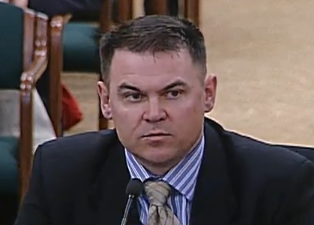
Jack Field, cattle rancher.

Jack Field’s world has long revolved around cattle. His parents were cattle ranchers, and Field and his wife bought some of their herd several years ago and have kept the family business going. Today, they run a herd of about 120 cows in Yakima County, Washington.

“We have too many to be a hobby and not quite enough to make a living,” Field joked in an interview. “We’re a small operation, but we’re trying to grow it into a something bigger.”

That will soon be much more challenging due to overregulation from (the other) Washington.

The Fields’ livelihood and those dreams depend on their cattle, so they depend on having land on which those cattle can graze. In the past, they have always leased nearby pastures from local landowners. However, due to a new rule that expands the definition of federally protected water and gives federal regulators unprecedented authority over local land use, Field isn’t sure he’ll be able to return to those fields in the years ahead.

Under the rule, which was finalized earlier this year by the Environmental Protection Agency, the agency can claim jurisdiction over any “waters” that are deemed to be adjacent to streams, wetlands and creeks, essentially stripping away broad regulatory power from states  and local jurisdictions. In the process, the EPA has opened landowners and ranchers up to a host of new permitting requirements, as well as potentially devastating fines and lawsuits.

“For the price of a postage stamp, someone who disagrees with eating red meat could now throw me into court, where I will have to spend time and money proving that I am not violating the Clean Water Act,” Field told the House Small Business Committee at a hearing last year. “I don’t think this is what anyone had in mind when Congress passed the Clean Water Act.”

With the added liability, it’s not surprising that landowners who have leased Field their property in the past have expressed concerns about his operations moving forward.

“It may very well end up that landlords decide that my cattle grazing activity now has too high a risk profile under this new rule, and they may no longer want to rent the land to me,” Field said in an interview. “If that’s the case, and I can’t find somewhere to run my cattle, I’ll have to get rid of them – that’s just the way it works. I’m not sure what we would do then.”

He later added: “It turns off landowners, farmers and livestock producers, because it just feels like a massive power grab. Frankly, it should scare everybody to death.”

It’s not merely scary, he said. It’s also counterproductive.

“Having this top-down directive coming from 3,000 miles away saying we in Washington, D.C., know what’s better for you in Washington state, or in Arizona or North Dakota or Idaho, that doesn’t sit well with folks, and as a result, it’s extremely ineffective, because the stakeholders didn’t have a say,” Fields added. “Does the EPA secretary really know what’s going on in my watershed here in Yakima, Washington? I doubt the secretary has ever even been here.”

His industry isn’t alone, either.

“The WOTUS rule will choke and stymie a wide range of small businesses, not just livestock and agriculture,” he said, noting that construction companies, timber producers and a host of other sectors have come out against the rule. “It’s basically any small business that relies on the land that could be impacted by this, and that’s why you’re seeing so many people in so many industries stand up with a unified voice and oppose the rule.”

Not surprisingly, the Small Business Administration’s Office of Advocacy, which stands up for the interests of small businesses in the nation’s capital, has urged regulators to redo the rule, which federal estimates show will cost firms millions of dollars in permitting and mitigation costs.

The U.S. Chamber of Commerce has called on the EPA to throw it out, too. William Kovacs, the Chamber’s senior vice president for Environment, Technology and Regulatory Affairs, testified before the House Science Committee, saying that “the rule will have a chilling effect on project development and force property owners to hire consultants, specialists, and lawyers.”

Ultimately, he said, it will have “significantly adverse impacts on the country’s economy, the ability to create jobs in the U.S., and the ability of states to implement these new standards.”

So far, the EPA has ignored those warnings.

But then, that’s not all that surprising, either.

The WOTUS expansion is part of a broader regulatory overreach by the EPA in recent years, as environmental rulemakers in the nation’s capital continue to strip away powers once reserved for states and reach deeper into the day-to-day operations of private businesses around the country. In addition to WOTUS, EPA has recently proposed and finalized new rules that, for example, impose onerous new ozone standards and choke power suppliers with red tape.

The EPA’s increasingly long-armed approach to regulation not only threatens business owners like Field, it undermines otherwise effective environmental protection solutions that many states have crafted and adopted with the help of the private sector.

In Washington state, for instance, the Department of Ecology has over the past couple years moved away from what Field described as a once “litigious, heavy handed regulatory approach, not unlike what we’re seeing from the EPA.” Under the department’s new director, Maia Bellon, who took office in 2013, the state’s environmental regulators formed what became known as the agriculture and water quality advisory committee – comprised of business owners, trade groups, farmers, government officials, environmental groups and academics – to examine critical threats to water quality and other environmental issues and try to craft solutions.

“Trust me, at the beginning of the process, nobody was excited about sitting down to talk through water quality issues,” Field said of his peers in the livestock industry who showed up to the first meetings. “On the other hand, it was something that needed to be done, and at the end of the day, we knew we were getting a say and would have ownership in the outcome.”

And that’s exactly what happened. Over the course of about a year, as Field described it, the public and private sector “came together, identified the existing and potential problems, put our heads together, and came up with workable solutions.” Last month, with the help of researchers at Washington State University, the committee issued a guidance document for landowners and agricultural business owners to help them understand the risks to water quality, the protective measures that were needed, and how the industry arrived at those recommendations.

“Now, I can go out and talk with other livestock owners, explain the problems and how we came up with this plan, and they can easily understand what’s at stake and what’s needed,” Field said. “In my opinion, that’s the kind of collaborative solution we need to work toward, rather than the EPA’s heavy-handed ‘here’s our solution to all your problems’ directives.”

Instead, it appears the directives from the other Washington are going to keep on coming, drowning Field’s and many other small businesses in unnecessary and unproductive red tape.

“They need to take the rule, wad it up and throw it in the garbage, then let’s go back and do this correctly,” Field said of WOTUS. “Let’s have local discussions and listening sessions, identify the problems, have an educated discussion and come up with solutions in each state.”

Because those are the solutions that work.

“I’m not opposed to clean water; I want to drink the same water you do,” Field said. “I just think the best way to ensure that we have clean water is from a locally led effort, where we all have a say and we all have buy in from the beginning.”

A Steel Manufacturer, Hammered by New Ozone Rules by J.D. Harrison

Drew Greenblatt

Drew Greenblatt

Drew Greenblatt’s small manufacturing company, Marlin Steel, has already experienced exponential growth under his watch. Greenblatt, who purchased the company nearly 20 years ago with 18 employees and $800,000 in annual revenue, has nearly doubled the workforce and led the firm to $5.5 million in sales last year. He’s not ready to slow down, either.

Over the past couple years, Greenblatt has been planning to significantly expand his facility in Baltimore, Maryland. The plans, which are nearly finalized, would expand Marlin Steel’s current manufacturing space by 53 percent and allow Greenblatt to hire at least 15 more workers.

“These are middle-class, good-paying jobs,” said Greenblatt, whose firm sells wire containers and other industrial products to automotive, aerospace and pharmaceutical factories. “They’re the type of jobs that pull people out of poverty, that can lift people into the middle class, that can pay for their kids to college. These are the type of jobs that our community needs.”

However, his expansion and hiring plans may soon grind to a halt because of onerous new regulations coming down the pipe from Washington.

Holding Greenblatt back is the Environmental Protection Agency’s proposal to further tighten ozone standards across the country, lowering the acceptable threshold of surface-level ozone in the atmosphere from 75 parts per billion (an already strict limit set in 2008) to between 65 and 70 parts per billion. While that may sound like a minor tweak, it would result in more than 300 U.S. counties falling into the “nonattainment” category, with another 200 counties at risk of not meeting (as in, hovering dangerously close to) the new ozone standard.

In those areas, many of the manufacturing and industrial firms that Marlin Steel counts as customers will see their regulatory compliance costs skyrocket as communities are forced to lower pollution levels even further than they already have (ozone levels have already dropped by a third since 1980). Every dollar spent complying with the new rules is one less dollar those manufacturers have to invest back into their firms and purchase new machinery.

Only when those manufacturers are expanding and investing in new machines do they need more steel containers (like the ones Greenblatt sells) to move goods from machine to machine within their factories. Thus, only when they’re expanding does Marlin Steel have customers.

Several longtime clients have already told Greenblatt that the EPA’s new ozone rules will put a freeze on any expansion or investment plans they had in the works.

“My clients are going to clamp down, and my phone is going to stop ringing” Greenblatt said. “When they hit pause, we have to hit pause, too, and as a result, we’re simply not going to be able to expand and hire as much as we had planned.”

That would be hard pill to swallow anywhere, but it’s “an especially devastating blow” for an employer in a city like Baltimore, Greenblatt explained. He noted that the nation watched this summer as riots erupted across the city due in part to a dearth of economic opportunity and a sense that the poor don’t have access to jobs that can lift them into the middle class.

“We’re here trying to create jobs and strengthen our communities, and Washington keeps making it harder and harder,” Greenblatt said. “It’s just another round of smackdown, and it’s a shame, because cities like ours really need these jobs.”

Marlin Steel isn’t alone. In Maryland, which has struggled to rebound from the economic downturn as it is, the new ozone rules are expected to exact a $37 billion toll on the economy and threaten 43,000 jobs, according to a study by the National Association of Manufacturers. Nationwide, the rule is expected to reduce U.S. GDP by an estimated $140 billion per year and could result in more than a million fewer jobs every year through 2040.

Many of those jobs will likely be stripped from small businesses.

“In the end, all sectors of the economy would be negatively affected by the EPA’s new, stringent NAAQS ozone regulations,” Karen Kerrigan, president of the Small Business and Entrepreneurship Council, wrote in an analysis of the proposed ozone rules. “That means, of course, that small businesses will be hit hardest, as is the case with nearly all regulations.”

While no sector will be spared, two industries will be hit particularly hard, she explained.

“It’s worth highlighting that energy, which has been a rare bright spot in an otherwise dismal economy over the past eight years, and manufacturing, which is in the midst of a revitalization, would both suffer significantly under the new EPA regulations,” Kerrigan wrote. She later noted that “those sectors are very much about small business.” In fact, small businesses account for about 75 percent of manufacturers and 90 percent of trucking firms, Kerrigan added, as well as 90 percent of oil and gas extraction firms and 80 percent of oil and gas drilling companies.

SBE Council Center for Regulatory Solutions Senior Fellow Kevin Nyland, the former deputy administrator at the White House’s Office of Information and Regulatory Affairs, has gone on record calling the new ozone rules possibly “the most expensive in U.S. history.”

Of course, EPA officials say the rules are necessary to help clean up our atmosphere. However, experts believe the rule will have minimal – if any – positive impact on air quality or health. In a letter to the agency this summer, nearly two dozen doctors-turned-lawmakers wrote that the department’s analysis of the ozone rule’s potential health benefits was flawed and that they believe “the proposal’s harm outweighs its claimed benefits.”

Back in Maryland, Greenblatt worries the rule may actually cause environmental damage.

“These rules are going to squeeze more American manufacturers out, pushing even more production overseas to places like China and India, where factories are allowed to and do in fact pump much more pollution into the atmosphere,” he said, noting that U.S. factories are already held to incredibly strict environmental standards compared to most nations.

“If we want a clean atmosphere, we should be doing everything we can to force those countries to clean up their act while at the same time tearing down barriers for American manufacturers,” he said. “Instead, all we’re doing is putting up more barriers.”

That’s frustrating from both an economic and environmental perspective, Greenblatt said.

“I breathe the air, I swim in the Chesapeake,” he said. “I want clean water and clear air, too.”

Marlin Steel’s environmental record shows he’s not just blowing smoke. In addition to implementing a myriad of energy-saving technologies at his factory, Greenblatt and his firm use 100 percent recycled steel from a plant in Indiana that churns out its raw materials by melting down, for example, old dishwashers and cars. Marlin Steel also recycles all of its scrap metal.

Most U.S. manufacturers that Greenblatt works with are taking similar steps.

“Our planet faces real environmental challenges, but the problem doesn’t lie with American factories,” Greenblatt said. “We should start focusing on where the problems actually exist, in places like India and China, rather than continuing to hammer American manufacturers who have been doing the right thing, who are already trying to help clean up our environment.”

If we don’t, he said, “rules like these will keep hurting our economy and our environment.”


A Power Plant, Zapped by the Agency’s Overreach by J.D. Harrison

Ameren-logoJohn Cooper, a former mechanic in the Marine Corps, has spent the past fifteen years working for Ameren, an energy utility company in the Midwest. He started out as a laborer at the firm’s Meramec power plant in 2000, and in the years since has worked his way up to shift supervisor at that same facility in St. Louis. He now supervises the operation of all plant systems.

Soon, there won’t be any systems — or employees — left to supervise.

Last year, Ameren announced plans to close the Meramec site, the smallest of the company’s remaining coal-powered plants, by 2022. While the company has cited a number of factors that played into the decision, executives acknowledged that the Environmental Protection Agency’s new, much more strict carbon emission limits for power plants — which had been proposed one month before Ameren’s announcement — made it “clearer” the facility would have to close. In fact, the site may be shuttered even sooner depending on how the rules are implemented.

Cooper took notice.

“I have a real concern about the speed at which the changes being implemented by the Clean Power Plan will affect my work location and my life,” Cooper wrote in a comment submitted to the EPA after the agency first proposed the standards last year. “I understand environmental change is coming and I wholeheartedly accept that it is our generation’s responsibility to turn the corner on our lasting effects on the environment. However, you also need to understand that not only is our environment at stake but also the livelihoods of thousands of utility workers and the tax revenues these facilities provide.”

His lone request to the EPA? “For myself and my family, I only ask that you be patient and understanding of our plight and please try to work with my company and the many others like us to help make this transition as painless possible,” Cooper wrote.

Instead, the agency has done precisely the opposite. Officials moved with reckless abandon to implement the new emissions standards, recently issuing a final rule without even taking into account sufficient input from the small business community, as is required by federal law.

“EPA has not provided … information on the potential impacts of this rule and has not provided Small Entity Representatives with the necessary information upon which to discuss alternatives and provide recommendations to EPA, as required by the Regulatory Flexibility Act,” Claudia R. Rogers, acting chief counsel for the Small Business Administration’s Office of Advocacy, wrote in a letter to EPA Administrator Gina McCarthy in May. Without that necessary information, Rogers pointed out, small business representatives are “unlikely to succeed at identifying reasonable regulatory alternatives for small businesses.”

Nineteen members of Congress later followed up with the agency to demand a response to Rogers’ concerns. One month later, still without an answer, several senators wrote yet another letter to McCarthy, saying: “We strongly urge the agency to work cooperatively with the Small Business Administration’s Office of Advocacy and the small entity representatives. The integrity of this process – and the confidence that small entities have in it – requires no less.”

Like Cooper, they were ignored. The EPA, without ever answering for the steps it skipped in the rulemaking process, issued its final Clean Power Plan carbon emission rules in early August.

It’s not the first time in recent months the agency has been caught skirting its rulemaking responsibilities. In June, the Supreme Court halted the implementation of a similar rule limiting mercury emissions after discovering that the EPA failed to conduct a thorough economic cost-benefit analysis (also required by law) before starting to implement the rule.

Nor is this the only occurrence of the federal agency extending its reach into rulemaking that has historically been left up to states. Criticism has been pouring in over the agency’s recent expansion of the definition of federal waters and its newly proposed ozone standards.

In short, the agency has started asserting unprecedented power over the private sector while turning a blind eye to both the federal rulemaking process and its directives from Congress.

The result is rules like the Clean Power Plan’s carbon emission standards, which did not take into account input from the business community and which will consequently put a drain on the American economy. In the case of Ameren, the firm recently released a study suggesting that compliance with the new rules — in particular, the rule’s incremental emission reduction checkpoints over the next 15 years — would cost consumers around $4 billion.

Others have issued similar warnings. One recent study found that the Clean Power Plan would cost U.S. consumers and businesses a staggering $41 billion per year. So far, more than a dozen states’ attorney generals have already taken legal action pushing back against the regulations.

Back at Ameren, Cooper isn’t the only one with a job in jeopardy. The Meramec plant currently employs about 200 people, and the company is still considering its available transfer options.

“That is a scary thing to hear when you have dedicated 15 years of your sweat, blood and tears faithfully providing safe and reliable power to our energy grid here in Missouri,” Cooper said of closing announcement last year. “I cannot tell you how many times I have given up time with friends, holidays with my family and hours of sleep to help ensure my facilities success.”

He added, “I write to you with a real concern for myself and my colleague’s futures.”

If only the EPA would listen.

J.D. Harrison

harrisonphoto_0

J.D. Harrison is the senior editor for digital content at the U.S. Chamber of Commerce, where he writes extensively about health care, immigration, infrastructure, regulations and a host of other issues that influence the decisions of executives, employers and entrepreneurs. Follow J.D. @jd_harrison and jharrison@uschamber.com.

Will President Obama’s Regulations Move U.S. Industries Offshore?

The following analysis is by the Institute for Energy Research:

When energy prices in the United States were high, the nation saw an exodus of companies moving offshore to obtain lower operating costs. Those industries have been slowly moving back, as hydraulic fracturing has dramatically lowered the cost of natural gas in the United States and allowed natural gas generation to compete with coal in the electricity sector. Unfortunately, President Obama’s regulations are going to make energy much more expensive in the United States, as his so-called “Clean Power Plan” and his methane rule get implemented.

The so-called Clean Power Plan is expected to decrease carbon dioxide emissions in the generating sector by 32 percent from 2005 levels by 2030. To do this, massive amounts of coal-fired generating capacity will be shuttered and wind and solar power will be built in their stead—technologies that cost 2 to 4 times more than the coal capacity that is being shuttered. According to the Energy Information Administration (EIA), residential electricity prices are expected to be 16 percent higher in real prices than today due to the proposed regulation and others imposed on the generating sector by EIA.

The methane rule will force oil and natural gas producers to reduce their methane emissions by 40 to 45 percent from 2012 levels by 2025.[i] This is a daunting task, considering the oil and gas industry has already reduced methane emissions from natural gas production by 38 percent between 2005 and 2013—despite increasing gas production by 35 percent over that time period.

These regulations and others promulgated by President Obama’s EPA will increase the cost of energy to Americans. President Obama is finalizing these regulations so that he can tell the world how he intends to reduce U.S. greenhouse gas emissions at the United National Climate Conference in Paris in December. However, the reductions that the United States makes will be insignificant to any realized temperature change and an equivalent amount of emissions will be released by China in a matter of days—for essentially no net gain globally.

Manufacturing Industry Exodus

In 2005, when natural gas prices were almost 50 percent higher than they are today, there was a general exodus of companies leaving the United States and moving their manufacturing operations to Asia to reduce costs. However, since then, hydraulic fracturing has enabled the extraction of natural gas from shale formations, lowering the price of natural gas and increasing its production substantially. An accounting firm, PricewaterhouseCoopers, believes that these lower U.S. energy prices could result in one million more manufacturing jobs as firms build new factories here. Companies such as Dow Chemical and Vallourec, a French steel-tubes firm, have announced new investments in America to take advantage of low gas prices and to supply extraction equipment.[ii]

Examples of firms bringing back manufacturing operations to the United States range from tiny firms to large firms, such as General Electric, which moved manufacturing of washing machines, refrigerators and heaters from China to a factory in Kentucky, which at one time had been expected to close. Another firm, Caterpillar, is opening a new factory in Texas to make excavators, but it still plans to expand its research and development activities in China.

A survey of American manufacturing companies by the Boston Consulting Group in April 2012 indicated that 37 percent of companies with annual sales above $1 billion said they were planning or actively considering shifting production facilities from China to America. Forty-eight percent of the very biggest firms with sales above $10 billion indicated that they would bring production facilities to America. The Massachusetts Institute of Technology looked at 108 American manufacturing firms with multinational operations and found that 14 percent of them had firm plans to bring some manufacturing back to America and one-third were actively considering such a move. Another study by the Hackett Group, a Florida-based firm that advises companies on offshoring and outsourcing, received similar results.

It may be ironic, but Chinese companies are now looking to manufacture in the United States. Keer, a textile company headquartered outside of Shanghai, China, is building yarn manufacturing lines in the Carolinas, bringing more than 500 jobs, due to low costs for energy, land, and cotton. The Carolinas at one time had been huge textile centers. Springs Mills in Lancaster once employed close to 20,000 people before the last textile factory closed in South Carolina in 2007. Lancaster County lost 11,000 textile jobs from 1995 to 2007. The greater Charlotte-Gastonia-Rock Hill region lost about 26,000 jobs at textile mills in the past 20 years.[iii]

But low energy prices and American ingenuity have brought manufacturing back to this country. However, all this is likely to change as President Obama’s regulations go into effect, making electricity and natural gas prices escalate, forcing companies to accept higher domestic operating costs or move offshore.

In the longer term, advanced manufacturing techniques will likely alter the economics of production, making it far less labor-intensive. Robots, for example, are already making a difference lowering the share of labor in total costs. Cheaper, more user-friendly and more dexterous robots are currently spreading into factories around the world, but these machines need energy to fuel them. And if President Obama implements regulations to raise energy costs, manufacturers will need to seek lower energy prices elsewhere, which will decrease the number of jobs in this country.

EPA’s Clean Power Plan

Early in August, EPA announced its final rule for the so-called Clean Power Plan, which reduces 32 percent of carbon dioxide emissions from the generating sector by 2030 from 2005 levels. This and other rules affecting the generating sector that have been finalized will shutter 90 gigawatts of coal-fired capacity and other fossil fuel technologies, and direct the construction of wind and solar units instead, despite the fact that it is cheaper to keep existing generating plants operating rather than building new plants. As a result, EIA expects residential electricity prices to be 16 percent higher in 2030 than they are today.

The use of low cost natural gas in the generation sector, displacing coal generation, has already reduced carbon dioxide emissions in the sector by 15 percent from 2005 levels. But, that is not a sufficient reduction for EPA. EPA wants the United States to reduce its carbon dioxide emissions from the electric generating sector by 773 million metric tons, and according to the International Energy Agency, while at the same time, China is expected to increase its carbon dioxide emissions by over 12,000 million metric tons.[iv] The U.S. reduction is expected to only reduce temperatures by 0.019 degrees Centigrade in 2100—a miniscule amount.[v]

Methane Rule

Also in August, the EPA finalized its methane rule, requiring oil and gas companies to reduce methane emissions by 40 to 45 percent from 2012 levels by 2025, despite the fact that the industry has already significantly reduced methane emissions while substantially increasing production.

According to EPA data, methane emissions from natural gas development have fallen steadily since 2005. (See red line in chart below.). The blue bars in the chart indicate natural gas production, which is rising steadily – even as less and less methane is being emitted from that production. The chart shows that net methane emissions from natural gas production fell 38 percent from 2005 to 2013 – even as natural gas production increased dramatically. Further, methane from hydraulically fractured natural gas wells fell 79 percent from 2005 to 2013.

Methane

Source: BreakingEnergy.com.

EPA’s Ozone Rule

EPA has finalized the so-called “Clean Power Plan” and the methane rule, but other regulations are still in the works. The proposed ozone rule, for example, is expected to be the most costly regulation costing the economy $1.7 trillion in lost GDP through 2040.   [vi]

The National Ambient Air Quality Standard (NAAQS) for ground-level ozone is an outdoor air regulation established by EPA under the Clean Air Act. Ozone is a naturally occurring gas composed of oxygen molecules. Ground-level ozone occurs both naturally and results from chemical reactions between nitrogen oxides and volatile organic compounds, which are emitted from industrial facilities, power plants, vehicle exhaust, and chemical solvents.

In March 2008, the EPA lowered the 8-hour primary NAAQS for ozone to its current level of 75 parts per billion. In November 2014, the EPA proposed lowering the ozone standard to a range between 65 to 70 parts per billion. By court order, EPA must finalize the standard by October 1, 2015.

These new ozone regulations proposed by EPA will cause hundreds of counties across the country to be in violation of air laws. Out of compliance on ozone means less development, fewer jobs and the potential for significant and long-term damage to the economy. What’s worse, the new proposed ozone rules are being considered while the previous ozone regulations from 2008 have not been entirely implemented. States, counties and communities across the country are working to meet the current requirements, and a new stricter standard would result in more communities out of compliance.

According to a February 2015 economic study by the National Association of Manufacturers, a 65 parts per billion standard could reduce GDP by $140 billion, result in 1.4 million fewer jobs, and cost the average U.S. household $830 in lost consumption – each year from 2017 to 2040.[vii]

Conclusion

President Obama is making energy prices escalate due to stringent environmental regulations being promulgated by the EPA. Due to the timing of these regulations, most of the price increases will not be seen by the public until his second term is up. Nonetheless, the headway the United States made to bring manufacturing back to America is being threatened. The result will be a loss of jobs that we cannot afford.


[i] Atlantic, The EPA’s New Methane Rules for the Oil and Gas Industry, August 18, 2015, http://www.theatlantic.com/business/archive/2015/08/epa-methane-emissions-oil-gas-industry/401651/

[ii] The Economist, Coming home, January 19, 2013,http://www.economist.com/news/special-report/21569570-growing-number-american-companies-are-moving-their-manufacturing-back-united

[iii] Charlotte Observer, Textile manufacturing returns to Carolinas—by way of China, August 8, 2014,http://www.charlotteobserver.com/news/business/article9148256.html

[iv] Institute for Energy Research, http://instituteforenergyresearch.org/analysis/u-s-climate-deal-with-china-is-no-deal-at-all/

[v] Cato, http://www.cato.org/blog/spin-cycle-epas-clean-power-plan?utm_medium=twitter&utm_source=twitterfeed

[vi] Chamber of Commerce, Ozone National Ambient Air Quality Standards, June 29, 2015, https://www.uschamber.com/issue-brief/ozone-national-ambient-air-quality-standards

[vii] National Association of Manufacturers, Costliest Regulation in History Coming Soon, http://www.nam.org/Issues/Ozone-Regulations/

EDITORS NOTE: The featured image is courtesy of Shutterstock.

Do you hear that giant sucking sound? Oh, no! Its another Green Project!

Popular Mechanics has an article about a company named Carbon Engineering that is sucking CO2 out of the air. By doing so Carbon Engineering is contributing to the death of plant life globally. Strong statement? Well read on.

Tim Radford, from the Climate News Network, in 2013 reported:

Australian scientists have solved one piece of the climate puzzle. They have confirmed the long-debated fertilization effect.

Plants build their tissues by using photosynthesis to take carbon from the air around them. So more carbon dioxide should mean more vigorous plant growth – though until now this has been very difficult to prove.

Randall Donohue of the Commonwealth Scientific and Industrial Organization in Canberra, Australia, and his colleagues developed a mathematical model to predict the extent of this carbon dioxide fertilization effect. Between 1982 and 2010, carbon dioxide levels in the atmosphere increased by 14 percent. So, their model suggested, foliage worldwide should have increased by between 5 and 10 percent.

[ … ]

The team averaged the greenness of each location over three year periods, and then grouped the greenness data from different locations according to known records of rainfall. They also looked at variations in foliage over a 20 year period. In the end, they teased out the carbon dioxide fertilization effect from all other influences and calculated that this could account for an 11 percent increase in global foliage since 1982.

So if you take CO2 out of the atmosphere you will reduce foliage and plant growth. Well that doesn’t seem to bother John Wenz from Popular Mechanics.

Popular Mechanics’ John Wenz writes:

Carbon Engineering has an ambitious plan to take carbon dioxide out of the atmosphere and turn it into fuel. The company is aiming the facility at areas where reforestation isn’t an option, such as deserts.

Air flows in through the series of fans you see in the picture, which feed into a carbon dioxide rich solution, helping pluck carbon compounds from the air. That solution is then purified, at which point Carbon Engineering extracts  the carbon dioxide for reuse or disposal in underground facilities. The solution is re-purified in the process, enabling it to be reused.

The technology is based on the same way that trees capture CO2 and release oxygen. It’s another take on the idea of an artificial tree, one of the potential geoengineering solutions that has been around for years, proposing to fight climate change by hacking the planet.

Words that Wenz uses are problematic at best. Wenz’s “ambitious plan” is really a waste of money that will harm foliage. The company Carbon Engineering is funded in part by the Climate Change and Emissions Management Corporation (CCEMC). Geoengineering is a Bill Gates initiative to cool the planet, the problem is the planet is already cooling.

So to save the planet it is necessary to defoliate it. Too bad for the environmentalists, who won’t have any more trees to hug as the CO2 gets sucked out of the atmosphere by Carbon Engineering.

Killing plants to produce fuel is as immoral as using food (corn Ethanol) to produce fuel. Both harm mankind.