EXCLUSIVE: Trump To Crack Down On Mail-In Voting With New Executive Order

President Donald Trump is expected to sign an executive order Tuesday cracking down on mail-in voting across the country, the Daily Caller learned first.

The executive order will require the Secretary of Homeland Security to create a list of verified U.S. citizens who are eligible to vote in each state with the Social Security Administration’s help, according to a fact sheet shared with the Caller. The presidential action will also require that the U.S. Postal Service (USPS) only send absentee ballots to those on each state’s approved mail-in ballot list. Ballots will now have specific secure envelopes, with unique barcodes for tracking, the order mandates.

States will be provided with their revised list of confirmed voters no less than 60 days before each federal election under the order.

The executive order also tells the U.S. Attorney General to prioritize investigating and prosecuting anyone accused of sending ballots to ineligible voters, the Caller learned. States that disobey the order may lose federal funds under the presidential action.

“Election integrity has always been a top priority for President Trump, and the American people sent him back to the White House because they overwhelmingly supported his commonsense election integrity agenda,” Abigail Jackson, a White House spokeswoman told the Caller in a statement.

“The President will do everything in his power to defend the safety and security of American elections and to ensure that only American citizens are voting in them. Congress should also expeditiously pass President Trump’s SAVE America Act to protect elections for generations to come,” she added.

The action comes as the U.S. Senate continues to debate the SAVE America Act. Under the legislation, voters would be required to provide proof of U.S. citizenship and ID, states would be required to clean up their voter rolls and approved reasons for mail-in ballots would be restricted.

The bill was brought to the Senate floor debate on March 17.

The president previously told the Caller he was in favor of using the standing filibuster to pass the legislation. He added that the White House was working very hard to get the legislation through.

Trump has also said he will veto any other legislation until the SAVE America Act is passed.

“It must be done immediately. It supersedes everything else,” Trump wrote in a TruthSocial post.

Election integrity has become a focal for the president and his base. The Republican National Committee has built up its election integrity branch over the last few election cycles. In the 2024 election cycle, the RNC filed more than 100 election integrity lawsuits across over 20 states.

The RNC has filed several lawsuits related to regulating mail-in voting over the last year. The Supreme Court heard oral arguments on Watson. v. Republican National Committee, which debates whether federal law requires mail-in ballots to be received by Election Day.

AUTHOR

Reagan Reese

White House Correspondent

RELATED ARTICLES:

How Using Talking Filibuster For Trump’s SAVE Act May Be Minefield For GOP

EXCLUSIVE: RNC Responds To 28 Bomb Threats, Nearly 500 Tips Of Suspicious Election Activity

RELATED VIDEO: What CPAC Polling Could Reveal About 2026 Midterms

EDITORS NOTE: This Daily Caller column is republished with permission. ©All rights reserved.
What to Make of the ‘Birthright Citizenship’ Case before SCOTUS

The U.S. Supreme Court on Wednesday heard oral arguments in what may be the most consequential case to come before the court in decades. At issue in Trump v. Barbara is an executive order President Donald Trump signed on his first day back in office, over one year ago, terminating automatic birthright citizenship. While the 14th Amendment states, “All persons born or naturalized in the United States, and subject to the jurisdiction thereof, are citizens of the United States and of the State wherein they reside,” the president laid particular emphasis on the clause “subject to the jurisdiction thereof,” arguing that illegal immigrants and those in the U.S. on temporary or short-term visas (such as tourism visas, student visas, H-1B work visas, etc.) are not “subject to the jurisdiction” of the U.S., and neither therefore are their children.

The Argument

“When Congress used the term ‘not subject to any foreign power’ in the Civil Rights Act of 1866, it rejected the British conception of allegiance. Senator Trumbull explained that ‘subject to the jurisdiction thereof’ in the clause means not owing allegiance to anybody else,” U.S. Solicitor General D. John Sauer explained before the Supreme Court on Wednesday. “The clause thus does not extend citizenship to the children of temporary visa holders or illegal aliens,” he added. “The Citizenship Clause was adopted just after the Civil War to grant citizenship to the newly freed slaves and their children, whose allegiance to the United States had been established by generations of domicile here. It did not grant citizenship to the children of temporary visitors or illegal aliens, who have no such allegiance.”

The automatic granting of birthright citizenship renders U.S. citizenship effectively meaningless, the president and Sauer charged, incentivizing illegal immigration by affording the children of illegal immigrants a U.S. citizen child to “anchor” them in the U.S. The practice further poses potential national security risks and opens the U.S. to foreign and even hostile influence. “It demeans the priceless and profound gift of American citizenship,” Sauer observed. “It has spawned a sprawling industry of birth tourism as uncounted thousands of foreigners from potentially hostile nations have flocked to give birth in the United States in recent decades, creating a whole generation of American citizens abroad with no meaningful ties to the United States.”

The Supreme Court’s most stalwart conservative jurists — namely, Justices Clarence Thomas and Samuel Alito — seemed inclined to agree with the Trump administration’s reasoning. Thomas, who typically asks the first question during oral arguments, suggested that the Citizenship Clause was intended as a direct response to the Supreme Court’s 1857 decision in Dred Scott v. Sandford, which ruled that the children of black slaves were not U.S. citizens. “How does the Citizenship Clause respond specifically to Dred Scott and answers, or changes, or corrects its answer as to citizens?” Thomas asked. “I’d like you to go back [to] the beginning and be more specific about the answer.”

Sauer recounted that the Supreme Court itself had clarified that “the one pervading purpose, the main object of the Citizenship Clause, is to overrule Dred Scott and establish the citizenship of the freed slaves.” The congressional record of the time, he said, evinces “a very clear understanding that the newly freed slaves and their children have a relationship of domicile. They do not have a relationship to any foreign power.” He continued, “That reinforces our point that ‘allegiance’ is what the word ‘jurisdiction’ means. It doesn’t mean regulatory jurisdiction or sort of being subject, merely subject to the laws. They’re talking, and they’re thinking about it in those debates, about allegiance.”

Other Supreme Court justices seemed more hesitant to embrace the Trump administration’s interpretation of the Citizenship Clause. Chief Justice John Roberts suggested that Sauer laid too much emphasis on the phrase “subject to the jurisdiction thereof” and offered “quirky” examples to prove his point. “Children of ambassadors, children of enemies during a hostile invasion, children on warships, and then you expand it to a whole class of illegal aliens [who] are here in the country,” he said. “I’m not quite sure how you can get to that big group from such tiny and sort of idiosyncratic examples.”

Democrat-appointed Justices Sonia Sotomayor and Elena Kagan, predictably, took issue with Sauer’s argument, countering that the historical principle upon which his argument rests was applicable to “sojourners,” those who were not domiciled in the U.S. but were temporary visitors or merely passing through. The argument would not, they suggested, be applicable to illegal immigrants, who have largely come to the U.S. to live and have no intention of returning to their home countries. Justice Ketanji Brown Jackson, appointed by former President Joe Biden, also seemed prepared to reject the Trump administration’s arguments. “If I steal someone’s wallet in Japan, the Japanese authorities can arrest me and prosecute me,” she said, describing “allegiance” as “a matter of law.” She added, “Even though I’m a traveler, I’m just temporarily on vacation in Japan, I’m still locally owing allegiance in that sense.”

Justice Samuel Alito indicated that he would likely accept the Trump administration’s arguments, despite some lingering questions. Like others, he acknowledged that the language of the Civil Rights Act of 1866 — “not subject to any foreign power” — was far less vague than the 14th Amendment’s phrase “subject to the jurisdiction” of the U.S. “‘Not subject to any foreign power’ is pretty straightforward,” he said in questioning American Civil Liberties Union (ACLU) attorney Cecelia Wang. “A boy is born here to an Iranian father who has entered the country illegally. That boy is automatically an Iranian national at birth, and he has a duty to provide military service to the Iranian government. Is he not subject to any foreign power?” Alito asked. “What I said about a boy born to an Iranian father is true of children born here to parents who are nationals of other countries,” he observed. “If I’m correct, it’s true to a child who’s born here to Russian parents. It’s true [for] a child who’s born here to Mexican parents. They’re automatically citizens or nationals of those countries and have a duty of military service. It sure seems like that makes them subject to a foreign power.”

In an appearance on “Washington Watch” Wednesday night, Ken Cuccinelli, senior fellow for Immigration Security at the Center for Renewing America and both a former Homeland Security official under the first Trump administration and the former attorney general of Virginia, summarized the arguments. “The basic principle … that the president advanced is: it is not enough to just be born in our territory,” he said. “The parents need to have allegiance and obedience to the sovereign, to use common law language,” with the “sovereign” being the U.S. “People who are here illegally cannot possibly fulfill that requirement. The citizenship clause requires not only presence in the United States, but that the person born is subject to the jurisdiction of the United States,” Cuccinelli stressed. “What that meant in 1868 included allegiance and obedience to the sovereign. And, again, illegal aliens are illegal because they are not being obedient to the sovereign. They’re not obeying our laws.”

U.S. v. Wong Kim Ark

Justice Neil Gorsuch, who was appointed by Trump and frequently sides with Thomas and Alito, also expressed skepticism. He suggested that if the interpretation of the Citizenship Clause prevalent at the time of its enactment in the 1860s were to be adhered to today, then the legal status of an immigrant would likely make no difference to whether or not he could be considered domiciled in the U.S. (i.e. living in the U.S. on a permanent basis), since there were very few immigration laws on the books at the time. “So why wouldn’t we, even if we were to apply your own test, come to the conclusion that the fact that someone might be illegal is immaterial?” he asked. Sauer replied, “I would first cite [U.S. v.] Wong Kim Ark on that point because Wong Kim Ark says you’re —” Gorsuch interrupted, “Well, I’m not sure how much you want to rely on Wong Kim Ark.”

U.S. v. Wong Kim Ark was the first Supreme Court decision, issued in 1898, to address the citizenship of children born in the U.S. to alien parents. Wong Kim Ark was born in San Francisco to Chinese nationals domiciled in the U.S. After a trip abroad, Wong was denied re-entry into the U.S. under the Chinese Exclusion Act of 1882, which barred nearly all immigration from Chinese and the naturalization of most Chinese nationals domiciled in the U.S. One of the chief disputes among the Supreme Court justices of the time was the meaning of the phrase “subject to the jurisdiction” of the U.S. The court’s majority ruled that “subject to the jurisdiction thereof” ought to be interpreted “in the light of the common law” of Britain, which held that children born even to foreigners on British soil were subjects of the British king, with the exceptions of the children of foreign rulers or emissaries, children born on foreign ships, and the children of enemies or invaders.

The dissent in the case, led by Chief Justice Melville Fuller, asserted that the U.S. had broken from British common law tradition when it declared its independence and established for itself its own set of laws, its own constitution, and its own distinct government. Fuller argued that the U.S. had more readily embraced the concept of jus sanguinis, which held that a child inherited his parent’s citizenship regardless of birthplace, over the British notion of jus soli. Noting that the U.S. had signed and issued numerous treaties and statutes restricting immigration from China and barring Chinese nationals from becoming U.S. citizens, Fuller concluded that “the children of Chinese born in this country do not, ipso facto, become citizens of the United States unless the 14th Amendment overrides both treaty and statute.”

He further cited, as did Sauer, the Civil Rights Act of 1866, which stipulates that “all persons born in the United States and not subject to any foreign power” are afforded U.S. citizenship. (Emphasis added.) Fuller warned that the adoption of jus soli over jus sanguinis would result in a situation where “the children of foreigners, happening to be born to them while passing through the country, whether of royal parentage or not, or whether of the Mongolian, Malay or other race, were eligible to the presidency, while children of our citizens, born abroad, were not.”

“So there were actually two separate parts of Wong Kim Ark. One was with respect to Wong Kim Ark, who was born in San Francisco, who was born to two parents who were lawfully domiciled in San Francisco, engaging in commerce, not representing the Empire of China,” explained Andrew R. Arthur, resident fellow in Law and Policy at the Center for Immigration Studies, in comments to The Washington Stand. While the court ultimately ruled that Wong was a U.S. citizen, they explained, in dicta, that there are exceptions to birthright citizenship, including the children of foreign diplomats, children born on foreign ships harbored in U.S. waters, children born in U.S. territory occupied by enemies, and Indians. Gorsuch and Justice Amy Coney Barrett, another Trump appointee, focused much of their questioning on that fourth exception. Arthur anticipated, “If there is any acceptance of Sauer’s arguments, it’s going to be in some way distinguishing those members of Indian tribes from other foreign nationals who were present in the United States, but not lawfully domiciled here.”

“Barrett asked do these Indians carry a bubble around them, so that if they leave tribal lands and they go and give birth outside of the tribal lands, are their children citizens? That indicated at least a willingness to consider Sauer’s arguments,” Arthur suggested, “because his point is temporary sojourners, which would be non-immigrants and those here unlawfully, cannot be lawfully domiciled in the United States.” The term “non-immigrants” is applied to those who come to the U.S. legally but only temporarily, such as those on work, student, or tourist visas, as opposed to those who come to the U.S. legally in order to live permanently, such as the spouses of U.S. citizens.

“I think this is the part that people really aren’t focused on because it’s probably the most complicated part of this. Many of the principles that the majority in Wong Kim Ark relied upon, in fact, they relied almost exclusively on English common law in order to interpret the citizenship clause of the 14th Amendment,” Arthur observed. “You know, ideas of fealty to the king. You were born in the King’s territory, therefore you owe subjection to the king, and because you owe subjection to the king, the king owes you protection,” he continued. “These truly are feudal principles.”

Fuller, who was joined by Justice John Marshall Harlan, rejected that idea. “They’re like, ‘English common law is not what we should be using because the Founders rejected all of those English concepts when they overthrew the crown. There is no king in this country, and therefore, it’s not appropriate to use those ideas,’” Arthur recounted. “Because birthright citizenship under English common law was very expansive. Anybody born in England was considered to be an English subject.”

The End of America?

Regardless of various interpretations of how oral arguments proceeded, legal scholars agreed that the issue of birthright citizenship before the Supreme Court is of paramount importance for the U.S. and the nation’s future. “On this 250th anniversary of the birth of our nation, the issue remains salient because the whole point was that we meant to create a new polity, a new citizenry,” Arthur told TWS. “It’s an abuse of the generosity of the American legal system for people to come here and give birth, to hire a surrogate in the United States, send over eggs and plant them and have a child born here.”

“If there is a civic institution that is sacred, it is American citizenship, and yet for some reason, the extent of birthright citizenship, the breadth of birthright citizenship has largely gone unexamined,” Arthur added. “As Sauer makes clear in his briefs, we’re basically utilizing an interpretation of birthright citizenship that the Franklin Roosevelt administration simply created almost out of whole cloth. Consequently, it is appropriate to have the highest court issue a decision that clarifies for everybody how expansive birthright citizenship is.”

Cuccinelli observed, “We have vulnerabilities in our society. The president is trying to close this one. He’s obviously already closed the border, everybody knows that.” He continued, “I would not say this is a change in law the president is seeking. This is a return to the original understanding of the citizenship clause of the 14th Amendment, and the main reason that clause needed to be put in the 14th Amendment was to overturn the horrendous Dred Scott decision by the Supreme Court from 1857, part of what led to the Civil War.” Cuccinelli also observed that the British common law understanding adopted by the Supreme Court in U.S. v. Wong Kim Ark could never have anticipated or provided for the modern phenomenon of mass immigration. “The whole question of mass illegal immigration is really unknown to the common law. This was not a problem in the United States in 1868, when the 14th Amendment was passed. And that was part of what the discussion in the oral argument today wandered around, because everyone agreed this wasn’t a problem then. So what do you do about it?”

Experts were less unanimous in their opinion of how the Supreme Court would ultimately rule in the case, although most anticipate that the ruling will be one of the last to be published in late June, so that the justices could end the term and retreat from the resulting controversy. Josh Hammer, senior counsel at the Article III Project, told TWS that he expects a majority — possibly even a 7-2 majority — to rule against the Trump administration. “John Sauer is a man who knows his legal history and, just as important, knows his audience. He answered every question tossed his way with confidence, skill, and ease. His argument about the all-important ‘subject to the jurisdiction thereof’ 14th Amendment language and his emphasis on ‘domicile’ is correct as an original matter,” Hammer said. “Regardless, I predict the votes will not be there to sustain the argument. … But I very much hope I am wrong.”

Cuccinelli anticipated a narrower margin. “This is definitely going to be one of those opinions that isn’t going to issue until the end of June, and I think it could be a very close vote,” he said. “It is very clear that if the administration wins this, I think it will be five-four, and if you were a betting man, which I’m not at this point, you’d probably bet against the administration just going by the oral argument today.”

Arthur suggested a more complicated approach, predicting that the justices would likely find the “subject to the jurisdiction thereof” phrase sufficiently vague to pass the matter to Congress to clarify. “This is an originalist court. They don’t really care about the practicalities of any of this,” he opined. Arthur deduced that Thomas and Alito were almost certain to side with the Trump administration and that Barrett and Gorsuch were likely open to accepting Sauer’s arguments but warned that Roberts and Justice Brett Kavanaugh were more difficult to read and could either bolster a majority decision or else take a third approach altogether.

“A lot of observers … think that the government has a tough row to hoe, and I don’t necessarily disagree with them, but I think that the key point that they’re going to make is that the ‘subject to the jurisdiction thereof’ clause is more vague than the ACLU argues that it is open to interpretation,” Arthur said. “I think that what they’re going to find is that it is vague and it could be interpreted, but Congress is the one to do the interpretation to make any limitations — again, subject to judicial review — not the executive branch.”

Cuccinelli pointed out that even if the Supreme Court were to rule against the Trump administration’s executive order, Congress could still act. “Then it’s in Congress’s hands. They can pass statutes just like they did with respect to the American Indians in 1924,” he said. “Only the U.S. and Canada have this foolish, self-destructive rule of territorial birth, and it can be gotten rid of by Congress.”

AUTHOR

S.A. McCarthy

S.A. McCarthy serves as a news writer at The Washington Stand.

RELATED ARTICLES:

Trump Signs Election Integrity Order to Enforce U.S. Citizenship Requirement for Voting

Democrat Candidate Leaves Party To ‘Put Country First’

EDITORS NOTE: This Washington Stand column is republished with permission. All rights reserved. ©2026 Family Research Council.


The Washington Stand is Family Research Council’s outlet for news and commentary from a biblical worldview. The Washington Stand is based in Washington, D.C. and is published by FRC, whose mission is to advance faith, family, and freedom in public policy and the culture from a biblical worldview. We invite you to stand with us by partnering with FRC.

WalkAway Founder Brandon Straka Addresses Conservative Movement and Youth Voter Engagement at CPAC

DALLAS, Texas /PRNewswire/ — Brandon Straka, founder of the #WalkAway Campaign, delivered a speech at CPAC last week, addressing what he described as growing divisions within the conservative movement and the urgent need to reconnect with younger voters ahead of the upcoming midterm elections.

Speaking before a national audience, Straka emphasized that while the movement continues to show energy and momentum, it is also facing internal challenges that must be addressed openly.

“This is not an easy moment for our movement,” Straka said. “There’s energy, there’s passion, there’s momentum, but there’s also frustration, division, and a growing sense that something doesn’t feel right.”

Straka, who founded the #WalkAway Campaign after leaving the Democratic Party, has become a prominent voice encouraging Americans to rethink political assumptions and engage in open dialogue. He noted that more than one million people have joined the movement, with over 100,000 individuals sharing personal testimonials about their political journeys.

In his remarks, Straka warned that ideological divisions within the conservative movement are becoming increasingly pronounced, describing them as political, generational, and personal.

“A great divide has taken place,” he said. “And if we don’t address it honestly, we risk losing the very principles that brought people into this movement in the first place.”

Straka pointed to growing tensions over foreign policy, including debates surrounding U.S. involvement abroad, as one example of the divide. He noted that younger voters often approach these issues differently than older generations, highlighting the need for greater understanding and dialogue.

“There is a real generational divide,” Straka said. “Younger Americans are asking different questions, and if we are not willing to listen, we will lose them.”

Throughout the speech, Straka stressed the importance of free speech, open debate, and rejecting what he described as “cancel culture” within political movements.

“When did we decide that disagreement requires destruction?” he asked. “A movement that silences its own people is a movement that cannot grow.”

Straka also called on conservatives to remain committed to accountability and transparency in government, regardless of political affiliation.

“It is your duty as a citizen to question your government,” he said. “Blind loyalty is not patriotism. Engagement is.”

In addition to addressing internal divisions, Straka highlighted key issues he believes are critical to younger Americans, including affordability, housing, and economic opportunity. He emphasized that addressing these concerns is essential to building broader engagement ahead of the midterms.

The speech also touched on the importance of justice, election integrity, and ongoing debates around free speech and censorship, which Straka described as central to the future of the country.

Looking ahead, Straka announced that the #WalkAway Campaign will launch a new series of panel discussions aimed at bridging divides within the conservative movement, including conversations between different generations of voters.

“Our goal is not to walk away from the right,” Straka said. “It’s to stay and fight to fix it by bringing people back together through honest conversation.”

The #WalkAway Campaign continues to expand its national outreach through events, digital storytelling initiatives, and efforts aimed at encouraging Americans to engage in independent thinking and civic participation.

For more information about the #WalkAway Campaign, visit www.walkawaycampaign.com

©2026 . All rights reserved.

Supreme Court Rules Candidates can Stop “LATE” Ballots from Being Counted

Bost v. Illinois State Board of Elections, is a United States Supreme Court case, in which the Court considered the legal standing of federal candidates in challenging regulations governing federal elections.

Lower court history:

In May 2022, Illinois representative Mike Bost, joined by two Republican officials, sued the Illinois State Board of Elections. The plaintiffs, represented by Judicial Watch, contended that a state law allowing postal ballots postmarked on or before Election Day to be counted if they are received within fourteen days, while ballots with an illegible postmark or lacking a postmark may be counted so long as the ballot was signed and dated before Election Day. The lawsuit cited the establishment of Election Day and claimed that Bost was subject to harm. The plaintiffs filed their lawsuit in the District Court for the Northern District of Illinois. In November, hours after midterm elections had closed, Judge John F. Kness set oral arguments over a motion to dismiss the lawsuit for December, averting uncertainty over the counting of ballots in the states. Kness dismissed the lawsuit in July 2023, stating that the plaintiffs lacked legal standing to sue the board of elections. In August 2023, the Court of Appeals for the Seventh Circuit upheld Kness’s decision in a 2–1 vote.

The Court agreed to hear the case on June 2, 2025 and heard oral arguments on October 8, 2025. Reversed and remanded, 7-2, in an opinion by Chief Justice Roberts on January 14, 2026. Justice Barrett filed an opinion concurring in the judgment, joined by Justice Kagan. Justice Jackson filed a dissenting opinion, joined by Justice Sotomayor. The court held that as a candidate for office, Congressman Michael Bost has standing to challenge the rules that govern the counting of votes in his election.

©2026 . All rights reserved.

Senior Democrat Senator: “The People We Care About Most, The Undocumented Migrants”

Senator Chris Murphy: “The people we care about most, the undocumented migrants”

They are telling you.

This is why Sheridan Gorman (and so many others) is dead. This is why DHS is shut down right now — the second extended shutdown over illegal immigration in recent months.

Reverend Jordan Wells: Senator Chris Murphy just said the quiet part out loud:

“The people we care about most, the undocumented migrants.”

He admitted Democrats’ 30+ year strategy has been to deliver citizenship for them — not American citizens, not veterans, not working families.

Reverend Jordan Wells: Senator Chris Murphy just said the quiet part out loud:

“The people we care about most, the undocumented migrants.”

He admitted Democrats’ 30+ year strategy has been to deliver citizenship for them — not American citizens, not veterans, not working families.

This is exactly why DHS is shut down right now — the SECOND extended shutdown over illegal immigration in recent months.

Democrats are blocking funding unless they get major restrictions on immigration enforcement. Result?

  • Tens of thousands of TSA workers forced to work without pay (again).
  • Hundreds have already quit.
  • Hours-long security lines at airports, ruining spring break travel for Americans.
  • Essential DHS operations crippled while the standoff drags on.

Priorities revealed: Illegal migrants over the safety, paychecks, and convenience of U.S. citizens and frontline workers.

Senator’s resurfaced comment on who Democrats care about the ‘most’ sparks online outrage: ‘He really said it’

Murphy’s 2024 comment was blasted by Bernie Moreno, Elon Musk and a White House official

By Andrew Mark Miller, Fox News, March 24, 2026:

Undocumented Americans are people we care about the most in U.S., Democratic Sen. Chris Murphy says

Sen. Chris Murphy told MSNBCs Chris Hayes in 2024 that “undocumented Americans” were the people they care about the most.

A resurfaced post by Democratic Sen. Chris Murphy discussing the people Democrats “care about most” is sparking social media outrage from conservatives, making the case it points to their priorities in the current fight on Department of Homeland Security funding.

In the clip, posted on Monday night by the conservative influencer account End Wokeness, MSNBC host Chris Hayes asked Murphy in 2024 about negotiations between Democrats and Republicans happening at the time about a border security bill. Hayes pressed Murphy on why Democrats were pushing to get funding for Ukraine instead of pushing for a path to citizenship for illegal immigrants, as the party had done in the past.

“Well, I mean, Chris, that’s been a failed play for 20 years,” Murphy replied. “So you are right that that has been the Democratic strategy for 30 years, maybe, and it has failed to deliver for the people we care about most, the undocumented Americans that are in this country.”

Conservatives quickly picked up on the clip and argued it’s emblematic of why Democrats haven’t been motivated to end the DHS shutdown that they voted for in February in opposition to ICE, even as concerns about national security during the war with Iran linger.

“This has absolutely proven to be true and never more than this week,” Sen. Bernie Moreno, R-Ohio, posted on X. “Senate Democrats have allowed 260,000 American workers to be used as political pawns so that they could protect criminal aliens that invaded our nation. Sick stuff.”

“Treachery,” Tesla and Space X CEO Elon Musk posted on X.

Continue reading.

AUTHOR

RELATED ARTICLES:

Republicans Rebrand Trump’s Big Beautiful Bill Ahead Of Midterms

Israeli Businesses Generate 20+K jobs in California, Report Reveals – Despite Gov. Gavin Newsom’s Slanderous Antisemitic Remarks

RELATED VIDEO: Victor Davis Hanson: The New Democratic Party

POSTS ON X:

EDITORS NOTE: This Geller Report is republished with permission. ©All rights reserved.

Democrats Hate the Immigration Laws that They Passed

©2026 . All rights reserved.

DEEP STATE: U.S. Intel Suppressed China’s Election Interference Evidence to Undermine Trump

If you want to know what the Deep State looks like, this is a great example.

Just the News: Analysts inside the U.S. intelligence community sought to conceal evidence of Chinese influence efforts from President Donald Trump during the 2020 election, with analysts saying they didn’t want their intel used by “that vulgarian in the Oval Office” to pursue policies toward China they personally disagreed with.

The revelation is found within a January 2021 report written by — and never before reported upon comments by — analytic ombudsman Barry Zulauf, who conducted a review of the spy community’s handling of Russian versus Chinese meddling efforts during the 2020 election.

Among his conclusions was that intelligence analysts downplayed China’s actions because they had disdain for the “vulgarian” Trump and did not want to support the policies and priorities of the Trump administration toward China with which they “personally disagree.”

Just the News reported this week that the U.S. intelligence community has known since early 2020 that Beijing also gained access to American voter registration data and used that information to conduct opinion analysis related to the presidential election between Trump and then-former Vice President Joe Biden.

Technocrats hate democracy. These swamp creatures should be prison.

U.S. intel hid Chinese 2020 election meddling from Trump because they opposed his policies, memo says

Dr. Barry A. Zulauf, a member of the Senior National Intelligence Service reported that others in the intelligence community said “I don’t want my intelligence going to the White House where it will be used by that vulgarian in the Oval Office to support policies against China with which I personally disagree.”

By: Jerry Dunleavy, Just The News, March 17, 2026:

Analysts inside the U.S. intelligence community sought to conceal evidence of Chinese influence efforts from President Donald Trump during the 2020 election, with analysts saying they didn’t want their intel used by “that vulgarian in the Oval Office” to pursue policies toward China they personally disagreed with.

The revelation is found within a January 2021 report written by — and never before reported upon comments by — analytic ombudsman Barry Zulauf, who conducted a review of the spy community’s handling of Russian versus Chinese meddling efforts during the 2020 election. Among his conclusions was that intelligence analysts downplayed China’s actions because they had disdain for the “vulgarian” Trump and did not want to support the policies and priorities of the Trump administration toward China with which they “personally disagree.”

Just the News reported this week that the U.S. intelligence community has known since early 2020 that Beijing also gained access to American voter registration data and used that information to conduct opinion analysis related to the presidential election between Trump and then-former Vice President Joe Biden.

Chinese government election influence efforts in the 2020 election

This is not the only piece of evidence pointing to Chinese government election influence efforts in the 2020 election. Although much about China’s activities in 2020 remains classified, Just the News conducted a thorough review of publicly-available intelligence assessments, federal indictments, foreign government warnings, and cybersecurity firm analyses.

There is credible evidence that Chinese government-linked cyber hackers and Chinese social media troll farms took aim at the U.S. presidential election in 2020 and sought to undercut Trump during his run against now-former President Biden. There are also indicators that Chinese intelligence and law enforcement agencies — China’s Ministry of State Security (MSS) and its Ministry of Public Security (MPS) — also played a role in 2020.

Zulauf — a longtime intelligence officer — wrote in his January 2021 report: “Given analytic differences in the way Russia and China analysts examined their targets, China analysts appeared hesitant to assess Chinese actions as undue influence or interference. These analysts appeared reluctant to have their analysis on China brought forward because they tended to disagree with the Administration’s policies, saying in effect, I don’t want our intelligence used to support those policies.”

Zulauf discussed his report on a podcast later that year, where he quoted an analyst working on Chinese interference efforts as having essentially said that “I don’t want my analysis going to the White House where that vulgarian … in the White House will use it to pursue policies toward China with which I personally disagree.”

An article in the Journal of Intelligence Conflict and Warfare recounted a 2023 speech by Zulauf, who said that the intelligence analyst was quoted as saying that “I don’t want my intelligence going to the White House where it will be used by that vulgarian in the Oval Office to support policies against China with which I personally disagree.”

“Dr. Zulauf went on to point out the various errors in this way of thinking — intelligence belongs to the community, not a single analyst, and further, while analysts are entitled to like or dislike particular leaders, they are not entitled to allow that to alter the intelligence products that they put forward,” the journal article said.

The review by Zulauf also found that allegations of Russian meddling and Chinese meddling were being measured based on differing standards, meaning Russia may have taken actions that were determined to be influence or interference efforts while, if and when China took the same or similar actions, those Chinese actions likely would not have been determined to be influence or interference efforts.

“Due to varying collection and insight into hostile state actors’ leadership intentions and domestic election influence campaigns, the definitional use of the terms ‘influence’ and ‘interference’ and associated confidence levels are applied differently by the China and Russia analytic communities,” Zulauf wrote in his report.

The ombudsman found that “the terms were applied inconsistently across the analytic community” and that “failing to explain properly these definitions is inconsistent with Tradecraft Standards.”

“ODNI officials engaging with policymakers said that these customers did notice the result, particularly differences in the volume, frequency, and confidence levels of the intelligence coming from the China and Russia analytic communities on activities that, from their perspective, were very similar in their potential effects,” Zulauf added.

The analytic ombudsman noted that multiple national intelligence officers wrote an “Alternative Analysis Memo” in October 2020 “which expressed alternative views on potential Chinese election influence activities.” Zulauf said that “these alternative views met with considerable organizational counter pressure” but that then-DNI and now-Director of the Central Intelligence Agency John Ratcliffe agreed with the dissenting alternative views which argued that China had in fact attempted to influence the 2020 election to undercut Trump’s candidacy.

The ODNI’s National Intelligence Council (NIC) released its intelligence community assessment on foreign threats to the 2020 election in March 2021, with ODNI saying that the majority view was that China did not ultimately try to meddle in the 2020 election, while the minority view — led by the national intelligence officer for cyber and other teams — said the Chinese did try to influence the election to hurt Trump’s reelection prospects.

“We assess that China did not deploy interference efforts and considered but did not deploy influence efforts intended to change the outcome of the U.S. Presidential election,” the ODNI said. “We have high confidence in this judgment. China sought stability in its relationship with the United States, did not view either election outcome as being advantageous enough for China to risk getting caught meddling.”

The majority view stated that “the IC assesses that Chinese state media criticism of the Trump administration’s policies related to China and its response to the COVID-19 pandemic remained consistent in the lead-up to the election and was aimed at shaping perceptions of U.S. policies and bolstering China’s global position rather than to affect the 2020 US election.”

“We assess that Beijing’s risk calculus against influencing the election was informed by China’s preference for stability in the bilateral relationship, their probable judgment that attempting to influence the election could do lasting damage to U.S.-China ties, and belief that the election of either candidate would present opportunities and challenges for China,” the majority view said. “Beijing probably judged that Russia’s efforts to interfere in the 2016 election significantly damaged Moscow’s position and relationship with the United States and may have worried that Washington would uncover a Chinese attempt to deploy similar measures to influence or interfere in the election and punish Beijing.”

The majority view also said that “China probably also continued longstanding efforts to gather information on U.S. voters and public opinion; political parties, candidates and their staffs; and senior government officials” but argued that “we assess Beijing probably sought to use this information to predict electoral outcomes and to inform its efforts to influence U.S. policy toward China under either election outcome” and that “Beijing did not interfere with election infrastructure.”

The national intelligence officer for cyber at the time, Christopher Porter, assessed with others that the Chinese had indeed tried to undercut Trump in his reelection race.

“The National Intelligence Officer for Cyber assesses that China took at least some steps to undermine former President Trump’s reelection chances, primarily through social media and official public statements and media,” the ODNI assessment said of the “moderate confidence” assessment. “The NIO […] assesses that some of Beijing’s influence efforts were intended to at least indirectly affect U.S. candidates, political processes, and voter preferences, meeting the definition for election influence used in this report.”

“This view differs from the IC assessment because it gives more weight to indications that Beijing preferred former President Trump’s defeat and the election of a more predictable member of the establishment instead, and that Beijing implemented some — and later increased — its election influence efforts, especially over the summer of 2020,” the assessment concluded. “The NIO assesses these indications are more persuasive than other information indicating that China decided not to intervene.”

Continue reading.

AUTHOR

RELATED ARTICLES:

Report: China Hacked U.S. Voter Databases in 2020 to Fraudulently Obtain Mail-in Ballots

Almost 200 House Democrats Vote Against Deporting People Who Commit Welfare Fraud

TRAITOR: Disgraced Ex-Counterterror Chief Joe Kent Under FBI Investigation for Classified Leaks

Joe Kent Didn’t Resign—He Imploded

Why the Shapiro–Carlson–Kelly–Morgan Fight Actually Matters

EDITORS NOTE: This Geller Report is republished with permission. ©All rights reserved.
Report: China Hacked U.S. Voter Databases in 2020 to Fraudulently Obtain Mail-in Ballots

A startling new report surfaced this week revealing that China’s communist regime hacked into U.S. voter registration databases in 2020 and planned to use the information to produce thousands of fake American driver’s licenses in order to obtain mail-in ballots, with the purpose of casting fraudulent votes for former President Joe Biden in the 2020 presidential election.

Just the News reported Monday on the recent reemergence of a highly redacted formerly classified memo produced by the National Intelligence Council in April 2020, which stated, “[Redacted] Chinese intelligence officials analyzed multiple U.S. states’ [Redacted] election voter registration data, [Redacted] to conduct public opinion analysis on the 2020 US general election.” Two years after it was produced, the memo was quietly declassified by former Director of National Intelligence Avril Haines.

But even after it was released, Just the News noted that the memo failed to gain attention, in stark contrast to the aftermath that occurred in March 2024 after it was discovered that Beijing had hacked into the U.K.’s databases and accessed the personal files of millions of Brits, causing widespread outrage. Now, the rediscovered memo could have significant implications for U.S. lawmakers as they consider the SAVE America Act, a bill currently being debated in the Senate that would require potential voters across the nation to present identification and proof of citizenship before being allowed to vote in federal elections.

The data that was reportedly obtained by Chinese Communist Party (CCP) operatives included driver’s license data and partial Social Security numbers, which can be used to make absentee ballot requests and to cast fraudulent ballots in person. According to Just the News, Director of National Intelligence Tulsi Gabbard is currently “working to declassify raw reports” on the CCP’s breach “for potential public dissemination.”

In June of last year, FBI Director Kash Patel made public an intelligence report from 2020 that warned the CCP was planning to mass-produce fraudulent U.S. driver’s licenses to obtain mail-in ballots, which the communist regime planned to cast for Biden, since he was considered more favorable to Beijing’s interests. According to a report from U.S. Customs and Border Protection (CBP) from July 2020, the CCP’s plan seemed to be taking shape as CBP officers “seized 1,513 shipments with fraudulent documents — a total of 19,888 counterfeit US drivers’ licenses” at the Chicago O’Hare International Airport, with “the majority of these shipments … arriving from China and Hong Kong.”

Experts like author Gordon Chang, who serves as a distinguished senior fellow at the Gatestone Institute, say they are not surprised by reports of the CCP’s hacking efforts to subvert U.S. elections.

“They are in virtually every network in the United States that they want to be,” he told The Washington Stand. “So of course they’re messing in our elections. This should not be considered news. This is something we should have been acting on a long time ago.”

Chang went on to observe that legislation like the SAVE America Act will help to strengthen election integrity but argued that more fundamental reforms of the U.S.’s election processes are needed.

“The SAVE America Act will help, of course, but only marginally,” he contended. “It basically relates to people who actually show up and vote, so maybe it’ll help. Maybe China could manipulate voting rolls and orchestrate people to show up. But I don’t think that’s the issue. I’ve always thought that we should have paper ballots. We shouldn’t have election stuff online. It’s just an invitation to have the Chinese or others mess with our elections. The Taiwanese run nearly flawless elections because they just use paper ballots, and they count the votes in front of everyone. Why can’t we do this?”

Chang concluded by emphasizing that while U.S. networks could be better defended from CCP cyberattacks, “ultimately our election machinery should not be online. And if it takes a couple days more in order to determine who the winner is, well, that’s fine, because that’s the cost of having election integrity.”

“This is just us opening up our electoral system to interference not only by domestic parties, but by foreign parties as well,” he added. “So this is on us.”

AUTHOR

Dan Hart

Dan Hart is senior editor at The Washington Stand.

EDITORS NOTE: This Washington Stand column is republished with permission. All rights reserved. ©2026 Family Research Council.


The Washington Stand is Family Research Council’s outlet for news and commentary from a biblical worldview. The Washington Stand is based in Washington, D.C. and is published by FRC, whose mission is to advance faith, family, and freedom in public policy and the culture from a biblical worldview. We invite you to stand with us by partnering with FRC.

Trump Reveals Fate of Senators Who Oppose SAVE America Act

President Donald Trump said he will “NEVER” endorse any senator who votes against his SAVE America Act.

“Get your Senators, REPUBLICAN OR DEMOCRAT, to VOTE ‘YES’ ON ‘THE SAVE AMERICA ACT,’” Trump said. “I WILL NEVER (EVER!) ENDORSE ANYONE WHO VOTES AGAINST ‘SAVE AMERICA!!!’”

If passed and signed into law, the SAVE America Act, which stands for the Safeguard American Voter Eligibility Act, would require proof of U.S. citizenship to register to vote and a valid photo ID to vote.

The legislation has passed the House but faces an uncertain future in the Senate.

The Senate will hold a vote on the bill, preceded by a lengthy floor debate this week, but the measure is expected to fall short of the necessary 60 votes to end debate and move to a vote.

Trump demanded additions to the bill that passed the House, including provisions ending mail-in voting, banning men from women’s sports, and prohibiting irreversible transgender procedures for minors.

“The Save America Act is one of the most IMPORTANT & CONSEQUENTIAL pieces of legislation in the history of Congress, and America itself,” Trump wrote on Truth Social. “NO MORE RIGGED ELECTIONS! Voter I.D., Proof of Citizenship, No Rigged Mail-In Voting (We are the only Country in the World that allows this!), No Men in Women’s Sports, No Transgender MUTILIZATION of our Children.”

Trump said these are all “90% to 99% ISSUES” that only “sick, demented, or deranged people” would oppose.

“If they do, each one of these points, separately, will be used against the user in his/her political campaign for office – A guaranteed loss!” Trump said.

Trump previously said he would “not sign other Bills until this is passed.”

AUTHOR

Elizabeth Troutman Mitchell is the White House Correspondent for “The Daily Signal.” Send her an email. Elizabeth on X: .

JD Vance Turns Table On Reporter Asking About Nationalizing Elections

Vice President J.D. Vance fired back at a reporter Wednesday who asked about President Donald Trump “nationalizing elections.”

Trump called on Republicans to nationalize elections and to pass the Safeguard American Voter Eligibility (SAVE) Act, which would require every American to provide government-issued identification before voting. Vance said voter ID should be required for all individuals who plan on voting in U.S. elections.

“If what you mean by intervening in the election is that we want everyone to have a voter ID before voting in this country, yes, we should be doing that, to be clear,” Vance said.

The crowd began chanting “USA!” in response.

WATCH:  JD Vance Turns Table On Reporter Asking About Nationalizing Elections

The SAVE Act passed the House in a 218-213 vote on Feb. 12, with Democratic Texas Rep. Henry Cuellar being the only Democrat to vote in favor of the legislation. The Senate voted to advance it in a 51-48 vote Tuesday, and is expected to spend several days debating the bill.

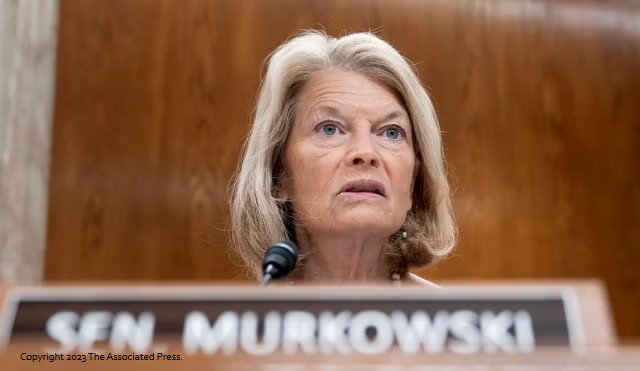
Republican Alaska Sen. Lisa Murkowski was the only Republican to vote against the legislation’s advancement, while Republican North Carolina Sen. Thom Tillis was not present for the vote. Tillis has vocally opposed using a talking filibuster to pass the bill.

Trump called on Senate Majority Leader John Thune to gather the necessary votes to get the election integrity bill to his desk. He threatened to veto every other bill that reaches his desk unless the Senate passes the SAVE Act.

“The Republicans should say, ‘We want to take over,’” Trump told former FBI deputy director Dan Bongino. “We should take over the voting, the voting in at least many — 15 places. The Republicans ought to nationalize the voting.”

AUTHOR

Nicole Silverio

Media Reporter

RELATED ARTICLES:

John Thune Asked Why GOP Lacks 51 Votes For Talking Filibuster On SAVE Act

White House Provides Update on Negotiations to Fund DHS

EDITORS NOTE: This Daily Caller column is republished with permission. ©All rights reserved.


All content created by the Daily Caller News Foundation, an independent and nonpartisan newswire service, is available without charge to any legitimate news publisher that can provide a large audience. All republished articles must include our logo, our reporter’s byline and their DCNF affiliation. For any questions about our guidelines or partnering with us, please contact licensing@dailycallernewsfoundation.org.

SAVE Act Clears First Hurdle

Democrats line up against voter integrity.

“I’m thrilled to announce that just moments ago, we won the vote on the motion to proceed to the House-passed version of the SAVE AMERICA Act. We got 51 votes for it, so game on.”

“We need to stay on this thing now until it passes. Make those who want a filibuster debate, make them speak, and don’t give up until it’s done.”

The SAVE America Act has advanced in its first test vote on the Senate floor.

51-48

Sen. Lisa Murkowski (R-AK) is the lone “NAY” from the Republican Party. But then she’s not really a Republican.

Senate GOP clears first hurdle on election bill as Democrats hold firm

The Senate will hold a do-or-die test vote on President Donald Trump’s SAVE America Act that would require proof of U.S. citizenship to vote in U.S. elections on Tuesday. Senate Majority Leader John Thune and Republicans need a simple 51-vote majority to launch further proceedings.

The Senate on Tuesday voted to open debate on the SAVE America Act in a narrow 51-48 vote, marking an early step forward for the GOP-backed election bill as Democrats remain united in opposition.

Sen. Lisa Murkowski, R-Alaska, was the lone Republican to vote against advancing the legislation, while all Democrats opposed opening debate. Sen. Thom Tillis, R-N.C., did not vote.

The procedural vote allows Senate Republicans to begin debate on the measure, with GOP leaders expected to allow for amendments and extended floor discussion in the coming days.

At some point, Senate Majority Leader John Thune is expected to file cloture to end debate, which would trigger a final vote requiring 60 votes to advance.

Because Republicans do not have 60 votes, Democrats could ultimately block the legislation by refusing to support ending debate, meaning Tuesday’s vote does not guarantee the bill will pass the Senate.

AUTHOR

RELATED ARTICLES:

Crushing Fraud

CEOs of Nation’s Leading Airlines Publish Open Letter Pressing Democrats to Open Government

RELATED VIDEO: ‘YOU CAN’T GO HIGHER!’: CNN Forced to Report MAGA Backs Trump 100% — ‘He is the 1972 Miami Dolphins’

POSTS ON X:

EDITORS NOTE: This Geller Report is republished with permission. ©All rights reserved.

How to Pass the SAVE America Act? Voting Documents for All!

Can Democrats take “Yes” for an answer?

As the Senate weighs the SAVE America Act, Republicans should help Democrats overcome their objections to this bill.

Racist Democrats like Sen. Chuck Schumer, D-N.Y., complain that black folks lack photo ID. Democrats insist that expecting supposedly witless or listless blacks to show poll workers photo ID is “Jim Crow 2.0.”

Democrats never offer to give IDs to these invisible legions of undocumented blacks. Imagine if Democrats handed photo ID to these poor, benighted souls: Blacks and others of color could cash checks, jet across America, get paid to shovel snow in New York City, and even vote in states with photo ID rules.

Democrats also attack SAVE for requiring birth certificates to register to vote. “Got one of those handy with you, in your purse?” Sen. Richard Durbin, D-Ill., prodded a congressional correspondent. “I doubt it.”

So, Senate Republicans should open the SAVE America Act proceedings by making Democrats vote first on legislation that I would call The Voting Documents for All Act.

• Any adult U.S. citizen could visit his state’s DMV office and receive a free photo ID card (not a driver’s license).

• The federal government would reimburse states for the cost of each free photo ID card, plus 10%, to encourage their assistance. This would be a funded mandate.

• Likewise, birth certificates for voter registration would be available, free of charge. Right now, Americans can order birth certificates online in all 50 states, through private and government websites. New federal promo codes could chop prices to $0.00.

• Congress would reimburse website owners and state agencies for their foregone birth-certificate revenues. Alternatively, tax credits could help voter-registration applicants recoup their document-acquisition expenses.

• Washington should offer states block grants to underwrite their worthy ways to boost access to election-related free birth certificates and photo ID cards.

• This could be financed from the $2 billion average annual revenues in the Justice Department’s Assets Forfeiture Fund. This includes ill-gotten gains from drug cartels and other criminal enterprises. This money is earmarked for “law enforcement-related priorities.”

Conveniently enough, distinguishing between U.S. citizens and cartelistas is a public safety and national security priority. This would be easier to accomplish if every American could show photo ID, and cartel members could not. The SAVE America Act’s birth certificate obligation would stymie MS-13 and Tren de Aragua thugs who try to become registered voters.

Democrat hacks, such as Sen. Adam Schiff, D-Calif., call these concerns “voter fraud conspiracy theories.”

But Assistant Attorney General for Civil Rights Harmeet Dhillon told Just the News Tuesday that the Justice Department scrutinized just 16 states. “We’re finding tens of thousands of noncitizens on the voter rolls, hundreds of thousands of dead people on the voter rolls, and duplicate registrations between states.” In fact, the Justice Department indicted Mauritanian illegal alien Mahady Sacko this month for allegedly voting in seven federal elections since 2008.

The Voting Documents for All Act would help mop up this mess and put Democrats precisely where Republicans want them.

If Senate Democrats vote “Yea”—with virtually every Republican, and the GOP House concurs—then U.S. citizens would enjoy free photo IDs and registration-related birth certificates. Democrats’ top arguments against the SAVE America Act would evaporate, like drizzle on a sunbaked sidewalk.

Democrats will have no excuse for fighting a bill favored by, according to a Feb. 25-26 Harvard Harris poll, 71% of 1,999 registered voters surveyed, including 50% of their fellow Democrats, 69% of independents, and 91% of Republicans.

Conversely, if Democrats vote “Nay,” they will expose themselves as congenital liars who could not care less about Americans without photo ID (good luck renting cars or checking into motels!) and prefer not to help citizens attain birth certificates so they can register to vote.

Either outcome would be a huge GOP victory. Democrats would paint themselves into a corner, whichever way.

An enterprising Republican senator should draft this proposed measure today, and Majority Leader John Thune, R-S.D., should deploy it as the opening salvo in the Senate’s election-integrity showdown.

We publish a variety of perspectives. Nothing written here is to be construed as representing the views of The Daily Signal.

AUTHOR

Deroy Murdock is a Manhattan-based Fox News contributor and a contributing editor with The American Spectator.

RELATED POSTS:

What Supermajorities of Likely Voters in Battleground States Say About SAVE America Act

Trump: ‘I Won’t Sign’ Any Other Bills Until SAVE America Act Is Passed

Ignore Democrat Lies; Birth Certificates Are Easy to Attain

Senate to Be Put on Record on Voter ID Legislation

RELATED VIDEO: “Pressure Builds in the Senate: Will the Talking Filibuster Finally Happen?”

EDITORS NOTE: This Daily Signal column is republished with permission. ©All rights reserved.

The Daily Signal depends on the support of readers like you. Donate now

What’s on Voters’ Minds? Polls Suggest These 3 Issues

What’s connecting with voters right now?

As Republicans seek to maintain their congressional majorities in November, it’s hard to keep up with the headlines: conflict with Iran, fierce debate in Congress, and an economy increasingly dominated by tech and artificial intelligence.

These polls indicate voters’ concerns in a hectic news environment.

It’s Iran, Stupid?

Bill Clinton’s winning 1992 presidential campaign once singled out “the economy, stupid,” as a winning issue.

Since then, it has become conventional wisdom that pocketbook issues win elections more than anything else in American politics.

But as the midterm elections approach, the ongoing military campaign against Iran could be competing with the economy as the top issue for voters.

A recent poll from Scott Rasmussen’s Napolitan News Service asked voters for their “most important political issue right now.”

A combined 29% of voters replied that either foreign policy (15%) or Iran (14%) was the most important issue.

Combined, this exceeds the 24% who considered the economy the most important issue.

Data Centers—Good for Economy, Bad for Quality of Life?

Across the country, tech companies are developing massive data centers to house the physical infrastructure that supports artificial intelligence.

Although Americans appear to believe these centers are good for the economy, there is a consistent trend of Americans suspecting they have negative effects on the quality of life.

According to January polling from Pew Research Center, “more [Americans] say data centers are mostly bad than good for the environment (39% vs. 4%), home energy costs (38% vs. 6%) and the quality of life for those nearby (30% vs. 6%).”

However, a mere 15% of respondents said the centers are “mostly bad” for local jobs, compared to 25% who said they are “mostly good.”

Similarly, when it comes to local tax revenue, 12% said the centers would be mostly bad, and 23% said they would be mostly good.

During his State of the Union address in February, President Donald Trump announced he was working with tech companies to ensure Americans’ electricity bills would not rise due to the construction of data centers.

Multiple tech companies have since signed on to a pledge to cover their own power costs.

SAVE America Act

One of the biggest fights on Capitol Hill right now is over the SAVE America Act—legislation which would require photo identification and proof of citizenship in federal elections.

But few people know what the bill is when they hear the name.

According to polling from the Napolitan News Service conducted from March 9-10, a mere 23% of respondents know what the bill is.

However, the individual components of the bill are popular among respondents, according to a Harvard/Harris poll conducted in February.

According to this polling, 75% of Americans support the bill’s proof of citizenship requirement, 81% support voter ID, and 80% support removing non-citizens from voter rolls.

The polling also indicates 58% of voters believe there is at least some voter fraud in U.S. elections.

AUTHOR

George Caldwell is a correspondent for The Daily Signal. Send an email to George. George on X: .

RELATED POSTS:

What One State Found When Probing Voter Rolls for Noncitizens

Schumer Vows to Fight Supposed ‘Jim Crow 2.0’ Bill With Policy 83% of Americans Support

More States Moving to Close Election Funding Loophole Few Voters Knew Existed

Illegal Alien’s NYC Subway Attack on Vet Highlights Left’s Defense of Savagery Over Civilization

EDITORS NOTE: This Daily Signal column is republished with permission. ©All rights reserved.

The Daily Signal depends on the support of readers like you. Donate now

Florida Passes Voter ID Bill as National SAVE Act Stalls

The Florida Senate passed voter ID legislation Thursday, sending the bill to Gov. Ron DeSantis’ desk, as the SAVE America Act stalls in the U.S. Senate.

SB 1334, a bill to strengthen the verification process for voters’ citizenship status, passed the Sunshine State’s Senate 27-12, fulfilling the prediction of Florida Chief Financial Officer Blaise Ingoglia earlier Thursday.

The bill had passed the Florida House, 83-21, in February.

“These new laws will further help protect the ballot box,” Jeremy Redfern, deputy chief of staff to Florida Attorney General James Uthmeier, told The Daily Signal. “We thank the Florida Legislature for being champions of election integrity and look forward to this legislation hitting Governor DeSantis’ desk for his signature.”

The bill will require voters to verify their citizenship with a photo identification card and require the Department of Highway Safety and Motor Vehicles to note the citizenship status of drivers who receive new identification.

Prior to the vote, Florida Republican Gov. Ron DeSantis announced in a social media post that he will sign the bill into law.

“Although Florida has already enacted much of what the federal legislation contemplates, this will further fortify our state as the leader in election integrity,” DeSantis wrote on X.

Republican state Rep. David Borrero told The Daily Signal that he refers to SB 1334 as the “SAVE Act,” like the national legislation, “because it helps save our democratic elections.”

“Requiring proof of citizenship ensures that voters are actually eligible to vote. Our system cannot be hijacked by noncitizens,” Borrero added.

Borrero attacked the 31 Democrats who voted against the bill in the state House.

“Clearly, it’s because they want illegals to vote in our elections,” he charged. “They are very weak on illegal immigrants; they incentivize it.”

The legislation, if signed into law, will take effect in January 2027.

Both Borrero and Ingoglia said there is no excuse for Republicans in the federal government to fail to pass voter ID when Florida passed the bill so efficiently.

“I agree with this 110%,” Borrero said. “Our entire U.S. Constitution relies on a system where only citizens vote. We cannot allow foreign nationals to hijack that system. This bill is needed to combat illegal voting all across the country, especially in states like California and New York.”

Borrero added that the bill is “so commonsense, that it wasn’t necessary before. But since the Left is so radicalized, we need to implement this now.”

During his press conference, Ingoglia issued similar remarks, adding that there is “zero reason” for a Republican-controlled Congress to be unable to pass “a very much-needed piece of legislation.”

The SAVE America Act, which has been championed by President Donald Trump and passed by the U.S. House of Representatives three times since 2024, continues to stall in the Senate, allegedly over bipartisan opposition.

Senate Majority Leader John Thune, R-S.D., has promised to bring the bill to a vote in the Senate next week, but a source familiar with the matter previously told The Daily Signal the vote will be considered a “show vote.”

“I can confirm, it looks like Thune is planning to bring it to a vote next week as a show vote,” the source said. “Despite outrage from GOP voters and the specific request of the president, he is not planning on pursuing a standing filibuster or any other method to actually pass the bill.”

A standing filibuster would bypass the 60-vote threshold needed to pass legislation and allow the legislation to pass with just 50 votes.

There are currently 53 Republicans in the Senate.

The Daily Signal reached out to Florida state Senate Democrat Leader Lori Berman and U.S. Sen. Chuck Schumer, D-N.Y., for comment, but neither responded by publication time.

AUTHOR

Pedro Boccalato Rodriguez-Aparicio is a journalism fellow at The Daily Signal. Send an email to Pedro.

RELATED POSTS:

White House to Address Congress’ Venezuela Questions

EXCLUSIVE: Congress Eyes New ‘Dalilah’s Law’ Proposal to Ban Illegal Immigrants From Trucking

Trump: ‘I Won’t Sign’ Any Other Bills Until SAVE America Act Is Passed

Virginia Republican Wins Big Upset After Muslim Democrat Busted for Racist Tweets

RELATED VIDEO: Chuck Schumer Admits Illegal Aliens Are on Voter Rolls—The Truth Behind the Save America Act

EDITORS NOTE: This Daily Signal column is republished with permission. ©All rights reserved.

The Daily Signal depends on the support of readers like you. Donate now

DOJ Review of Voter Rolls Uncovers Alarming Names—and It’s Only the Beginning

The Justice Department is finding thousands of noncitizens and dead people on voter rolls as it pursues more state election records, said Harmeet Dhillon, the assistant attorney general for civil rights, in an interview.

“We’re finding tens of thousands of noncitizens on the voter rolls, hundreds of thousands of dead people on the voter rolls, and duplicate registrations between states,” Dhillon said on “Just the News, No Noise.”

Dhillon based her claim on a review of only 16 Republican-leaning states, such as Florida and Texas, that voluntarily complied with the Justice Department’s request for the election records.

The administration is suing 29 states for the records, seeking to ensure that states are complying with the National Voter Registration Act of 1993 and the Help America Vote Act of 2002. Those laws require states to update their voter registration lists and ensure they are free of names of dead people, or people who no longer reside in jurisdictions where they are registered to vote.

This comes in light of several prosecutions of noncitizens for illegal voting.

This week, Immigration and Customs Enforcement and the FBI announced the arrest of Mahady Sacko, an illegal alien from Mauritania, for voter fraud in Philadelphia. ICE asserted he had been illegally voting in the United States since 2008.

Sacko entered the U.S. near Miami, and an immigration judge ordered him removed. Sacko exhausted all appeals, and the Board of Immigration Appeals upheld his removal on Nov. 14, 2002—over two decades ago.

In December, Joe Ceballos resigned as mayor of Coldwater, Kansas, after being arrested for voting multiple times, though he was not a citizen. The Department of Homeland Security announced removal proceedings but Ceballos, a legal permanent resident from Mexico, voted in multiple elections, according to the agency, and faced state charges.

The lawsuits contend the Justice Department has the authority to request and review election records under the Civil Rights Act of 1960.

The DOJ has sued both red and blue statesMost recently, the Justice Department sued Utah, Oklahoma, Kentucky, West Virginia, and the Democrat-leaning New Jersey.

The Justice Department has also sued major Democrat-leaning states, such as California and New York, for voter rolls, as well as battleground states such as Arizona and Georgia.

“It’s really frustrating that we’re being prevented from doing our job,” Dhillon said.

The Justice Department could have a tough road ahead, noted J. Christian Adams, president of the Public Interest Legal Foundation, an election integrity group that has sued states for information on “dirty voter rolls.”

Adams is a former lawyer in the Justice Department’s Civil Rights Division.

“It’s decades-old news,” Adams told The Daily Signal of dead voters and noncitizens on voter lists. “Good luck doing anything about it.”

He noted that in cases by the foundation, both the 6th U.S. Circuit Court of Appeals and the 11th U.S. Circuit Court of Appeals ruled states can’t be compelled to clean up voter rolls if they are already making an effort. The Supreme Court declined to hear the cases.

“It’s one thing to get data, it’s another thing to enforce cleaning up the rolls,” Adams said.

A Justice Department spokesperson did not respond to The Daily Signal by publication time to provide more details about the number of ineligible voters found on the voter lists so far.

AUTHOR

Fred Lucas is chief news correspondent and manager of the Investigative Reporting Project for The Daily Signal. He is the author of The Myth of Voter Suppression: The Left’s Assault on Clean Elections. Send an email to Fred. Fred on X: .